
Executive Overview
In the contemporary discourse surrounding canine behavior, breed-specific stereotypes often dictate public perception and policy. Among the breeds most frequently subjected to systemic bias are giant working dogs, whose imposing physical statures are routinely conflated with inherent aggression or volatility. However, a closer examination of individual animals within these classifications often reveals a profound divergence between outward appearance and internal temperament.
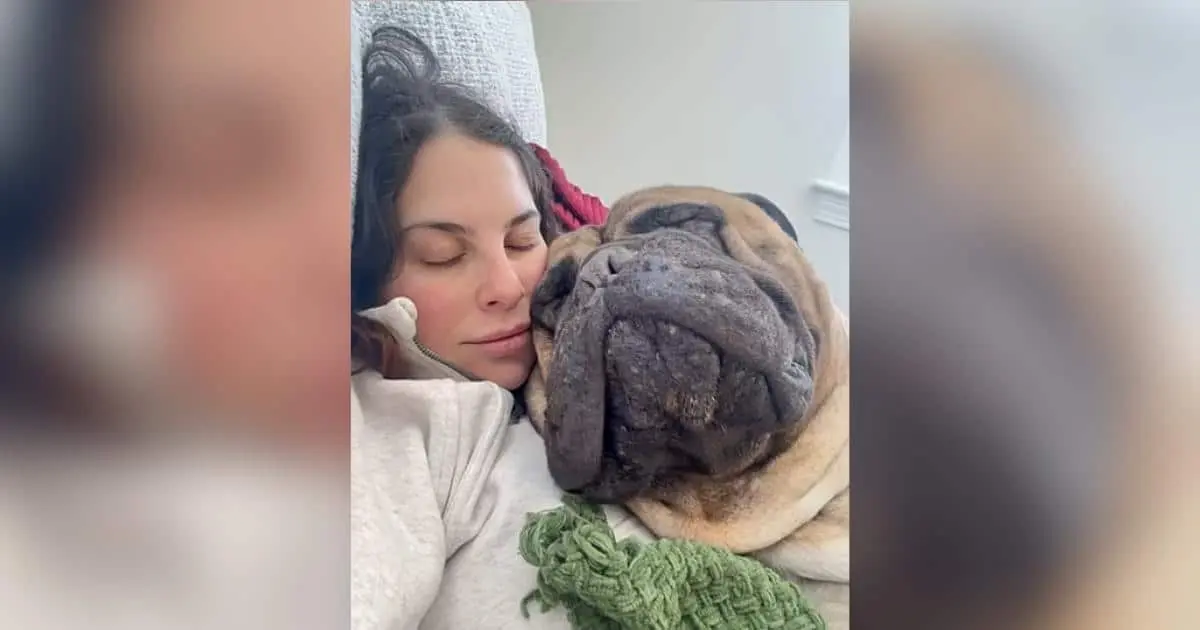
A compelling case study of this physical-behavioral dichotomy is Meech, a 160-pound Bullmastiff residing with his owner, Dorit. Despite possessing the musculature and skeletal mass capable of deterring formidable threats, Meech exhibits a behavioral profile characterized by extreme docility, acute sensory sensitivity, and a persistent adherence to juvenile comfort-seeking mechanisms.
This investigative report explores the life of Meech as a microscopic representation of a macroscopic phenomenon: the "gentle giant" paradigm. By analyzing Meech’s daily behavioral patterns—ranging from his lack of spatial awareness (proprioception) to his reliance on transitional objects and garments—this article examines the biological, psychological, and sociological factors that shape large-breed temperaments. Furthermore, it addresses the systemic stigmas surrounding giant breeds and highlights how responsible stewardship and targeted socialization can cultivate emotionally stable, highly affectionate family companions.
Detailed Chronology: The Evolution of a Gentle Giant
The development of a giant breed dog from a vulnerable, highly dependent puppy into a massive adult is a complex physiological and psychological journey. Understanding Meech’s current behavioral profile requires tracing this developmental trajectory and analyzing how early socialization and environmental consistency shaped his personality.
+-----------------------------------------------------------------------------+
|                          MEECH'S DEVELOPMENTAL TIMELINE                     |
+-----------------------------------------------------------------------------+
|                                                                             |
|  [Infancy & Early Adoption]                                                 |
|  * Rapid skeletal growth phase.                                             |
|  * Introduction to domestic environment by Dorit.                           |
|  * Formation of secure attachment bonds.                                    |
|                                                                             |
|  [Adolescent Transition]                                                    |
|  * Emergence of "lap dog" identity (poor proprioceptive awareness).         |
|  * Retention of infantile comfort habits (suckling stuffed toys).            |
|  * Introduction of sensory comforting tools (custom pajamas).               |
|                                                                             |
|  [Adulthood (Current State: 160 lbs)]                                       |
|  * Achievement of full physical maturity (160 lbs).                         |
|  * Exhibition of highly specific micro-phobias (toothbrushes, massage guns). |
|  * Functioning as a primary emotional companion and breed ambassador.       |
|                                                                             |
+-----------------------------------------------------------------------------+
The Early Developmental Phases
As a puppy, Meech was introduced to his owner, Dorit, during a critical socialization window. During this phase, large-breed dogs establish their baseline understanding of safety, threat assessment, and social hierarchy. For Bullmastiffs, a breed historically engineered in 19th-century England to guard estates, early positive reinforcement is paramount to prevent the development of overprotective or defensive instincts.
Dorit’s early approach focused on creating a secure attachment style. By exposing Meech to diverse stimuli in a controlled, non-threatening manner, she laid the groundwork for his deeply affectionate demeanor. However, as Meech’s physical frame expanded at an exponential rate—often gaining several pounds per week during peak growth phases—his cognitive perception of his own physical boundaries failed to keep pace.
The Persistence of Juvenile Behaviors in Adulthood
Now fully grown at 160 pounds, Meech displays a phenomenon known to veterinary behaviorists as prolonged behavioral neoteny, wherein an adult animal retains physical or behavioral traits typical of its juvenile stage.
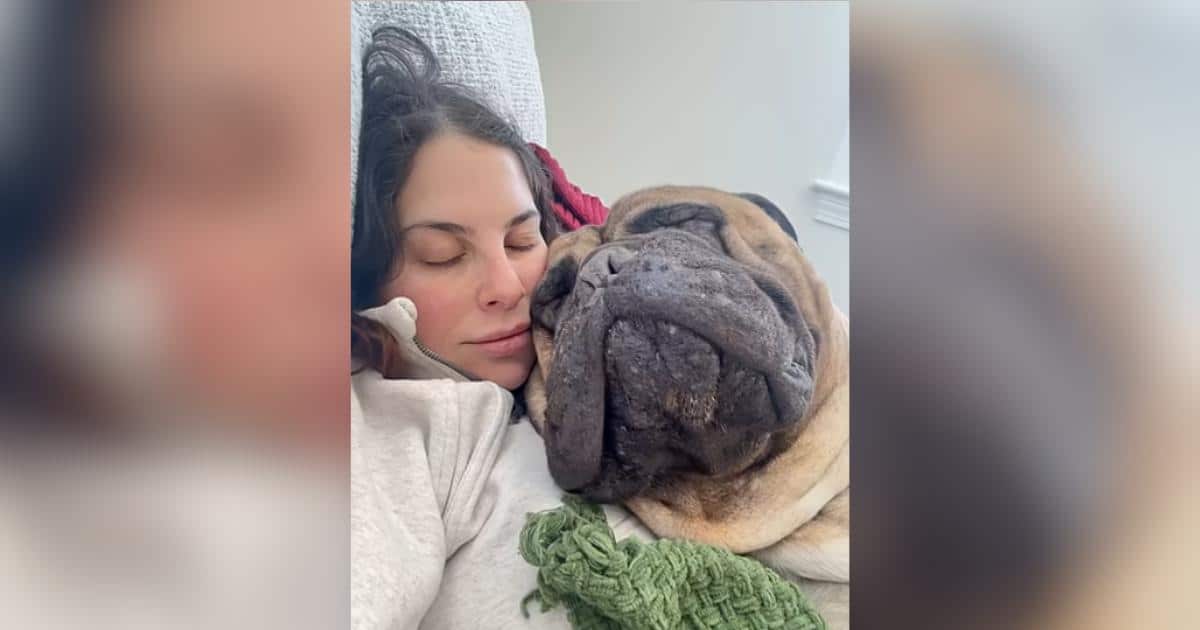
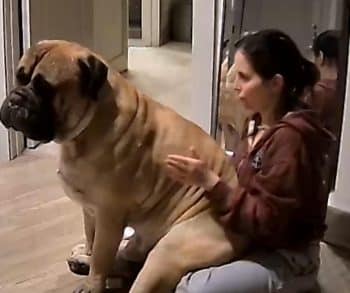
- The Lap-Dog Delusion: Meech exhibits an apparent inability to calculate the spatial impact of his physical mass. When attempting to cuddle, he routinely attempts to climb into the laps of Dorit and visitors, behaving as though he still occupies the physical footprint of a 15-pound puppy.
- Transitional Object Dependency (Suckling): A prominent feature of Meech’s daily routine is his habit of suckling on stuffed toys. This behavior, carried over directly from infancy, serves as a self-soothing mechanism. When settling down, Meech will gently grasp a plush toy in his mouth and perform rhythmic suckling motions, a practice that stimulates the release of endorphins and promotes emotional regulation.
- Sartorial Comfort (Pajamas): Adding to his highly domestic profile, Meech regularly wears custom-fitted pajamas. While visually endearing to observers, the use of garments on large, short-coated breeds serves practical therapeutic purposes, including mild pressure therapy (similar to a weighted blanket) which mitigates anxiety, and thermal regulation during colder seasons.
Supporting Context & Metrics: The Science of Giant Breeds and Canine Sensitivity
To fully understand why a dog of Meech’s caliber exhibits such a delicate psychological profile, it is necessary to examine the biological and behavioral metrics associated with giant canine breeds, specifically the Bullmastiff.
+-----------------------------------------------------------------------------+
|                     BULLMASTIFF BREED METRICS & PROFILE                     |
+-----------------------------------------------------------------------------+
|                                                                             |
|  [Physical Parameters]                                                       |
|  * Average Male Weight:  110 - 130 lbs (Meech exceeds standard at 160 lbs)  |
|  * Average Male Height:  25 - 27 inches at the shoulder                     |
|  * Bite Force Potential: Approximately 550 PSI                             |
|                                                                             |
|  [Psychological & Sensory Profile]                                          |
|  * Temperament Category: Alert, loyal, docile, highly sensitive             |
|  * Proprioception:       Low-to-moderate (common in rapid-growth breeds)    |
|  * Sensory Threshold:    High tolerance for physical discomfort;            |
|                          Low tolerance for novel/vibrating auditory stimuli |
|                                                                             |
+-----------------------------------------------------------------------------+
The Biomechanics of Poor Proprioception
Proprioception is the body’s ability to perceive its own position, movement, and spatial orientation. In giant breeds, the rapid rate of skeletal and muscular growth during their first two years can result in a mismatch between physical size and neurological mapping.
Because Meech transitioned from a small puppy to a 160-pound adult in a relatively short timeframe, his brain’s internal map of his physical boundaries remained somewhat outdated. This explains why he does not comprehend the surprise or physical strain of individuals when he attempts to use them as furniture; to Meech, his internal self-image does not align with the reality of his massive external frame.
Analyzing Micro-Phobias: Why Giant Dogs Fear Tiny Objects
One of the most striking paradoxes of Meech’s personality is his acute fear of harmless, everyday household items, specifically toothbrushes and electronic massage tools.
From an evolutionary and sensory perspective, this reaction is highly logical:

- High-Frequency Vibrations: Electronic massage tools and electric toothbrushes emit high-frequency ultrasonic frequencies and vibrations that are imperceptible or merely annoying to humans, but highly intense and disruptive to a canine’s sensitive auditory and vestibular systems.
- Novelty and Unpredictability: To a dog, a small, vibrating object behaves in an unnatural manner. Because Meech is naturally docile and non-confrontational, his default response to an unrecognized, buzzing stimulus is avoidance rather than aggression.
- Contrast in Threat Assessment: While a guardian breed might instinctively confront a human intruder, a domestic object like a toothbrush does not fit into the innate predatory or defensive templates of the dog. Lacking a pre-programmed behavioral response, the sensitive Bullmastiff defaults to cautious retreat.
The Demographics of Large-Breed Bias
Public perception of giant breeds is heavily influenced by media representation and lack of exposure. Statistics indicate that large breeds, particularly those with mastiff ancestry, are disproportionately subject to housing restrictions, increased insurance premiums, and public avoidance.
However, behavioral assessments conducted by organizations such as the American Temperament Test Society (ATTS) consistently demonstrate that giant breeds often score higher in stability and non-aggression than many popular small and medium-sized breeds. The gentle disposition exhibited by Meech is not an anomaly; rather, it is highly representative of well-socialized, properly raised Bullmastiffs.
Official Statements and Expert Insights
To contextualize the behavioral patterns of Meech and the broader implications for giant-breed advocacy, we examine perspectives from veterinary behaviorists, breed historians, and direct testimony from his owner, Dorit.
Dorit on the Reality of Living with Meech:
"When people first see Meech, their immediate reaction is often to step back. His size is undeniable, and he looks incredibly powerful. But the reality of living with him is entirely different. He is the most sensitive, gentle soul I have ever known.
He has completely transformed my life. He is my best friend and a constant source of comfort. When he climbs onto the couch to be near me, or when he curls up in his pajamas suckling his favorite toy, all the stereotypes about big, intimidating dogs completely melt away. He doesn’t have a mean bone in his body; he just wants to be close to the people he loves."
Veterinary Behaviorist Perspective on Giant-Breed Sensory Processing:
Dr. Elizabeth Vance, a specialist in canine cognitive ethology, emphasizes the importance of recognizing the emotional depth of large breeds:
"There is a persistent and dangerous myth that physical size correlates with emotional toughness or aggression. In reality, giant breeds like Bullmastiffs are often highly sensitive to their environments. Their history as silent guardians means they are keenly observant of changes in their surroundings.
When an owner like Dorit fosters a secure, low-stress environment, these dogs can express their natural propensity for gentleness. Behaviors like toy-suckling and seeking physical closeness are healthy coping mechanisms that indicate a highly developed emotional capacity. Denying these dogs the opportunity to seek comfort because of their size is a disservice to their well-being."
Future Outlook: Dismantling Breed Stigmas through Digital Advocacy
The future of giant breeds in modern society relies heavily on shifting public consciousness from fear-based assumptions to education-based understanding. The dissemination of Meech’s story across digital platforms, including YouTube and social media, serves as a powerful tool in this educational campaign.
+-----------------------------------------------------------------------------+
|                        PATHWAYS TO DISMANTLING BREED STIGMA                 |
+-----------------------------------------------------------------------------+
|                                                                             |
|  [Digital Advocacy]                                                         |
|  * Humanizing giant breeds through raw, unedited behavioral footage.        |
|  * Highlighting vulnerable behaviors (suckling, sensory fears).              |
|                                                                             |
|  [Responsible Stewardship]                                                  |
|  * Promoting early, positive reinforcement-based socialization.             |
|  * Educating owners on the unique veterinary needs of giant dogs.           |
|                                                                             |
|  [Policy Reform]                                                            |
|  * Challenging breed-discriminatory housing and insurance regulations.       |
|  * Advocating for temperament-based evaluations over visual profiling.      |
|                                                                             |
+-----------------------------------------------------------------------------+
The Power of Visual Narrative
By documenting Meech’s daily lives—specifically his interactions with everyday objects, his gentle nature, and his reliance on comforting routines—Dorit is actively challenging the visual profiling of large dogs. When the public witnesses a 160-pound canine wearing pajamas, gently suckling a stuffed animal, or hiding from a toothbrush, it humanizes the animal and dismantles the archetype of the "vicious guard dog."
Long-Term Veterinary and Welfare Considerations
As Meech continues to age, maintaining his physical and psychological health will require proactive management. Giant breeds face specific physiological challenges, including:
- Orthopedic Management: Ensuring joint health through controlled exercise, weight management, and orthopedic bedding is critical to support Meech’s 160-pound frame and prevent osteoarthritis.
- Cognitive Maintenance: Continuing to engage Meech in mental enrichment games and gentle sensory exposure will ensure his cognitive faculties remain sharp, helping to mitigate anxiety and phobias in his senior years.
- Preventative Care: Close monitoring for breed-specific issues such as gastric dilatation-volvulus (GDV) and cardiac health remains a priority for Dorit and his veterinary team.
Conclusion: The Legacy of Meech
Meech’s journey is a testament to the transformative power of compassionate ownership and the profound depth of the human-canine bond. He stands as a living reminder that the true character of an animal cannot be measured by weight, height, or physical capability. By embracing Meech’s sensitive nature, providing him with the security to remain a puppy at heart, and sharing his story with the world, Dorit is paving the way for a more empathetic, informed, and inclusive future for giant breeds everywhere.