
Executive Overview
The evolutionary history of life on Earth has long been anchored in the study of cellular organisms, yet a quiet revolution is rewriting the narrative from the microscopic up. Viruses—often perceived strictly as pathogenic agents of disease—are increasingly understood by evolutionary biologists as foundational architects of complex life. Unlike autonomous cellular life forms, viruses exist as discrete packages of genetic information, devoid of the metabolic machinery required to synthesize proteins independently. This absolute reliance on host cellular machinery has historically cast them as evolutionary parasites. However, a growing body of scientific inquiry suggests a far more profound, symbiotic, and constructive role for viruses in the emergence of advanced biological systems.
At the vanguard of this paradigm shift is Professor Masaharu Takemura of the Tokyo University of Science (TUS). In 2001, Professor Takemura and Dr. Philip Bell of Macquarie University independently formulated a bold proposition: the cell nuclear virus origin theory, also widely known as viral eukaryogenesis. This hypothesis posits that the nucleus defining eukaryotic cells—organisms ranging from yeasts to human beings—did not evolve entirely through internal cellular mutation, but rather originated from a large, ancient DNA virus that established a permanent residency inside an archaeal host.
The credibility of this theory has been bolstered over the last two decades by the discovery of giant DNA viruses—colossal viral entities that challenge conventional definitions of life by possessing genomes rivaling those of small bacteria and complex metabolic repertoires. The latest chapter in this unfolding saga is the discovery of ushikuvirus, a newly identified giant DNA virus isolated from Lake Ushiku in Ibaraki Prefecture, Japan. Described in a landmark study published in the Journal of Virology by Professor Takemura, alongside collaborators at the National Institute of Natural Sciences (NINS) including Mr. Jiwan Bae, Mrs. Narumi Hantori, Dr. Raymond Burton-Smith, and Professor Kazuyoshi Murata, ushikuvirus offers vital clues regarding viral diversification, replication mechanics, and the evolutionary lineage of complex cells. Beyond its theoretical implications, this discovery opens up intriguing avenues for medical biotechnology, offering potential frameworks for controlling harmful amoebic pathogens that threaten human health.
Detailed Chronology: From the Enigma of Viral Origins to the Ushikuvirus Breakthrough
To understand the weight of the ushikuvirus discovery, one must trace the historical milestones that led modern virology to rethink the boundaries between the living and the non-living.
[2001] Viral Eukaryogenesis Proposed
  │     (Takemura & Bell independently theorize viral origin of the cell nucleus)
  ▼
[2003] Discovery of Giant DNA Viruses
  │     (Mimivirus discovered; demonstration of membrane-bound "virus factories")
  ▼
[2010s-2020s] Expansion of Giant Virus Families
  │     (Identification of Mamonoviridae, Clandestinovirus, and Medusavirus)
  ▼
[Present] Isolation of Ushikuvirus
        (Published in Journal of Virology; reveals novel replication mechanics and membrane disruption)
1. The 2001 Hypothesis: Viral Eukaryogenesis
For decades, mainstream evolutionary biology viewed viruses as genetic escapees—fragments of cellular genomes that had broken free and adopted a parasitic lifestyle. However, in 2001, Professor Masaharu Takemura in Japan and Dr. Philip Bell in Australia independently challenged this reductionist view. They proposed that the nucleus of eukaryotic cells might trace its ancestry directly to a large DNA virus, such as an ancient poxvirus, that successfully infected an ancestral archaeal single-celled microorganism.
Rather than destroying the host cell through a lytic cycle, this ancestral virus established a persistent, stable residence within the host cytoplasm. Over evolutionary timescales, the viral entity integrated and absorbed crucial genetic material from the host cell, gradually evolving into the membrane-bound control center we now recognize as the cell nucleus. If substantiated, this theory positions viruses not merely as biological interlopers, but as central catalysts in the emergence of complex, multi-system life on Earth.
2. The 2003 Paradigm Shift: The Rise of Giant Viruses
For years, the viral eukaryogenesis hypothesis lacked tangible structural analogs among contemporary viruses. That changed dramatically in 2003 with the identification of giant DNA viruses (such as Mimivirus). When these massive entities infect a host cell, they construct elaborate intracellular structures known as virus factories.
In several documented species, these factories are enclosed by distinct lipid membranes and serve as dedicated sites for viral DNA replication and transcription. Structurally and functionally, these factories bear an uncanny resemblance to a primitive, primordial version of a cell nucleus. This profound structural convergence provided the first major empirical wind in the sails of the viral eukaryogenesis model, demonstrating that modern viruses retain the architectural blueprints necessary to construct nuclear-like domains.
3. Expanding the Catalog: Mamonoviridae and Clandestinovirus
In the years following the 2003 breakthroughs, virologists intensified environmental screenings, unearthing an astonishing diversity of giant DNA viruses inhabiting aquatic and soil ecosystems. Among these are members of the Mamonoviridae family, which specialize in infecting Acanthamoeba, along with the phylogenetically adjacent clandestinovirus, which targets Vermamoeba.
These discoveries revealed that giant viruses are not isolated anomalies, but a deeply rooted, highly diverse lineage with complex ecological niches. However, because isolating and characterizing these microscopic monoliths is notoriously difficult, each newly sequenced genome represents a critical puzzle piece in mapping the global virosphere.
4. The Discovery of Ushikuvirus
Marking a significant advance in this field, the collaborative research team led by Professor Takemura, alongside TUS graduate students Jiwan Bae and Narumi Hantori, and NINS researchers Dr. Raymond Burton-Smith and Professor Kazuyoshi Murata, successfully isolated and cataloged a novel giant DNA virus. Christened ushikuvirus after its discovery site—Lake Ushiku in Ibaraki Prefecture—this virus infects Vermamoeba, aligning it host-wise with clandestinovirus while linking it structurally to the broader Mamonoviridae family.
Supporting Context & Metrics: Structural Architecture and Comparative Analysis
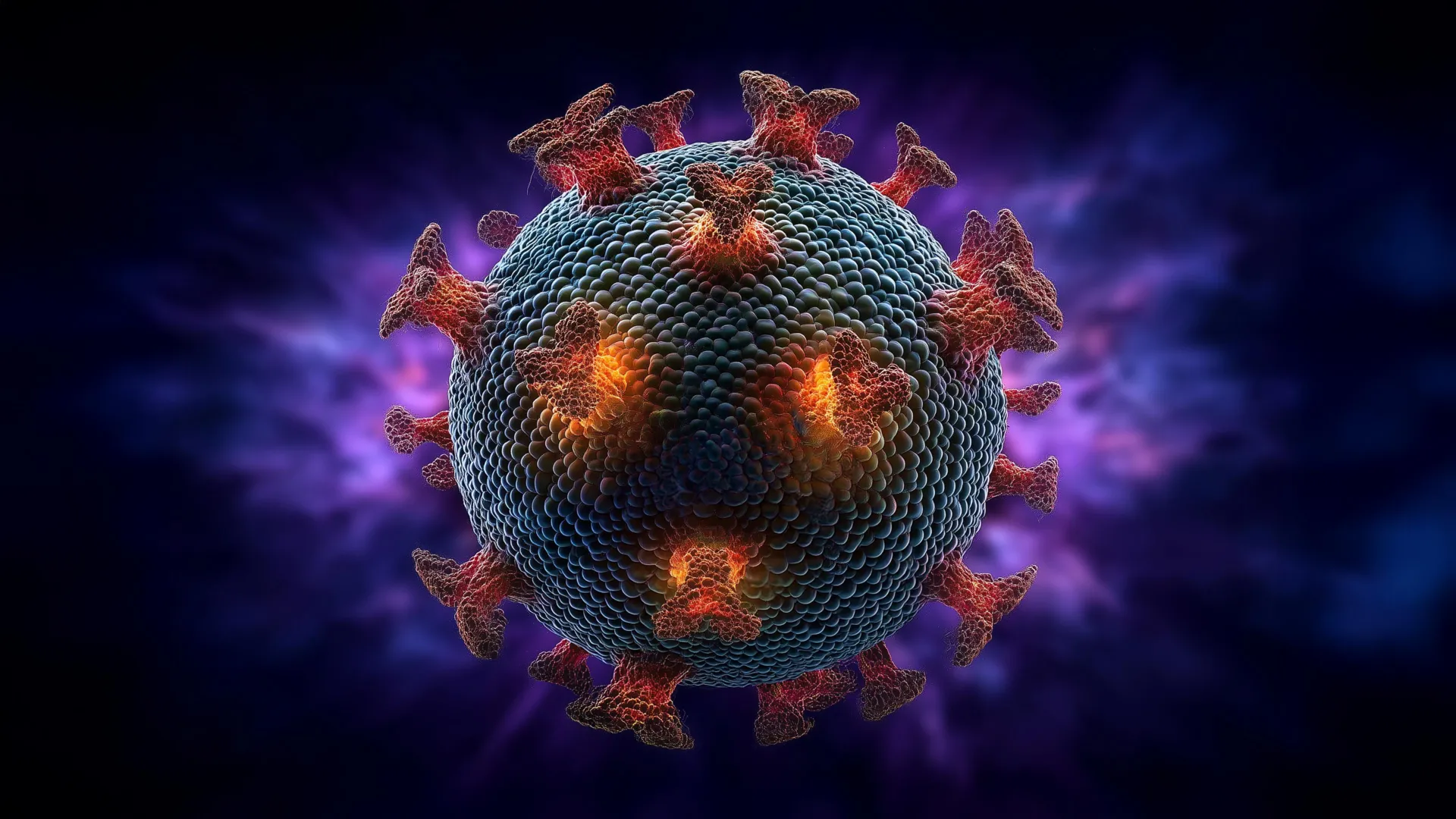
The structural biology of ushikuvirus separates it from previously cataloged giant viruses. While it shares deep phylogenetic roots with the Mamonoviridae family—specifically bearing resemblances to Medusavirus, known for its iconic icosahedral capsid covered in numerous short spikes—ushikuvirus exhibits striking morphological and behavioral divergences.
Morphological and Replication Metrics
| Feature / Metric | Medusavirus (Mamonoviridae) | Clandestinovirus | Ushikuvirus (New Discovery) |
|---|---|---|---|
| Primary Host | Acanthamoeba | Vermamoeba | Vermamoeba |
| Capsid Symmetry | Icosahedral with short spikes | Complex architectural shell | Icosahedral with unique multi-capped spikes |
| Cytopathic Effect | Standard amoebic lysis | Moderate structural changes | Triggers abnormal cellular hypertrophy (giant host cells) |
| Replication Site | Intact host nucleus | Intact host nucleus | Complete breakdown of the host nuclear membrane |
| Evolutionary Link | Baseline Mamonoviridae | Transitional relative | Bridges Mamonoviridae and membrane-disrupting lineages (e.g., Pandoravirus) |
The Mechanics of Infection and Cytopathic Pathology
Upon infecting Vermamoeba cells, ushikuvirus induces a distinct cytopathic effect. Unlike many viruses that cause rapid cellular shrinkage or immediate lysis, ushikuvirus infection causes the host cells to swell and grow to abnormally large dimensions. This hypertrophy suggests a unique metabolic manipulation of the host cell cycle by the viral genome.
Furthermore, high-resolution imaging reveals that the capsid surface of ushikuvirus features complex structural variations: multiple spike arrays topped with unique, specialized caps, some terminating in delicate, filament-like extensions absent in Medusavirus.
A Divergent Replication Strategy
Perhaps the most significant finding regarding ushikuvirus is its replication methodology. While its relatives within the Mamonoviridae family—including Medusavirus and clandestinovirus—replicate their genomes safely within an intact host nucleus, ushikuvirus takes a radically different route. During the height of viral replication, ushikuvirus actively dismantles and breaks down the host’s nuclear membrane.
This mechanical divergence is of paramount importance to evolutionary biologists. It suggests an evolutionary bridge between viruses that maintain host nuclear integrity during replication and those aggressive giant viruses (such as Pandoravirus) that completely obliterate nuclear structures to hijack cellular resources. These behavioral variations likely represent adaptive evolutionary responses to different environmental pressures and host defense mechanisms encountered over evolutionary time.
Official Statements and Expert Perspectives
The isolation and characterization of ushikuvirus have generated considerable excitement within the Japanese scientific community and the broader international virology discipline.
Reflecting on the vast, largely uncharted territory of giant virus research, Professor Masaharu Takemura emphasized the philosophical and scientific dimensions of the work:
"Giant viruses can be said to be a treasure trove whose world has yet to be fully understood. One of the future possibilities of this research is to provide humanity with a new view that connects the world of living organisms with the world of viruses."
Elaborating on how this specific discovery advances our comprehension of evolutionary phylogenies, Professor Takemura further noted:
"The discovery of a new Mamonoviridae-related virus, ‘ushikuvirus,’ which has a different host, is expected to increase knowledge and stimulate discussion regarding the evolution and phylogeny of the Mamonoviridae family. As a result, it is believed that we will be able to get closer to the mysteries of the evolution of eukaryotic organisms and the mysteries of giant viruses."
The collaborative nature of the project—bridging the Graduate School of Science at the Tokyo University of Science with the advanced facilities of the National Institute of Natural Sciences (NINS)—underscores the multidisciplinary rigor required in modern virological research. Contributions from early-career researchers like Master’s degree students Jiwan Bae and Narumi Hantori demonstrate the vital role of next-generation scientists in decoding complex viral proteomes and microscopic morphologies, supported by the analytical prowess of senior investigators such as Dr. Raymond Burton-Smith and Professor Kazuyoshi Murata.
Future Outlook: Theoretical Horizons and Practical Applications
The implications of the ushikuvirus discovery stretch far beyond academic debates regarding the tree of life, bridging fundamental evolutionary theory with concrete biomedical applications.
1. Rewriting Eukaryotic Evolution
As researchers continue to sequence and catalog novel giant viruses like ushikuvirus, the gaps in the viral eukaryogenesis hypothesis steadily narrow. By analyzing the genetic repertoires of these viruses—specifically how they interact with, manipulate, and occasionally integrate into host nuclear machinery—scientists are moving closer to verifying whether a primordial giant virus truly laid the foundation for the cellular nucleus. Future research will focus on comparative genomics, searching for conserved viral genes within modern eukaryotic genomes that bear the unmistakable fingerprint of ancient viral domestication.
2. Biomedical and Public Health Horizons
While amoeba-infecting giant viruses are not direct human pathogens in the traditional sense, their hosts are far from benign. Certain species of Acanthamoeba and related amoebae are opportunistic pathogens capable of causing severe, often fatal human diseases, including amoebic encephalitis (a devastating inflammation of the brain) and painful corneal infections such as Acanthamoeba keratitis.
By achieving a granular, molecular-level understanding of how giant viruses identify, infect, and systematically dismantle these single-celled organisms, biomedical researchers hope to harness viral mechanisms for therapeutic purposes. This could eventually pave the way for novel biological control agents—such as targeted viral therapies—designed to eliminate pathogenic amoebae in clinical or environmental settings, offering innovative tools where traditional pharmacology falls short.
3. Educational Outreach and Virus Literacy
A core component of Professor Takemura’s long-term academic mission—evidenced by his authorship of over 120 scientific papers and receipt of more than 2,500 citations—is the improvement of public virus literacy. In an era defined by viral pandemics and heightened awareness of microbial threats, shifting public and academic perception away from the rigid dichotomy of "virus as enemy" toward an understanding of "virus as evolutionary partner" is vital. Educational initiatives grounded in discoveries like ushikuvirus promise to foster a more nuanced, scientifically accurate appreciation of the microscopic world that sustains all life on Earth.
This research was made possible through financial support from the Japan Society for the Promotion of Science (JSPS) via KAKENHI grant number 20H03078, alongside joint research initiatives hosted by the Exploratory Research Center on Life and Living Systems (ExCELLS program No. 22EXC601-4).