
By the Pet Safety and Industry Editorial Desk
Published: August 3, 2020
Executive Overview
In the high-stakes environment of professional pet grooming, emergencies can strike without warning. While salons are designed to be safe, pampering environments, the physical handling, drying, and restraint of animals can occasionally trigger unforeseen medical events. On a typical workday at a local grooming salon, a routine appointment nearly turned into a tragic loss. However, thanks to immediate intervention, comprehensive emergency preparation, and certified Pet First Aid and CPR training, a beloved canine client named Max was brought back from the brink.
This incident highlights a critical conversation within the pet care industry: the absolute necessity of certified, hands-on emergency training for all animal care professionals. As captured on newly installed security cameras, the swift, calm, and technically precise execution of pet CPR by salon leadership saved Max’s life. This report delves into the chronological sequence of the emergency, examines the underlying medical factors, explores the reactions of the veterinary staff and pet parents, and underscores the invaluable role of organizations like Pet Tech in elevating industry safety standards.
Detailed Chronology: The Incident Unfolds
The events of that fateful day began as a standard grooming appointment for Max, a dog with a history of behavioral challenges that had previously led to him being "fired" from multiple grooming facilities across town. Entrusted to the care of a professional groomer named Elizabeth, Max was undergoing his usual styling when disaster struck.
Without warning, Max experienced a sudden and catastrophic loss of consciousness. The transition from a normal grooming procedure to a life-threatening medical crisis occurred in a matter of seconds. Elizabeth, understandably shaken, was suddenly faced with every pet professional’s worst nightmare: a client’s pet unresponsive on the grooming table.
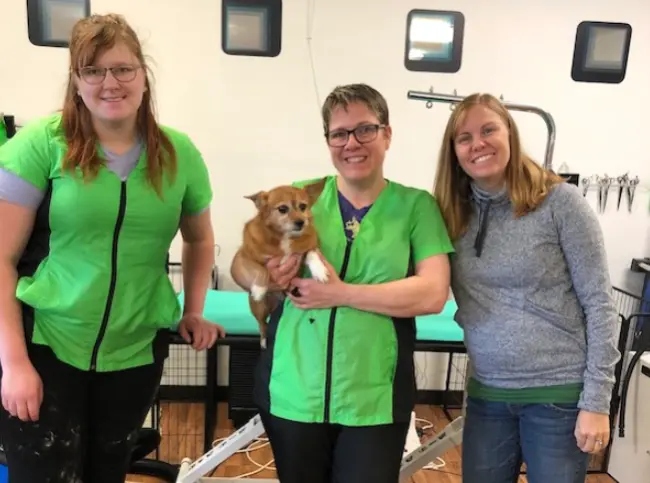
Fortunately, the salon owner, Lara, was nearby and possessed the critical skillset required for the situation. Reacting with the calm precision of a trained professional, Lara immediately stepped in to assess Max’s condition. Recognizing that the dog was in cardiac arrest or experiencing a severe respiratory-cardiac collapse, she initiated emergency protocols.
Lara administered targeted chest compressions while carefully monitoring Max’s vital signs. The physical mechanics of canine CPR require exact hand placement, precise compression depth, and a measured rhythm—skills that can only be mastered through rigorous, hands-on practice. As Lara performed the compressions, she checked for responsiveness.
The turning point came when Lara opened Max’s mouth to check his airway and pulled his tongue past his canines. Max flinched—a vital sign that he was fighting his way back to consciousness. Instantly, Lara shouted for her keys, knowing that the worst had passed and that immediate veterinary transport was required. By the time they were en route to the animal hospital, Max was fully awake, alert, and responsive.
The Power of Modern Surveillance: Transparency and Accountability
In the wake of the emergency, salon owner Lara made a profound observation regarding the role of technology in modern pet care operations. Just one week prior to the incident, the salon had installed a comprehensive security camera system. While the primary motivation for the installation was standard business protection and liability mitigation, the cameras played an unexpected and invaluable role in the aftermath of Max’s medical crisis.
When accidents or medical emergencies occur in closed-door environments like grooming salons, questions of liability, negligence, and human error inevitably arise. However, because the incident was captured on high-definition video, Lara was able to review the footage 100% objectively.
Upon reviewing the tape, Lara confirmed with absolute certainty that Elizabeth, the groomer handling Max, had done nothing wrong. The video showed standard, careful handling up to the exact moment of the medical collapse. This revelation was deeply comforting to Elizabeth, who was understandably traumatized by the event. It reinforced the value of a supportive, knowledge-driven workplace culture where management relies on facts and training rather than panic and blame. Furthermore, it highlights a growing trend in the pet care industry: the integration of transparent surveillance to protect both the business and the integrity of its employees.
Veterinary Evaluation and Medical Findings
Following the stabilization of his condition, Max was rushed to a nearby veterinary clinic for a comprehensive medical workup. The evaluation provided crucial insights into why the otherwise routine grooming session triggered such a dramatic physiological response.
Diagnostic Imaging and Underlying Causes
To ensure that the chest compressions administered during CPR had not caused structural damage to Max’s ribcage, the attending veterinarian ordered a series of X-rays. Fortunately, the thoracic radiographs confirmed that Max’s ribs were entirely intact—a testament to the precision of Lara’s trained hands during the high-stress resuscitation effort.
However, the diagnostic imaging revealed a critical underlying anatomical anomaly: Max’s trachea appeared to be abnormally small where it connects to the lungs. Veterinary specialists concluded that this tracheal hypoplasia or localized narrowing was a major contributing factor—and likely the primary underlying cause—of Max’s sudden loss of consciousness. Under the mild stress or physical positioning associated with grooming, Max’s compromised airway struggled to maintain adequate oxygenation, leading to hypoxia and subsequent collapse.
The Veterinary Staff’s Reaction
The veterinary visit also featured a moment of interpersonal tension that quickly resolved into professional camaraderie. Initially, the examining veterinarian—who was not Lara’s primary, long-term vet—reacted with skepticism, confusion, and mild hostility, struggling to understand how a routine grooming session had resulted in a near-fatal emergency.
However, the dynamic shifted dramatically when Lara’s regular veterinarian arrived at the clinic. The primary veterinarian, who maintains a strong, collaborative relationship with Lara’s salon and frequently refers clients whose dogs cannot be managed by standard groomers, immediately recognized the situation. Upon learning that Lara had successfully performed pet CPR and saved the dog’s life, the primary vet offered a warm embrace of gratitude and validation. Once the full story was recounted, the examining veterinarian’s demeanor softened entirely, transitioning from judgment to deep respect.
Stakeholder Reactions: Pet Parents and Colleagues
The ripple effects of an emergency of this magnitude extend far beyond the salon walls, deeply impacting pet parents, colleagues, and the broader community.
The Pet Parents’ Perspective
Perhaps one of the most remarkable aspects of the incident was the reaction of Max’s owners. Knowing that Max had a challenging temperament—having been dismissed or "fired" by virtually every other professional groomer in the local area—the owners were acutely aware of how difficult he could be to handle.
Upon being informed of the emergency, their immediate, instinctive question to the salon was: "Did he bite someone?" This reflects the high level of stress they routinely experienced regarding their pet’s behavior. When they learned the truth—that Max had suffered a medical collapse due to an undiagnosed internal condition and had been saved by prompt CPR—their reaction was sheer gratitude. They were entirely unfazed by the event, deeply appreciative of the salon’s preparedness, and even offered to pay for the grooming work that had been completed prior to the emergency. Furthermore, in a testament to the trust established through this crisis, Max’s owners stated that moving forward, only Lara would groom him to ensure his safety.
The Grooming Team’s Resilience
For Elizabeth, the groomer handling Max at the time of the collapse, the event was a profound psychological hurdle. Experiencing a pet stop breathing under your care is a terrifying ordeal. However, the transparent review of the security footage—proving that no procedural errors were made—combined with leadership’s supportive response, transformed a potential staff departure into a powerful bonding experience. Elizabeth emerged from the ordeal with a renewed appreciation for working in a professional, educated environment where continuous learning is championed.
Supporting Context & Industry Metrics: The Imperative of Pet First Aid
This real-life rescue serves as a textbook case study for organizations dedicated to animal safety. Thom Somes, popularly known as "The Pet Safety Guy," is the President and Co-Founder of Pet Tech, the pioneering international training center dedicated to educating pet parents and pet care professionals in emergency care.
According to Somes and industry safety advocates, incidents like the one involving Max underscore a vital truth: emergencies do not schedule themselves around convenience, and waiting for professional veterinary help is rarely an option when seconds count.
Why Hands-On Training Matters
In the digital age, online video courses and informational articles have their place, but they fall dangerously short when it comes to kinetic, high-stress emergency response. Pet CPR and First Aid require muscle memory, physical calibration, and real-time coaching.
- Tactile Feedback: Knowing how hard to press on a 10-pound Chihuahua versus a 90-pound Labrador Retriever requires physical practice on specialized canine manikins.
- Overcoming Panic: Simulated emergency scenarios in in-person classes condition the human brain to bypass initial panic and instinctively execute life-saving steps.
- Team Coordination: Multi-person salon environments benefit immensely when multiple staff members are certified, allowing for seamless transitions between restraint, resuscitation, and preparation for transport.
Industry statistics consistently demonstrate that businesses investing in staff certification experience lower liability risks, higher customer retention, and significantly better outcomes when medical crises occur on the premises.
Future Outlook: Raising the Bar for Salon Safety
As the pet care industry continues to experience exponential growth, consumer expectations are shifting dramatically. Pet owners no longer view groomers, dog walkers, and boarding facilities as mere service providers; they view them as trusted guardians of their furry family members.
Incidents like Max’s near-tragedy and miraculous recovery provide a blueprint for the future of professional pet care. Key takeaways for the industry moving forward include:
- Mandatory Certifications: A growing number of progressive salons are making Pet First Aid and CPR certification a mandatory prerequisite for employment.
- Technological Integration: The adoption of security and monitoring systems is shifting from a tool for loss prevention to a vital asset for operational transparency, employee safety, and continuous professional development.
- Veterinary-Salon Partnerships: Strengthening communication channels between grooming salons and local veterinary clinics ensures seamless emergency continuity of care and builds a unified community network dedicated to animal wellness.
Max’s story ultimately concludes on a high note. Fully recovered and interacting happily with his caregivers at the veterinary clinic, Max returned home to a family more grateful than ever for the vigilance and expertise of their local groomer. For the pet care community, his survival stands as a shining testament to the fact that proper training is never a waste of time—it is quite literally a matter of life and death.