
Executive Overview
An unexpected archaeological discovery on a tiny, isolated outcrop in the Baltic Sea is forcing evolutionary biologists, geneticists, and archaeologists to fundamentally reconsider the prehistoric dynamics between human communities and apex predators. Unearthed within the limestone depths of a coastal cave, the remains of wolves dating back between 3,000 and 5,000 years reveal an extraordinary, forgotten chapter of ancient coexistence. These animals—genetically verified as pure wolves rather than domesticated dogs—were discovered on the Swedish island of Stora Karlsö, a remote geographic feature separated from the mainland by miles of open water and completely devoid of native terrestrial mammals.
Because these wild canids possessed no biological capacity to cross open maritime expanses on their own, researchers have arrived at a startling conclusion: Stone Age and Bronze Age humans must have deliberately captured and transported them across the sea by boat. Once established on the island, these wolves lived alongside human seal hunters and fishers, partaking in a shared diet rich in marine proteins. Isotopic analysis, osteological examinations, and state-of-the-art ancient DNA sequencing further indicate that these captive or managed wolves experienced unusual physical modifications, including diminished body sizes and extraordinarily low genetic diversity.
Published in the Proceedings of the National Academy of Sciences (PNAS), this landmark multi-institutional study was spearheaded by an international coalition of researchers from the Francis Crick Institute, Stockholm University, the University of Aberdeen, and the University of East Anglia. By bridging advanced genomics with classical osteoarchaeology, the study challenges the orthodox framework of canine domestication. For decades, science viewed the wolf-to-dog transition as a linear, evolutionary journey driven primarily by self-domestication or gradual adaptation to human settlements.
The findings from Stora Karlsö suggest a far more complex, varied, and experimental reality. Prehistoric human communities were not merely domesticating dogs or exterminating competing predators; rather, they were actively capturing, housing, feeding, and occasionally caring for wild wolves. This forgotten chapter of ancient coexistence highlights a sophisticated, experimental relationship between humans and canids—one that ultimately bypassed the evolutionary finish line of modern domestication, leaving behind a fascinating puzzle of ancient biological manipulation.
Detailed Chronology
The Neolithic and Bronze Age Context
The narrative of the Stora Karlsö wolves unfolds across two distinct yet overlapping epochs of human history: the Neolithic (Late Stone Age) and the Bronze Age. Spanning roughly from 3,000 to 5,000 years ago, these periods marked profound transformations in human culture, including the adoption of advanced maritime technologies, intensified seafaring, and the early development of metalworking.
During this era, Stora Karlsö—a rugged, limestone-dominated island encompassing a mere 2.5 square kilometers in the Baltic Sea—was not a permanent human settlement in the modern sense. Instead, it served as a seasonal, high-value exploitation hub. Prehistoric coastal communities, primarily composed of specialized seal hunters and fishers, journeyed across the open water to harvest the region’s abundant marine resources. These groups utilized Stora Karlsö as a temporary base of operations, leaving behind vast quantities of discarded fish bones, seal remains, and cultural artifacts within the island’s numerous geological formations.
The Stora Förvar Cave Excavation
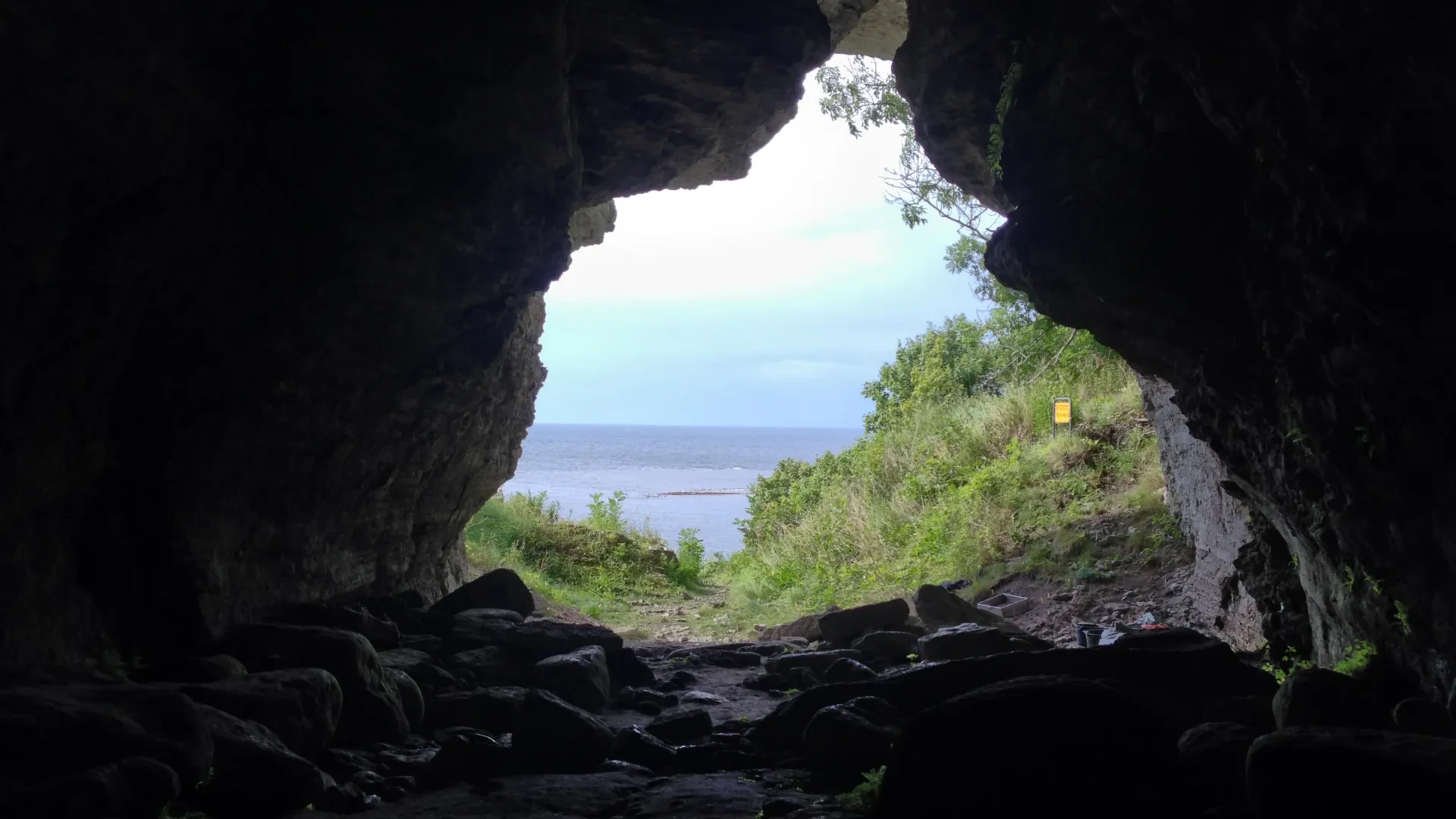
At the heart of this activity lies Stora Förvar, a deep and historically rich cave site on the island that has long fascinated archaeologists. Over centuries of seasonal occupation, the cave accumulated deep stratigraphical layers containing the refuse, tools, and skeletal remains left behind by ancient human visitors.
It was within these ancient sediments that researchers uncovered the provocative canid remains. Given the geographic isolation of Stora Karlsö and its lack of native land-dwelling mammals, the presence of large carnivores immediately raised profound ecological questions. Wolves cannot swim miles of open Baltic sea on their own volition, nor could they have populated the island via ancient land bridges during this era. The chronological data extracted from the cave layers securely locked the specimens into a window spanning the late Neolithic through the Bronze Age, confirming that these animals shared the island environment contemporaneously with human seal-hunting populations.
The Maritime Voyage
Establishing the chronology of the remains paved the way for reconstructing how the wolves arrived at their isolated sanctuary. The scientific consensus is definitive: human intervention was the sole mechanism capable of placing these apex predators on Stora Karlsö.
Archaeological evidence indicates that Neolithic and Bronze Age groups in the region possessed sophisticated watercraft—sturdy wooden boats capable of transporting not only human crews and hunting gear, but also live cargo. Transporting a wolf across open water requires deliberate intent. Whether captured as dependent pups or restrained as mature animals, these wolves were subjected to maritime transit by human handlers. This logistical feat underscores a level of control, resource allocation, and purposeful animal management that far exceeds casual interaction, pointing to an intentional human strategy during the Stone and Bronze Ages.
Supporting Context & Metrics
Geographic and Ecological Constraints
To fully appreciate the anomaly of the Stora Karlsö wolf discovery, one must examine the rigorous ecological metrics of the region:
- Island Area: Stora Karlsö spans an area of approximately 2.5 square kilometers.
- Terrestrial Mammal Baseline: The island historically lacks native land mammals due to its complete post-glacial isolation via open sea.
- Distance to Mainland: Situated in the Baltic Sea off the coast of Gotland, Sweden, the island requires traversing significant maritime distances—well beyond the swimming endurance or natural dispersal capabilities of terrestrial canids.
- Temporal Span: The identified wolf remains date back approximately 3,000 to 5,000 years, placing them firmly within the Neolithic and Bronze Age cultural horizons.
Dietary Convergence and Isotope Analysis
To determine how these wolves sustained themselves on an island devoid of terrestrial game like deer, elk, or wild boar, scientists employed stable isotope analysis. This laboratory technique examines the chemical signatures preserved in tooth enamel and bone collagen, offering a detailed dietary profile of an organism over the course of its lifetime.
The isotopic results provided a stark revelation: the Stora Karlsö wolves subsisted predominantly on marine proteins. Their nutritional intake closely mirrored that of the human seal hunters inhabiting the Stora Förvar cave. Rather than hunting non-existent terrestrial herbivores, these wolves were consuming seals, fish, and other marine resources. In an island setting where wild prey for a wolf was virtually non-existent, this dietary convergence strongly implies that the animals were being provisioned by human hands—fed scraps from the seal-hunting operations or deliberately maintained on shared nutritional supplies.
Morphological and Genetic Anomalies
Physical and genetic examinations of the remains further distanced these specimens from wild mainland wolf populations:
- Genetic Classification: Advanced ancient DNA (aDNA) sequencing confirmed that both primary specimens were 100% wolf, bearing no genetic admixture or ancestry tracing back to domestic dogs (Canis lupus familiaris). Their genetic profile was indistinguishable from other ancient Eurasian wolves.
- Stature and Diminishment: Osteological measurements revealed that the Stora Karlsö wolves were noticeably smaller in body size compared to their contemporary mainland counterparts—a morphological shift frequently observed in isolated island populations or animals subjected to dietary constraints and human-mediated environments.
- Genetic Bottlenecks: Genomic profiling of the most complete genome recovered from the site exposed exceptionally low genetic diversity. This metric—falling below levels typically observed in wild ancient wolf populations—mirrors patterns found in heavily bottlenecked populations or selectively bred, captive organisms.
- Evidence of Care: One particular Bronze Age specimen bore the distinct skeletal signatures of a severe, debilitating limb injury. Under natural conditions in the wild, such a fracture would render a wolf incapable of hunting, resulting in starvation or predation. The fact that this animal survived long enough for the bone to heal and remodel indicates that it received direct care, protection, and provisioning from human keepers.
Official Statements
The international research team emphasized the paradigm-shifting nature of their findings across multiple institutional releases, highlighting how the discovery upends long-held assumptions regarding human-canine history.
Dr. Linus Girdland-Flink (University of Aberdeen, Lead Author):
"The discovery of these wolves on a remote island is completely unexpected. Not only did they have ancestry indistinguishable from other Eurasian wolves, but they seemed to be living alongside humans, eating their food, and in a place they could only have reached by boat. This paints a complex picture of the relationship between humans and wolves in the past."
Pontus Skoglund (Ancient Genomics Laboratory, Francis Crick Institute, Senior Author):
"It was a complete surprise to see that it was a wolf and not a dog. This is a provocative case that raises the possibility that in certain environments, humans were able to keep wolves in their settlements, and found value in doing so."
Anders Bergström (University of East Anglia, Co-Lead Author):
"The genetic data is fascinating. We found that the wolf with the most complete genome had low genetic diversity, lower than any other ancient wolf we’ve seen. This is similar to what you see in isolated or bottlenecked populations, or in domesticated organisms. While we can’t rule out that these wolves had low genetic diversity for natural reasons, it suggests that humans were interacting with and managing wolves in ways we hadn’t previously considered."
Jan Storå (Department of Osteoarchaeology, Stockholm University):
"The combination of data has revealed new and very unexpected perspectives on Stone Age and Bronze Age human-animal interactions in general and specifically concerning wolves and also dogs."
Future Outlook
The identification of managed, captive-style wolves on Stora Karlsö opens expansive new avenues for archaeological and genetic research. For decades, the dominant academic paradigm treated prehistoric canids through a binary lens: animals were either fully wild wolves to be avoided or hunted, or they were domesticated dogs on an inevitable march toward complete human integration.
This discovery shatters that binary, introducing the concept of "unsuccessful" or non-linear domestication experiments. It raises provocative questions that future investigations must address:
- Widespread Phenomenon or Isolated Anomaly? Researchers are now tasked with re-evaluating archaeological collections from other isolated island and mainland sites across Europe and Eurasia to determine whether keeping wild wolves in human settlements was a widespread cultural practice during the Neolithic and Bronze Ages rather than an isolated Baltic quirk.
- Technological and Behavioral Motivations: Why did ancient seal hunters invest the time, risk, and maritime resources to transport dangerous apex predators across the sea? Hypotheses range from utilitarian roles—such as guarding camps, assisting in specialized hunting tasks, or providing companionship—to symbolic, ritualistic, or economic purposes that modern science is only beginning to fathom.
- Advanced Genomic Mapping: As ancient DNA extraction techniques continue to evolve, high-resolution sequencing of additional canid remains will allow scientists to trace fine-scale genealogical relationships among these captive wolves, measuring the precise degree of human genetic selection versus natural genetic drift in closed island environments.
Ultimately, the wolves of Stora Karlsö represent a ghostly echo from a forgotten era of human-animal relations. They stand as a testament to an ancient, experimental epoch where prehistoric communities tested the boundaries of coexistence with the planet’s most formidable predators—leaving behind a legacy written in bone and DNA that continues to challenge our understanding of our own evolutionary history.