
Executive Overview
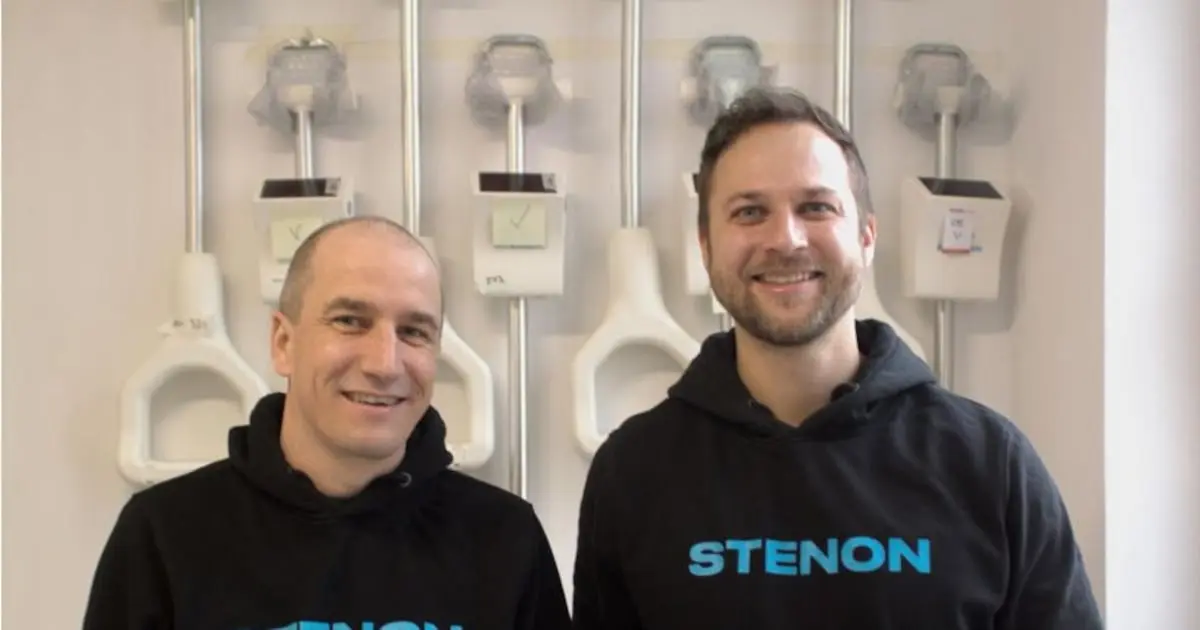
For the vast majority of university students, the undergraduate and postgraduate dissertation process is a grueling academic hurdle—a protracted exercise defined by sleep-deprived nights, excessive caffeine consumption, and an exhausting trudge toward a looming graduation deadline. Yet, for Niels Grabbert, a Berlin-educated technologist, this traditional academic rite of passage served as the unexpected incubation ground for a profound technological breakthrough.
While completing his undergraduate studies, Grabbert wrote his thesis in English purely as a vehicle to master a second language. However, when his father was diagnosed with cancer during his master’s program, Grabbert shifted his academic focus toward a deeply personal and life-altering challenge: engineering a advanced blood sensor designed to detect trace biomarkers capable of supporting complex oncology treatments.
That master’s thesis, spanning more than 100 dense pages, ultimately laid the rigorous technical and scientific foundations for Stenon—an agritech pioneer specializing in real-time soil data intelligence. Recently, Stenon announced a successful €18 million Series B funding round, capital earmarked to accelerate the global expansion of its revolutionary soil-sensing technology.
At first glance, the scientific leap from human oncology to agricultural soil science appears vast, if not entirely disconnected. However, from Grabbert’s analytical perspective, both human blood and arable soil share striking physiological and chemical characteristics. Both are extraordinarily complex, fluid environments teeming with a vast array of intricate biological and chemical signals—where some of the most critical indicators exist only at exceedingly low, difficult-to-detect concentrations.
By taking the highly sensitive spectroscopic range he originally engineered for identifying cancer biomarkers and meticulously recalibrating it for agricultural applications, Grabbert solved one of the industry’s most elusive puzzles: measuring soil nitrogen accurately, rapidly, and directly in the field. Widely regarded as the "holy grail" of modern agriculture due to the profound technical hurdles of detecting it in situ, nitrogen management is central to both farm profitability and environmental sustainability.
With its flagship hardware-software platform, FarmLab—affectionately dubbed "the spade" by working farmers—Stenon is successfully bridging the gap between cutting-edge laboratory science and rugged agronomic field execution. As the company closes its latest €18 million financing round led by impact investment firm Pymwymic, Stenon stands at the vanguard of a technological revolution poised to redefine global farming economics and elevate environmental stewardship on a planetary scale.
Detailed Chronology: The Evolution of an Agritech Disruptor
The Academic Genesis: From Linguistics to Oncology
The story of Stenon does not begin in a venture capital boardroom or an elite agricultural research station; it begins in the disciplined, analytical environment of a Berlin university laboratory. Niels Grabbert’s academic journey was characterized by a pragmatic willingness to tackle ambitious, cross-disciplinary problems. His initial foray into thesis-writing was an exercise in linguistic immersion, tackling his undergraduate thesis entirely in English to secure fluency.
However, the inflection point for his entrepreneurial career arrived during his master’s studies, triggered by the personal trauma of his father’s cancer diagnosis. Confronted with the limitations of existing diagnostic tools, Grabbert dedicated his research to the detection of elusive biological markers in blood. This required pushing the boundaries of spectroscopic detection—the science of interacting matter and radiated energy—to identify minute chemical concentrations amidst complex organic interference.
While the immediate goal of the research was medical, the underlying physics and engineering principles proved remarkably versatile. Grabbert realized that the technical challenge of isolating faint biochemical signals in human blood was fundamentally identical to the challenge of measuring nutrient concentrations within heterogeneous, moisture-rich, and chemically volatile agricultural soils.
Identifying the Agricultural "Holy Grail"
Upon completing his master’s degree, Grabbert turned his analytical eye toward the agricultural sector, quickly identifying a glaring technological void. For decades, the foundational methodology for understanding soil chemistry—particularly nitrogen, phosphorus, and potassium levels—had remained fundamentally archaic. Farmers would traverse their fields, collect physical core samples, package them, and ship them off to distant regional laboratories.
This traditional workflow introduced critical bottlenecks. Results often took anywhere from several days to multiple weeks to return. More importantly, because soil composition shifts dynamically with weather patterns, microbial activity, and crop uptake, lab results delivered weeks after sample collection frequently bore little resemblance to the actual chemical realities of the field by the time fertilizer applications commenced.
"There was a lot of research done, but all this research was not really going somewhere," Grabbert reflects, noting the stark disconnect between academic soil science and practical, on-farm execution.
Recognizing that conventional soil testing was fundamentally broken, Grabbert pivoted his spectroscopic innovations toward agriculture. He focused his sights on soil nitrogen—widely acknowledged by agronomists as the holy grail of crop nutrition. Nitrogen is essential for vegetative growth and maximizing crop yields, yet it is notoriously difficult to measure accurately in real time because it exists in multiple chemical forms that fluctuate rapidly in response to environmental stimuli.
The Birth of FarmLab and Field Testing
To solve this deep-seated industry pain point, Grabbert and his team engineered FarmLab. Eschewing the traditional model of off-site laboratory assays, Stenon conceptualized an integrated hardware-software ecosystem designed to bring the analytical power of a modern chemistry lab directly into the hands of the grower in the middle of a working field.
The physical device itself is disarmingly simple in appearance, designed for rugged field use. Farmers and agronomists insert the sensor-laden probe directly into the soil—earning it the colloquial moniker "the spade" among early adopters. As the probe penetrates the earth, a sophisticated array of optical and electrical sensors immediately goes to work, measuring critical parameters including nitrogen content, organic matter composition, soil temperature, and moisture levels.
Embedded software algorithms and proprietary artificial intelligence instantly translate these raw spectroscopic measurements into actionable, localized insights. Rather than staring at indecipherable spectral graphs, farmers receive clear, precise recommendations regarding optimal fertilizer application rates tailored to micro-zones within their fields.
Following rigorous prototyping, Stenon embarked on extensive, multi-year field trials across a remarkably diverse portfolio of global crops, including wheat, corn, cotton, coffee, salads, and specialized vegetables. The empirical data gathered from these trials demonstrated transformative outcomes for growers: farmers utilizing the FarmLab system routinely observed net profit increases ranging between $65 and $120 per hectare. These financial gains were underpinned by measurable agronomic benefits, including yield boosts of 2% to 8% and dramatic reductions in synthetic fertilizer usage of up to 40%.
Supporting Context & Metrics: Why Speed and Precision Matter
The Chronological Deficit of Traditional Testing
To fully appreciate the commercial and environmental disruption represented by Stenon’s technology, one must examine the profound economic and operational costs of time delays in agricultural supply chains. In modern industrial farming, timing is everything. Crop cycles are tightly choreographed, weather windows for field operations are notoriously narrow, and input costs—particularly synthetic nitrogen fertilizers—represent one of the single largest operational expenses for grain and row-crop producers.
In conventional agricultural frameworks, the timeline from sampling to application is chronically sluggish. A farmer operating in the United States or Europe typically collects composite soil samples during the autumn harvest season. These samples are dispatched to commercial laboratories, processed over the winter, and returned months later. Based on these historical, aged datasets, fertilizer purchasing and spreading strategies are mapped out for the following spring.
This systemic time lag introduces massive inefficiencies. Soils are dynamic biological systems; nitrogen leaches out with winter rains, volatilizes into the atmosphere, or is locked up by microbial immobilization. Consequently, applying fertilizers in spring based on autumn data is akin to navigating a high-speed vessel using a map drawn months prior in shifting waters.
The 20-Second Revolution
Stenon’s FarmLab system eradicates this temporal deficit entirely. By decentralizing the analytical process, the device reduces the turnaround time from weeks to mere seconds. When an agronomist or farmer pushes the probe into the soil, raw data is captured, processed, and translated into a precise fertilizer recommendation within 20 seconds.
By repeating this rapid sampling process across multiple GPS-tagged locations within a field, users can instantly generate high-resolution spatial maps detailing minute variations in soil requirements.
"In the morning, somebody can go into the field and take a measurement. After lunch, the fertilizer spreaders are already arriving and taking our data to apply fertilizer to the field," Grabbert explains, illustrating the seamless, real-time integration of data science and mechanical field application.
This unprecedented speed unlocks entirely new operational paradigms, particularly in intensive agricultural geographies where conventional laboratory infrastructure is either entirely absent or structurally incapable of matching the breakneck pace of modern farming.
Navigating Global Agricultural Realities: Brazil and the United States
The operational necessity of real-time soil intelligence varies significantly by region, with different markets presenting unique logistical challenges that Stenon is uniquely positioned to solve.
Take Brazil, for example—one of the world’s agricultural powerhouses. Brazilian farming operations are characterized by immense scale, highly intensive multi-cropping systems, and rapid transitions between crop cycles. Growers often harvest one major crop and immediately prepare the soil for the next planting within a matter of days. In such high-tempo environments, waiting one to two weeks for conventional laboratory soil assays is completely unviable.
"Brazil is so quick in applying a new crop cycle, they need the data on the spot. They cannot wait for one or two weeks otherwise it’s already too late," Grabbert notes. For Brazilian producers, Stenon’s instant readouts provide the operational agility required to maintain continuous, highly productive cropping cycles without flying blind.
Conversely, the North American market presents a different structural challenge. In the United States, vast acreage and severe seasonal labor constraints mean that farmers often struggle to find the operational bandwidth to conduct comprehensive soil sampling during the frantic weeks of the spring planting season. As a result, growers have historically defaulted to sub-optimal autumn testing regimes. FarmLab offers North American producers a streamlined pathway to bypass seasonal sampling bottlenecks, enabling in-season, variable-rate nitrogen adjustments that protect profit margins while dramatically curbing environmental runoff.
Official Statements and Industry Validation
The commercial viability and broader socio-environmental impact of Stenon’s technology have garnered significant attention from the institutional investment community. The company’s recent €18 million Series B funding round was successfully led by Pymwymic, a prominent European impact venture capital firm known for backing enterprises that generate measurable ecological dividends alongside robust financial returns.
Elaborating on the strategic rationale behind the investment, representatives from Pymwymic highlighted the unique market positioning of Stenon’s hardware-software platform. According to the investment firm, Stenon occupies a "rare intersection where improving soil health and strengthening farm economics go hand in hand."
For decades, the prevailing narrative in agricultural economics posited a zero-sum trade-off between ecological conservation and farm profitability. Environmental mandates—such as reducing synthetic fertilizer runoff to protect watersheds and curb greenhouse gas emissions—were frequently viewed by working farmers as costly regulatory burdens that squeezed already tight profit margins.
Stenon disrupts this false dichotomy. By providing hyper-local, real-time measurements of soil nitrogen and organic matter, FarmLab enables farmers to surgically optimize their fertilizer inputs. The financial outcome is unambiguous: farmers slash their largest variable input expense (synthetic nitrogen fertilizers) by up to 40%, while simultaneously enjoying yield boosts of 2% to 8%. Ecologically, this massive reduction in over-fertilization dramatically curtails agricultural runoff, mitigating groundwater contamination and reducing nitrous oxide emissions—a potent greenhouse gas.
This powerful dual-value proposition—simultaneously driving bottom-line profitability and measurable regenerative outcomes—was a critical factor in securing the €18 million Series B injection, positioning Stenon as a marquee asset in the burgeoning global agritech landscape.
Future Outlook: Scaling, Automation, and the Competitive Horizon
Overcoming the Labor and Scale Bottleneck
Despite the technological brilliance of a 20-second soil reading, Stenon faces a formidable operational hurdle that confronts virtually all hardware-enabled agritech enterprises: physical scale.
While generating a soil analysis takes less than half a minute, physically traversing thousands of acres of farmland to collect a statistically significant volume of data points remains an inherently labor-intensive undertaking. On massive industrial farm operations in the American Midwest or the Brazilian Cerrado, manual probing across expansive acreage can strain farm labor resources.
To address this challenge pragmatically, Stenon has cultivated a hybrid go-to-market ecosystem. In key strategic markets, the company has partnered with established agricultural service providers and input distributors. These partners offer comprehensive measurement services, deploying both Stenon’s FarmLab devices and the necessary labor to map fields on behalf of the grower. In other instances, progressive farmers integrate the devices directly into their existing scouting and agronomic workflows, utilizing their own field personnel.
However, Stenon maintains a clear-eyed understanding of its core competencies and organizational limitations. The company is fundamentally a deep-tech software and hardware engineering firm, not a massive localized service contractor.
"We are a tech company. We cannot afford 100 people outside on the fields. It’s not our core," Grabbert candidly admits.
The Automation Imperative
Recognizing that reliance on manual probing represents a natural ceiling on operational growth, Stenon is actively engineering the next evolutionary leap in its product roadmap. The company is slated to launch a brand-new product later this year specifically designed to address the high volume of manual labor required to collect comprehensive field measurements at scale.
While Grabbert remains tight-lipped regarding the exact engineering specifications of the upcoming release, he hints that the innovation will introduce a deeply automated and integrated approach to soil data collection. Industry insiders speculate this could involve autonomous robotic deployment, drone integration, or advanced tractor-mounted sensor arrays capable of gathering high-density spectroscopic data continuously during routine field operations without requiring manual insertion.
Anticipating a Crowded Horizon
As Stenon utilizes its newly acquired €18 million capital war chest to expand its global footprint, the competitive landscape is shifting beneath its feet. Currently, Stenon enjoys a privileged market position with relatively few direct, technologically equivalent competitors capable of matching its real-time, in-field spectroscopic nitrogen sensing capabilities.
However, Grabbert harbors no illusions regarding the longevity of this technological moat. The intersection of artificial intelligence, advanced photonics, and sustainable agriculture is attracting an influx of venture capital and R&D talent globally. Grabbert confidently projects that within the next five years, rival enterprises will rapidly close the gap, intensifying competition across the agritech sector.
"Within the next five years, other companies will be pacing up with us for sure," Grabbert acknowledges.
This looming market maturation sets the stage for a critical window of opportunity. Stenon has a finite timeframe to aggressively scale its commercial operations, cement strategic distribution partnerships, and convince a traditionally conservative agricultural base that FarmLab is not merely an interesting gadget, but an indispensable operational foundation for modern farming.
From an undergraduate linguistic exercise to a master’s thesis born of personal tragedy, and onward to an international agritech enterprise backed by millions in institutional capital, Niels Grabbert’s journey mirrors the very technology he created: precise, resilient, and relentlessly driving toward a more sustainable future. As Stenon prepares to unveil its next wave of automated innovations, the agricultural world watches closely to see how far the humble spade can carry the future of global food production.