
Executive Overview
Long before the advent of agriculture, the establishment of permanent settlements, or the written word, humanity forged its most profound ecological alliance. While modern culture casually refers to canines as "man’s best friend," this shorthand obscures a complex, dynamic, and deeply reciprocal evolutionary journey that spans at least 14,000 to 15,000 years—and potentially much longer. Archaeological excavations across the globe reveal ancient canine remains intentionally interred alongside humans, while prehistoric rock art on every continent testifies to a partnership that has fundamentally shaped human civilization.
In his groundbreaking new volume, First Dogs: Hunter-Gatherers and their Canine Companions from Prehistory to the Present (Routledge), archaeologist Professor Peter Mitchell challenges the conventional narrative of domestication. Rather than depicting early humans as absolute masters who unilaterally captured and subdued wild wolves, Mitchell presents a compelling case for a gradual, cooperative convergence. Early hunter-gatherer communities and ancient canids likely entered into this relationship as relatively equal participants.
This intricate co-evolutionary partnership transformed a forest-dwelling apex predator into hundreds of distinct modern breeds—ranging from pocket-sized Chihuahuas to waist-high Great Danes. Across millennia, dogs served not merely as passive pets, but as indispensable survival partners. They hunted alongside humans, guarded hearths, transported heavy loads, managed livestock, and provided vital emotional companionship.
However, the geographic and physiological diversity of the modern canine is not solely the result of human whimsy. It is a masterclass in environmental adaptation. From the oxygen-starved heights of the Tibetan Plateau to the freezing expanses of the Arctic and the dense canopies of tropical rainforests, dogs changed biologically alongside the human societies they inhabited. Crucially, this influence ran in both directions. As archaeological, genetic, and ethnographic data increasingly demonstrate, humans and dogs have mutually altered one another’s biology, culture, and survival strategies for millennia.
Detailed Chronology of Canine Domestication
Understanding the timeline of canine evolution requires peering deep into the Pleistocene epoch, long before any other plant or animal species was brought under human control.
The Prehistoric Convergence (15,000+ Years Ago)
For decades, popular science framed canine domestication as a rapid event: ancient hunter-gatherers captured wolf pups, hand-reared them, and selectively bred the friendliest specimens. Professor Mitchell’s work, supported by a growing body of zooarchaeological and genetic research, reframes this transition as a protracted, multi-generational mosaic.
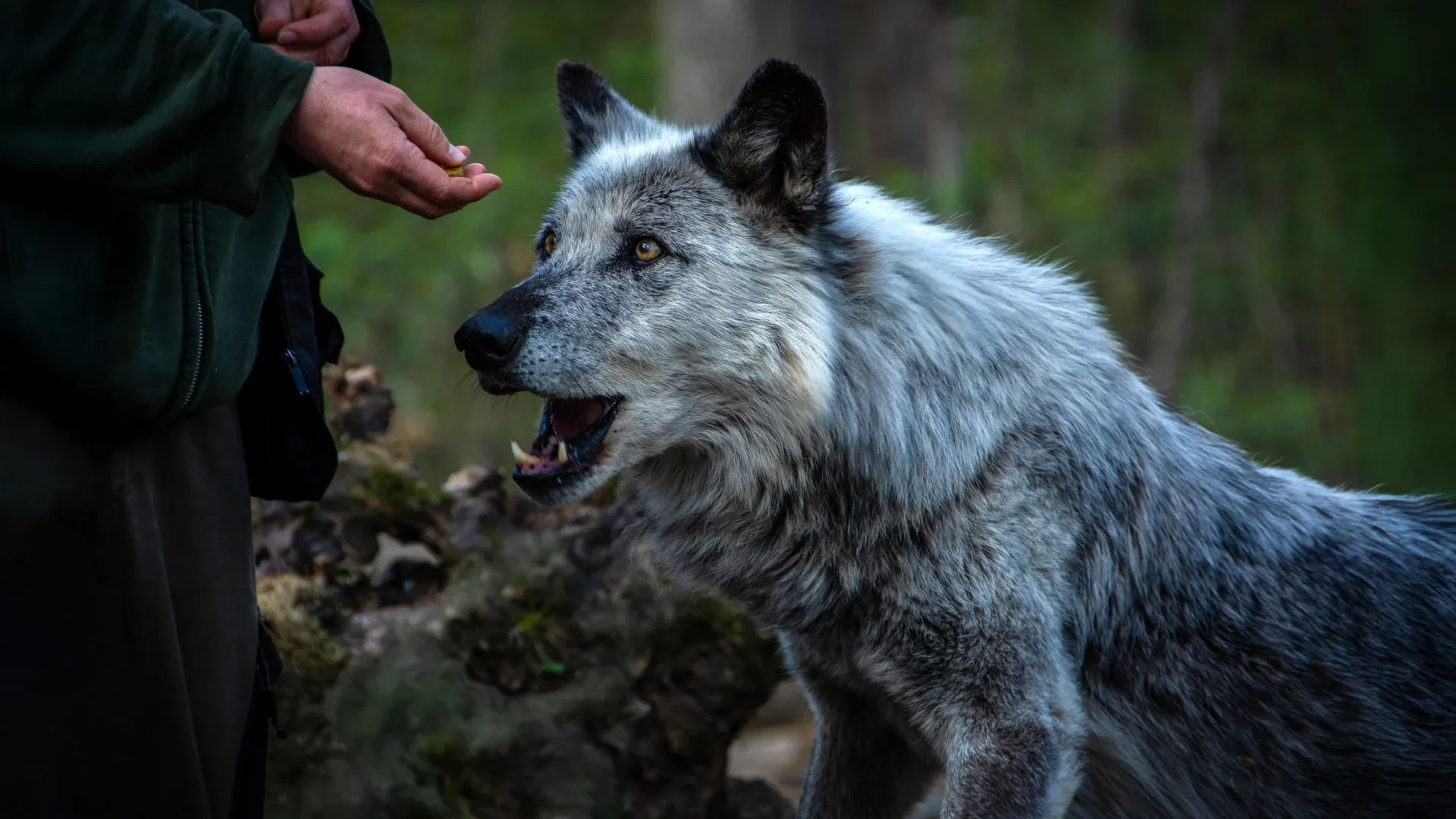
Rather than a single threshold event, the transformation from gray wolf (Canis lupus) to dog (Canis lupus familiaris) was a porous, long-term entwinement. Opportunistic wolves likely gravitated toward human campsites to scavenge for high-calorie refuse, while humans tolerated—and eventually valued—these vigilant, sharp-eared shadows. Over thousands of years, this ecological proximity bridged the behavioral gap between two distinct apex predators.
The Hunter-Gatherer Era (14,000 to 5,000 Years Ago)
As human populations expanded and colonized diverse ecosystems, their canine companions traveled with them. Archaeological evidence from sites across Eurasia and the Americas shows that by 14,000 years ago, dogs were firmly embedded in human social structures. Graves from this era frequently feature human-canine joint burials, indicating that dogs held emotional and symbolic value within hunter-gatherer cosmology long before the rise of agricultural empires.
During this vast epoch, distinct regional types began to emerge organically. Without the intervention of modern kennel clubs or written breed standards, local environments and subsistence strategies acted as natural filters. Dogs that possessed traits beneficial to their human groups—such as acute scenting abilities in the tropics or heavy coats in the arctic—survived and reproduced, laying the groundwork for the astonishing morphological diversity seen today.
The Colonial Disruption and Genetic Legacy (Recent Centuries)
The millennia-long tapestry of regional dog lineages faced a massive disruption during the era of European colonial expansion. As colonizers traversed the globe, European dog breeds were introduced to foreign ecosystems, frequently interbreeding with or outright replacing indigenous canine populations.
Despite this widespread genetic replacement, traces of ancient regional lineages persist in modern genetic data. These surviving signatures provide contemporary researchers with invaluable clues regarding the deep history of human migration and cultural exchange, proving that the bones beneath our feet hold the history of our ancestors’ greatest alliance.
Supporting Context & Metrics: Adaptation Across Extreme Environments
The global explosion of canine diversity is a testament to natural and artificial selection operating in tandem across wildly disparate ecological niches. Dogs did not simply accompany humans into extreme environments; they evolved the physiological machinery required to survive them.
1. High-Altitude Survival on the Tibetan Plateau
Life at extreme elevations presents a severe physiological challenge due to chronic hypoxia—oxygen-poor air that tests the limits of mammalian cardiovascular systems. Intriguingly, on the Tibetan Plateau, dogs and human populations developed parallel genetic solutions to this environmental pressure.
Genetic sequencing has identified specific gene variants in Tibetan dogs that allow them to function efficiently in low-oxygen environments. These adaptations closely mirror the genetic changes found in indigenous human populations living in the same unforgiving region. Until these genetic adaptations were locked in, hypoxia acted as a hard physiological ceiling on canine presence at high altitudes.
2. The Arctic: Mechanics of Survival
In the high Arctic, the human-canine partnership evolved into an absolute prerequisite for survival. Indigenous Arctic communities developed sophisticated, highly specialized cultures anchored by dog sledding.
Zooarchaeological analyses of ancient canine remains from the far north reveal distinct skeletal markers of this labor-intensive lifestyle:
- Vertebral Stress Patterns: Repeated physical strain across frozen terrain left unique patterns of stress and calcification along the spinal columns of ancient sled dogs.
- Robust Appendicular Skeletons: Limb bones show hyper-dense cortical architecture capable of absorbing the immense mechanical loads associated with hauling sleds across pack ice.
- Isotopic Dietary Overlap: Stable isotope studies of ancient bone collagen demonstrate that in coastal Arctic regions, humans and dogs maintained nearly identical diets dominated by marine mammals and fish, highlighting an unprecedented level of shared subsistence.
3. The Tropics: Agility and Precision Hunting
Conversely, hunter-gatherer communities in the tropical rainforests of South America and Southeast Asia forged a completely different canine archetype. Rather than heavy-boned haulers, tropical dogs evolved into lean, highly agile trackers.
Operating in dense undergrowth required speed, silence, and exceptional maneuverability. Ethnographic data indicates that Indigenous groups in these regions actively managed breeding lineages, selecting for hyper-focused hunting traits and occasionally outcrossing domestic dogs with wild canid species to reinforce stamina and scent-tracking capabilities.
4. Cultural Breeding: Woolly Dogs of the Northwest Coast
Adaptation was not driven exclusively by climate and hunting needs. Cultural practices played an equally powerful role. Along the Northwest Coast of North America, certain Indigenous communities selectively bred small, specialized dogs with dense, woolly undercoats. Rather than using these animals for hunting or transport, communities sheared them to harvest their hair, weaving the fibers into ceremonial blankets and textiles.
5. The Invisible Barrier: Disease and Global Spread
Environmental harshness was not the only hurdle facing canine populations. Recent historical and epidemiological research highlights the role of vector-borne diseases in shaping the global distribution of dogs.
In sub-Saharan Africa, pathogens such as trypanosomiasis (sleeping sickness) and ehrlichiosis presented severe biological obstacles. Because dogs originated as temperate-to-Arctic northern hemisphere species, these tropical disease vectors likely delayed their southward expansion or limited their populations in certain equatorial zones compared to temperate regions. Disease thus acted as a silent evolutionary gatekeeper.
Official Statements and Expert Insights
To understand the true weight of this history, researchers emphasize that the human-dog relationship must be viewed as an ongoing, reciprocal dialogue rather than a finished product of human engineering.
Reflecting on the deep-rooted connections between early societies and canids, Professor Peter Mitchell notes:
"The connections between dogs on the one paw and people dependent on wild plant and animal resources on the other are ancient, diverse, and profound."
Addressing the evolutionary mechanics of the split between wolves and early canids, Mitchell expands on the gradual nature of the process:
"The process whereby grey wolves became dogs is ongoing, not one marked by a single threshold event. It was likely both long and drawn out."
Commenting on the power dynamics of the relationship over time, Mitchell adds:
"The relationship thus constructed has been a joint effort, if one where, especially in the West and over recent centuries, humans have increasingly come to dominate in determining its shape and direction. Nevertheless, the way dogs and humans relate—and have related—to each other has value precisely because of their mutual, complex entwinement with each other."
Researchers studying high-altitude adaptation echo these sentiments regarding physiological timing. Discussing the challenges faced by dogs entering the Tibetan Plateau, Mitchell observes:
"We do not know when dogs first joined them, and the genetic variants needed to thrive there may have been quickly acquired, but until that was achieved hypoxia presumably acted as a constraint on canine presence."
Future Outlook: What Lies Ahead for Canine Science and Human Society?
As we look toward the future, the study of canine evolution stands at an exciting crossroads. The convergence of paleogenomics, advanced zooarchaeology, and isotope analysis is opening unprecedented windows into the deep past.
1. Unlocking the Genetic Archives
Modern DNA extraction techniques are rapidly improving, allowing scientists to sequence the genomes of ancient dogs from archaeological sites that were previously considered too degraded for analysis. In the coming decade, researchers anticipate mapping a more complete family tree of ancient canine lineages, shedding light on the exact genetic pathways that allowed dogs to transition from wild forest carnivores to specialized human companions.
2. Rethinking Animal Welfare and Conservation
Understanding that dogs evolved as active participants in human survival—rather than passive toys or domesticated commodities—has profound implications for modern animal welfare. Recognizing the deep behavioral and physical needs encoded in canine DNA helps veterinarians, ethologists, and pet owners better cater to the instinctual drives of contemporary breeds. Whether it is the endurance needs of northern working dogs or the scent-tracking urges of hounds, viewing dogs through an evolutionary lens encourages a more respectful, empathetic approach to pet ownership.
3. The Ongoing Evolution of "Man’s Best Friend"
Professor Mitchell reminds us that the transformation of the gray wolf into the domestic dog is not a closed chapter. It is an ongoing, dynamic process. As human societies urbanize, migrate to new frontiers, and face contemporary ecological challenges, our canine companions continue to adapt alongside us.
Ultimately, the 15,000-year partnership between humans and dogs remains one of the most remarkable evolutionary experiments in planetary history. It is a joint venture built on mutual survival, shared environments, and a profound, enduring psychological bond that continues to define what it means to be human.