
Executive Overview
For decades, the standard narrative surrounding wildlife rescue has followed a comforting and universally accepted script: an animal is saved from the clutches of the illegal wildlife trade, rehabilitated away from human influence, and ultimately triumphantly returned to its native habitat. It is a storyline celebrated in documentaries, heavily pushed by animal welfare campaigns, and demanded by an emotionally invested public. Yet, a groundbreaking and sobering scientific study reveals a harsh, uncomfortable truth that conservationists have long feared: returning rescued wildlife to the wild does not always end in success. In some cases, the natural habitat becomes what researchers starkly describe as a "death trap."
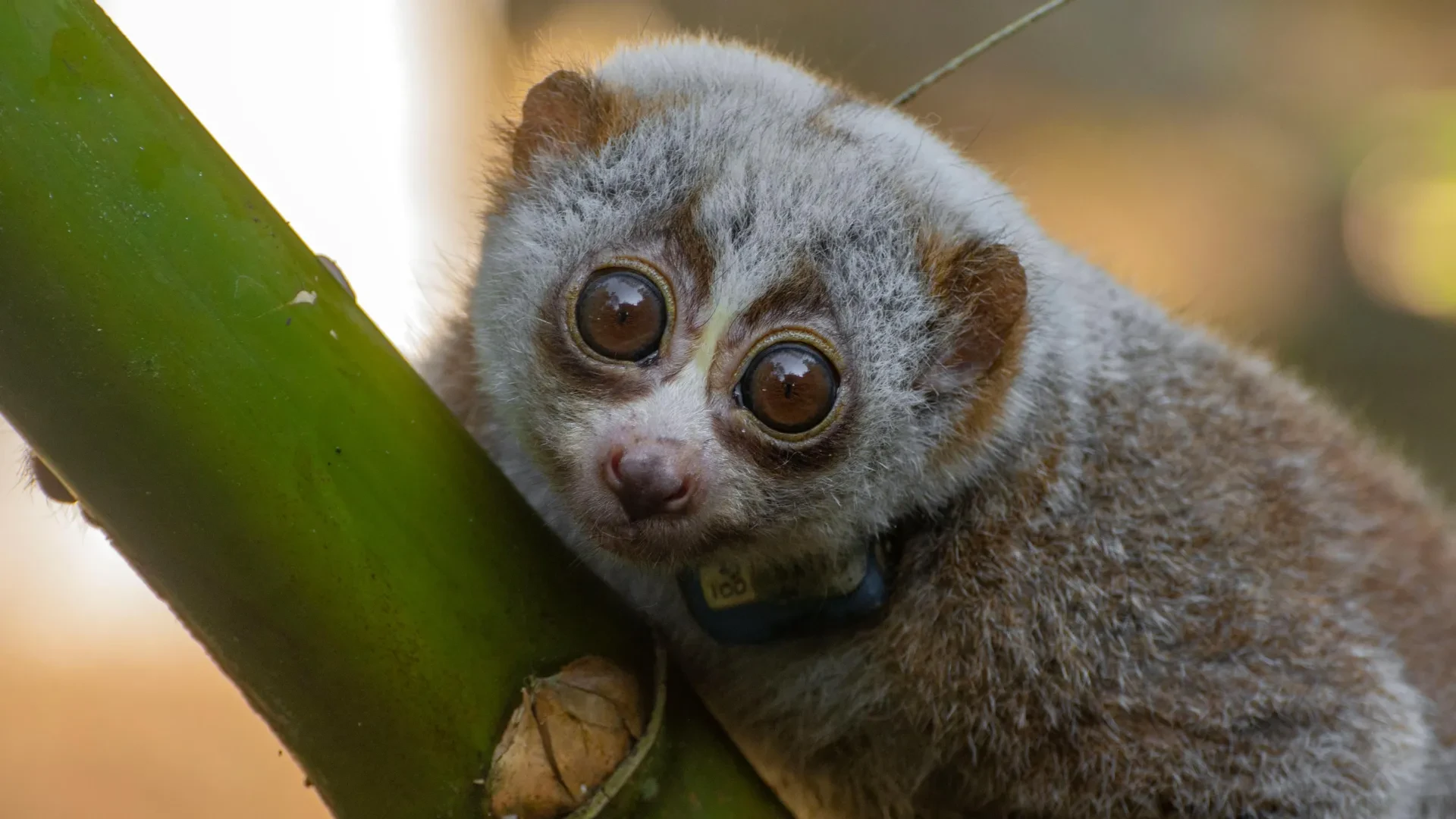
Published in the esteemed journal Global Ecology and Conservation, the research was spearheaded by renowned primatologist Professor Anna Nekaris OBE of Anglia Ruskin University, alongside a collaborative team of international researchers from the conservation group Plumploris e.V. and the University of Western Australia. Their investigative lens focused on the Bengal slow loris (Nycticebus bengalensis), a small, nocturnal primate caught in the crosshairs of the illegal pet trade. By tracking a cohort of rescued and released Bengal slow lorises in the dense forests of northeastern Bangladesh, the research team uncovered a devastating mortality rate that challenges foundational assumptions about wildlife rehabilitation and reintroduction.
The findings indicate that releasing captive-raised or rescued animals into habitats without meticulous ecological planning can lead to catastrophic outcomes. Out of nine radio-collared Bengal slow lorises returned to a protected national park, a staggering seven perished shortly after release. The primary cause of death was not starvation, disease, or predation by traditional carnivores, but rather lethal territorial combat with wild conspecifics—other slow lorises already defending their established home ranges.
This investigative deep dive explores the mechanics of this conservation crisis. It examines how well-meaning rescue efforts can inadvertently spell doom for vulnerable species, highlights the unique biological traits that make slow lorises particularly susceptible to reintroduction failure, and questions the systemic flaws in current global wildlife management practices. As the wildlife trade continues to surge, this study serves as a clarion call for the conservation community to pivot from rushed, optics-driven releases to data-driven, highly regulated scientific rehabilitation strategies.
Detailed Chronology and Field Investigation
The journey from captivity back to the wild is fraught with invisible perils, a reality laid bare by the meticulous tracking of nine Bengal slow lorises in northeastern Bangladesh. To understand the immediate and long-term impacts of release protocols, researchers deployed advanced radio-collometers to monitor the daily movements, territorial behaviors, and survival rates of the subjects. The selected release site was a prominent national park that had historically served as a dumping ground or designated release area for various rescued wildlife species.
What unfolded over the ensuing months was a tragedy of territorial intolerance.
The First Ten Days: A Fatal Welcome
The vulnerability of the newly released lorises became apparent almost immediately. Within the first ten days following their release, three of the nine animals were dead. Plunged into a complex, pre-existing social hierarchy of wild forest dwellers, the captives lacked the nuanced spatial awareness, local ecological knowledge, and stealth required to navigate occupied territory.
Without established sleeping sites or knowledge of immediate food distribution networks, the released lorises were forced to wander extensively. This heightened movement exposed them directly to the resident populations who fiercely defended their territories from intruders.
The Six-Month Fallout
As the weeks pressed on, the grim toll continued to mount. By the six-month mark, an additional four animals had perished, bringing the total number of deaths to seven out of nine. Researchers successfully recovered four of the seven bodies for post-mortem examinations. The physical evidence left little room for interpretation: every single recovered carcass bore severe, unmistakable trauma indicative of violent intraspecific aggression.
The animals suffered devastating bite wounds localized primarily on the head, face, and digits. In the ecosystem of the slow loris, these are the signature marks of territorial warfare. The two solitary survivors of the cohort shared a distinct behavioral pattern that differentiated them from their ill-fated peers: they traveled across significantly larger geographical areas, actively avoiding established residential hubs and bypassing violent confrontations with resident groups.
The correlation between time spent in captivity and decreased survival days was equally striking. Animals that had endured longer stints in human hands suffered shorter lifespans upon release. Furthermore, the released lorises exhibited aberrant behavioral traits—moving more frequently and appearing hyper-alert compared to their wild counterparts—making them unmistakable anomalies in a forest already crowded with vigilant defenders.
Supporting Context & Metrics: The Plight of the Bengal Slow Loris
To fully grasp the gravity of these findings, one must examine the broader ecological and socioeconomic crisis surrounding the species at the center of the study.
Icons of Exploitation: The Illegal Pet Trade
Slow lorises are biologically engineered to capture human empathy. With their oversized, luminous eyes, button noses, and slow, deliberate movements, they possess neotenous facial features that trigger human caregiving instincts. Tragically, this evolutionary defense mechanism has become their greatest vulnerability.
Driven by viral social media videos depicting captive slow lorises being tickled or fed, these primates have been catapulted into the upper echelons of the illegal pet trade. They rank among the most heavily trafficked primates on the planet. Poachers routinely capture them from the wild to supply a global demand for exotic pets, traditional medicine ingredients, and attractions for the tourist trade.
To prepare them for the illegal market, poachers often commit a cruel and dangerous falsification: they clip or pull out the animals’ front teeth with wire cutters to prevent venomous bites. This barbaric practice causes severe trauma, chronic pain, and systemic infections, severely compromising the animals’ ability to survive if they are ever confiscated and given a second chance at freedom.
Conservation Status and IUCN Metrics
Recognized globally as a group under siege, all slow loris species are categorized by the International Union for Conservation of Nature (IUCN) across varying degrees of threat, ranging from Vulnerable to Endangered and Critically Endangered. The Bengal slow loris (Nycticebus bengalensis), native to the forests of South and Southeast Asia, faces steep population declines driven by relentless habitat fragmentation, agricultural expansion, and poaching.
Because these populations are dwindling in the wild, conservation organizations frequently step in. When law enforcement agencies intercept illegal wildlife shipments, rescue centers are flooded with traumatized, stressed, and medically compromised animals. Under immense pressure from the public, donors, and animal welfare advocates to achieve a "happy ending," authorities often default to immediate or poorly planned reintroduction programs to clear out overcrowded rescue facilities.
The Biological Paradox of Slow Loris Venom
Compounding the challenges of their reintroduction is a fascinating yet terrifying biological trait: slow lorises are the world’s only venomous primates.
When threatened by predators or rivals, a slow loris licks a gland on the inside of its upper arm (the brachial gland). The secretion mixes with its saliva, creating a potent, flesh-rotting toxin. They deliver this venom through specialized, comb-like lower teeth (toothcomb). While this evolutionary adaptation protects them from natural predators, it also makes territorial disputes among conspecifics exceptionally brutal and frequently fatal.
When a naive, captive-raised loris wanders into a wild territory, it encounters resident lorises that possess fully functional venom apparatuses and deep, localized knowledge of the terrain. The resulting conflicts are not mere posturing; they are violent, chemically weaponized skirmishes that outsiders are rarely equipped to win.
Official Statements and Expert Analysis
The implications of the Anglia Ruskin University study stretch far beyond a single forest in Bangladesh, challenging foundational methodologies within global wildlife rescue networks.
Senior author Professor Anna Nekaris OBE, a leading global authority on slow loris ecology and the head of the Little Fireface Project, articulated the deep disconnect between public perception and ecological reality:
"It’s assumed that returning confiscated or rescued animals to the wild is always a positive conservation story. Our research shows that for highly territorial species like slow lorises, releasing them into areas that are already densely populated can be a death trap.
Many rescued endangered species are often released because the public expects it, but for animals such as the Bengal slow loris, this is not always the best course of action. Without fully understanding the animal’s behaviour, its time spent in captivity and the density of resident populations at the release site, reintroductions may do more harm than good."
The study’s lead author, Hassan Al-Razi, team leader of Plumploris e.V. Bangladesh, highlighted the logistical and institutional flaws plaguing conservation efforts on the ground in South Asia:
"Rescue and release have become an increasingly common practice in Bangladesh. Many wild animals, including slow lorises, are rescued and subsequently released back into the wild.
However, in many cases, these releases are conducted inappropriately. For forest-dwelling species, release sites are often selected based on logistical convenience rather than ecological suitability. As a result, certain forests have effectively become dumping grounds for rescued animals and are no longer appropriate release sites.
Although our research has focused on the Bengal slow loris and demonstrated the consequences of such practices, we believe similar patterns likely affect many other species."
The Discrepancy in Conservation Monitoring
The study also underscores a glaring disparity in how different rescued taxa are treated post-release. Large, charismatic megafauna—such as tigers, leopards, and elephants—frequently benefit from intensive, multi-year radio-tracking, dedicated veterinary oversight, and heavily funded post-release support programs.
Conversely, smaller, nocturnal, or less glamorous species—including slow lorises, pangolins, civets, and smaller reptiles—are often released with little to no follow-up. Because these animals "disappear" into the canopy or underbrush, conservationists and the public operate under an assumption of success. Out of sight often translates to out of mind, masking systemic reintroduction failures behind a veil of benevolent ignorance.
Future Outlook and Reimagining Wildlife Conservation
The findings of Professor Nekaris and her team should not be interpreted as an argument against rescuing wildlife, nor should they be used to justify keeping every confiscated animal in permanent captivity. Instead, the study provides a vital blueprint for reform—a call to transition from emotionally driven wildlife management to rigorous, science-backed conservation protocols.
1. Mandatory Pre-Release Ecological Assessments
Before any animal is cleared for reintroduction, conservation managers must conduct comprehensive ecological carrying-capacity studies of the proposed release site. Releasing territorial animals into high-density environments where resources are already heavily contested is an ecological catastrophe waiting to happen. Sites must be assessed not for logistical ease, but for genuine habitat suitability and low resident conspecific density.
2. Tailored Rehabilitation and Behavioral Training
Time spent in captivity erodes natural survival instincts. Rehabilitation protocols must be revolutionized to prepare animals for the brutal realities of the wild. For species like the slow loris, this includes mimicking natural foraging challenges, minimizing human imprinting, and assessing physical health—including dental status and venom gland integrity—before release is even considered.
3. Investment in Long-Term Post-Release Monitoring
Governments, non-governmental organizations, and international funding bodies must allocate resources toward post-release monitoring for smaller and lesser-known species. Radio telemetry, camera trapping, and periodic health checks are non-negotiable components of ethical conservation. If we do not know whether a released animal survives, we cannot claim to be practicing conservation; we are merely engaging in wildlife abandonment.
4. Expanding Permanent Sanctuary Infrastructure
For animals deemed psychologically or physically unsuited for a return to the wild—whether due to prolonged captivity, missing teeth, or severe behavioral alterations—permanent, high-standard sanctuaries must be recognized as a valid and ethical conservation outcome. Forcing an unequipped animal into a "death trap" forest simply to satisfy human desires for a happy ending is a betrayal of the very ethos of animal welfare.
Conclusion
The fate of the Bengal slow lorises in northeastern Bangladesh serves as an urgent cautionary tale for the global conservation community. Nature is not a forgiving safety net, and freedom without preparation is often a slow, agonizing sentence. By confronting these uncomfortable truths, listening to empirical science, and reforming rescue-to-release pipelines, conservationists can ensure that future efforts to return animals to the wild are defined not by tragic death tolls, but by true, sustainable survival.