
Executive Overview
Nestled within the picturesque rolling meadows and dramatic bluffs of northwest Illinois, the historic town of Galena has long captured the imagination of travelers seeking a quintessential, rustic slice of Midwest living. Millions of tourists flock to the region annually, drawn by its preserved 19th-century architecture, boutique shopping, and scenic vistas. Yet, just a short drive outside the bustling tourism hub lies an entirely different side of the local landscape—one anchored by multi-generational grit, agrarian heritage, and forward-thinking enterprise.
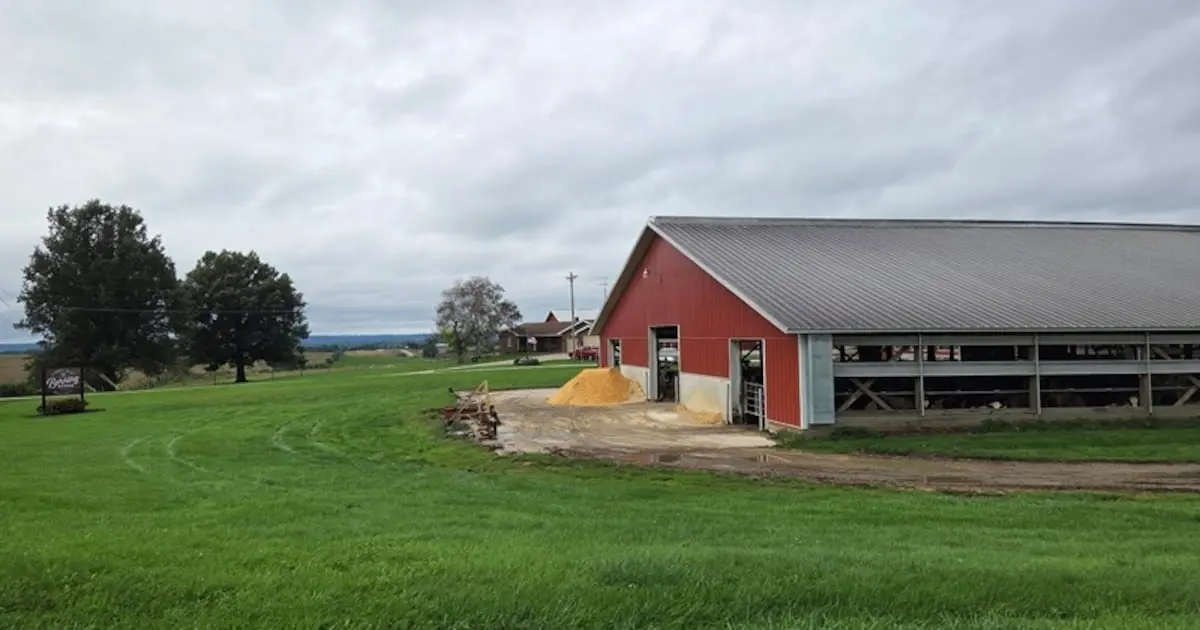
This is the home of Berning Acres, a sprawling, 800-acre dairy farm located in nearby East Dubuque, Illinois. Owned and operated by the husband-and-wife team of Matt and Natalie Berning, this second-generation agricultural enterprise represents both the triumphs and the tribulations of modern American dairy farming. Managing a milking herd of roughly 500 cows 365 days a year, the family balances the traditional, dawn-to-dusk labor of livestock husbandry with the complex economic realities of 21st-century agricultural markets.
At a time when independent dairy farms across the United States face severe financial contraction due to volatile milk prices, surging feed expenses, and unpredictable weather patterns, Berning Acres is charting a resilient path forward. By diversifying operations through agritourism, deploying precision agricultural technologies, and leaning into sustainable farming practices, the Berning family is safeguarding their legacy while educating the public about the true origins of their food.
This in-depth profile examines the operational mechanics, economic pressures, technological integrations, and community engagement initiatives that define Berning Acres—offering a transparent look into the heartbeat of contemporary Midwest agriculture.
Detailed Chronology: The Roots and Evolution of Berning Acres
Foundation and Early Years (1973)
The story of Berning Acres is rooted in family dedication, perseverance, and slow, calculated growth. In 1973, Matt Berning’s parents, John and Ellen Berning, laid the foundational stones of the farm with modest beginnings: a 120-acre plot of land and a milking herd of just 30 cows.
During an era when independent family farms were already beginning to feel the pressures of industrial consolidation, John and Ellen focused on foundational agricultural principles—meticulous animal husbandry, soil stewardship, and relentless hard work. Over the decades, through economic recessions, shifting agricultural policies, and changing consumer habits, the farm slowly expanded its acreage and herd size, transforming from a small family homestead into a commercial dairy operation.
Transition to the Second Generation
As Matt Berning grew up immersed in the daily rhythms of the farm, his passion for agriculture solidified early. Unlike many peers who sought opportunities away from rural life, Matt pursued formal education tailored to the evolving industry, studying dairy herd management as well as agribusiness science and technology at Southwest Technical College.
When Matt assumed operational leadership alongside his wife, Natalie—who married into the farming lifestyle and enthusiastically embraced its demands—they brought a renewed perspective to the family business. Today, the operation remains deeply collaborative. Founders John and Ellen continue to play indispensable roles in daily execution. John can still be found working hands-on across the farm, while Ellen expertly manages the complex financial cash flows and is famously known to hop into a tractor cab whenever labor demands require it. Together with their five children, the Bernings represent a seamless bridge between agricultural heritage and modern farm management.
Diversification into Agritourism
Recognizing the untapped potential of Galena’s booming tourism industry—which attracts nearly two million visitors annually—the Bernings made a strategic pivot into agritourism. Prior to launching their comprehensive public farm tours, Berning Acres successfully operated agricultural camps designed to give children hands-on educational experiences regarding livestock and crop production.
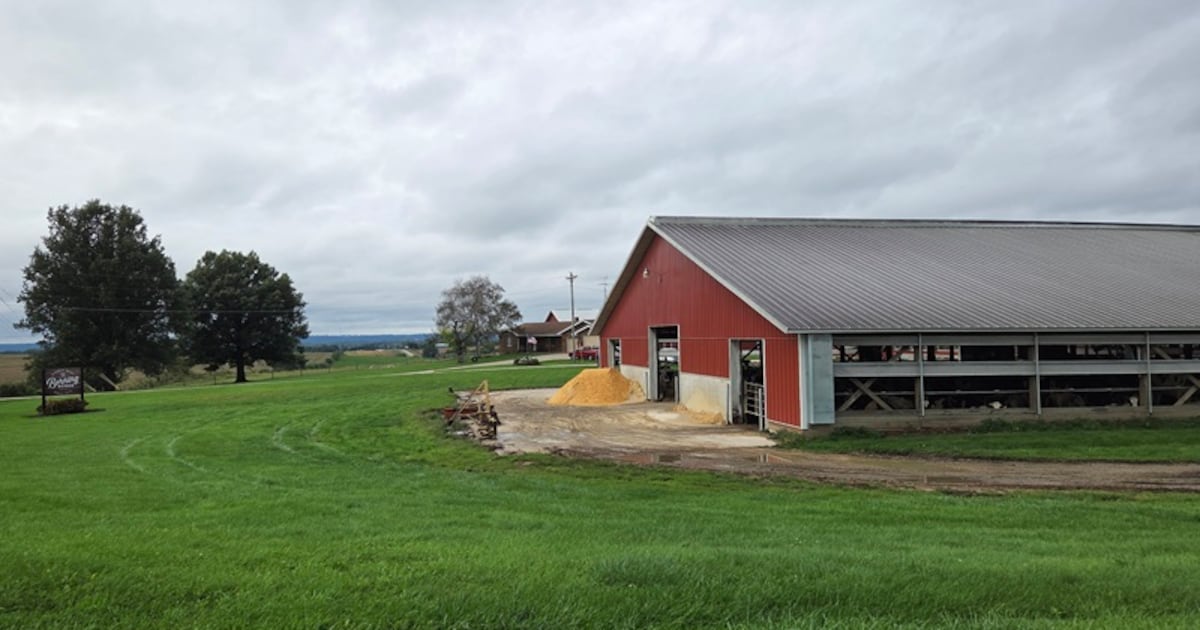
Capitalizing on this educational framework, the farm launched structured, six-day-a-week public tours. These immersive excursions welcome out-of-town families, tourists, and locals alike onto a fully functioning, working dairy farm. By erecting a strategic billboard along US-20 West heading into Galena, the farm successfully bridges the gap between regional leisure travelers and agricultural education, creating a vital supplemental revenue stream while demystifying modern food production.
Supporting Context & Metrics: The Economics of a Northwest Illinois Dairy
Running an end-to-end dairy operation that supplies cheese production facilities in Wisconsin through the Rolling Hills Dairy Producers Cooperative requires constant economic vigilance. For Berning Acres, the financial landscape is governed by a complex matrix of input costs, commodity pricing cycles, environmental factors, and regional weather anomalies.
The Commodity Paradox: Feed Costs vs. Milk Prices
One of the most persistent financial hurdles facing modern dairy operators is the inverse relationship between feed costs and milk pricing. While neighboring row-crop farmers cultivating corn and soybeans frequently benefit from high commodity prices, those very same high prices squeeze dairy margins to the breaking point.
"Everything is based off the corn price," explains Matt Berning. "So, I personally prefer it when the corn price is lower because the feed price is lower. If corn is more expensive, that also normally means that milk will follow down the line."
Because grain represents a primary expenditure required to sustain a 500-head milking herd, elevated feed costs directly erode profitability. To combat this vulnerability, Berning Acres strategically grows a portion of its own corn feed on its 800-acre landholding, mitigating external market shocks where possible. Furthermore, the farm utilizes advanced conservation techniques—such as cover cropping and no-till farming practices—to enhance soil health and fertility, offsetting the associated operational expenses through targeted agricultural grants.
Operational Overhead and Weather Volatility
The financial realities of running a 21st-century dairy extend far beyond feed and seed. Climate and seasonal shifts introduce severe operational expenditures that can fluctuate wildly from year to year.
During the scorching summer months of the Midwest, keeping 500 dairy cows cool, comfortable, and productive is both an animal welfare imperative and a massive financial overhead. High-capacity barn ventilation systems, misters, and cooling fans drove Berning Acres’ electricity bills to staggering heights—reaching between $6,000 and $8,000 per month during peak summer heat waves.
Compounding these energy costs, unpredictable weather patterns in northwest Illinois heavily disrupted seasonal field work. Extended periods of wet weather complicated harvest timelines for the farm’s corn crops, forcing the Bernings to constantly adapt their operational calendar to Mother Nature’s demands.
Official Statements & Industry Insights
The Value of Authentic Agritourism
The decision to open Berning Acres to the public was not merely financial; it was rooted in a deep desire to foster transparency between urban/suburban consumers and rural producers. Natalie Berning emphasizes that modern consumers are increasingly searching for genuine, unscripted experiences that connect them to the land.

"Galena gets almost 2 million visitors a year. People are looking for experiences like this," Natalie Berning states. "This is an extremely authentic experience. We invite you onto our working farm [and] give you a lot of hands-on experiences."
The tour experience is meticulously designed to be educational from start to finish. Visitors begin their journey at the feed storage facilities, tracing the nutritional intake of the cattle. From there, groups tour maternity and calf-raising areas, witness the milking parlors in action, and conclude the visit by enjoying artisan ice cream crafted directly from Berning Acres’ own dairy supply. Alongside educational tours, the farm store offers branded merchandise (caps and shirts) and locally sourced specialty cheeses, cementing the farm’s brand within the regional tourism market.
The Technological Paradox: Precision vs. Integration
To maintain efficiency across an 800-acre operation with hundreds of livestock, Berning Acres has eagerly adopted modern agricultural technology. Automated robotic milkers, computerized calf-feeders, and biometric monitoring collars that track the real-time health, rumination, and fertility of individual cows are standard equipment across the facilities.
However, Matt Berning points out a glaring frustration plaguing the modern ag-tech sector: the lack of interoperability between proprietary software platforms.
"One of the issues that we have sometimes from technology is they don’t interact together," Matt notes. "This company sells this. This company sells that, but can you get them to talk? No."
While individual gadgets and data-collecting devices perform admirably on their own, the friction of managing disparate data streams creates administrative bottlenecks. Matt expresses cautious optimism that emerging artificial intelligence (AI) applications will soon bridge these digital divides, allowing holistic farm management software to seamlessly synthesize data across all operational sectors.
Future Outlook: Sustainability, Education, and Resilience
As Berning Acres looks toward the horizon, the farm serves as a powerful case study for the future of independent Midwest agriculture. The traditional model of dairy farming—relying solely on wholesale milk cooperatives—is no longer sufficient to guarantee long-term stability against macroeconomic pressures, inflation, and unpredictable climate cycles.
By aggressively developing agritourism as a viable secondary revenue stream, the Bernings have transformed their physical location into an interactive classroom. This direct-to-consumer engagement not only diversifies their income but builds a loyal base of agricultural advocates who carry an appreciation for Midwest farming back to their home communities.
Simultaneously, the farm’s commitment to environmental stewardship through no-till methods, cover crops, and grant-assisted soil conservation ensures that the 800-acre landholding will remain productive and fertile for generations to come. Despite rising utility bills, volatile grain markets, and the persistent headaches of fragmented agricultural software, the Berning family’s blend of generational wisdom, technological adaptability, and community hospitality ensures that Berning Acres will remain a cornerstone of the northwest Illinois agricultural landscape for decades to come.