
Executive Overview
The global conservation community has long wrestled with a paradox of wildlife management: while breeding endangered species in captivity is often the only way to pull them back from the brink of extinction, returning those animals to the wild rarely goes according to plan. For decades, conservationists attempting to bolster dwindling populations of large predators have faced a stubborn behavioral hurdle—the homing instinct. When wild-born animals are relocated, or when captive-raised animals are set free, they frequently expend vital energy trying to return to their original enclosures, capture sites, or breeding facilities, frequently placing them in conflict with humans or dooming reintroduction efforts altogether.
Now, a groundbreaking study published in the journal Wildlife Research offers a dramatic shift in perspective. Research conducted in the perilous, remote mangrove forests of Bangladesh suggests that saltwater crocodiles (Crocodylus porosus) born or raised in captivity may lack this persistent urge to return to their enclosures once released into the wild.
Led by a collaborative team including behavioral ecologist and Murdoch University Adjunct Associate Professor Ru Somaweera, IUCN Bangladesh, and the Bangladesh Forest Department—with funding from the Deutsche Gesellschaft für Internationale Zusammenarbeit (GIZ)—the study tracked the post-release movements of mature saltwater crocodiles using advanced satellite technology. The findings indicate that unlike their wild counterparts, which display fierce and often fatal navigational persistence when displaced, captive-reared adults settle seamlessly into new habitats.
This behavioral distinction could fundamentally alter global protocols for crocodilian reintroduction. Historically, conservation programs have relied on releasing fragile hatchlings, which suffer staggering mortality rates and require decades to reach reproductive maturity. If older, captive-reared crocodiles can be successfully introduced into the wild without attempting to home back to captivity, conservationists gain a powerful new tool to accelerate population recovery in regions where apex predators have been hunted to the absolute edge of survival.
Detailed Chronology and Study Methodology
To understand the weight of these new findings, one must examine the perilous state of saltwater crocodiles in South Asia and the meticulous design of the recent study.
The stage for the research was set in the Sundarbans mangrove forest in Bangladesh. Spanning the delta of the Ganges, Brahmaputra, and Meghna rivers, the Sundarbans represent one of the last great natural refuges for the saltwater crocodile in a country where industrial-scale commercial hunting for skins decimated populations throughout the mid-20th century. Although the government legally protected the species in 1973, decades later, local numbers have shown no measurable recovery. Today, the country’s remaining wild saltwater crocodiles are virtually restricted to the Sundarbans, where recent surveys estimate a precarious population of just 140 mature individuals.
Faced with this stagnation, researchers sought to answer a critical operational question: Could older, captive-bred crocodiles be used to supplement shrinking wild populations, or would their psychological ties to captivity cause reintroduction efforts to fail?
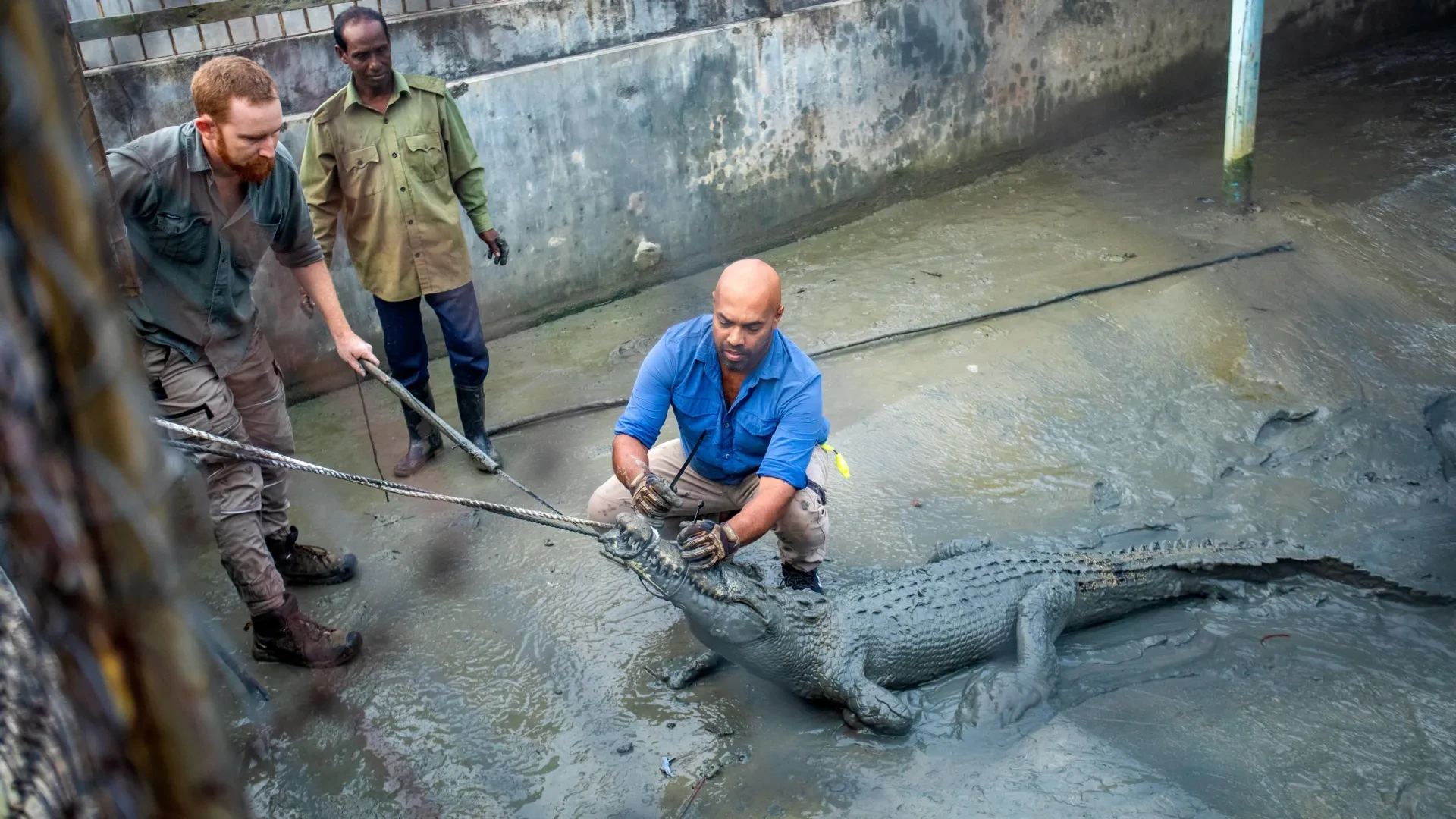
To solve this knowledge gap, the research team implemented a high-tech tracking program. They fitted five mature saltwater crocodiles with advanced satellite telemetry devices, allowing scientists to monitor their every movement across vast tracts of tidal waterways. The test cohort was carefully structured to compare different life histories:
- The Captive-Reared Cohort: Three mature females that had spent between 8 and 22 years living exclusively in captive breeding facilities.
- The Local Wild Control: One wild crocodile captured locally and released immediately back into its home waters.
- The Translocated Wild Control: One wild crocodile, named Jongra, that was captured and then relocated (translocated) a significant distance away from its native territory.
Following their release, the five crocodiles were monitored continuously via satellite for several months, yielding unprecedented data on how captive-raised versus wild-born apex predators navigate unfamiliar ecosystems.
Supporting Context & Metrics: Decoding Crocodilian Navigation
Finding the way back home is a foundational behavior across the animal kingdom, vital for foraging, avoiding predators, and securing mates. While many species make brief, daily excursions to nests or burrows, others navigate hundreds or thousands of miles across open oceans or trackless forests over weeks and months.
Yet, among the world’s fauna, crocodilians occupy a fascinating and formidable niche. As the largest predators in tropical and subtropical freshwater and brackish environments, they possess an extraordinary spatial awareness and an internal compass that has long baffled scientists.
"Crocodilians are a unique case when it comes to homing behavior," explains Associate Professor Ru Somaweera. "Crocodiles are remarkably good at finding their way home, often returning to their original capture sites and limiting the success of relocation programs."
In standard wildlife management, this hyper-developed homing instinct is a double-edged sword. When problem crocodiles—animals that wander into populated fishing villages or shipping lanes—are captured and moved dozens or even hundreds of kilometers away, they frequently embark on grueling, direct treks back to where they were caught. This behavior frequently leads them through hazardous, human-dominated landscapes, resulting in deadly human-wildlife conflicts or the ultimate destruction of the animal.
However, until this study, scientists did not fully understand how this homing machinery functioned in individuals that had spent their formative years isolated from the wild.
The metrics gathered during the Bangladesh tracking project laid bare the stark contrast between captive-raised and wild-translocated individuals:
- The Captive-Reared Behavior: None of the three long-term captive females attempted to return to their breeding facilities. Instead, telemetry data showed they established small, well-defined home ranges. Their daily movement patterns, pacing, and habitat utilization mirrored those of the local wild control crocodile, signaling a smooth, stress-free psychological adaptation to the wild.
- The Translocated Wild Behavior (Jongra): The wild crocodile translocated roughly 132 kilometers from his native waters exhibited textbook homing distress. While Jongra did not complete the entire journey back to his original capture site during the monitoring window, his directional vector was unmistakable. He traveled significantly greater distances each day than any other tracked crocodile, traversed an exceptionally large geographic area, and recorded single-day movement spikes exceeding 30 kilometers—behavioral hallmarks of frantic homing attempts.
Official Statements and Expert Analysis
The implications of these behavioral disparities extend far beyond academic ecology; they rewrite the manual for endangered species recovery in developing nations where human and wildlife spaces increasingly overlap.
"If crocodiles who are bred and raised in captivity subsequently return to their enclosures or breeding facilities after being released, attempts to reintroduce them into the wild as part of conservation efforts will ultimately fail," noted Associate Professor Ru Somaweera, behavioral ecologist from Murdoch University.
Somaweera highlighted the historical limitations that have plagued conservationists trying to rebuild crocodilian demographics. For generations, management programs have avoided releasing older, dangerous predators due to the high risks of human-wildlife conflict and homing behavior. Instead, programs relied almost exclusively on releasing fragile hatchlings.
"The traditional approach has been to use hatchlings in reintroduction programs, but their survival rates are extremely low and they take a long time to reach reproductive maturity," Somaweera said. "Understanding whether larger, captive-bred crocodiles can be used instead represents an important knowledge gap."
By demonstrating that long-term captive adults do not possess the psychological blueprint to navigate back to captivity, the research team has unlocked a demographic fast-track. Because these captive-reared females have already survived the vulnerable early years of life and reached reproductive maturity, releasing them instantly injects breeding-age adults into collapsing wild populations.
At the same time, the study offers a sobering warning regarding wild-to-wild translocations.
"Unfortunately, the results weren’t as good for the wild crocodile Jongra, who was translocated about 132km from his home before being released," Somaweera explained, pointing out that wild animals retain their internal GPS indefinitely. "For translocated crocodiles, it’s important there is careful release planning to manage their tendencies to return home."
The research project—formally titled "What is home? Post-release movements of captive-reared and translocated mature saltwater crocodiles in Bangladesh"—was made possible through an international conservation coalition. The initiative was spearheaded by IUCN Bangladesh and the Bangladesh Forest Department, with vital financial backing provided by the Deutsche Gesellschaft für Internationale Zusammenarbeit (GIZ).
Future Outlook: A New Paradigm for Predator Conservation
As human populations expand and natural habitats fragment across South and Southeast Asia, the management of apex predators requires increasingly sophisticated, science-based interventions. The findings from the Sundarbans mangrove forest provide a clear, actionable roadmap for conservation practitioners worldwide who are tasked with reviving depleted crocodilian stocks.
Moving forward, conservation strategies in Bangladesh and similar range states are expected to undergo a major evolution. First, breeding centers can now be integrated directly into active reintroduction pipelines. Rather than maintaining aging captive populations indefinitely—a costly endeavor for underfunded wildlife authorities—facilities can systematically phase mature adults into carefully vetted, protected wilderness zones like the Sundarbans.
Second, the study underscores the urgent need to overhaul protocols for managing "nuisance" wild crocodiles. Simply moving a wild-born adult away from a conflict zone is often an exercise in futility, as demonstrated by Jongra’s exhausting 30-kilometer-a-day march. Wildlife agencies must instead invest in comprehensive release planning, utilizing physical barriers, long-distance remote tracking, or alternative management strategies for displaced wild animals that cannot safely remain near human settlements.
Ultimately, the revelation that captive-raised saltwater crocodiles are essentially a "blank slate" when it comes to homing instincts offers a rare conservation win. It proves that animals raised behind concrete walls can still reclaim their ancestral inheritance in the tidal mazes of the wild. As conservationists deploy these insights across the globe, the thunderous splash of a captive-bred apex predator returning to its natural home may soon become a more common, and hopeful, sound in the struggle against extinction.