
Executive Overview
A recent buyer’s guide published by Good Housekeeping, titled “8 Dog Food Brands Vets Actually Recommend,” has sparked significant debate among pet food consumer advocates, veterinary professionals, and industry watchdogs. The article, which relied on insights from two consulting veterinarians—Dr. Alejandro Caos and Dr. Megan Conrad—purported to offer evidence-based guidance for pet owners navigating an increasingly crowded pet nutrition market.
However, an in-depth review by pet food consumer advocate Susan Thixton and the Association for Truth in Pet Food reveals critical flaws in the recommendations. The published guide contains scientifically inaccurate claims regarding pet dental health, relies on vague marketing terminology, and completely glosses over the fundamental legal and safety distinctions between human-grade and feed-grade ingredients.
Despite Good Housekeeping’s 125-year history of consumer advocacy and product evaluation, this analysis highlights a growing disconnect between mainstream media recommendations, clinical veterinary advice, and the complex regulatory frameworks governing pet food manufacturing. This report provides a detailed breakdown of the guide’s claims, examines the regulatory mechanisms overseen by the Association of American Feed Control Officials (AAFCO) and the U.S. Food and Drug Administration (FDA), and offers actionable guidance for pet parents seeking true transparency.
Detailed Chronology: Unpacking the Recommendations
+-----------------------------------------------------------------------------------+
|                            CHRONOLOGY OF EVENTS                                  |
+-----------------------------------------------------------------------------------+
| 1. Good Housekeeping Publishes Recommendations                                    |
|    - Cites Dr. Alejandro Caos & Dr. Megan Conrad.                                 |
|    - Names Nutro Ultra "Best Overall" & Purina ProPlan "Nutritionally Balanced."   |
|                                                                                   |
| 2. Scientific & Regulatory Flaws Identified                                       |
|    - False claim: Standard kibble reduces plaque/tartar (Fails VOHC standards).   |
|    - Omission: Fails to define "high-quality" or "nutritionally balanced."        |
|    - Failure to differentiate feed-grade from human-grade (Ollie Pet Food).      |
|                                                                                   |
| 3. Advocacy Formal Challenge Issued                                               |
|    - Association for Truth in Pet Food files formal critique to editorial team.   |
|    - Calls for consumer education on FDA CPG policies and AAFCO standards.        |
+-----------------------------------------------------------------------------------+
The Kibble Dental Myth vs. VOHC Standards
In the published guide, Good Housekeeping awarded its top spot—"Best Overall"—to Nutro Ultra Dry Dog Food. To justify this rating, Dr. Alejandro Caos made specific claims regarding the oral health benefits of dry kibble:
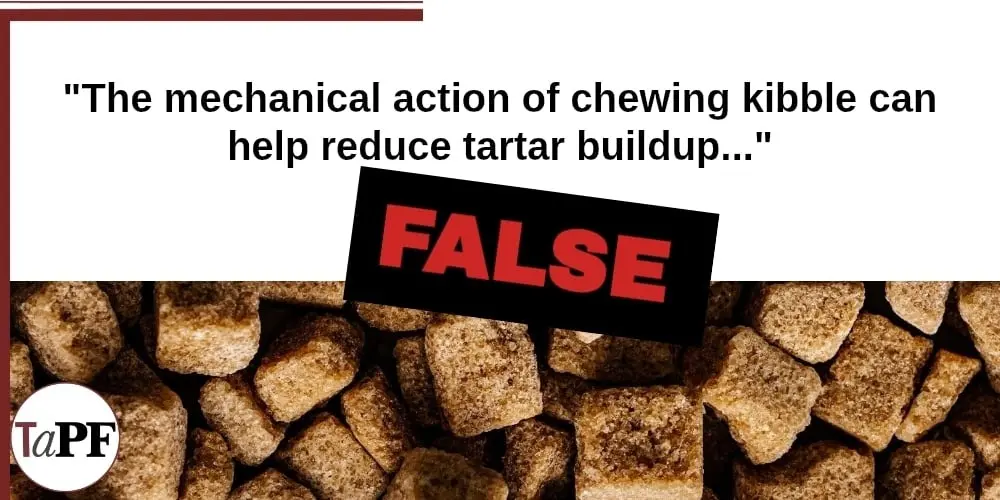
"The crunchy texture can help promote dental health… The mechanical action of chewing kibble can help reduce tartar buildup and maintain healthier teeth and gums, while the abrasive action of chewing can help scrape away plaque."
From a veterinary dentistry perspective, this statement is demonstrably false for conventional dry kibbles. Standard kibble is engineered to shatter instantly upon contact with the tip of a dog’s tooth. Because the kibble crumbles before the tooth penetrates deeply into the piece, there is virtually no mechanical scraping action along the gumline—the critical area where plaque and tartar accumulate and cause periodontal disease.
To legally or scientifically claim that a dry pet food reduces plaque or tartar, a product must undergo clinical testing and earn acceptance from the Veterinary Oral Health Council (VOHC). The VOHC evaluates pet products using standardized clinical trials to verify whether they demonstrably retard plaque and calculus accumulation. Nutro Ultra Dry Dog Food holds no such certification, making the expert assertion scientifically unfounded and misleading to pet owners relying on kibble for dental hygiene.
Broad Statements and Unsubstantiated Nutritional Claims
The recommendations continued with generalized statements regarding proper nutrition. Dr. Caos offered the following criteria for selecting a commercial diet:
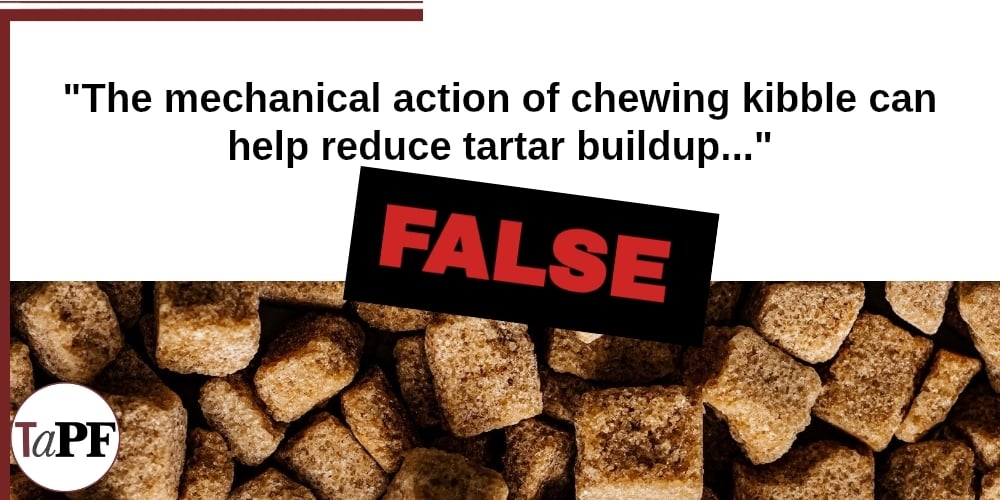
"Healthy dog food should provide balanced nutrition, use high-quality ingredients, promote proper digestion, and be suitable for your dog’s life stage and any unique dietary considerations."
While fundamentally unobjectionable, such guidance offers little functional utility to consumers. Terms like "high-quality ingredients" possess no legal definition within pet food regulation. Without defining what constitutes quality—such as ingredient origin, processing methods, or biological value—the terminology functions primarily as marketing jargon rather than actionable veterinary counsel.
Similarly, Dr. Megan Conrad endorsed Purina ProPlan, describing it as "one of the most nutritionally balanced options on the market." The article failed to clarify what criteria were used to assess this balance, whether peer-reviewed feeding trials were evaluated, or why this specific brand surpassed hundreds of competing formulations compliant with basic nutritional profiles.
The Mischaracterized Human-Grade Distinction
Out of all eight brands recommended by Good Housekeeping, only one—Ollie Pet Food—utilizes human-grade ingredients. However, the article omitted any explanation of what "human-grade" legally means under state and federal regulations. Instead, the piece reduced Ollie’s manufacturing distinction to a cosmetic description, describing the products merely as "homemade-looking dinners."
By focusing entirely on aesthetic presentation rather than supply chain integrity, Good Housekeeping missed a vital opportunity to educate pet owners on the vast legal boundary separating human-grade pet foods from standard feed-grade alternatives.
Supporting Context & Metrics: Regulatory Reality and Industry Standards
To understand why these omissions matter, consumers must look at the regulatory landscape governing the production of pet food in the United States.
+------------------------------------------------------------------------------------+
|                   COMPARATIVE METRICS: PET FOOD CATEGORIES                         |
+------------------------------------------------------------------------------------+
| Feature / Standard       | Feed-Grade Pet Food      | Human-Grade Pet Food         |
+--------------------------+--------------------------+------------------------------+
| Facility Compliance      | Renderers / Feed Mills   | USDA / FDA Human Food Plants |
| FDA Discretion Applied?  | Yes (Allows 4D Animals)  | No (Strict Zero-Tolerance)   |
| Ingredient Integrity     | Non-Human Consumption    | Edible Human Consumption     |
| VOHC Dental Claims       | Requires Clinical Proof  | Requires Clinical Proof      |
+--------------------------+--------------------------+------------------------------+
The FDA, AAFCO, and "Enforcement Discretion"
Commercial pet foods fall into two distinct legal categories: Human-Grade and Feed-Grade.
- Human-Grade: Formulated using ingredients that are entirely certified edible for human consumption and manufactured throughout every step of processing inside USDA-inspected, human-food-grade facilities in accordance with Code of Federal Regulations (CFR) Title 21.
- Feed-Grade: Formulated under animal feed regulations. Feed-grade products are legally permitted to contain ingredients that would be condemned or barred from the human food supply chain.
The baseline legal safety standard for feed-grade pet food is heavily impacted by federal policies. Under historical FDA Compliance Policy Guides (such as CPG Sec. 675.400), the federal government exercises what it terms "enforcement discretion." The FDA has publicly clarified its stance regarding non-slaughtered animal tissues in feed-grade products:

"We do not believe that the use of diseased animals or animals that died otherwise than by slaughter to make animal food poses a safety concern and we intend to continue to exercise enforcement discretion."
This policy allows feed-grade processing facilities to incorporate tissue from "4D" animals (dead, dying, diseased, or disabled) into rendered meals used in standard commercial pet food, provided the material undergoes high-heat processing. Most mainstream media outlets, as well as many practicing veterinarians, are unaware of these enforcement guidelines or the contents of the AAFCO Official Publication (OP), which defines these raw ingredient parameters.
                  ┌────────────────────────────────────────┐
                  │          PET FOOD REGULATION           │
                  └───────────────────┬────────────────────┘
                                      │
           ┌──────────────────────────┴──────────────────────────┐
           ▼                                                     ▼
┌─────────────────────┐                               ┌─────────────────────┐
│  HUMAN-GRADE FOOD   │                               │   FEED-GRADE FOOD   │
└──────────┬──────────┘                               └──────────┬──────────┘
           │                                                     │
 ┌─────────┴─────────┐                                 ┌─────────┴─────────┐
 │ Fully Edible for  │                                 │ Governed by FDA   │
 │ Human Consumption │                                 │ Compliance Guides │
 └───────────────────┘                                 └─────────┬─────────┘
                                                                 │
                                                       ┌─────────┴─────────┐
                                                       │ Permits Rendered  │
                                                       │  Feed Ingredients │
                                                       └───────────────────┘
Mechanics of Dental Claims and VOHC Testing
The physical mechanics of kibble breakdown further explain why general claims regarding dental health are scientifically inaccurate.
- Standard Kibble Fracturing: When a dog bites down on a conventional piece of kibble, the force causes the dry particle to shatter instantly at the tip of the tooth crown. The tooth does not sink deep enough into the kibble for the matrix to rub against the cervical region of the tooth where plaque forms.
- VOHC-Accepted Formulations: Specialized dental diets engineered to clean teeth use a specific, high-density fiber matrix. This structure prevents the kibble from shattering upon initial contact, forcing the tooth to penetrate deeply into the piece before it breaks apart. This creates an abrasive scraping action against the entire tooth surface, physically removing soft plaque deposits.
Products lacking explicit VOHC testing and certification cannot validly claim mechanical tartar reduction benefits.
STANDARD KIBBLE                           DENTAL DYNAMICS MATRIX
  (Shatters on Contact)                     (VOHC Accepted Standard)

      │ Tooth                                    │ Tooth
      ▼                                          ▼
   ┌──────┐  <-- Fractures at tip             ┌──────┐  <-- Tooth penetrates deeply
   │      │      neglecting gumline           │      │      wiping plaque off the
   └──────┘                                   └──────┘      entire surface
Veterinary Education Gaps
The inaccuracies present in mainstream buying guides are often a byproduct of systemic gaps in veterinary nutrition education. Standard veterinary school curricula focus extensively on clinical disease management, pathology, pharmacology, and surgical techniques. However, dedicated coursework in commercial pet food manufacturing regulations, state feed control laws, and ingredient sourcing categories is often limited.
Consequently, clinical veterinarians often rely on basic manufacturer marketing profiles or general nutritional guidelines, leading to recommendations that inadvertently perpetuate industry myths.
Official Statements and Advocacy Direct Action
Following the publication of the guide, Susan Thixton, founder of TruthaboutPetFood.com and co-founder of the Association for Truth in Pet Food (ATPF), issued a formal response and submitted an official communication to the editorial staff at Good Housekeeping.
The ATPF serves as an active consumer stakeholder organization, representing public interests directly at semi-annual AAFCO meetings and engaging directly with FDA officials on pet food safety standards and enforcement transparency.
Direct Excerpt from the Advocacy Communication:
*"With the veterinarians Good Housekeeping consulted with, their words were not much different than what many veterinarians tell pet owners on a daily basis. Their words do not make them bad veterinarians, it only shows they are not informed about pet food…
We sent Good Housekeeping an email explaining how their pet food advice could mislead pet owners… Keep speaking up. Be respectful, tactfully hold them accountable for their pet food advice."*
Suggested Consumer Inquiry Framework
To help pet parents evaluate diet recommendations critically, consumer advocates encourage owners to ask their veterinarians specific, probing questions when receiving brand endorsements:
+-----------------------------------------------------------------------------------+
|                  RECOMMENDED QUESTIONS FOR YOUR VETERINARIAN                      |
+-----------------------------------------------------------------------------------+
| 1. "When you recommend a 'high-quality' brand, are you referring to human-grade   |
|    or feed-grade ingredients?"                                                    |
|                                                                                   |
| 2. "Does this dry kibble have clinical, peer-reviewed data or a VOHC seal         |
|    verifying its ability to reduce tartar and plaque buildup?"                    |
|                                                                                   |
| 3. "Are the claims regarding 'balanced nutrition' backed by published, independent|
|    controlled feeding trials that I can review?"                                  |
|                                                                                   |
| 4. "Are you familiar with AAFCO ingredient definitions and the FDA's enforcement  |
|    discretion regarding rendered animal materials?"                               |
+-----------------------------------------------------------------------------------+
Future Outlook and Strategic Guidance for Consumers
The controversy surrounding Good Housekeeping’s buying guide points to a broader transformation taking place across the pet care sector. Modern pet parents are moving away from passive reliance on generic media roundups and authority endorsements, opting instead for rigorous transparency regarding supply chains, safety testing, and regulatory standards.
┌───────────────────────────────────────────────────────────────────────────────────┐
|                                FUTURE PATHWAY                                     |
├───────────────────────────────────────────────────────────────────────────────────┤
|                                                                                   |
|  [ Traditional Endorsements ]  ──►  [ Increased Public Regulatory Awareness ]     |
|   - Generic vet quotes               - Demand for human-grade verification        |
|   - Unsubstantiated dental claims    - Shift toward independent VOHC metrics      |
|   - Media buyer guides               - Pressure on FDA/AAFCO for clear labeling   |
|                                                                                   |
└───────────────────────────────────────────────────────────────────────────────────┘
Critical Steps for Evaluating Pet Food Recommendations
Moving forward, industry analysts and consumer advocates recommend that pet parents adopt a structured evaluation process when selecting pet foods:
- Verify Dental Claims via Official Registries: Never assume standard kibble cleans teeth. Check the official Veterinary Oral Health Council Accepted Products List to confirm if a diet or treat is proven to reduce plaque or calculus.
- Distinguish Legal Sourcing Definitions: Determine if a product is officially certified as Human-Grade (requiring every ingredient to be human-edible and processed in human-food facilities) or classified as Feed-Grade.
- Analyze Marketing Jargon: Look past promotional phrases such as "veterinarian recommended," "holistic," "natural," or "homemade-style." Demand specific data on ingredient sourcing, manufacturing plant certifications, and feed control compliance.
- Engage in Constructive Advocacy: Hold legacy media organizations, mainstream outlets, and clinical professionals accountable by respectfully requesting evidence-based justifications for product endorsements.
As regulatory bodies face mounting pressure to modernize labeling rules and eliminate permissive feed-grade enforcement policies, pet owner education remains the most effective tool for driving accountability across the pet food industry.