
Executive Overview
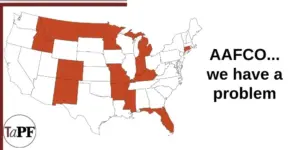
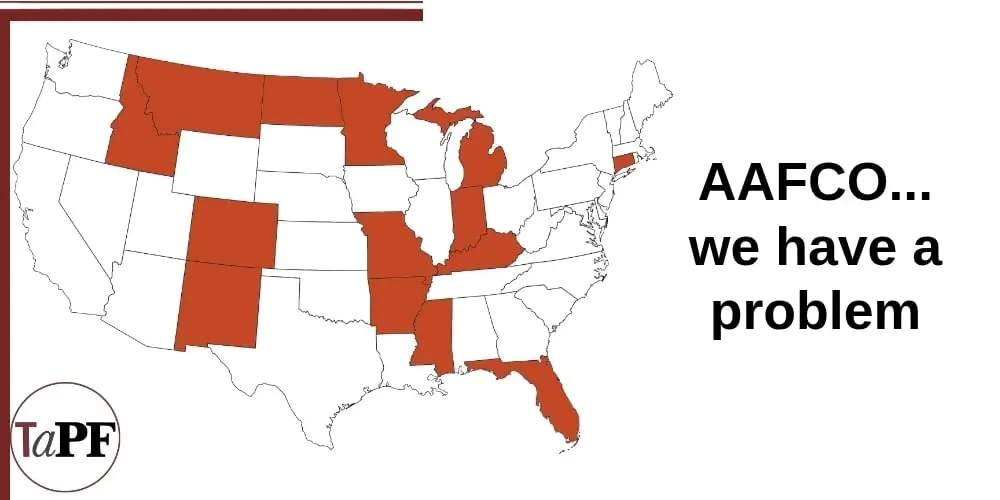
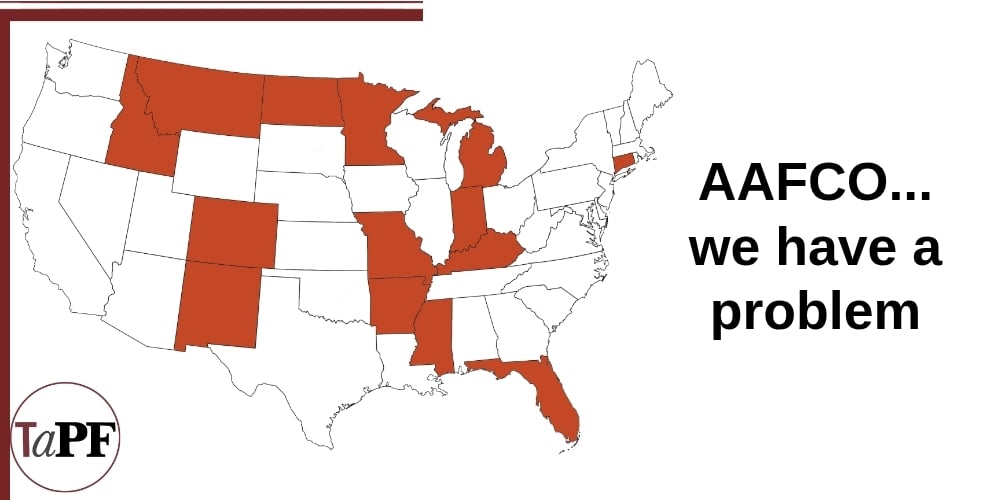
A critical legal vulnerability within North American pet food regulation has emerged: fourteen U.S. states possess commercial feed statutes that directly conflict with the ingredient definitions established by the Association of American Feed Control Officials (AAFCO). This regulatory misalignment centers on the sourcing of animal tissues, specifically regarding whether rendered animal products must derive exclusively from slaughtered livestock or if they may incorporate diseased, non-slaughtered, or decomposed animal tissue.
Under the statutory codes of these fourteen states—Arkansas, Colorado, Connecticut, Florida, Idaho, Indiana, Kentucky, Michigan, Minnesota, Mississippi, Missouri, Montana, New Mexico, and North Dakota—commercial feed containing tissue from diseased animals or animals that died by means other than slaughter is legally classified as adulterated. However, official AAFCO ingredient definitions widely adopted by pet food manufacturers lack explicit prohibitions against these non-slaughtered sources.
       +-------------------------------------------------------------+
       |                  THE LEGAL CONFLICT                         |
       +-------------------------------------------------------------+
       |                                                             |
       |   14 STATE STATUTES                  AAFCO DEFINITIONS      |
       |   • Prohibit non-slaughtered         • Omit slaughter       |
       |     or diseased animal material        requirement          |
       |   • Classify non-compliant           • Permit regulatory    |
       |     feed as "adulterated"              exceptions           |
       |                                                             |
       +------------------------------+------------------------------+
                                      |
                                      v
                       +------------------------------+
                       |       LEGAL IMPLICATION      |
                       | State administrative laws    |
                       | render conflicting AAFCO     |
                       | definitions legally INVALID  |
                       +------------------------------+
Because administrative law in these jurisdictions invalidates agency rules or definitions that contradict overarching state statutes, a legal challenge could strip these commonly used rendered ingredients of their legal definitions within those states. Consequently, widespread pet food formulations containing poultry by-product meal, meat meal, and animal digest could face immediate regulatory prohibition, pulling products off retail shelves and exposing major manufacturers to extensive litigation.
Detailed Chronology
The regulatory framework governing the multi-billion-dollar pet food industry relies on a co-regulatory system involving the U.S. Food and Drug Administration (FDA), state departments of agriculture, and AAFCO—a private, non-profit voluntary association of feed control officials. While AAFCO establishes standardized ingredient definitions, individual state legislatures enact commercial feed laws to govern products sold within their borders.
+-----------------------------------------------------------------------------+
|                          CHRONOLOGY OF REGULATORY CONFLICT                  |
+-----------------------------------------------------------------------------+
| STATUTORY ENACTMENT                                                         |
| State legislatures pass commercial feed laws defining feed adulteration     |
| (explicitly banning non-slaughtered dead animals and diseased tissue).      |
+-----------------------------------------------------------------------------+
                                      |
                                      v
| AAFCO DEFINITION ADOPTION                                                   |
| AAFCO committees formulate and vote on ingredient definitions that omit     |
| strict slaughter and health requirements for rendered animal products.      |
+-----------------------------------------------------------------------------+
                                      |
                                      v
| CRITICAL OVERSIGHT                                                          |
| State feed control officials from the 14 affected states participate in     |
| and approve AAFCO definitions despite existing state statutory conflicts.   |
+-----------------------------------------------------------------------------+
                                      |
                                      v
| ADVOCACY INTERVENTION                                                       |
| Consumer advocate Susan Thixton conducts statutory review, uncovers          |
| systemic legal conflicts, and issues formal notification to AAFCO.          |
+-----------------------------------------------------------------------------+
Statutory Enactment and Regulatory Drift
State legislatures enacted strict commercial feed laws designed to protect public health and animal welfare by establishing clear boundaries against adulteration. Over successive decades, however, AAFCO developed ingredient definitions that favored industrial efficiency and rendering flexibility. In doing so, definitions for animal-derived meals omitted explicit requirements that raw materials originate solely from healthy, slaughtered animals.
Dual Roles and Official Approvals
State feed control officials from the fourteen affected states actively participated in AAFCO voting procedures, served on the Pet Food and Ingredient Definitions Committees, and held senior executive leadership positions within the organization. During this time, these officials voted to approve and maintain ingredient definitions that directly violated the statutes of their home jurisdictions, creating a structural legal conflict that remained unaddressed for years.
Advocacy
Investigation and Formal Challenge
In early 2026, consumer advocate Susan Thixton, representing TruthaboutPetFood.com and the Association for Truth in Pet Food (ATPF), completed a systematic statutory review across all fifty U.S. commercial feed codes. The review identified a clear breach between state statutes and AAFCO definitions. Thixton subsequently issued a formal legal notice to AAFCO leadership, documenting the statutory conflicts and calling for immediate regulatory realignments.
Supporting Context & Metrics
To understand the legal mechanics of this dispute, one must examine state feed codes alongside administrative law principles. Missouri’s statutory framework serves as a representative baseline for the legal structures operating across all fourteen affected states.
+-----------------------------------------------------------------------------+
|                           MISSOURI LAW AS A BASELINE MODEL                  |
+-----------------------------------------------------------------------------+
|                                                                             |
|  1. STATUTE ON ADULTERATION (Section 266.180)                               |
|     Commercial feed is deemed ADULTERATED if it contains:                   |
|     • Product of an animal that died other than by slaughter                |
|     • Product of a diseased animal                                          |
|     • Filthy, putrid, or decomposed substances                              |
|                                                                             |
|  2. RULE OF ADMINISTRATIVE INVALIDITY (Section 536.014)                     |
|     • "No department, agency, commission or board rule shall be valid       |
|        in the event that: The rule is in conflict with state law."          |
|                                                                             |
|  3. THE LEGAL CONSEQUENCE                                                   |
|     • AAFCO definitions that permit non-slaughtered or diseased tissue      |
|       are legally INVALID under Missouri administrative law.                |
|                                                                             |
+-----------------------------------------------------------------------------+
Statutory Comparison: Missouri vs. AAFCO Standards
Section 266.180 of the Missouri Revised Statutes establishes that a commercial feed is deemed adulterated:
"If it is, in whole or in part, the product of a diseased animal or of an animal which dies other than by slaughter which is unsafe within the meaning of section 402(a)(5) of the Federal Food, Drug, and Cosmetic Act…"
Furthermore, the code deems feed adulterated "if it consists in whole or in part of any filthy, putrid, or decomposed substance, or if it is otherwise unfit for feed."
Conversely, AAFCO definitions for widely used rendered ingredients omit these restrictions. Instead, AAFCO definitions rely on a standardized clause stating that the ingredient "shall be suitable for use in animal food." Within AAFCO manuals, "suitable for use in animal food" is defined as conforming to the Federal Food, Drug, and Cosmetic Act (FD&C Act) "unless otherwise expressly permitted by the appropriate state or federal agency."
This regulatory phrasing creates an enforcement loophole. By allowing federal or state administrative "discretion" to override statutory definitions of adulteration, AAFCO permits rendered ingredients to utilize 4-D animals (Dead, Dying, Diseased, or Disabled) unless state law explicitly overrides that discretion. However, in states like Missouri, administrative rules cannot override statutory law.
Section 536.014 of the Missouri Revised Statutes explicitly dictates:
"No department, agency, commission or board rule shall be valid in the event that: (2) The rule is in conflict with state law."
Because state administrative law voids any agency rule in conflict with state statute, AAFCO’s discretionary definitions are vulnerable to being declared legally invalid in a court of law.

Geographic and Ingredient Impact Scope
The legal vulnerability spans fourteen states representing significant consumer markets and agricultural centers.
+-----------------------------------------------------------------------------+
|                         SCOPE OF LEGAL VULNERABILITY                        |
+-----------------------------------------------------------------------------+
|                                                                             |
|  AFFECTED STATES (14)                                                       |
|  • Arkansas       • Florida      • Kentucky     • Mississippi  • New Mexico |
|  • Colorado       • Idaho        • Michigan     • Missouri     • North Dakota |
|  • Connecticut    • Indiana      • Minnesota    • Montana                     |
|                                                                             |
|  AFFECTED INGREDIENT DEFINITIONS                                            |
|  1. Poultry By-Product Meal                                                 |
|  2. Poultry By-Products                                                     |
|  3. Meat Meal                                                               |
|  4. Meat and Bone Meal                                                      |
|  5. Animal By-Product Meal                                                  |
|  6. Animal Digest                                                           |
|                                                                             |
+-----------------------------------------------------------------------------+
The six affected ingredient definitions—Poultry By-Product Meal, Poultry By-Products, Meat Meal, Meat and Bone Meal, Animal By-Product Meal, and Animal Digest—form the primary protein and flavor foundation for a vast majority of commercial dry kibbles, canned foods, and veterinary diets across the United States.
Official Statements
The Consumer Advocacy Position
In a formal petition submitted directly to AAFCO leadership, Susan Thixton outlined the structural breach between state laws and ingredient definitions:
"Fourteen US states have state laws that conflict with AAFCO ingredient definitions commonly used in pet food… The AAFCO definitions of these ingredients do not hold the requirement to be sourced from a slaughtered animal, directly in conflict with state law. Without the requirement in the AAFCO definition to be sourced from slaughtered animals, ingredient manufacturers are free to source non-slaughtered dead animals in their ingredients.
It is concerning that many individuals from these 14 states voted to approve these ingredient definitions, participated on the Pet Food and Ingredient Definitions committees and even held high positions within AAFCO knowing their state laws conflicted with the AAFCO definitions—yet no one ever spoke up.
We are asking AAFCO to immediately address this issue, before a serious problem for pet food consumers and industry occurs. AAFCO’s Animal Product ingredient definitions SHOULD be aligned with state laws. At the very least, the Animal Product ingredient definitions for the 14 states must be revised to fully align with state laws; include the requirements to be sourced from a slaughtered animal, a disease-free animal, and free from filth and decomposition."
Regulatory Discretion under Scrutiny
Historically, state agriculture departments and the FDA have relied on "regulatory enforcement discretion" to permit the inclusion of non-slaughtered animal tissues and rendered by-products in pet food formulations, citing economic efficiency in processing animal agricultural waste streams.
However, legal experts note that administrative discretionary policies cannot override explicit state statutory bans on adulterated feed. As consumer advocacy groups increase regulatory scrutiny, state agriculture secretaries may face mounting legal pressure to enforce their state codes strictly as written.
Future Outlook
The identification of this statutory gap leaves the pet food industry and state regulators facing several potential operational disruptions.
+-----------------------------------------------------------------------------+
|                          POTENTIAL INDUSTRY OUTCOMES                        |
+-----------------------------------------------------------------------------+
|                                                                             |
|  SCENARIO A: JUDICIAL CHALLENGE & INVALIDATION                              |
|  • Citizen suits or class-action lawsuits challenge AAFCO definitions.      |
|  • State courts strike down definitions in the 14 affected jurisdictions.   |
|  • Rendered ingredients become legally undefined, halting sales.            |
|                                                                             |
|  SCENARIO B: EMERGENCY REGULATORY EMERGENCY REVISION                        |
|  • AAFCO accelerates emergency rulemaking to amend definitions.             |
|  • Renderers forced to segregate raw material streams (slaughtered vs 4-D). |
|  • Severe supply chain strain and rising production costs.                  |
|                                                                             |
|  SCENARIO C: STATE LEGISLATIVE AMENDMENTS                                   |
|  • State legislatures move to amend feed codes to align with AAFCO.         |
|  • Public opposition from consumer groups against weakening feed safety.    |
|                                                                             |
+-----------------------------------------------------------------------------+
Risk of Product Prohibitions and Litigation
If a commercial competitor, consumer defense organization, or state attorney general files a declaratory judgment action in any of the fourteen states, courts applying standard principles of administrative law could rule the conflicting AAFCO definitions invalid.
Without a valid legal definition in state administrative code, affected ingredients would lack regulatory standing. Under state feed control statutes, any commercial feed utilizing an undefined or adulterated ingredient can be issued an immediate "Stop Sale" order, effectively removing those products from market shelves across affected state lines.
Supply Chain Disruptions for Renderers and Manufacturers
To achieve full compliance with state statutes without court intervention, pet food manufacturers would need to mandate that their ingredient suppliers guarantee that all rendered animal products derive exclusively from inspected, slaughtered livestock.
This requirement would require a restructuring of rendering supply chains:
- Material Segregation: Renderers would have to build segregated processing lines separating slaughtered livestock trimmings from fallen, diseased, or non-slaughtered farm animals.
- Auditing and Verification: Manufacturers would require strict point-of-origin documentation to prove that raw materials are free from decomposed or non-slaughtered tissue.
- Cost Adjustments: A restriction on raw material availability could drive up sourcing costs for rendered meat meals, impacting product pricing across the retail sector.
Structural Overhaul of Feed Governance
This regulatory tension highlights the growing instability of relying on private advisory bodies like AAFCO to establish standards that bypass formal legislative processes. As state feed officials face increased scrutiny over these statutory conflicts, pressure will grow on both state legislatures and federal regulators to establish transparent, standardized safety rules that protect feed integrity while maintaining regulatory consistency.