
Executive Overview
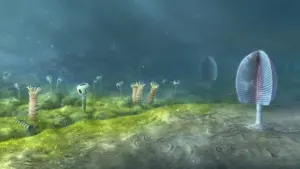
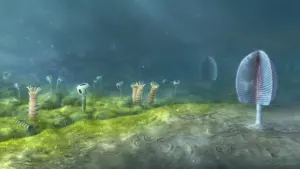
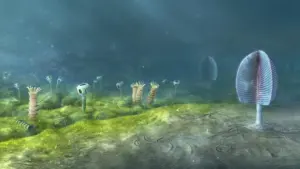
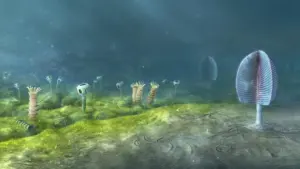
At first glance, a human, an octopus, and a delicate marine coral appear to inhabit entirely separate biological realities. They possess radically different physiologies, dwell in distinct ecosystems, and navigate the world through sensory mechanisms shaped by millions of years of adaptation. Yet, hidden deep within the cellular machinery of these disparate organisms lies an indisputable unifying thread: recognizable genetic fragments inherited directly from a common animal ancestor that walked, swam, or drifted through primeval waters more than 600 million years ago.
How these ancient genomic building blocks survived the vast stretches of deep time—and how they were systematically reorganized as animal life diversified into millions of unique species—has long remained one of evolutionary biology’s most profound enigmas. Now, a landmark study published in the journal Science Advances has upended traditional understandings of genetics by revealing that the architecture of animal genomes does not evolve through an infinite, chaotic array of possibilities. Instead, chromosomal evolution appears to be channeled along a restricted, highly predictable set of irreversible pathways that researchers have aptly termed "evolutionary highways."
Led by an international team at the University of Vienna, researchers synthesized data from more than 5,800 publicly available, chromosome-scale genomes representing 4,454 distinct species across 19 animal phyla. This monumental undertaking constitutes the largest cross-species comparison of chromosomal architecture in the history of science. By developing an innovative analytical framework known as "evolutionary genome topology," the research team has successfully mapped the sprawling expanse of animal DNA onto a single, unified coordinate system.
The implications of this breakthrough stretch far beyond theoretical biology. By uncovering the structural rules that govern how genomes shift over time, scientists can now peer backward into the twilight of multicellular life and forward into the future of biological adaptation. Furthermore, this dynamic mapping tool offers conservation biologists an unprecedented compass, helping to identify evolutionarily unique lineages—such as glass sponges, mosquitoes, and earthworms—whose isolated genetic structures may demand specialized preservation strategies in an era of unprecedented environmental crisis.
Detailed Chronology: The Journey from Universal Ancestry to Genomic Mapping
To appreciate the scale of the University of Vienna’s achievement, one must first understand the monumental hurdles that have historically fragmented genomic research. Every living animal on Earth descends from a single, ur-ancestral organism that populated the Earth over 600 million years ago. In the eons since that primordial creature existed, the chromosomes housing its genetic code have undergone relentless stress: they have fused together, snapped apart, and been thoroughly scrambled as new lineages diverged, specialized, and conquered nearly every ecological niche on the planet.
For decades, the advent of high-throughput sequencing allowed laboratories worldwide to sequence the genomes of thousands of species. However, the vast majority of these early achievements resulted in "draft genomes." While draft genomes provide a comprehensive parts list—revealing precisely which genes an animal possesses—they frequently fail to disclose the physical layout of those genes along the chromosomes. It is akin to possessing all the individual chapters of a master encyclopedia but having them shredded into a randomized box of paragraphs; the words are present, but the overarching narrative is lost.
Only in recent years has technological advancement made "chromosome-scale assemblies" widely achievable. These complete assemblies arrange genes in their precise, native order across unbroken, contiguous chromosomes, offering a remarkably detailed topographical map of an organism’s hereditary material. Recognizing that the global scientific community had finally accumulated a critical mass of these high-resolution assemblies, the international research team—spearheaded by evolutionary geneticists in Vienna—embarked on a massive comparative synthesis.
The Mechanics of Genomic Permanence: Fusion-with-Mixing
Central to the team’s findings is the identification of a specific, irreversible genetic mechanism they previously termed "fusion-with-mixing." In the dynamic lifecycle of a genome, chromosomes occasionally collide and fuse. When this union is accompanied by the profound intermixing of the genes residing on those once-separate strands, a biological Rubicon is crossed. Once genes from fused chromosomes become thoroughly integrated, the original chromosomal arrangement can virtually never be restored.
This absolute irreversibility acts as a one-way valve in evolutionary history. Because the process cannot be undone, every instance of fusion-with-mixing leaves an indelible, permanent scar on the genome—a lasting chronological marker of shared ancestry. These structural signatures are so durable and reliable that researchers have previously deployed them to untangle deep phylogenetic debates, such as identifying the elusive sister group to all other animals.
As the Viennese team analyzed their colossal dataset, they observed that variations in chromosome numbers across different phyla fundamentally stem from two foundational processes: ancestral chromosomes either combine or separate. Whether condensing or fragmenting, the introduction of fusion-with-mixing events relentlessly shunts lineages onto wildly divergent evolutionary trajectories. Consequently, major animal groups find themselves permanently marooned in distinct regions of what the researchers designate as "genome-architecture space."
As chromosomal mixing accumulates generation after generation, these lineages drift further apart in structural design. These alterations exert profound, long-lasting downstream effects, influencing massive networks of genes—including the master regulatory genes responsible for orchestrating embryonic development and fundamental body plans.
Supporting Context & Metrics: The Scale of the Study
The sheer empirical weight of the University of Vienna study distinguishes it as a watershed moment in comparative genomics. Quantifying the architecture of life on a macro-evolutionary scale required processing unprecedented volumes of biological data.
Key Metrics of the Study:
- Temporal Scope: Spans more than 600 million years of evolutionary history, tracing lineages back to the dawn of multicellular animal life.
- Genomic Dataset: Examined over 5,800 publicly available, chromosome-scale genomes.
- Taxonomic Breadth: Represented 4,454 distinct species.
- Phylogenetic Diversity: Encompassed 19 distinct animal phyla, providing an exceptionally broad cross-section of the animal tree of life.
- Analytical Innovation: Developed evolutionary genome topology, a spatial framework that maps structural genomic variations onto a unified coordinate system.
By shifting the analytical lens away from simple DNA nucleotide sequences and focusing instead on structural topology, the researchers bypassed the noise of point mutations. Nucleotide sequences can mutate rapidly, often obscuring deep phylogenetic relationships over hundreds of millions of years. Chromosomal architecture, by contrast, operates on a grander, more conserved structural scale. By establishing a shared coordinate system for chromosome-scale genomes, the team created a universal baseline that allows scientists to compare genetic layouts across vastly different phyla with unprecedented clarity.
Official Statements: Insights from the Research Team
The profound implications of mapping the structural evolution of animal DNA have been underscored by the lead architects of the study, who emphasize both the retrospective power and predictive potential of their new framework.
Dr. Oleg Simakov, a professor at the University of Vienna who co-led the international study, highlighted the forward-looking utility of decoding these ancient evolutionary constraints:
"Understanding these rules of evolution doesn’t just tell us about the past," Dr. Simakov explained. "It also lets us explore where genome evolution might go next and enables us to identify key measures for the conservation of animal biodiversity in a rapidly changing world."
Echoing this sentiment, Dr. Darrin Schultz—who initiated the research as a postdoctoral fellow at the University of Vienna and now serves as an Assistant Professor at Lehigh University and Lehigh Oceans—detailed the visual and conceptual breakthrough represented by their mapping methodology:
"For the first time, we can see thousands of genomes on a single map and trace the unique paths along which animals’ DNA evolved," Dr. Schultz noted. "Viewing the map as a whole gives us a panoramic picture of the patterns by which animal genomes have changed over time. Furthermore, if we fold the map up in a different way, we can compare how different groups of animals took divergent structural paths from one another after splitting onto separate evolutionary tracks."
These statements encapsulate the dual triumph of the research: it provides a rigorous, high-resolution mirror reflecting the history of life, while simultaneously forging a predictive lens through which to view the future of biological architecture.
Future Outlook: Biodiversity Conservation and Evolutionary Simulations
While reconstructing the ancestral pathways of ancient organisms offers immense intellectual satisfaction, the practical applications of evolutionary genome topology are poised to make immediate waves in both evolutionary biology and conservation science.
Pinpointing Evolutionary Outliers
Because the evolutionary framework maps the structural territory of genomes, it immediately highlights anomalies—clades that occupy isolated, eccentric coordinates on the genomic map because their chromosome architectures share few parallels with the rest of the animal kingdom. Among the lineages that stand out most prominently are mosquitoes, glass sponges, and earthworms.
These organisms possess highly specialized or accelerated chromosomal rearrangements that set them apart from standard genomic trajectories. By spotlighting these distinct groups, the evolutionary genome topology framework equips conservation biologists with a novel tool to flag evolutionarily unique and globally significant species. In an era marked by accelerating habitat loss and climate disruption, prioritizing species that represent isolated branches of chromosomal architecture may become vital for preserving the deepest reservoirs of evolutionary novelty on Earth.
Simulating the Future of Genomes
Perhaps most intriguingly, the mathematical models underpinning the study are not restricted to looking backward. Because the research demonstrates that chromosomal changes tend to flow along restricted, irreversible "evolutionary highways" rather than random trajectories, the system possesses predictive capabilities.
Scientists can now run simulations modeling potential future directions of genome evolution. By understanding the mechanical constraints and historical momentum governing chromosome fusion and mixing, researchers can explore how animal genomes—and by extension, the biological diversity they support—might continue to adapt and shift in response to future ecological pressures.
As the global scientific community continues to sequence an ever-growing number of non-model organisms, frameworks like evolutionary genome topology will prove indispensable. By transforming a chaotic mountain of genomic data into a coherent, navigable map, the University of Vienna study has illuminated the hidden rails upon which life has traveled for over six hundred million years—offering a masterclass in how the deep past continues to shape the living future.
Funding and institutional support for this landmark research were generously provided by the European Research Council under the Horizon 2020 European Union Research and Innovation Programme (Grant No. 945026), the Austrian Science Fund (FWF, Grant P32190), and the Rupert Riedl Prize bestowed by the Vienna Haus des Meeres Verein.