
LONDON — The global agricultural technology sector is undergoing a profound structural reckoning. For over a decade, venture capital deployed in agtech followed a familiar, software-centric playbook centered on hyper-growth, massive equity injections, and the relentless pursuit of the mythical "unicorn." Today, however, converging crises—compounding climate volatility, shifting geopolitical landscapes, tight credit markets, and an unsustainable burden of risk placed squarely on the shoulders of primary producers—have forced a fundamental reassessment.
At the recent World Agri-Tech Innovation Summit in London, industry leaders, venture capitalists, corporate executives, and researchers gathered to debate the future of food production. The consensus was clear: the era of speculative, software-style growth in agriculture has given way to an era of pragmatic integration, collaborative risk-sharing, and capital efficiency.
This comprehensive report examines the four critical shifts redefining the agtech landscape: the evolution of resilience finance, the death of the agtech unicorn in favor of sustainable capital efficiency, the triumph of system integration over standalone product superiority, and the rise of advanced agricultural risk intelligence.
Executive Overview
For decades, the prevailing narrative of agricultural innovation assumed that if a developer built a superior biological input, a more accurate sensor, or a smarter AI-driven algorithm, the market would naturally adopt it. It also assumed that farmers—as independent business owners—should shoulder the financial and operational risks of transitioning to sustainable practices.
Both assumptions have proven flawed.
Today, the systemic pressures facing the global food supply chain are too complex for any single stakeholder to manage in isolation. Climate change is no longer a distant theoretical threat; it is a daily operational hazard manifested through unpredictable droughts, unseasonal frosts, and extreme weather events. Concurrently, volatility in energy, fertilizer, and commodity markets has made input costs violently unpredictable.
To survive and thrive, the agricultural sector must pivot across four distinct pillars:
- Resilience Finance: Moving away from a model where farmers bear 100% of the cost of climate adaptation while processors and retailers reap the downstream benefits.
- Alternative Agtech Investment Models: Abandoning the pursuit of billion-dollar unicorns in favor of capital-efficient, profitable businesses valued between $100 million and $400 million.
- Ecosystem Integration: Recognizing that technical superiority is secondary to how seamlessly a technology integrates into existing farm management workflows and regional ecosystems.
- Agricultural Risk Intelligence: Developing sophisticated, multi-variable analytical platforms capable of quantifying compound risks to help banks, insurers, and food brands price uncertainty.
Detailed Chronology of the Summit Debates
The discourse at the World Agri-Tech Innovation Summit unfolded across sequential panel sessions, tracing a logical arc from macro-level financing constraints down to micro-level technological implementation and risk modeling.
Day One: The Financial Realities of Farm-Level Adaptation
The summit opened with an urgent examination of agricultural economics. Speakers noted that while food manufacturers and global retailers are setting ambitious Scope 3 emissions targets and demanding sustainable sourcing, the financial mechanisms to help farmers achieve these goals remain deeply flawed.
Session after session highlighted a stark structural mismatch: farmers are expected to front the capital for long-term soil health initiatives, precision irrigation, and regenerative practices, yet the economic rewards accrue primarily to downstream actors who secure stable, resilient supply chains. This realization set the stage for debates on blended finance and shared-risk models.
Day Two: Venture Capital and the Search for Agtech Realism
As discussions shifted toward investment strategy, venture capitalists and agtech founders confronted the sobering reality of market dynamics. The previous decade’s influx of venture capital—fueled by low interest rates and a software-as-a-service (SaaS) mentality—clashed harshly with the biological and capital-intensive realities of agriculture.
Pioneering investors argued that the industry must abandon the Silicon Valley unicorn fetish. Instead, the focus must pivot toward blended capital stacks that combine venture debt, corporate venture capital, and structured finance to build durable companies that do not rely on endless, dilutive equity rounds.
Day Three: The Biological and Digital Integration Challenge
Later panels addressed the friction between technology developers and end-users. Industry experts dissected why brilliant biological innovations and sophisticated artificial intelligence models often fail to achieve commercial scale.
The core takeaway was operational: farmers do not want more isolated digital dashboards or complicated biological inputs that disrupt established spray programs. They demand unified systems that respect local realities, local soils, and local agronomic practices.
Closing Sessions: Pricing the Unquantifiable
The summit concluded with a forward-looking examination of risk intelligence. Experts in climate modeling and insurance underscored a fundamental truth of the modern era: humanity cannot adapt to a crisis it cannot measure. The final panels mapped out the architecture of next-generation risk platforms designed to help financial institutions navigate compound, multi-variable shocks.
Supporting Context & Metrics
To fully understand why these four shifts are occurring, one must examine the underlying economic and environmental pressures bearing down on global agriculture.
The Anatomy of the Supply Chain Mismatch
Modern food supply chains are heavily consolidated. A handful of multinational trading houses, major food manufacturers, and dominant supermarket chains control the flow of commodities from farm gate to consumer plate. For these corporations, supply chain continuity is an existential priority. Climate disruptions threaten raw material availability, driving up input costs and eroding profit margins.
However, the primary producer—the farmer—operates on razor-thin margins while facing escalating capital expenditure requirements. Consider the cost profile of transitioning a conventional farm to modern climate-resilient standards:
- Precision Irrigation Systems: Often require capital investments running into tens or hundreds of thousands of dollars.
- Soil Health & Regenerative Practices: Involve multi-year transition periods where crop yields may temporarily dip before stabilizing.
- New Genetics and Biologicals: Require farmers to learn unfamiliar application techniques, risking crop failure if mismanaged.
When the financial burden of these transitions rests solely on the farmer, adoption rates stall. Conversely, when downstream partners co-invest, the entire supply chain gains structural security.
The Agtech Valuation Correction
The venture capital correction in agtech reflects a broader macroeconomic tightening, but it also highlights the unique constraints of the sector compared to enterprise software.
- Development Timelines: Software can be coded, deployed, and iterated in weeks. Biological crop protection products or novel agricultural hardware require years of laboratory testing, regulatory approvals, multi-season field trials, and physical manufacturing scale-up.
- Customer Acquisition Costs: Farmers are notoriously conservative buyers for good reason—a failed software update in finance causes minor inconvenience; a failed agricultural input ruins an entire year’s livelihood. Trust takes years to build.
- Exit Multiples: While enterprise software companies can scale to multi-billion-dollar valuations with negligible marginal costs, agricultural markets are fragmented by geography, crop type, and local regulations, making rapid global monopolization nearly impossible.
Official Statements and Industry Insights
The paradigm shift away from traditional models was powerfully articulated by prominent industry leaders throughout the London summit.
On Resilience Finance and Shared Risk
Geert Maesmans, R&D Vice President at Cargill:
"If we expect that the farmer carries all the risk and that the benefits are reaped somewhere else in the value chain, then it’s definitely not going to work."
Maesmans highlighted that major food corporations are beginning to recognize that long-term procurement security requires active balance-sheet participation. Rather than viewing sustainability as a compliance checklist, progressive agrifood giants are exploring insetting—investing directly within their own supply sheds to build climate resilience—alongside blended finance structures backed by banks and insurers.
On the Myth of the Unicorn
Michael Lee, Managing Director at Syngenta Group Ventures:
"The unicorn is a myth in agtech."
Lee challenged founders and fellow investors to recalibrate their ambitions. By working backward from realistic exit valuations of $100 million to $400 million, agtech entrepreneurs can design capital-efficient business models that prioritize profitability, cash flow, and strategic partnerships over unsustainable hyper-growth.
On Systemic Integration vs. Product Superiority
Manel Cervera Comabella, Managing Partner and COO at DunhamTrimmer:
"Winners won’t have the best products. Not necessarily. The winners will be those who fit better to the system."
Comabella emphasized that a technically inferior product that integrates seamlessly into a farmer’s daily routine will consistently outperform a laboratory-perfect innovation that requires a complete overhaul of farm management practices.
Jeff Macdonald, Corporate Social Responsibility Leader (EMEA) at IBM:
"Generic AI delivering generic advice is gonna deliver very little, if any, value to local farmers."
Macdonald underscored the critical need for context-aware digital tools. Artificial intelligence in agriculture must be hyper-localized, factoring in specific soil compositions, microclimates, and regional crop varieties to deliver actionable, trustworthy insights.
On Quantifying Complex Vulnerabilities
Ana Gonzalez, Senior Advisor at Risklayer:
"We cannot transition and we cannot adapt to something that we haven’t quantified."
Gonzalez pointed to the blind spots in traditional risk assessment. As climate change, geopolitical instability, and commodity shocks converge, the lack of granular, multi-variable risk intelligence leaves financial institutions and producers flying blind.
Future Outlook: The Next Decade of Agtech
As the agricultural sector digests the lessons of the past decade, the path forward is becoming increasingly clear. The next ten years of agtech will not be defined by flashy venture capital announcements or utopian promises of fully automated, human-free mega-farms. Instead, progress will be measured by durability, collaboration, and systemic integration.
1. The Institutionalization of Resilience Finance
We will likely witness the rapid mainstreaming of financial instruments that explicitly price and reward climate resilience. Commercial banks will increasingly tie lending rates to verifiable soil health and water-use metrics (sustainability-linked loans). Crop insurance providers, armed with better data, will offer premium discounts to farmers adopting de-risked technologies, effectively subsidizing innovation through lower risk profiles.
2. A Maturing Investment Ecosystem
The "death of the unicorn" does not spell the death of agtech venture capital; rather, it marks its professionalization. Investors will embrace venture debt, revenue-based financing, and strategic joint ventures with established agribusinesses. This will result in leaner, more resilient startups that achieve profitability faster and are better positioned for sustainable long-term growth or strategic acquisitions.
3. The Rise of the Agricultural Integration Layer
Standalone apps and isolated digital tools will struggle for market share. The future belongs to platforms that act as an "integration layer"—unifying disparate data streams, machinery telemetry, agronomic advice, and supply chain tracking into a single, cohesive interface. Companies that make life simpler for the farmer, rather than adding cognitive load, will capture the market.
4. Advanced Risk Intelligence as Infrastructure
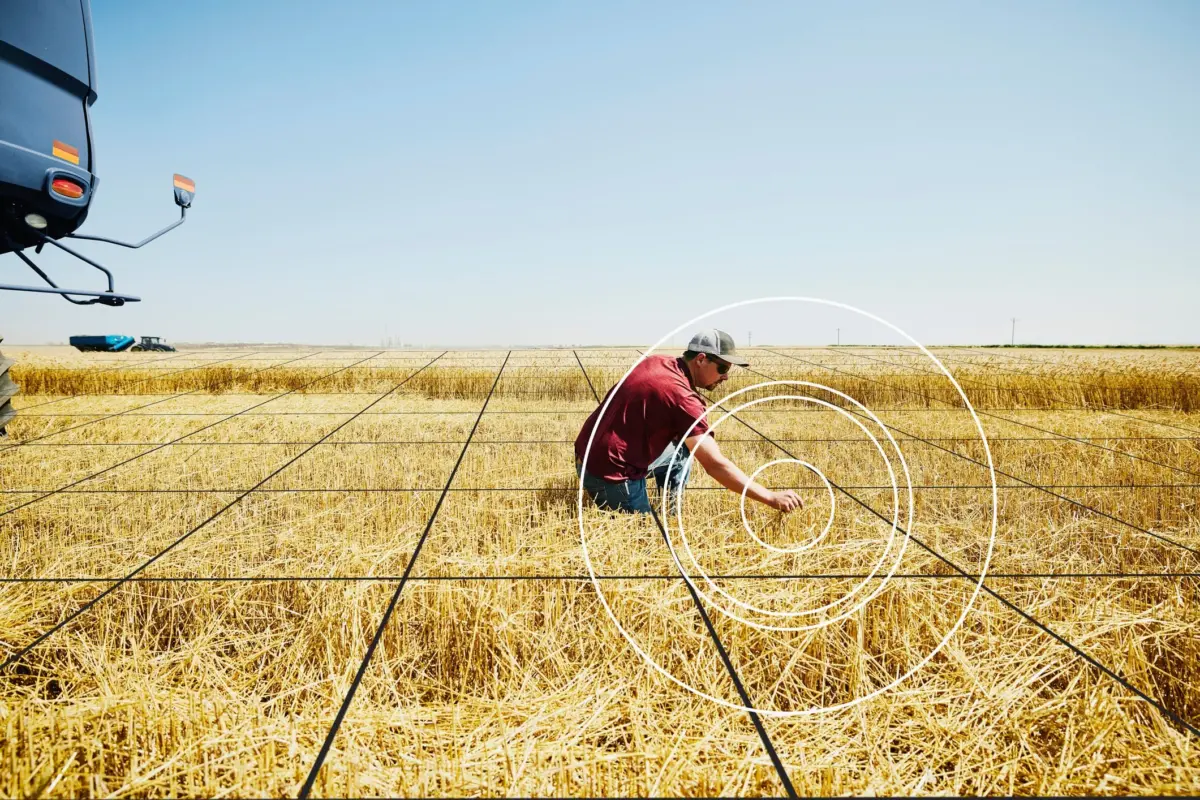
Finally, agricultural risk intelligence will evolve from a niche analytical service into foundational financial infrastructure. By combining climate forecasting, satellite imagery, soil sensors, and macroeconomic data into predictive models, future platforms will give banks, insurers, and food manufacturers the ability to stress-test their supply chains against compound shocks.
Ultimately, the transformation underway in agtech represents a maturing of the sector. By acknowledging that farming is fundamentally an interconnected, high-risk biological enterprise—and by realigning financial incentives, investment expectations, and technological design around that reality—the global food system can build a more secure, profitable, and resilient future.