
Executive Overview
Across the verdant valleys, manicured golf courses, and bustling parking lots of the Hawaiian archipelago, a quiet, high-stakes drama is unfolding. The nēnē (Branta sandvicensis), also widely known as the Hawaiian goose, stands as a triumph of modern conservation—and a fragile reminder of how easily ecosystems can tip toward disaster. Once reduced to a precarious population of just 30 individuals in the wild by 1949, the species has clawed its way back from the brink of absolute extinction. Today, an estimated 4,323 birds roam the islands, a testament to decades of intensive captive breeding, strict legal protections, and federal downlisting from endangered to threatened status in 2019.
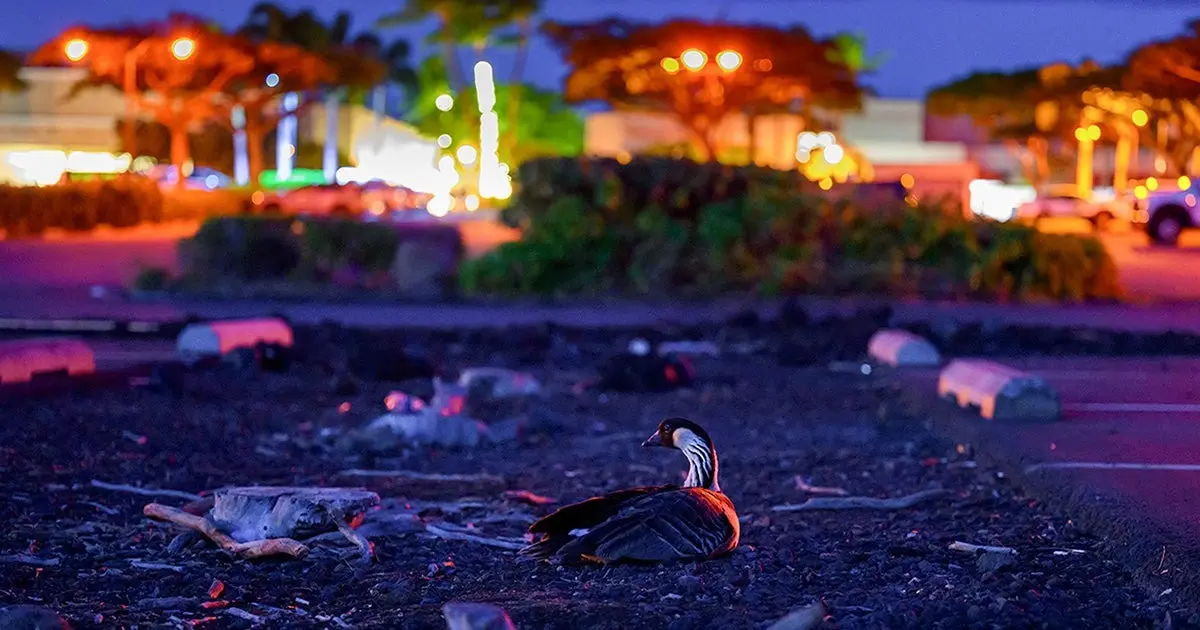
Yet, this hard-won recovery is facing a multifaceted, modern crisis. As an adaptable species that has learned to thrive in human-altered landscapes, the nēnē frequently graze on resort lawns, waddle through shopping center asphalt, and nest dangerously close to high-traffic zones. In doing so, they have run headfirst into a new gauntlet of anthropogenic and invasive threats: speeding vehicles, surging populations of feral cats, devastating parasitic infections, and relentless predation by introduced mongooses.
To prevent these iconic birds from slipping backward, a new wave of conservationists is merging traditional stewardship with cutting-edge technology. Spearheaded by community scientists, local nonprofits, and dedicated state biologists, initiatives utilizing artificial intelligence, real-time remote surveillance, community-driven mapping software, and targeted infrastructure redesigns are reshaping wildlife management in the Pacific. This is the story of how data-driven innovation and grassroots vigilance are colliding to secure the future of Hawaiʻi’s state bird and last surviving endemic goose.
Detailed Chronology: From the Brink of Extinction to Modern Threats
The Historical Bottleneck (Pre-1950s)
Before Western contact, the nēnē was widespread across the major Hawaiian islands, adapted uniquely to life on the volcanic slopes and lowlands. However, the arrival of European colonizers catalyzed a catastrophic collapse. The introduction of firearms led to rampant hunting during breeding seasons, while extensive agricultural clearing decimated their native lowland habitats. Worst of all was the introduction of invasive mammalian predators—most notably the small Asian mongoose (Urva auropunctata), brought over in the 19th century under the misguided belief that they would control rat populations in sugarcane fields. Because nēnē are ground-nesting birds, their eggs and helpless goslings proved to be effortless prey for the diurnal carnivores. By 1949, the wild population had plummeted to an alarming total of 30 individuals.
The Captive Breeding Resurgence (1950s–2010s)
Recognizing the imminent loss of Hawaiʻi’s iconic endemic goose, conservationists launched intensive rescue operations, centered heavily on captive breeding programs. Birds were bred in specialized facilities—including programs championed by the Wildfowl & Wetlands Trust in the UK and local Hawaiian stations—and gradually reintroduced into the wild. These efforts succeeded in establishing self-sustaining populations, particularly on Kauaʻi, which uniquely lacked a mongoose population. By the late 2010s, the population rebounded enough to warrant the U.S. Fish and Wildlife Service reclassifying the bird from "endangered" to "threatened" in 2019, cementing it as a celebrated global conservation success story.
The Modern Fracture Point (2021–Present)
Despite the overarching population growth, recent years have revealed deep vulnerabilities. Populations on several islands—most notably Maui, Molokaʻi, and parts of Hawaiʻi Island—have experienced concerning declines. The island of Oʻahu has lost its resident population entirely. Biologists note that the species’ high visibility in tourist-heavy and urbanized zones has created a lethal paradox: while proximity to humans endears the nēnē to the public, it exposes them to chronic, daily hazards.
A stark illustration of this occurred in December 2023 at a luxury resort on the Island of Hawaiʻi. Three nēnē goslings hatched successfully on a pristine lawn; within 72 hours, two were dead. One was found drowned in a decorative pond, while the other vanished—a suspected victim of mongoose predation. Incidents like this highlight how modern infrastructure, fresh water, and lush resort landscaping inadvertently create ecological traps where predators and geese overlap.
Supporting Context & Metrics: The Anatomy of Modern Hazards
Understanding the current struggle of the nēnē requires examining the specific, interrelated pressures threatening their survival across the islands:
- Geographic Disparity: The recovery is profoundly uneven. Approximately 61 percent of the total nēnē population resides on Kauaʻi. Meanwhile, islands with established mongoose populations, such as Hawaiʻi Island and Maui, continue to see volatile population fluctuations.
- The Feral Cat Crisis and Toxoplasmosis: Feral cat colonies, maintained by well-meaning "managers" who leave out large quantities of commercial pet food, have boomed across the islands. Unexpectedly, nēnē have developed a taste for this cat food, drawing them directly into cat-heavy zones. This proximity exposes the geese to Toxoplasma gondii, a parasitic protozoan carried by cats that causes toxoplasmosis. The disease is frequently fatal to birds and induces dangerous risk-taking behaviors, such as lingering on active roadways. Furthermore, nesting near these colonies exposes adults and goslings to filth, flies, and opportunistic predators.
- Infrastructure and Vehicle Strikes: During breeding season, nēnē frequently move between nesting sites and feeding grounds. Because they inhabit urbanized green spaces, they routinely cross busy thoroughfares. Speeding vehicles remain a leading cause of adult mortality.
- Atypical Hazards: The birds’ integration into human spaces introduces bizarre, lesser-known dangers, including broken bones caused by flying golf balls on resort courses and accidental poisonings or entanglements in urban waste.
Official Statements and Leadership: Technology Meets Community Science
Amid these mounting pressures, conservationists are refusing to let the species slide backward. At the forefront of this movement is Jordan Lerma, a Native Hawaiian marine biologist who founded the nonprofit nene.org in 2022 to bolster the work of state and federal agencies.
+--------------------------------------------------------------------------+
|                       THE NĒNĒ CONSERVATION TECH STACK                   |
+--------------------------+-----------------------------------------------+
| AI-Powered Band App      | Instantly pulls up life history, injury logs, |
|                          | and banding locations from a simple photograph.|
+--------------------------+-----------------------------------------------+
| Real-Time Remote Cams    | Automatically logs band numbers and updates   |
|                          | spatial data to track flock movements.        |
+--------------------------+-----------------------------------------------+
| FeralMap Platform        | Crowdsourced tracking database for invasive   |
|                          | cats, mongooses, and feral pigs.              |
+--------------------------+-----------------------------------------------+
| Kiwi-Style Box Traps     | Elevated, scent-attractant traps deployed for |
|                          | year-round mongoose eradication.              |
+--------------------------+-----------------------------------------------+
"It makes me and my family really happy to see nēnē at the parks," Lerma explains, emphasizing that the geese provide a rare, accessible gateway for the public to connect with native Hawaiian wildlife. "It is one of the few native species you can see at lower elevations."
To manage approximately 70 percent of the nēnē population—which has been banded by biologists for individual tracking—Lerma developed an artificial intelligence-powered mobile application. When field researchers or community members snap a photo of a bird’s band, the app instantly retrieves its comprehensive life history, including its birth location, past injuries, and historical sightings.
This technology is paired with networks of remote cameras deployed across the Island of Hawaiʻi. These units transmit images in real-time to servers that automatically log band numbers and update geographic profiles.
"When biologists are looking for a bird in particular, they can just look at the app and say, ‘OK, it’s been out on this golf course for the past week,’" Lerma notes. "That’s drawing on our cameras, that’s drawing on community, and I think it’s a win-win."
Data-Driven Policy Changes
Lerma’s technological interventions extend far beyond software. In 2023, near a busy restoration area in Hilo where nēnē were frequently struck and killed by motorists, local advocates spent years fruitlessly begging for reduced speed limits. Lerma installed six custom speed monitors along the road for a 10-day study, discovering that 81 percent of the 5,000 recorded vehicles exceeded the legal limit. Armed with hard data, he presented the findings to the county. Within two months, the speed limit was slashed from 35 mph to 25 mph, complemented by newly installed raised crosswalks and traffic-calming speed tables. Not a single nēnē has been killed at that deadly corridor since the changes were implemented.
On the legislative front, systemic changes are also taking root. To combat the ecological chaos caused by unmanaged cat colonies, the County of Hawaiʻi passed a landmark law banning the feeding of feral cats on county property. Furthermore, Lerma developed FeralMap, a community science platform enabling citizens to report sightings of invasive species like mongooses, feral pigs, and cats, feeding critical data directly into public conservation databases.
State officials emphasize that public behavior remains the ultimate frontier. Raymond McGuire, a biologist with the Hawaiʻi Department of Land and Natural Resources (DLNR), notes the perpetual tension of managing wildlife in human spaces:
"Nēnē being in public areas and coming into contact with humans is the big issue I’m dealing with… That encourages risky behavior from the birds and exposes them to new dangers. That’s how the population is going to slip away from us again."
To combat the mongoose threat directly, Lerma and a dedicated team of volunteers introduced advanced, New Zealand-style elevated box traps utilizing liquid scent attractants at resort nesting grounds. These modern units operate year-round, successfully protecting vulnerable broods and resulting in thriving nesting seasons at locations like the Mauna Lani resort through 2024 and 2025.
Future Outlook: The Ongoing Stewardship of Hawaiʻi
The survival of the nēnē hangs in a delicate balance. While the numerical trajectory of the species has trended upward over the last 70 years, the regional distribution remains precarious, and the emergence of hyper-local urban threats demands constant vigilance.
The philosophy guiding modern conservationists is clear: extinction is driven by human action, but human ingenuity and cultural stewardship possess an equal and opposite power to reverse that damage. By fusing high-tech monitoring tools—such as AI band recognition and real-time remote telemetry—with grassroots community science and targeted legal reform, advocates are proving that native species can coexist with modern development.
Yet, as Jordan Lerma frequently reminds his peers, conservation is not a finite project with a neat endpoint; it is an ongoing, generational commitment. As long as the nēnē continue to share our spaces, the work of protecting them must evolve in lockstep with a changing world, ensuring that the distinctive honk of the Hawaiian goose remains a permanent fixture of the islands’ natural heritage.