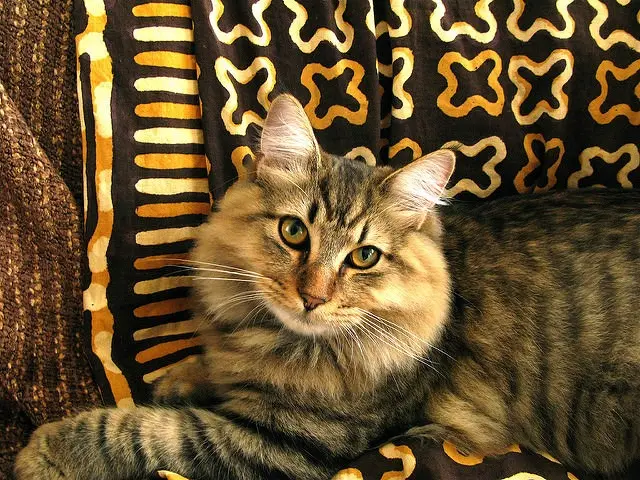
For centuries, humanity has maintained a complex, symbiotic relationship with Felis catus, our quintessential domestic feline companion. Yet, despite millennia of co-habitation, selective breeding, and urbanization, the house cat retains an unmistakable aura of untamed wilderness. Beneath the polished veneer of a domestic existence lies a creature built along the exact same evolutionary lines as the apex predators ruling the savannahs, jungles, and taigas of the world.
When placed side-by-side, the structural anatomy, hunting reflexes, sensory apparatus, and predatory drive of a small house cat and a massive wild felid are remarkably similar. The primary differentiator, aside from a dramatic variance in scale and a distinct lack of steak-knife-sized claws, is sociological. However, a specialized cohort of domestic cat breeds bridges this evolutionary gap entirely. Through careful hybridization, targeted preservation of spontaneous genetic mutations, and intentional aesthetic selection, breeders have cultivated domestic felines that serve as the splitting images of leopards, cheetahs, panthers, tigers, and bobcats.
This investigative report examines the phenomenon of "exotic-looking" domestic cats. We explore the structural science connecting house cats to big cats, provide a detailed chronicle of the breeding history behind these magnificent animals, analyze the metrics of their behavior and ownership requirements, and evaluate the future outlook of breeding programs committed to balancing wild aesthetics with domestic temperaments.
Supporting Context & Metrics: The Biological Bridge to the Wild
To understand why certain domestic cat breeds can so convincingly mimic their massive wild cousins, one must first examine the shared biological machinery of the Felidae family. Every cat—from the tiny rusty-spotted cat of India to the majestic Siberian tiger—shares a remarkably conserved skeletal and muscular architecture.
Anatomical Parallels
The Skull and Jaw: All felines possess a shortened rostrum (muzzle) designed for powerful bite force relative to their size, housing specialized carnassial teeth adapted explicitly for shearing flesh.
Sensory Engineering: Forward-facing eyes providing binocular and stereoscopic vision, highly mobile pinnae (ears) capable of rotating independently to pinpoint prey, and specialized tactile vibrissae (whiskers) set deep into nerve-rich follicles are universal across the family.
Locomotion: Digitigrade movement (walking on their toes) paired with retractable claws allows both house cats and big cats to stalk silently and accelerate with explosive bursts of speed.
Behavioral Metrics
While a domestic cat’s daily routine may revolve around sunbeams and commercially prepared kibble, its behavioral metrics remain intensely primal. Studies in feline ethology demonstrate that indoor cats exhibit predatory sequences—stalking, chasing, pouncing, and killing—virtually identical to those of a leopard or lion. The breeds highlighted in this report amplify these visual and behavioral traits, bringing an authentic safari aesthetic into the living room while retaining the sociability required for modern domestic life.
Detailed Chronology: The Evolution of Wild-Mimic Breeds
The development of cat breeds that mirror wild felids represents a fascinating intersection of modern genetics, animal husbandry, and, in some cases, serendipitous natural mutation. Below is the chronological breakdown of the seven primary breeds leading this movement.
1. The Bengal (Recognized officially by TICA in 1986)
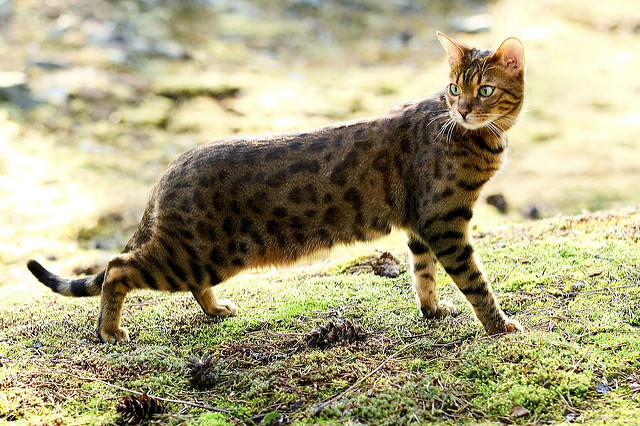
The Bengal stands as the gold standard for leopard-like domestic felines. Created through the deliberate crossbreeding of various domestic cat breeds with the Asian Leopard Cat (Prionailurus bengalensis), the Bengal brings genuine wild ancestry into a manageable domestic package.
The Look: Rich, iridescent coats featuring distinct rosettes, spots, and horizontal striping reminiscent of a true leopard.
The Reality: Recognized by The International Cat Association (TICA) in 1986, Bengals possess striking wild aesthetics paired with the playful, engaging temperament of a high-energy domestic cat.
2. The Savannah (Emerging late 20th century)
The Savannah represents a dramatic leap in size and scale within the domestic cat world. Originating as a cross between a domestic cat and the Serval—a medium-sized, long-legged wild African cat—Savannah kittens are categorized by generational markers (F1 through F5) denoting their proximity to their wild ancestor.
The Look: Tall, lean bodies with large, radar-like ears, long necks, and bold spotted coats inherited directly from the Serval.
The Reality: Known more for dog-like behaviors than traditional cat tendencies, Savannahs are exceptionally active, highly intelligent, and capable of learning to walk on leashes and play fetch.
3. The Abyssinian (Ancient heritage, modern standards)
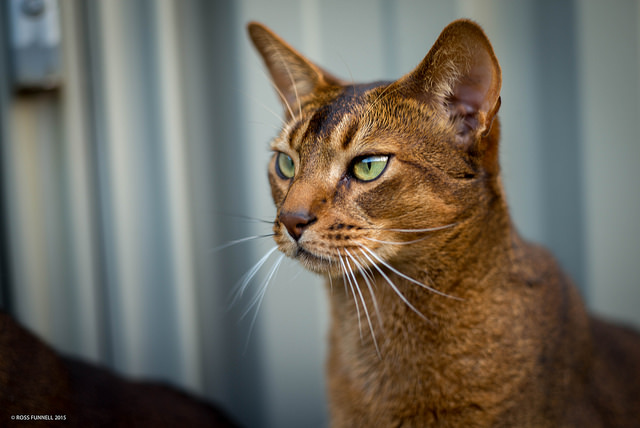
Unlike the Bengal or Savannah, the Abyssinian has no direct recent lineage or hybridization with wild cats. Instead, its resemblance to a miniature African lion or desert wildcat is the result of centuries of selective breeding focused on a distinct agouti (ticked) coat pattern.
The Look: A warm, golden, ticked-tabby coat combined with almond-shaped, expressive eyes that evoke the imagery of ancient Egyptian art and African grasslands.
The Reality: Highly social and emotionally sensitive, Abyssinians forge intense bonds with their human companions and are prone to behavioral depression if left isolated for extended periods.
4. The Bombay (Developed in the 1950s)
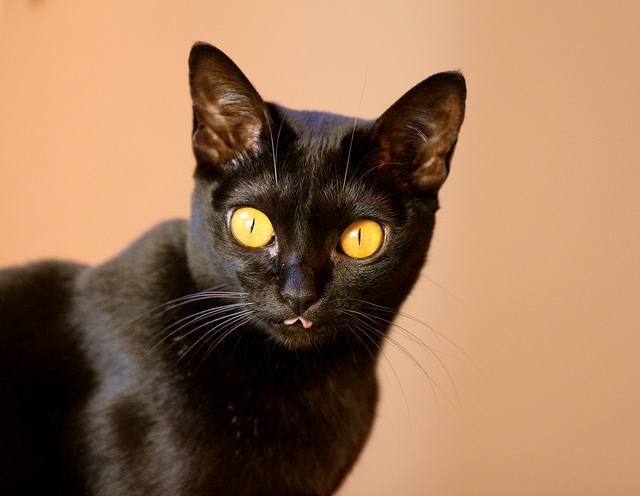
Conceived by American breeder Nikki Horner in Louisville, Kentucky, the Bombay was explicitly engineered to be a miniature black panther. By crossing American Shorthairs with sable Burmese cats, Horner successfully captured the dark, hypnotic allure of the jungle predator.
The Look: A jet-black, sleek, form-fitting coat, muscular physique, and striking copper or green eyes.
The Reality: Recognized by the Cat Fanciers’ Association (CFA), Bombays are intensely affectionate, highly social, and uniquely suited for households with children due to their robust, playful nature.
5. The American Bobtail (Recognized for spontaneous mutation)
Unlike hybrids that draw their appearance from wild parents, the American Bobtail owes its wildcat silhouette to a completely natural, spontaneous genetic mutation.
The Look: A sturdy, heavy-boned, muscular build coupled with a short, expressive, bobbed tail that mirrors the North American Bobcat.
The Reality: Per the CFA, these cats are famously affectionate and adapt easily to multi-pet households, often amusing owners by carrying toys around like freshly hunted prey.
6. The Toyger (Created in the late 1980s / 1990s)
Developed by breeder Judy Sugden and recognized by TICA, the Toyger was intentionally bred to look like a miniature tiger (Panthera tigris).
The Look: Vertical, branching stripes and vibrant orange-and-black coloration that replicate the majestic camouflage of the world’s largest wild cat.
The Reality: Beyond aesthetics, the breed serves a higher philosophical purpose; Sugden utilized the Toyger to draw global attention to the rapid decline and conservation crisis facing wild tigers. Despite their fierce tiger stripes, Toygers are remarkably laid-back, affectionate, and intelligent companions.
7. The Egyptian Mau (Ancient lineage, recognized modern breed)
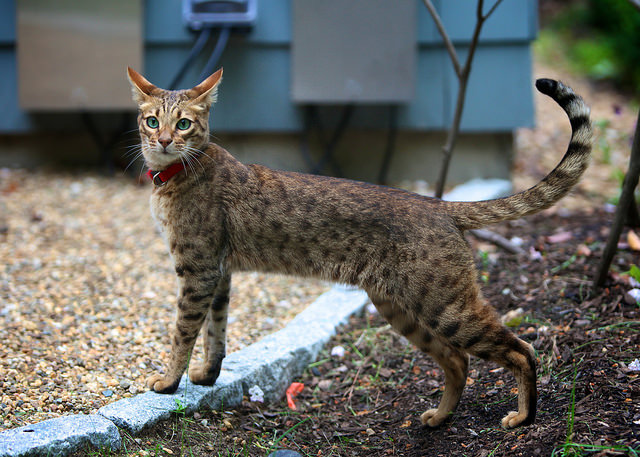
The Egyptian Mau holds a unique distinction: it is one of the few naturally spotted domestic cat breeds, meaning its cheetah-like spots are not the result of recent hybridization with wild felids.
The Look: Natural spotted coats, gooseberry-green eyes, and a loose skin flap extending from the flank to the back knee that allows for incredible leg extension and agility.
The Reality: According to the CFA, the Egyptian Mau is the fastest of all domestic cat breeds, capable of sprinting at speeds exceeding 30 miles per hour. They are intensely athletic, agile, and vocal participants in family life.
Official Statements and Industry Perspectives
The breeding, ownership, and ethical considerations surrounding wild-appearing and hybrid cat breeds are subjects of ongoing dialogue among major feline registries, conservationists, and veterinary professionals.
The International Cat Association (TICA) Statement on Hybridization: "The integration of wild felid species into domestic breeding programs, such as the Asian Leopard Cat in Bengals or the Serval in Savannahs, requires strict adherence to ethical breeding standards, generational tracking, and state regulations. Breeders must ensure that successive generations maintain a stable temperament suitable for domestic integration while preserving the breathtaking aesthetic markers of our natural world."
The Cat Fanciers’ Association (CFA) Perspective on Natural Mutations: "Breeds like the American Bobtail and Egyptian Mau demonstrate that nature frequently provides its own artistic flair. Through careful, selective stewardship of spontaneous mutations and ancient landraces, breeders can produce cats that honor the rugged beauty of North American bobcats and African wildcats without compromising the health, safety, or domestic viability of the animal."
Veterinary epidemiologists emphasize that while these breeds offer owners an undeniable aesthetic thrill, prospective pet parents must research local municipal laws regarding hybrid ownership, as jurisdictions vary widely on the legality of owning early-generation (F1–F3) hybrid cats.
As we look toward the future of feline husbandry, the demand for exotic-looking companion animals continues to surge. Urbanization and smaller living spaces make keeping actual wild animals impossible, illegal, and profoundly unethical. Consequently, the market for domestic breeds that safely capture the majesty of the wilderness is expanding rapidly.
However, this growth brings significant responsibilities. Future breeding initiatives face several critical challenges:
Ethical Gene Pool Management: Breeders must continue to outcross hybrid lines appropriately to ensure genetic diversity, mitigating hereditary health issues common in closed registries.
Behavioral Education: Ensuring that owners are adequately prepared for the high energy levels of breeds like Savannahs and Bengals is paramount to reducing shelter surrender rates.
Conservation Advocacy: Following the pioneering ethos of breeds like the Toyger, future breeding programs are increasingly aligning themselves with global wildlife conservation efforts, utilizing the popularity of house cats to fund and promote the protection of their endangered wild counterparts.
Ultimately, these living works of art serve as ambassadors for the natural world. Whether curling up on a living room sofa or leaping across a scratching post with the speed of a cheetah, these breeds remind humanity of the profound, unbreakable bond uniting our modern homes with the untamed heart of the wild.
Frequently Asked Questions
What cat breed looks like a leopard?
The Bengal is the domestic cat breed that looks most like a leopard. Developed by crossing the Asian Leopard Cat with domestic shorthairs starting in the 1960s and 1970s—a cross officially recognized by TICA in 1986—the Bengal features the distinctive rosetted, spotted coat that mirrors the leopard of the African and Asian wild.
What cat breed looks like a cheetah?
The Egyptian Mau is the closest domestic equivalent to a house-sized cheetah. It is one of the very few naturally spotted domestic cat breeds, meaning its striking spots occur entirely without crossbreeding to a wild felid, according to the Cat Fanciers’ Association.
What cat breed looks like a bobcat?
The American Bobtail shares a bobcat’s characteristic short, stubby tail and heavy, muscular build. Despite this striking resemblance, the tail is the result of a naturally occurring spontaneous genetic mutation rather than crossbreeding with wild bobcats, per CFA guidelines.
What cat breed looks like a lynx?
The Highland Lynx and the Pixie-bob are the two primary breeds most frequently compared to a lynx. They are selectively bred to feature characteristic traits such as tufted ears, stocky bodies, and bobbed tails, capturing the rugged aesthetic of northern wilderness cats, as noted by TICA.