
Executive Overview
High above the concrete canyons of Manhattan, a silent, daily tragedy unfolds against the gleaming facades of the city’s architectural marvels. Every spring and autumn, millions of migratory birds navigate the treacherous airspace of New York City, only to be disoriented by sweeping artificial lights and deceived by expansive, reflective glass. The resulting collisions claim the lives of tens of thousands of avian visitors annually. Amidst this grim reality, a new generation of conservationists is stepping forward to bear witness, document the losses, and demand systemic change.
Among them is 14-year-old Miles Wu. A dedicated volunteer with the NYC Bird Alliance’s Project Safe Flight, Wu spends his Sunday mornings patrolling the perimeter of Bryant Park during peak migration seasons. Armed with a clipboard, a keen eye, and a profound reverence for wildlife, he collects data on window-strike victims to aid scientific research and policy advocacy. But Wu’s contribution extends far beyond the realm of traditional field monitoring.
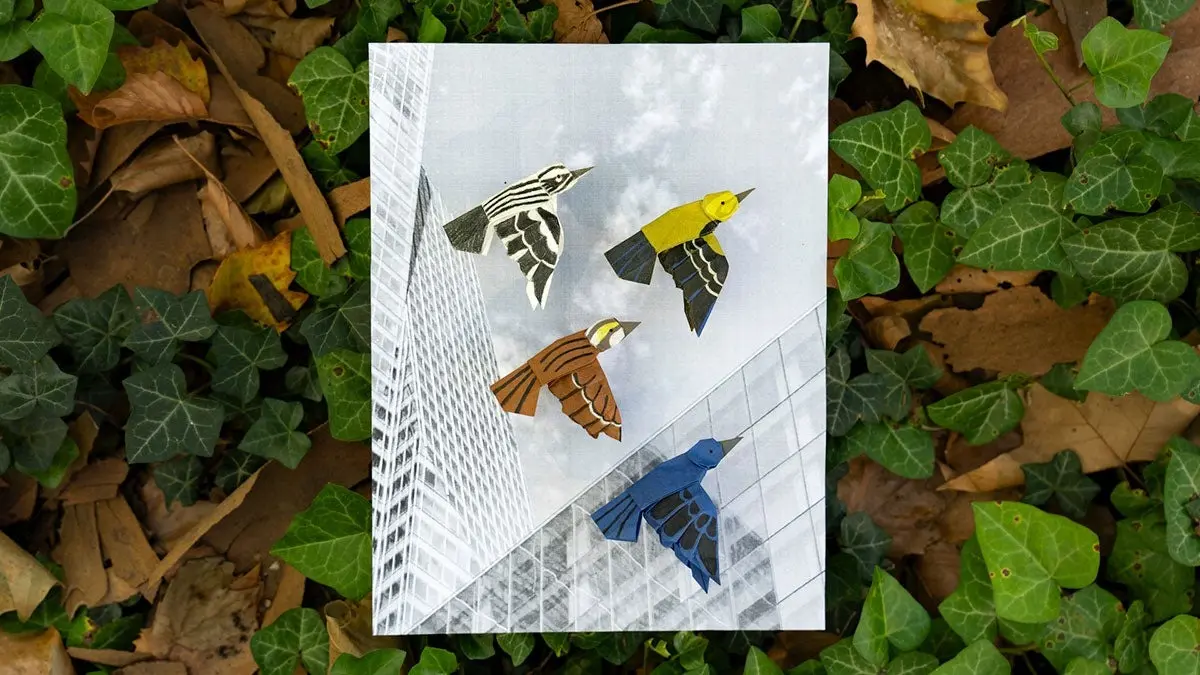
A master origami artist with over seven years of folding experience, Wu has channeled his poignant encounters into a striking, multi-dimensional art installation. By meticulously folding paper into the likenesses of four specific bird-strike victims he discovered during the spring migration—an Indigo Bunting, a Black-and-white Warbler, a Black-throated Green Warbler, and a White-throated Sparrow—he has transformed grief into advocacy. This comprehensive report explores Wu’s dual journey as an avian monitor and a paper sculptor, the broader ecological crisis facing migratory birds in urban environments, the critical data driving conservation efforts, and the legislative path toward safer skyscrapers.
Detailed Chronology: From the Manhattan Pavement to the Origami Studio
The Encounter That Sparked a Movement
The genesis of Wu’s recent artistic tribute traces back to a crisp morning this past May. Standing near a glassy Manhattan office building at the conclusion of his Project Safe Flight monitoring shift, the 14-year-old experienced a moment that would fundamentally alter his creative perspective. A brilliant flash of azure caught his eye—an Indigo Bunting, a songbird renowned for its dazzling, iridescent blue plumage.
Instants later, a sharp, dull thump echoed against the glass. The bunting struck the structural window and plummeted to the pavement, landing just feet from where Wu stood.
"It was shocking and sad," Wu recalls, reflecting on the fragility of the creature. "But it was also really beautiful."
This paradoxical convergence of vibrant life and sudden, tragic vulnerability left an indelible mark on the young conservationist. Rather than letting the memory fade, Wu decided to channel his emotional processing into the medium he knew best: origami. The fallen Indigo Bunting became the centerpiece of a new, deeply personal sculptural composition designed to honor not only this single bird, but all the avian casualties of the urban landscape.
A Seven-Year Journey in Paper Engineering
Wu’s mastery of origami is far from accidental; it is the product of half a lifetime of rigorous practice and artistic evolution. His journey began in elementary school, where he and his classmates folded simple ninja stars and introductory geometrical shapes. The hobby transformed into a dedicated passion when his aunt and cousins gifted him a specialized origami book.
As his dexterity and spatial reasoning improved, Wu quickly outgrew pre-packaged designs. Two years ago, he took the leap into original pattern design, establishing an online presence to showcase his intricate creations. Given his preexisting passion for birding in Central Park—a hobby he had cultivated for several years prior—it was only natural that his artistic focus gravitated toward fauna.
"They’re just really interesting subjects for folding because they have all these long appendages," Wu explains, noting the structural complexities required to replicate beaks, wings, and tails from a single uncut sheet of paper.
Anatomy of an Avian Sculpture
Crafting a realistic songbird from a flat square of paper requires an intimate understanding of both mathematics and biology. All of Wu’s avian designs begin with what paper artists call the classic "bird base"—a geometric configuration featuring five distinct flaps: a short central flap for the body, and four longer appendages destined to become the head, tail, and paired wings.
For his memorial piece, Wu elevated his standard process through meticulous material selection and post-folding detailing:
- Paper Selection: He opted for a heavier, higher-quality paper stock capable of holding sharp, permanent creases and supporting structural weight without sagging.
- Structural Alterations: Wu customized the foundational folds to mimic the specific feather configurations and resting postures of each species. He meticulously shaped the curvature of the wings to reflect how they would appear in flight or moments after landing.
- Chromatic Realism: To capture the subtle gradients of plumage, Wu utilized colored pencils, hand-rendering the distinctive black-and-white stripes of the Black-and-white Warbler and the vibrant throat patches of the Black-throated Green Warbler.
- Environmental Context: Once completed, the four paper songbirds were mounted onto paper-covered foam board. Wu arranged them against a photographic backdrop featuring the very Manhattan buildings he monitors near Bryant Park, grounding the fragile sculptures in the harsh urban environment that claimed their real-world counterparts.
Supporting Context & Metrics: The Crisis on the Glass Frontier
Understanding the Urban Avian Hazard
To appreciate the significance of Wu’s artwork, one must understand the ecological trap that New York City presents to migrating wildlife. Situated along the Atlantic Flyway—a major aerial migration corridor utilized by millions of birds each spring and fall—New York is a vital transit zone. However, the city’s architectural evolution has turned its urban core into a labyrinth of ecological hazards.
Migratory songbirds predominantly fly at night, navigating by the stars and the Earth’s magnetic field. When these exhausted travelers encounter severe light pollution emanating from brightly illuminated skyscrapers, they become profoundly disoriented. Drawn off course by the artificial glow, they are funneled into the urban canyons.
When morning breaks, a secondary peril emerges: reflective glass. Modern architectural designs favoring floor-to-ceiling windows mirror surrounding trees, open skies, and clouds, creating a fatal illusion of open space. Flying at high speeds, birds are incapable of perceiving glass as a physical barrier. Because these migratory species have often traveled hundreds of miles without rest or sustenance, their physical fatigue compounds their vulnerability, leaving them unable to react quickly to sudden obstacles.
Project Safe Flight and the Reality of "Lifers"
Wu’s firsthand exposure to this crisis occurs through his volunteer work with Project Safe Flight, an initiative spearheaded by the NYC Bird Alliance. Every Sunday during the volatile migration windows of spring and fall, Wu awakens before 7:00 a.m. to patrol the perimeter of Bryant Park.
His mission is methodical: he walks the building bases, scanning the ground for stunned, injured, or deceased birds.
- Live Rescues: When Wu encounters a stunned bird that has survived an impact, he carefully recovers it and arranges for transport to the Wild Bird Fund, a premier wildlife rehabilitation center located in Manhattan. During the recent spring migration, Wu successfully rescued a live Brown Creeper, offering it a fighting chance at recovery.
- Specimen Collection: Tragically, the vast majority of birds discovered during these patrols have already succumbed to the impact. These deceased specimens are meticulously collected, cataloged, and donated to the ornithology department at the American Museum of Natural History, where they contribute to ongoing scientific research, genetic studies, and taxonomic preservation.
For a young birder, participating in these patrols brings a profoundly bittersweet emotional toll. In the birding community, spotting a new species for the first time is celebrated as checking off a "lifer." For Wu, the grim reality of his volunteer work means that his introduction to several new species has occurred posthumously.
"A lot of them were lifers, even though they were dead," Wu reflects, capturing the poignant duality of his conservation fieldwork.
Official Statements and Quantitative Impact
The Staggering Toll of Building Collisions
While individual anecdotes from young monitors like Miles Wu provide a human and emotional face to the issue, large-scale data collection is essential for driving systemic legislative reform. The persistent efforts of Project Safe Flight volunteers furnish conservation scientists with the rigorous metrics needed to quantify the annual loss of urban wildlife.
According to comprehensive estimates compiled by the NYC Bird Alliance, an astounding 90,000 to 230,000 birds perish from window collisions in New York City every single year. This staggering mortality rate makes the urban built environment one of the single most dangerous anthropogenic threats to migratory bird populations along the Eastern Seaboard.
Conservation organizations utilize these empirical datasets to lobby property owners, real estate developers, and municipal legislators. The overarching goal is the widespread adoption of bird-friendly building practices, which have proven highly effective at mitigating strike rates. Key interventions include:
- Lights-Out Initiatives: Encouraging commercial building management to dim or extinguish non-essential exterior and interior lighting during peak nocturnal migration hours (typically midnight to dawn).
- Bird-Safe Glazing: Retrofitting existing windows and mandating new construction to incorporate pattern-infused glass, UV-reflective films, or exterior screens that break up reflections and signal a physical barrier to approaching birds.
Bridging Science and Art
Conservationists and educators have increasingly recognized that quantitative data alone is sometimes insufficient to inspire broad public action. This is where creative interventions, such as Wu’s origami installation, play an indispensable role. By translating cold statistics into tangible, delicate works of art, young advocates can reach demographics that might otherwise remain disconnected from environmental policy discussions.
"I thought this piece would be like a tribute to all the birds from Project Safe Flight," Wu states, summarizing the philosophy behind his installation. His artwork serves as an empathetic bridge, prompting downtown workers, tourists, and passersby to look closer at the glass walls surrounding them and consider the invisible lives impacted by urban development.
Future Outlook: A Safer Horizon for New York’s Avians
As Miles Wu continues to refine his artistic techniques and expand his commitment to conservation, the broader movement for bird-safe architecture in New York City gains crucial momentum. Municipal legislation, such as local laws requiring bird-friendly building materials in new city-owned or significantly altered structures, represents a vital step forward. However, retrofitting the millions of square feet of existing commercial real estate remains an ongoing challenge requiring continuous advocacy, public education, and sustained data collection.
The intersection of youth activism, scientific monitoring, and creative expression offers a compelling blueprint for the future of urban conservation. When a fourteen-year-old can transform a tragic encounter into an intricate work of art that honors the fallen while educating the public, it signals a cultural shift in how cities value urban biodiversity.
Ultimately, installations like Wu’s Aviary piece remind us that coexistence between bustling metropolises and vulnerable wildlife is not an impossible dream, but a shared responsibility. As policymakers debate architectural standards and building managers evaluate lighting policies, the paper birds resting against their photographic Manhattan backdrop stand as both a memorial to past losses and a silent sentinel for a safer, more mindful tomorrow.