To an ordinary pet, the modern world is a carnival of sensory temptations. The aroma of fallen food, the distant call of a passing stranger, the darting blur of a squirrel, and the chaotic symphony of urban traffic constantly vie for attention. For everyday dogs, yielding to these impulses is a natural instinct. However, for a fully certified service dog, this same environment must transform into a place of profound tranquility, focus, and unwavering reliability.
At the heart of every successful assistance animal lies a masterclass in psychological conditioning, emotional bonding, and expert instruction known as focus training. Far from being an innate trait, the ability of a service dog to completely tune out environmental chaos is meticulously engineered. It is built through early socialization, systematic desensitization, positive reinforcement, and relentless repetition.
Organizations like Dogs Inc stand at the vanguard of this specialized field, executing comprehensive training pipelines that transform eager puppies into composed, life-changing partners. This report explores the architecture of service dog focus training—examining why neutrality is the ultimate goal, dissecting the primary categories of distractions, analyzing the techniques used by professional trainers and volunteer puppy raisers, and highlighting how absolute focus translates into human safety, autonomy, and confidence.
Detailed Chronology: The Lifecycle of a Service Dog’s Focus Training
The journey from a hyperactive, curious puppy to a hyper-attentive, calm working professional does not happen overnight. It is a carefully calibrated developmental timeline spanning many months, divided into distinct phases where focus is systematically introduced, tested, and proven.
Phase 1: Early Infancy and Foundational Socialization (Months 0–6)
Focus training begins long before a puppy is ever tasked with opening a door, retrieving an dropped item, or guiding a handler through a congested street. In the earliest stages of life, puppy raisers introduce newborns and young pups to novel sights, sounds, and textures.
The First Exposures: Puppies are gently exposed to urban sidewalks, grocery store exteriors, bustling parks, and unexpected auditory stimuli.
Building Positive Associations: Every new environmental factor is immediately paired with calm behavior and high-value rewards. This teaches the developing puppy to approach novel stimuli with curiosity rather than fear or over-excitement, laying the groundwork for emotional stability.
Establishing Eye Contact: Raisers use early positive reinforcement games to encourage spontaneous eye contact. The puppy learns a fundamental rule of engagement: looking toward their human guardian is infinitely more rewarding than investigating the surrounding environment.
Phase 2: Adolescent Development and Impulse Control (Months 6–12)
As puppies enter adolescence, their world expands rapidly, and their biological instincts—such as prey drive, social curiosity, and territorial awareness—begin to peak. This is often the most challenging period of development.
Gradual Distraction Escalation: Trainers systematically increase the difficulty of the training environment. Starting in quiet, controlled indoor spaces, they slowly transition to moderately busy areas, keeping the dog far enough away from triggers to ensure they can remain calm and responsive.
Mastering the Pause: Impulse control exercises become daily staples. Puppies learn to pause before reacting to a dropped piece of food, an approaching dog, or a sudden loud noise. In that crucial window of hesitation, the dog is rewarded for choosing focus over instinct.
The Puppy Raiser Partnership: During this phase, volunteer puppy raisers act as frontline educators, turning everyday errands, family gatherings, and community outings into micro-training sessions that cement reliable habits.
Phase 3: Advanced Public Access Training (Months 12–18+)
Once the foundational impulse control and obedience behaviors are solidified, the adolescent dog transitions to professional trainers for advanced public access preparation.
Real-World Environments: Dogs are integrated into complex commercial and public facilities, including shopping malls, public transit systems, crowded restaurants, and medical centers.
Proofing Behaviors: Trainers test the dog’s reliability across diverse scenarios. A command given in a quiet training room must be executed with identical precision in the middle of a noisy, crowded concourse smelling of hot food and echoing with public announcements.
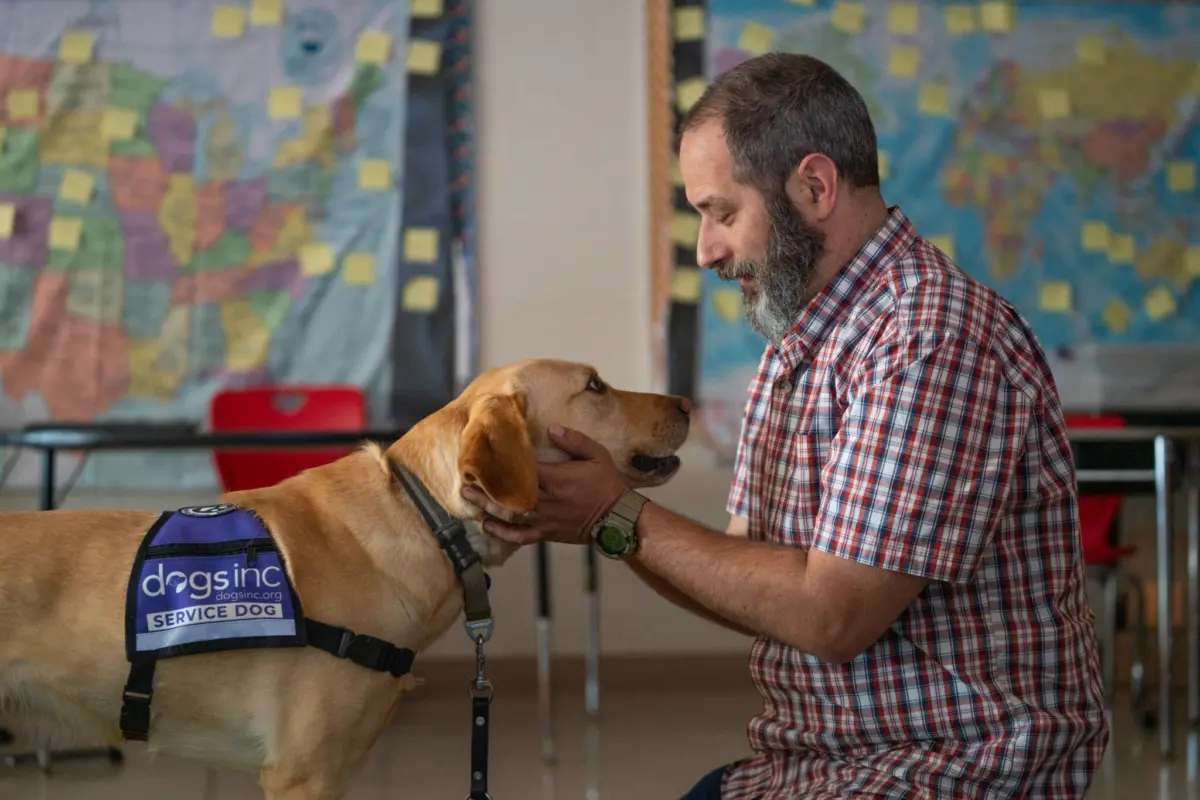
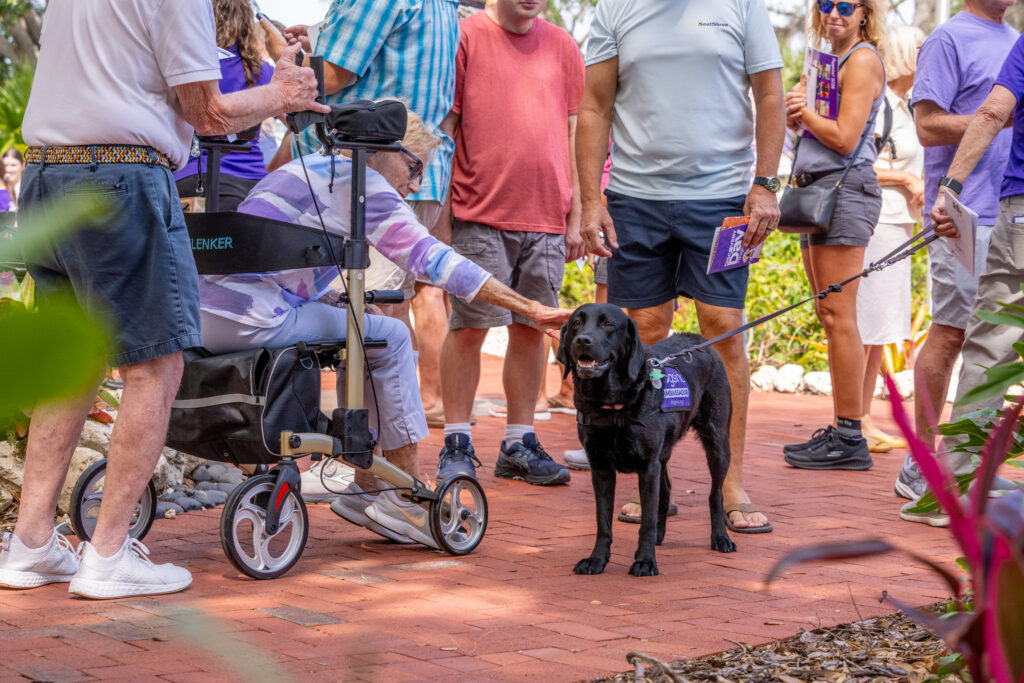
Handling Social Pressures: The dog learns to completely ignore well-meaning strangers attempting to make eye contact, talk to them, or initiate unauthorized leash greetings.
Phase 4: Final Placement and Lifelong Maintenance
The culmination of the training chronology occurs when the fully proofed service dog is matched with an individual with disabilities.
Team Integration: The handler and dog undergo intensive joint training to ensure seamless communication.
Sustained Working Mindset: Even after graduation, the working partnership relies on ongoing consistency, regular reinforcement of boundaries, and clear communication to ensure the dog’s focus never degrades over time.
Supporting Context & Metrics: Navigating the Four Pillars of Distraction
To understand the complexity of focus training, one must examine the specific categories of stimuli that test a service dog’s resolve. Distractions are not monolithic; they operate across distinct sensory channels that require tailored desensitization strategies.
1. Environmental Distractions
The Challenge: Crowds, dense traffic, sudden architectural movements, flashing lights, and piercing acoustic shocks (such as sirens, construction noise, or public address systems).
The Impact: These triggers can easily trigger a "fight-or-flight" response in untrained or genetically sensitive canines.
The Training Remedy: Systematic desensitization and counter-conditioning. By exposing the dog to environmental stressors from a safe distance and gradually closing the gap while rewarding calm demeanor, trainers rewrite the brain’s baseline stress response.
2. Social Distractions
The Challenge: Human interaction. Passersby frequently attempt unauthorized leash greetings, make direct eye contact, whistle, or call out to the animal.
The Impact: Service dogs are frequently perceived as friendly pets rather than working medical equipment, leading to well-meaning but hazardous interruptions.
The Training Remedy: Focus training instills an absolute disregard for outside social cues. The dog learns that its sole social anchor is the handler, rendering external human attention entirely irrelevant.
3. Food and Scent Distractions
The Challenge: Restaurants, grocery store aisles, discarded food items on sidewalks, and powerful organic aromas.
The Impact: Olfactory perception is a dog’s primary window to the world. Scent-based temptations represent some of the strongest natural pulls an animal can experience.
The Training Remedy: Through rigorous impulse control protocols, service dogs learn that food encountered in the environment is not an invitation to consume, but rather an inert object to be acknowledged and calmly bypassed.
4. Other Dogs and Wildlife
The Challenge: Squirrels, birds, cats, and passing pet dogs.
The Impact: These represent primal, evolutionary triggers designed to provoke a chase response.
The Training Remedy: Instructors employ high-value rewards and distance-increasing techniques to build a reliable recall and emotional neutrality, ensuring the dog remains composed even when chased or provoked by untrained animals.
Official Statements and Expert Perspectives
The methodology behind elite service animal training relies heavily on empirical behavioral science and the dedicated collaboration of community volunteers.
Industry experts emphasize that a service dog’s focus is fundamentally a communication bridge. According to leading canine behaviorists and institutional instructors at organizations like Dogs Inc:
"A service dog’s focus acts as a communication bridge, showing they trust their guardian as a source of direction and reward. We do not train dogs to completely ignore the world around them; rather, we train them to move through it with absolute control and neutrality."
Furthermore, experts highlight the irreplaceable value of the human-animal bond in sustaining this focus:
"Dogs are far more likely to focus on their person when they see them as the most rewarding part of their environment. This is not achieved through coercion or intimidation, but through positive reinforcement, clear boundaries, and consistent expectation-setting from the very first day of puppyhood."
Institutional leaders frequently underscore the collaborative nature of this mission. The tripartite partnership between professional instructors, volunteer puppy raisers, and the eventual handlers creates an unbroken chain of accountability. Every walk through a shopping center, every delayed gratification exercise, and every positive reinforcement reward compounds to build an animal capable of life-saving reliability.
Future Outlook: The Evolution of Service Dog Training and Accessibility
As societal awareness regarding accessibility and disability rights continues to expand, the demand for highly trained service animals is surging. Looking toward the future, organizations dedicated to breeding and training working canines are continually refining their methodologies to meet modern challenges.
1. Advanced Behavioral Genetics and Early Screening
Modern breeding programs are increasingly utilizing data-driven behavioral tracking and genetic profiling to identify puppies with optimal resilience, low startle thresholds, and high trainability scores before formal training even begins. This ensures that resources are invested in animals best suited to withstand the rigorous demands of public access work.
2. Public Education and Etiquette Advocacy
A persistent hurdle in the modern landscape of service dog handling is the prevalence of public misunderstanding regarding service dog etiquette. Future outlooks emphasize broad public education campaigns aimed at teaching communities how to respect working teams—specifically by refraining from distracting, petting, or calling out to working animals. Protecting a service dog’s focus is a community responsibility, not just an owner’s burden.
3. Technology-Assisted Training and Tele-Support
The integration of digital tracking tools, remote coaching platforms, and standardized evaluation metrics is helping training institutions scale their impact. By supporting volunteer puppy raisers with real-time digital feedback and data analytics on distraction thresholds, organizations can optimize the foundational training period with unprecedented precision.
Conclusion
Ultimately, the journey of service dog focus training is a testament to the profound potential of interspecies cooperation. By transforming a world full of chaotic distractions into a quiet, manageable landscape, institutions like Dogs Inc empower individuals with disabilities to navigate daily life with dignity, independence, and absolute confidence. Through patience, positive reinforcement, and unyielding consistency, the distracted puppy becomes the focused professional—a steady, grounded partner standing ready when it matters most.