
Executive Overview
In a decisive move to future-proof the nation’s food security and alleviate crippling labor deficits, the United Kingdom government has launched a landmark £20 million funding competition. Spearheaded by Farming Minister Stephen Morgan, this strategic financial injection is designed to accelerate the research, development, and deployment of next-generation agricultural automation and robotics.
The initiative moves far beyond traditional boundaries by welcoming cutting-edge automation solutions not only for arable crops and horticulture, but crucially expanding its scope to encompass livestock management and forestry. Part of the Department for Environment, Food and Rural Affairs’ (Defra) flagship Farming Innovation Programme—and sitting comfortably within a broader £23 million governmental commitment to agricultural research and development this year—the scheme represents a vital lifeline for agritech innovators navigating the perilous “valley of death” between prototype development and widespread commercialization.
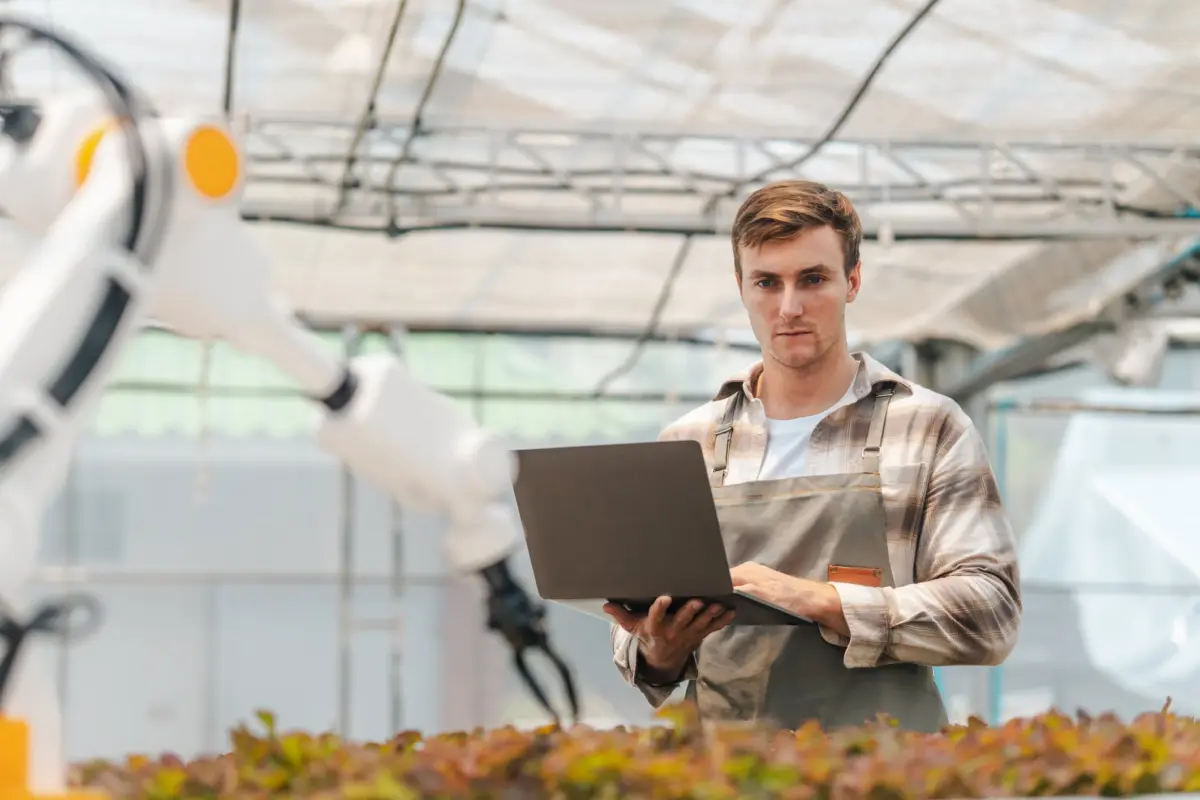
Delivered in direct partnership with Innovate UK, the competition challenges Britain’s brightest engineering and agricultural minds to design smart machines capable of planting, tending, harvesting, and managing land autonomously. As traditional labor pools continue to shrink in the wake of post-Brexit migration shifts and demographic changes, this funding aims to transform the operational backbone of British farming. By putting advanced robotics directly into the hands of growers, livestock farmers, and foresters, the government hopes to boost yields, slash operational overheads, and cement the UK’s position as a global leader in sustainable, high-tech agriculture.
Detailed Chronology and Policy Evolution
To understand the weight of the £20 million announcement, one must trace the recent evolution of UK agricultural policy. For decades, British farming relied heavily on a predictable, transient seasonal workforce—a model that suffered catastrophic disruptions during the convergence of Brexit and the COVID-19 pandemic. Faced with unharvested crops rotting in fields and rising labor costs, both industry leaders and policymakers recognized that human labor shortages were no longer a temporary cyclical blip, but rather a permanent structural challenge.
The Shift Toward Agtech Resilience
In response, the UK government began carving out targeted funding streams to foster home-grown technological alternatives. The genesis of this modern push can be traced back to the establishment of the Farming Innovation Programme (FIP).
- Phase One (Foundations): Initial rounds of funding targeted low-TRL (Technology Readiness Level) research, supporting academic institutions and early-stage start-ups in conceptualizing automated harvesting tools, automated weeders, and AI-driven crop monitors.
- Phase Two (Scaling Up): As prototypes matured, funding mechanisms pivoted toward collaborative R&D, requiring tech developers to partner directly with working farms to test machinery under rigorous, real-world agricultural conditions.
- Phase Three (The Current £20 Million Expansion): Marking a distinct departure from earlier, highly segmented competitions, the latest iteration broadens the horizons. Delivered alongside Innovate UK, it deliberately tears down silos by opening eligibility to livestock and forestry sectors—industries that have historically lagged behind horticulture and arable farming in automation investment due to the complex, unpredictable nature of managing live animals and rugged woodland environments.
This chronology highlights a maturing industrial policy. The government is no longer simply funding blue-sky research; it is orchestrating an entire pipeline designed to take ideas out of university laboratories and place them firmly onto the muddy backroads of British farms.
Supporting Context, Economic Metrics, and Industrial Realities
While a £20 million funding pot is a welcome stimulus, industry veterans note that it represents just a fraction of the capital required to commercialize heavy-duty industrial robotics. Transforming a delicate robotic arm that works in a controlled lab into a rugged, mud-proof, weather-resistant machine capable of operating 16 hours a day on a commercial farm is an intensely capital-intensive journey.
The Economics of Agtech Scale-Up
To contextualize the financial landscape, consider the trajectory of pioneering UK agritech firms:
- Fieldwork Robotics: Having recently secured significant funding to transition from pilot programs to full-scale farm operations, the company’s flagship autonomous raspberry-picking robot illustrates the immense runway required. Through successive rounds of Defra and Innovate UK grants, Fieldwork has successfully graduated from a conceptual prototype to a production-ready system. The business has now locked down a domestic manufacturing partnership capable of churning out up to 5,000 robots annually.
- RootWave: Operating in the non-chemical weed control space, RootWave utilizes high-frequency electricity to kill weeds down to the root, offering a sustainable alternative to chemical herbicides. Securing substantial funding rounds has allowed the company to scale globally, yet executives emphasize that the transition from prototype to commercial scale remains fraught with financial bottlenecks.
[Academic Concept]
       │
       ▼ (Initial Defra/Innovate UK R&D Grants)
[Functional Prototype]
       │
       ▼ (Scaling & Field Testing Phase - Capital Intensive)
[Production-Ready Commercial System]
       │
       ▼ (Manufacturing & Wide-Scale Farm Adoption)
[Resilient, Automated Agricultural Sector]
Strategic Allocation vs. Dilution
A central debate among industry leaders centers on how these public funds should be distributed. Tom Archer, Head of Sales & Marketing at RootWave, has voiced a pragmatic warning regarding the £20 million allocation. While acknowledging the profound difference the funding can make, Archer cautions against spreading the capital too thin.
"Taking products from prototype to commercial scale is a capital-intensive phase as companies complete testing for usability, performance, and durability in real-world conditions," Archer notes. He advocates for a strategic approach that prioritizes fewer, higher-quality projects over the broad distribution of modest grants, ensuring that selected innovators receive enough capital to genuinely move the needle.
Official Statements and Stakeholder Perspectives
The rollout of the £20 million competition has elicited widespread commentary from government officials, industry bodies, and technology developers alike, underscoring a unified consensus: automation is no longer a futuristic luxury, but an existential necessity for modern food production.
Government Commitment: Farming Minister Stephen Morgan
Announcing the competition, Farming Minister Stephen Morgan emphasized the human element behind the policy, framing high-tech automation as a direct support mechanism for overburdened agricultural workers.
"Farmers work incredibly hard to put food on our tables, often battling to find enough seasonal workers when the pressure is on," Morgan stated. "This funding will help put cutting-edge robots and technology into their hands, easing that burden while boosting yields and profits."
Morgan’s remarks reflect a calculated political and economic strategy. By linking technological adoption directly to business profitability and mental well-being on the farm, the government is actively seeking to dismantle traditional resistance to automation among older generations of farmers.
The Innovate UK Perspective: Bridging the Valley of Death
Chris Danks, Head of Agrifood at Innovate UK, expanded on the mechanical and operational goals of the partnership, stressing the importance of closing the gap between conception and deployment.
"Robotics and automation are becoming increasingly important tools to help farmers improve productivity and build more resilient businesses," Danks explained. "This competition will help accelerate innovations from concept to on-farm application."
Danks’s focus on on-farm application is critical. For years, brilliant agritech solutions have stalled because developers lacked the networks or resources to integrate their software and hardware into existing farm machinery fleets and operational workflows.
Industry Voices: The Reality of Scaling Up
Sid Shaikh, Chief Technology Officer at Fieldwork Robotics, provided an insider’s view on how government backing acts as a force multiplier for early-stage and scaling enterprises.
"Through a combination of Defra and IUK grant funding, we have progressed our technology from prototype development to a production-ready robotic harvesting system," Shaikh shared.
He elaborated on how the nature of public support must evolve alongside the businesses it targets:
"It has moved beyond supporting innovation and product development to helping companies like Fieldwork Robotics with certification, commercialisation, scale-up and technology adoption. Developing and commercialising complex autonomous systems requires significant investment well beyond the initial R&D phase."
Shaikh’s insights underscore a vital policy lesson: early-stage grants are essential for invention, but targeted validation, certification, and commercialization support are what ultimately secure economic return on investment for the taxpayer.
Future Outlook: The Horizon of Autonomous Agriculture
As the application window for the £20 million funding competition opens, the broader horizon for UK agriculture is undergoing a profound structural metamorphosis. The integration of artificial intelligence, machine vision, and autonomous locomotion is set to redefine what it means to be a farmer in the 21st century.
Beyond the Horizon: Livestock and Forestry
By expanding the current funding round beyond arable crops and horticulture, Defra has opened the door to groundbreaking innovations in sectors that have historically been underserved by Silicon Valley and domestic tech start-ups alike:
- Livestock Automation: Autonomous drones and ground rovers equipped with thermal imaging and biometric sensors are poised to monitor herd health, track grazing patterns, and detect lameness or disease long before symptoms become visible to a human herdsman.
- Forestry Robotics: Automated thinning, precision planting, and AI-driven disease mapping in dense woodlands will allow forestry managers to maximize carbon sequestration and sustainable timber yields while minimizing human exposure to hazardous logging environments.
The Road Ahead: Challenges to Overcome
Despite the undeniable promise, significant hurdles remain before fully autonomous farming becomes ubiquitous across the British countryside:
- Rural Digital Infrastructure: Reliable, high-speed 5G and fiber-optic connectivity must reach deep rural areas if autonomous fleets are to operate safely and effectively without constant human oversight.
- Standardization and Interoperability: Farmers frequently utilize machinery from multiple competing manufacturers. Ensuring that a harvesting robot from Company A can seamlessly communicate with a tractor from Company B will require open industry standards.
- Trust and Skill Acquisition: The modern agricultural workforce must be upskilled. Navigating, repairing, and programming advanced agritech requires a new breed of digitally fluent agriculturalists, necessitating robust educational pathways and vocational training programs.
Conclusion
The UK government’s £20 million injection into agricultural robotics is more than just a financial grant scheme; it is a strategic blueprint for national food security and ecological resilience. By bridging the notoriously treacherous gap between laboratory prototypes and commercial farm deployment, this initiative empowers innovators like Fieldwork Robotics and RootWave to scale their solutions globally. As these intelligent machines take root in fields, orchards, barns, and forests across the nation, British agriculture is stepping boldly into an era where productivity, sustainability, and technological ingenuity walk hand in hand.