
Date: August 11, 2026
Source: Alley Cat Action® 2026 Summer Newsletter
Executive Overview
The landscape of feline welfare is fraught with systemic challenges, ranging from large-scale hoarding crises to severe neglect and physical trauma. Yet, within this complex environment, moments of profound resilience continually emerge. The Alley Cat Action® 2026 Summer Newsletter highlights a series of extraordinary rescue operations that underscore the impact of targeted intervention, community partnership, and unwavering compassion.
At the center of these narratives are individual animals—such as Neo, a battle-scarred black cat who overcame severe malnutrition and trauma; Cricket, a spirited survivor of a massive multi-cat hoarding rescue in Alabama; and Strudel and her litter of kittens, who transitioned from the precarious environment of a high-stress shelter to thriving domestic health. These accounts do more than showcase individual survival; they serve as a testament to the life-saving infrastructure made possible by dedicated animal advocacy groups and the donors who sustain them.
This report examines the intricate details of these rescue missions, exploring the medical diagnoses, rehabilitative protocols, systemic challenges of large-scale animal rescues, and the long-term outlook for feline welfare advocacy as organizations navigate the ongoing demands of the field.
Detailed Chronology: Stories from the Front Lines of Rescue
Neo: The Face of Resilience
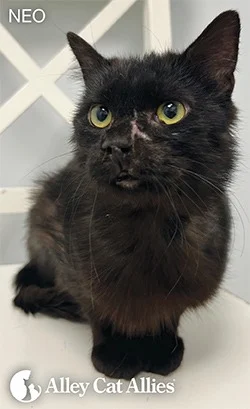
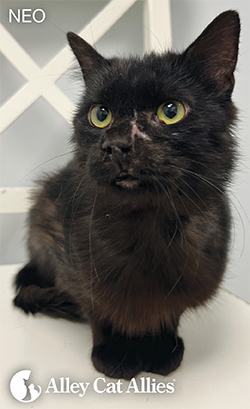
Every rescue animal carries a history written upon their physical form, but few wear their past as visibly—or as proudly—as Neo. When the small black cat first entered the care of rescue personnel, his condition was alarming. He bore a massive, raw wound across his face, a trauma that would instantly draw the eye and evoke deep concern. However, medical evaluations quickly revealed that the facial wound was merely the most prominent symptom of a broader, systemic crisis.
Upon intake, veterinary teams discovered that Neo was severely underweight, deeply malnourished, and fighting off a serious systemic illness. His body was depleted, leaving him with limited physiological reserves to combat the infections ravaging his compromised immune system. For a cat in such a fragile state, the margin for error during medical intervention is razor-thin.
The rehabilitation process required immediate, intensive surgical intervention to address his facial trauma, followed by weeks of specialized medical management, caloric rehabilitation, and watchful post-operative nursing care. Neo proved to be an exceptional patient—or rather, a formidable fighter. As his body regained strength, his underlying spirit emerged.
Today, the extensive facial wound has healed completely, leaving behind a distinct scar across his nose. Rather than detracting from his appearance, this mark has become a symbol of his survival. Veterinary and care staff have embraced the scar not as a blemish, but as a distinguished badge of honor and bravery. Neo’s journey illustrates the reality that with adequate resources and expert medical care, even cats facing extreme physical deficits can achieve complete physiological and emotional recovery.

+-----------------------------------------------------------------+
|                        NEO'S RECOVERY PATH                      |
+-----------------------------------------------------------------+
|  [Intake] -------------> [Surgical Care] ------> [Rehabilitation]|
|  - Severe Malnutrition   - Facial Wound Repair   - Weeks of       |
|  - Systemic Illness      - Infection Control       Medical Care   |
|  - Critical Weight Loss                          - Full Healing  |
+-----------------------------------------------------------------+
Cricket: Defying the Odds in Alabama
While individual street rescues present distinct medical hurdles, large-scale multi-cat interventions introduce complex logistical and veterinary challenges. Such was the case when an astonishing 91 cats and kittens were discovered living in cramped, highly unsuitable conditions on a single residential property in Alabama. The scale of the discovery required immediate collaboration between local responders and national advocacy networks, with Alley Cat Allies stepping in to absorb and underwrite the extensive veterinary costs required to triage the influx of animals.
In large hoarding situations, the spectrum of health issues is typically wide, ranging from upper respiratory infections and parasitic infestations to severe psychological trauma. Miraculously, the majority of the 91 cats and kittens pulled from the Alabama property presented with only minor, easily manageable injuries and illnesses.
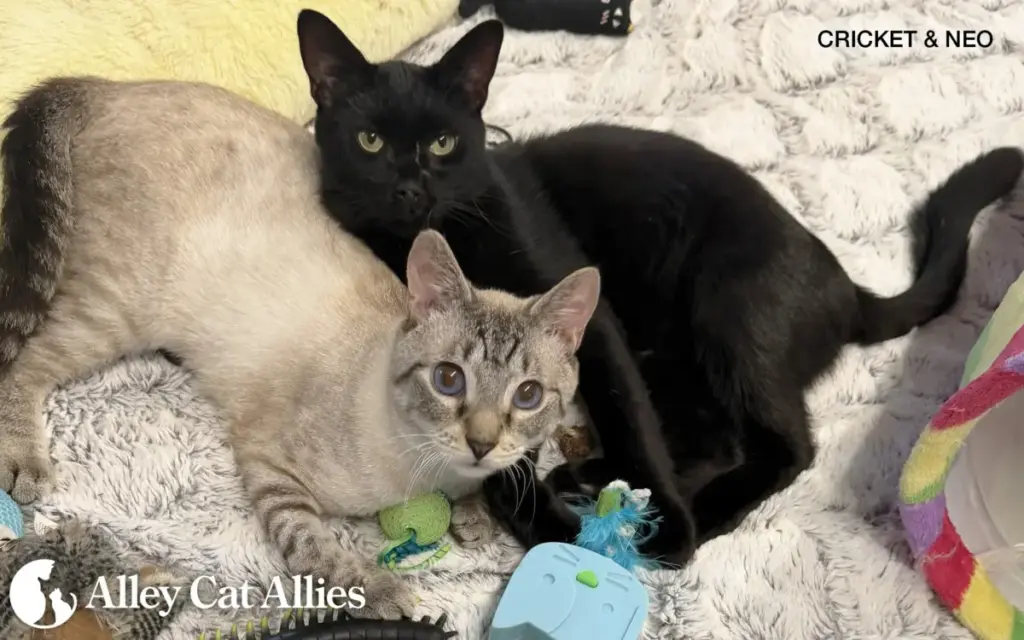
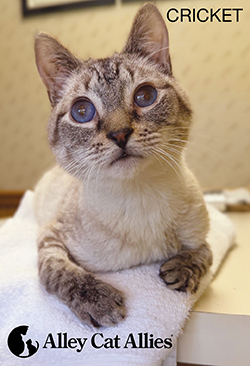
One cat, however, stood apart from the cohort. Cricket, approximately one year old at the time of rescue, caught the attention of veterinary teams due to an unmistakable physical anomaly involving his front legs. Upon clinical examination, Cricket received an official diagnosis of carpal laxity—a developmental and structural condition that severely compromises the stability of the wrist joints.
Carpal laxity can hinder mobility, placing abnormal strain on the skeletal structure and making normal movement difficult or painful. To combat this, Cricket was placed on a specialized treatment regimen designed to strengthen his forelimbs and correct his joint alignment. A core component of this protocol involves the strategic use of medical splinting to stabilize the joints while allowing for supervised, gentle movement.
Despite the physical demands of his treatment, Cricket’s disposition remains entirely undeterred. His medical constraints have done nothing to curb his enthusiasm for life. According to his caretakers, Cricket divides his time between demanding affectionate human contact—insisting on being picked up and snuggled at every opportunity—and displaying sudden bursts of high-energy play that give the term "zoomies" an entirely new definition. His case highlights the resilience of animals adapting to physical therapy and underscores the importance of specialized orthopedic care in rescue environments.
Strudel, Cherry, Berry, and Pebbles: A Family Transformed
For maternal cats living in precarious or unmanaged environments, the cycle of reproduction often leads to a continuous loop of physical depletion and vulnerability for both the mother and successive litters. Breaking this cycle requires a dual-pronged approach: immediate neonatal and maternal support followed by permanent population management.
Strudel entered the rescue ecosystem accompanied by her vulnerable litter of kittens: Cherry, Berry, and Pebbles. They had been housed in a traditional shelter environment—a setting that, while well-intentioned, often exposes young, immunologically naive kittens to high levels of stress and pathogen exposure. Without timely intervention and extraction from the shelter environment, the survival rates for Strudel and her offspring hung in the balance.
The intervention of rescue supporters changed the trajectory of their lives. From their earliest days of dependency through their developmental milestones, Strudel, Cherry, Berry, and Pebbles received comprehensive medical care, nutritional support, and a safe, stable environment. This early investment in their health fostered strong immune systems and balanced temperaments.
As part of their ongoing care plan, Strudel is scheduled to be spayed, ensuring that this will be her final litter. This critical surgical intervention spares her from the relentless physical toll of repeated pregnancies, allowing her to redirect her energy toward her own health and well-being. Meanwhile, her kittens—Cherry, Berry, and Pebbles—benefit from the security of a healthy start, enabling them to engage in natural feline behaviors: playing hard, sleeping soundly, and experiencing life free from the foundational trauma of early neglect.
Supporting Context & Metrics: The Mechanics of Modern Rescue
The stories of Neo, Cricket, Strudel, and her kittens are representative of a larger, systemic operational framework required to sustain modern feline advocacy and rescue work. Behind every successful adoption, medical recovery, and large-scale hoarding intervention lies an intricate matrix of logistics, financial allocation, and specialized veterinary science.
The Financial and Logistical Realities of Hoarding Interventions
When a property yields 91 cats and kittens, as occurred in the Alabama rescue, the immediate resource strain on local shelters is catastrophic. Standard municipal facilities rarely possess the physical space, staff bandwidth, or financial capital to absorb nearly a hundred unexpected animals simultaneously.
- Veterinary Triage: The initial medical costs involve intake exams, vaccinations, parasite treatments, and diagnostic testing for feline leukemia virus (FeLV) and feline immunodeficiency virus (FIV).
- Specialized Surgeries: Cases like Neo’s facial reconstruction or ongoing physical therapies like Cricket’s carpal laxity splinting require specialized veterinary surgeons, durable medical equipment, and extended pharmacological support.
- Network Partnerships: National organizations like Alley Cat Allies act as a financial and logistical safety net, covering veterinary expenses that would otherwise overwhelm grassroots responders and force difficult decisions regarding resource allocation.
Medical Insight: Understanding Feline Conditions
To contextualize the recoveries detailed in the Alley Cat Action® report, it is valuable to examine the underlying veterinary science governing these conditions:
- Systemic Malnutrition and Trauma Recovery (Neo): Severe weight loss in stray or neglected cats leads to hepatic lipidosis (fatty liver disease) if not managed carefully during re-feeding. Neo’s recovery required a calibrated nutritional protocol paired with surgical wound management to ensure that healing tissues received adequate protein and micronutrients.
- Carpal Laxity Syndrome (Cricket): Common in rapidly growing kittens and cats subjected to poor nutritional environments or confinement, carpal laxity involves weakness in the flexor tendons and ligaments surrounding the carpal joint. Treatment typically centers on nutritional optimization (ensuring proper calcium-phosphorus ratios and vitamin D levels) combined with controlled physical therapy and supportive splinting.
- Maternal Depletion and Neonatal Care (Strudel & Litter): Lactation places an immense metabolic load on a mother cat. Without high-caloric nutrition and safe housing, queens frequently suffer from calcium deficiency (eclampsia) and rapid weight loss. Spaying Strudel post-weaning not only prevents future litters but also halts the hormonal and physical cycle of depletion, significantly extending her life expectancy and improving her quality of life.
Official Statements and Institutional Perspective
The overarching philosophy guiding these interventions centers on the intrinsic value of every feline life, regardless of physical condition, age, or past trauma. Representatives from animal welfare organizations emphasize that rescue work extends far beyond basic sheltering; it requires a commitment to restorative medicine and community education.
"Every cat that comes into our care—whether they bear the scars of physical trauma like Neo, navigate congenital conditions like Cricket, or require a safe foundation for a mother and her young like Strudel—represents a life of inherent worth. Our mission is to meet their physical and emotional needs fully, ensuring that survival is only the beginning of a thriving, joyful existence."
— Reflections from the Alley Cat Action® Editorial and Rescue Teams
Advocacy groups continually stress that these outcomes are not achieved in isolation. They are the direct result of a collaborative ecosystem comprising on-the-ground rescuers, specialized veterinary professionals, national oversight organizations, and compassionate donors who provide the financial backbone necessary to fund complex surgeries, long-term physical therapy, and emergency hoarding interventions.
Future Outlook: The Ongoing Evolution of Feline Welfare
As the animal welfare community looks toward the remainder of 2026 and beyond, the lessons learned from cases like those featured in the Alley Cat Action® Summer Newsletter point toward several critical areas of focus and development:
1. Scaling Emergency Response Capabilities
Large-scale hoarding cases and mass surrenders are projected to remain a persistent challenge. Strengthening the infrastructure between national funding bodies and regional shelters will be paramount. Developing rapid-deployment veterinary teams equipped to handle mass intakes on-site will reduce the trauma experienced by animals during transport and initial intake phases.
2. Advancing Specialized Veterinary Medicine
The successful rehabilitation of cats with complex orthopedic conditions, such as Cricket’s carpal laxity, demonstrates the value of advanced physical therapy in feline medicine. Future initiatives will likely see an expansion in rehabilitative modalities—including hydrotherapy, targeted physical therapy, and advanced orthotic manufacturing—tailored specifically to companion animals.
3. Proactive Population Management through Spay/Neuter Access
The intervention provided to Strudel and her kittens highlights the ultimate goal of humane advocacy: breaking the cycle of uncontrolled breeding. Expanding low-cost, high-volume spay and neuter (HVSN) programs remains the single most effective tool for preventing maternal depletion, reducing shelter overpopulation, and mitigating the root causes of neglect before they culminate in emergency rescues.
4. Cultivating a Culture of Compassion and Adoption
Public perception of "imperfect" pets is shifting. As evidenced by Neo’s distinguished scar and Cricket’s irrepressible energy, animals with unique physical histories or ongoing medical needs possess immense capacity for companionship and joy. Education campaigns that reframe scars, old injuries, and special needs as badges of resilience will continue to drive adoption rates and foster deep empathy within communities.
Conclusion
The narratives of Neo, Cricket, Strudel, Cherry, Berry, and Pebbles are powerful reminders of what is possible when dedication meets resources. They are stories of transformation—moving from the brink of starvation, confinement, and neglect into lives defined by safety, play, and affection. Through the sustained efforts of organizations like Alley Cat Allies and the steadfast support of compassionate individuals, these cats have not only survived; they have reclaimed their right to a life lived to the fullest.