
Executive Overview
The global agricultural technology landscape is undergoing a structural paradigm shift. Driven by mounting climate volatility, stringent environmental regulations, shifting geopolitical trade routes, and a persistent squeeze on farmer profit margins, the agtech sector in late 2026 is moving away from speculative "shiny-new-object" hype. Instead, it is grounding itself in commercial pragmatism, scalable engineering, and fundamental biology.
Recent milestones across the industry illustrate this evolution. Major agrochemical and seed giants are executing massive corporate restructurings to unlock shareholder value and isolate high-margin intellectual property, while biotech innovators introduce tools that redefine crop protection and yield optimization. From Syngenta’s multi-year biological breakthrough with microRNAs and Corteva’s impending spin-off of its seed and genetics powerhouse, Vylor, to Yara’s industrial-scale carbon capture deployment and GoSun’s electrification of smallholder machinery, the industry is entering a new era.
This report provides an in-depth synthesis of these transformative developments, analyzing how regulatory frameworks, venture capital deployment, and ground-level field trials are converging to redefine the future of global farming.

Detailed Chronology: September 2026 Agtech Developments
The month of September 2026 has served as an exceptionally active window for transformative agtech announcements, regulatory advancements, and structural industry realignments. Below is a chronological tracing of the most consequential developments.
September 1: GoSun Debuts the Moonrider 27 Electric Tractor
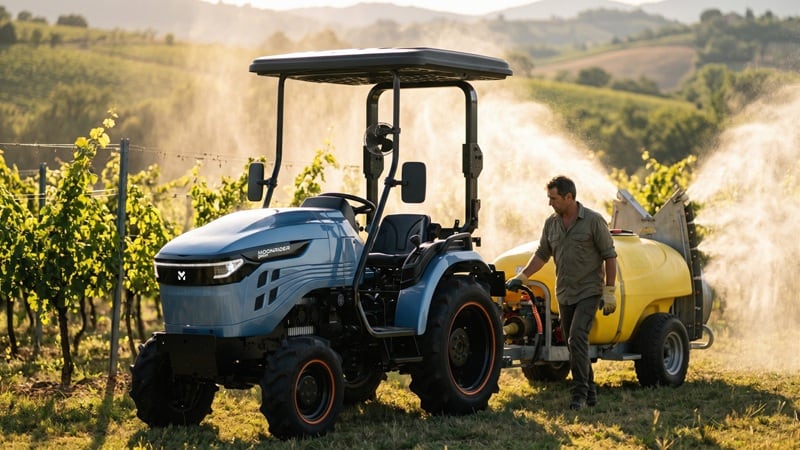
Cincinnati-based clean-tech innovator GoSun made its official agricultural debut at the Farm Progress Show, unveiling the all-electric Moonrider 27 compact tractor. Developed in partnership with India-based Moonrider, the 27-horsepower vehicle is specifically engineered for small-scale and specialty operations ranging from 5 to 50 acres. According to GoSun Founder and CEO Patrick Sherwin, the tractor targets a glaring gap in the North American market, offering farmers a reliable hedge against volatile fossil fuel prices and escalating maintenance and repair costs associated with legacy internal combustion engines.
September 2: Corteva Unveils the Vylor Corn Roadmap
Ahead of its formally scheduled October 1, 2026 corporate separation, Corteva released its comprehensive corn innovation roadmap for Vylor, its soon-to-be-independent advanced seed and genetics division. The roadmap provides the clearest strategic rationale yet for the spin-off: establishing a high-growth, royalty-driven intellectual property engine centered on proprietary biotechnology, elite germplasm, and advanced gene editing, distancing itself from the capital-intensive and cyclical crop protection market.

September 7: The Launch of Vylor Edge Raises Strategic Questions
Complementing the corn roadmap announcement, Vylor officially launched Vylor Edge, a dedicated venture and investment platform designed to accelerate the commercialization of early-stage agricultural technologies. While the platform is set to inherit several established partnerships from the legacy Corteva Catalyst portfolio, industry analysts have raised questions regarding how Vylor Edge will functionally coexist alongside existing innovation vehicles once the separation is finalized.
September 8: Precision-Bred Soybeans Thrive in UK Trials
Corteva’s precision-bred soybean trial at the Wellesbourne Research Station in Warwickshire, UK, demonstrated results that significantly exceeded expectations. Utilizing advanced gene-editing techniques, the trial successfully forced soybeans to flower and mature much earlier than conventional varieties. This technological breakthrough neutralizes one of the primary historical barriers to commercial soybean production in Britain’s cooler climate, signaling a major step toward a home-grown European plant protein future and highlighting the UK’s progressive regulatory stance on gene-edited crops.
September 14: Yara Inaugurates Europe’s Largest Industrial CCS Facility
Yara International officially inaugurated its massive carbon capture and storage (CCS) facility at its Sluiskil ammonia and fertiliser plant in the Netherlands. Capable of capturing up to 800,000 tonnes of $textCO_2$ annually, the facility represents a monumental engineering milestone for low-carbon fertilizer production. The core challenge moving forward, however, will be whether downstream buyers in cost-sensitive agricultural markets are willing to pay a commercial premium for low-carbon inputs.
September 16: Corteva Breaks Through the Hybrid Wheat Barrier
In another major pre-spin-off disclosure, Corteva confirmed that Vylor will commercialize hybrid hard red winter wheat in North America by late 2027. The launch relies on a proprietary hybridization system dubbed Xpedite, which Corteva claims finally overcomes the complex technical and economic scaling barriers that have frustrated hybrid wheat breeders for decades.
September 17: Bayer Backs Robigo in Series A Funding
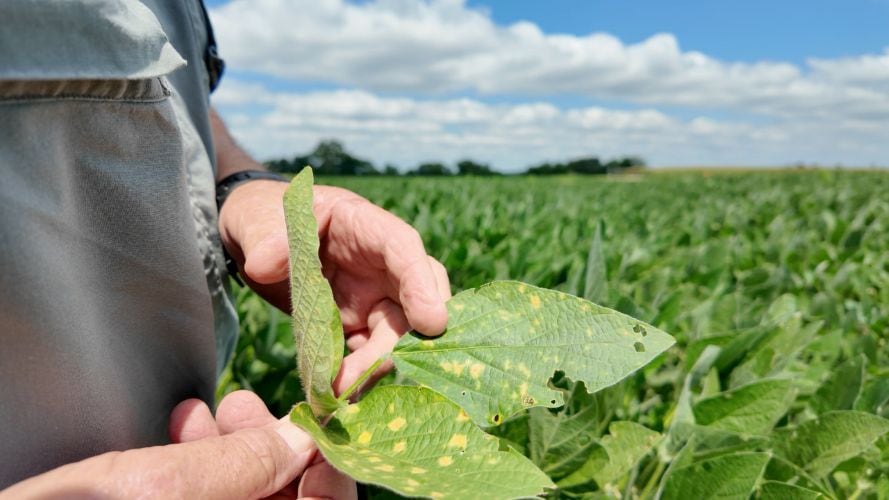
Biotechnology startup Robigo secured an undisclosed Series A funding round led by Leaps by Bayer, Bayer’s venture capital arm. Rather than backing a single standalone product, Bayer’s investment validates Robigo’s underlying R&D "engine"—a proprietary platform integrating engineered microbes, RNA interference (RNAi), and CRISPR technology to target high-cost agricultural diseases such as Sudden Death Syndrome in soybeans.
September 21: Vylor Executes First Open-Innovation Deal with Rainbow Crops
Putting its open-innovation strategy into immediate action, Vylor announced a strategic partnership with Belgian agricultural biotech firm Rainbow Crops. The collaboration will leverage artificial intelligence and multiplex gene editing to develop climate-resilient corn varieties, serving as the first true test case for how the newly formed Vylor Edge platform will synergize external biotech startups with Vylor’s internal germplasm libraries.
September 22: Syngenta Unveils EXORT MicroRNA Technology
Syngenta claimed a major biological breakthrough by unveiling EXORT (EXOgenous RNA Targeting technology), which the company hails as the first novel mode of action in the biologicals sector in over two decades. Utilizing naturally occurring plant microRNAs at microscopic application rates, EXORT fine-tunes critical developmental processes—such as grain growth and fruit set—demonstrating verified yield enhancements of 5% to 10% in extensive field trials. Syngenta plans its initial commercial rollout in Latin America by 2027.
September 24: World Agri-Tech London Concludes with a Focus on Fundamentals
The annual World Agri-Tech Innovation Summit in London wrapped up with a distinctly pragmatic tone. While artificial intelligence, gene editing, and biologicals dominated the exhibition floors, panel discussions and investor panels repeatedly emphasized that the industry’s primary bottleneck is no longer scientific invention, but rather navigating complex international regulatory frameworks, securing deployment capital, and establishing viable distribution models.
Supporting Context & Metrics
To fully appreciate the macroeconomic forces shaping these announcements, one must examine the quantitative parameters governing modern agtech investments and operational pressures:
- Yield Improvements: Syngenta’s EXORT trials document consistent, statistically significant yield increases of 5% to 10% across diverse field environments, achieved at ultra-low application rates.
- Carbon Capture Scale: Yara’s Sluiskil CCS facility in the Netherlands captures up to 800,000 tonnes of $textCO_2$ annually, making it the largest industrial carbon capture installation dedicated to fertilizer production in Europe.
- Target Acreage for Electrification: GoSun’s Moonrider 27 tractor addresses the underserved smallholder and boutique farming market segment operating on 5 to 50 acres, targeting long-term operational savings against surging diesel and maintenance overhead.
- Timeline to Commercialization: Syngenta is fast-tracking EXORT from field trials to its first commercial market launch in Latin America by 2027, mirroring Corteva/Vylor’s planned rollout of hybrid hard red winter wheat in North America the same year.
Official Statements & Industry Perspectives
The convergence of biological innovation and corporate restructuring has prompted notable commentary from industry leaders:
"The industry has plenty of innovation. The bigger question is whether the regulation, investment, and business models are ready to support it at scale."
— Industry Consensus from the World Agri-Tech Innovation Summit, London
Commenting on the clean-tech integration for compact farming operations, GoSun Founder and CEO Patrick Sherwin noted to AgNavigator:
"We are tapping into what we see as a clear structural gap in the North American market, leveraging advanced battery technology to help smaller-scale farmers insulate themselves against lifetime vehicle fuel and repair inflation."
Regarding Bayer’s strategic focus on foundational R&D platforms rather than isolated end-products, Leaps by Bayer continues to champion investments in companies like Robigo, emphasizing that venture arms must back technological engines capable of generating multi-crop, multi-disease solution pipelines.
Future Outlook
As the agricultural sector looks past the horizon of late 2026 into 2027 and beyond, the trajectory of agtech is clear. The era of speculative, unproven technological moonshots has given way to disciplined engineering, precision biology, and structural commercial alignment.

- The Rise of IP-Driven Spin-Offs: The separation of Corteva into Vylor establishes a new precedent for legacy conglomerates. Expect other major agricultural players to spin off their seed, genetics, and digital platform divisions into pure-play intellectual property entities to maximize shareholder value and attract specialized venture capital.
- Biologicals and RNA Tech Take Center Stage: With Syngenta’s EXORT platform and Robigo’s CRISPR-engineered microbes leading the charge, biological crop protection and yield enhancement are moving from niche organic markets into mainstream, high-acreage commercial farming.
- Regulatory Adaptation: The divergence between innovation-friendly jurisdictions (such as the UK’s welcoming stance on gene-edited soybeans) and heavily restricted markets will increasingly dictate where global agribusinesses deploy their capital and conduct early-stage field trials.
- Decarbonization Economic Realities: Initiatives like Yara’s industrial CCS facility will test whether global agricultural supply chains can successfully pass the cost of green manufacturing onto downstream consumers, or if low-carbon commodities will struggle without mandatory regulatory mandates.
Ultimately, the agtech sector’s return to fundamentals in late 2026 has laid a durable, pragmatic foundation. Technologies that solve immediate, high-cost agronomic challenges—while fitting seamlessly into existing farm economics—will define the next generation of global agriculture.