
Executive Overview
For decades, the global agricultural supply chain has grappled with a delicate yet devastating adversary: the humble potato. Renowned for being notoriously difficult to transport and process, potatoes are intensely susceptible to physical damage. Even minor impacts during the harvesting process can cause internal bruising, setting off a chain reaction of quality degradation, food waste, and financial losses that cost the agricultural sector millions of dollars annually.
Traditionally, efforts to mitigate this issue have focused on engineering better mechanical components or refining post-harvest sorting technologies. However, consumer packaged goods (CPG) giant PepsiCo and premier agricultural machinery manufacturer Grimme have taken a radically different, proactive approach. By tackling the supply chain crisis at its foundational root—operator technique—the two industry titans are redefining what is possible through modern agricultural upskilling.
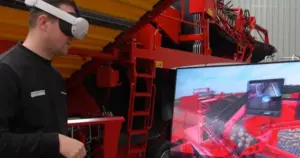
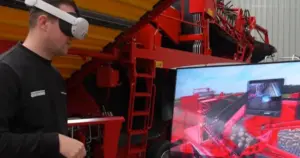
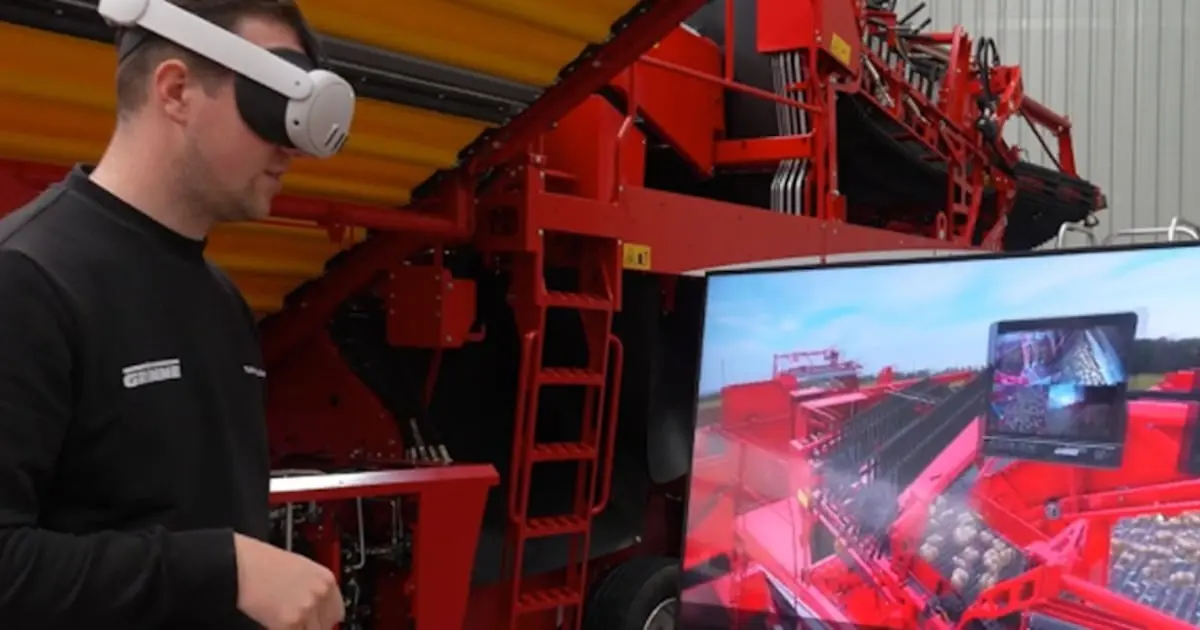
In a landmark collaboration supported by immersive learning technology provider Altoura, PepsiCo and Grimme have developed high-fidelity digital replicas, or "digital twins," of Grimme’s flagship EVO and SE series potato harvesters. This immersive training platform allows machine operators, agronomists, and farm laborers to virtually inspect complex machinery, remove protective panels, practice maintenance routines, and simulate harvesting conditions long before stepping foot into an actual tractor or field.
Initially rolled out as pilot programs across Latin America and Europe, the virtual reality (VR) and cross-platform training initiative has already yielded staggering results. According to metrics released by PepsiCo, pilot deployments helped boost the yield of bruise-free potatoes by an astonishing 87%, alongside a 1.7-fold reduction in severe bruising incidents. By combining cutting-edge enterprise metaverse technologies with age-old agricultural expertise, this initiative addresses one of farming’s most persistent structural challenges: a global shortage of skilled, specialized labor.
This comprehensive report explores the genesis of the PepsiCo-Grimme collaboration, the mechanics of agricultural digital twins, the profound economic and operational metrics driving adoption, the strategic roadmap for localized global expansion, and the broader implications of virtual reality in modernizing the agrarian workforce.
Detailed Chronology: From Manufacturing Simulation to the Potato Field
The journey toward virtualizing potato harvesting did not begin in a muddy field; rather, it was born out of cross-industry pollination within PepsiCo’s expansive global operations. To understand how agricultural machinery became the subject of immersive digital twins, one must trace the technological evolution of the CPG giant across its manufacturing and supply chain verticals.
The Industrial Genesis
Earlier this year, PepsiCo made headlines by announcing an industry-first artificial intelligence and digital twin collaboration with technological powerhouses Siemens and NVIDIA. That initiative sought to integrate AI-driven simulation into PepsiCo’s complex industrial manufacturing facilities, allowing engineers to optimize assembly lines, predict maintenance failures, and streamline factory floors in virtual environments.
According to Rob Meyers, Vice President of Global Agriculture at PepsiCo, the success and operational efficiency observed in these industrial trials sparked a lightbulb moment for the agricultural division.
"We had seen some of the work that our wider PepsiCo business was doing around using digital twins to improve operator training in the manufacturing space and felt there was a lot of applicability that could help us on the farming side," Meyers explained in an interview with agricultural technology publication AgNavigator.
Conceptualizing the Ag-Tech Partnership
Recognizing that harvesting efficiency is just as critical as factory packaging, PepsiCo approached Grimme, a world-renowned leader in potato, beet, and vegetable harvesting technology. Grimme’s EVO and SE series harvesters are sophisticated, high-capacity machines capable of unearthing massive volumes of crop. However, their operational complexity means that minor misconfigurations—such as improper web speeds, aggressive shaker intensities, or incorrect roller clearances—can wreak havoc on crop integrity.
To bridge the gap between complex machine engineering and seasonal farm operator proficiency, the companies enlisted Altoura, a specialist in immersive learning and spatial computing. Altoura’s mandate was clear: translate the intricate mechanical blueprints of Grimme harvesters into pixel-accurate, interactive 3D digital twins.
Global Rollout and Pilot Testing
The partnership progressed rapidly from conceptual design to field trials. Over the past year, PepsiCo and Grimme launched a phased rollout of the digital twin training platform, beginning with rigorous pilot tests in Brazil and Mexico. These regions were chosen not only for their robust potato-farming economies but also because they presented diverse operational environments and linguistic backgrounds, testing the platform’s adaptability.
Following the success in Latin America, the program expanded to Eastern Europe, with targeted deployments in Poland and Romania. Furthermore, the technology was prominently showcased at PepsiCo’s prestigious Global Agro University in Germany, introducing the platform to regional agronomy leaders, farm managers, and supply chain executives from across Europe.
Supporting Context & Metrics: The Physics and Economics of Potato Bruising
To fully appreciate the impact of PepsiCo and Grimme’s VR training initiative, one must examine the operational realities of potato farming. The supply chain journey of a potato—from the moment it is plucked from the soil to the moment it is sliced into a chip or packaged for retail—is fraught with physical peril.
The Anatomy of a Bruise
Potato tubers are composed largely of water and starch cells. When subjected to mechanical shock, compression, or sudden deceleration during harvesting, sorting, and transport, these cells rupture. This damage manifests in three primary ways:
- Shatter Bruising: Visible cracks or splits in the skin and flesh of the potato, which immediately expose the tuber to bacterial and fungal rots.
- Blackspot Bruising: Internal discoloration caused by the enzymatic oxidation of damaged cells beneath an unbroken skin. This form of bruising is notoriously insidious, as it remains hidden during initial harvesting and sorting, only to be discovered days or weeks later during processing—resulting in entire batches being rejected.
- Internal Pressure Bruising: Structural collapse caused by prolonged stacking and handling under improper humidity and temperature conditions.
The harvester is Ground Zero for these defects. If an operator sets the digging web too fast relative to the ground speed, or if the separation mechanisms are too aggressive for the specific soil moisture and rock content of a given field, thousands of pounds of potatoes can be structurally compromised within minutes.
Quantifying the Financial Risk
The financial implications of potato bruising are staggering. Millions of dollars in revenue evaporate annually due to crop rejection, down-graded yields, and increased food waste. When a processing plant receives truckloads of bruised potatoes, the yield of usable product per ton drops precipitously.
However, as PepsiCo’s Rob Meyers points out, the financial equation heavily favors proactive technological intervention:
"The loss of revenue for a farmer due to bruising can be very high, and the VR technology costs are only a fraction of this risk."
The Metrics That Matter
The economic argument for the digital twin platform is anchored by concrete performance data from the pilot programs. According to figures disclosed by PepsiCo:
- 87% Increase in Bruise-Free Potatoes: Operators trained via the Altoura virtual platform achieved a dramatic reduction in overall physical damage to the harvested crop.
- 1.7x Reduction in Severe Bruising: The most catastrophic forms of physical damage—those leading to immediate crop rejection or industrial write-offs—were nearly halved.
These metrics demonstrate that machine efficiency is rarely a limitation of the hardware itself; rather, it is a function of the human operator’s understanding of how to calibrate that hardware in real-time.
Official Statements and Industry Insights: Adapting to Local Realities
Deploying advanced immersive technology across global agricultural supply chains presents unique structural hurdles. Farms are geographically dispersed, internet connectivity in rural areas can be intermittent or nonexistent, and the agricultural workforce is heavily reliant on seasonal labor speaking a multitude of languages.
To overcome these barriers, PepsiCo and Grimme prioritized extreme flexibility and localization in the design of the Altoura-powered platform.
The Power of Localization
Speaking with AgNavigator, Rob Meyers emphasized that technological sophistication is meaningless if it fails to resonate with the end-user on the ground.
"Adapting to local realities is often more important to driving adoption at scale. As we expand into new markets, we’re continuing to refine the experience, including language support and training content. The goal isn’t to introduce complexity. It’s to make proven expertise available to more operators, in more places, before they enter the field."
This philosophy dictates that a farm worker in rural Poland experiences a training module tailored to local soil conditions, linguistic nuances, and regional farming practices, mirroring the exact operational parameters of the Grimme EVO harvester they will pilot the following day.
Accessibility Without Infrastructure Barriers
One of the most significant engineering achievements of the digital twin platform is its hardware-agnostic and connectivity-independent architecture. While the software is meticulously optimized to deliver jaw-dropping immersion through Virtual Reality (VR) headsets—such as Meta Quest or enterprise-grade spatial computing devices—it is not strictly tethered to high-end hardware.
Operators and trainees can seamlessly access the training simulations via standard tablets, smartphones, and desktop computers. Furthermore, recognizing the harsh connectivity realities of agricultural settings, Altoura and PepsiCo engineered the application for offline functionality. Once the training module is initially downloaded through the Altoura application, users do not require Wi-Fi or active mobile service to run the simulation. A seasonal worker standing in a remote field can complete a troubleshooting module on an iPad without worrying about cellular dead zones.
Future Outlook: Can VR Solve Agriculture’s Labor Crisis?
As the global agricultural sector looks toward the horizon, it faces a looming demographic and structural crisis: a severe, chronic shortage of skilled labor. Younger generations are increasingly migrating to urban centers, leaving rural farming communities with an aging, diminishing workforce. Concurrently, farming operations have grown increasingly mechanized and technologically complex, demanding higher levels of technical literacy from operators who are often hired on a seasonal basis.
Bridging the Skills Gap Through Immersive Tech
Traditionally, upskilling farm labor involved shadowing experienced operators, reading dense, multi-hundred-page technical manuals, or learning through costly trial and error on expensive machinery in active fields. This traditional model is slow, inconsistent, and financially punishing.
Virtual reality and digital twin technology offer a paradigm shift. By creating risk-free, highly engaging virtual environments, agricultural enterprises can accelerate the onboarding process from weeks to days, while ensuring absolute consistency in the quality of training delivered.
Trainees can repeatedly practice high-stress scenarios—such as clearing a jam in the harvester’s primary web, adjusting roller speeds on the fly, or performing emergency shut-downs—without risking physical injury, equipment damage, or crop destruction.
The Broader Agricultural Horizon
The success of the PepsiCo-Grimme potato harvester digital twin serves as a bellwether for the broader agricultural technology (AgTech) landscape. As spatial computing hardware becomes more affordable, lightweight, and accessible, the integration of VR and digital twins is poised to expand beyond root-crop harvesting.
Future iterations of agricultural training may encompass everything from autonomous tractor fleet management and precision pesticide application to complex combine-harvester maintenance for wheat, corn, and soybean production.
Furthermore, as generative AI converges with digital twin platforms, tomorrow’s farm operators may soon interact with AI-driven virtual mentors inside their headsets—coaching them in real-time on how to optimize fuel efficiency, minimize soil compaction, and maximize crop yields based on hyper-local weather and soil telemetry.
Conclusion
The collaboration between PepsiCo, Grimme, and Altoura proves that solving the world’s most complex food supply chain challenges does not always require inventing a heavier machine or a harsher chemical. Sometimes, the most powerful innovation lies in empowering the human mind.
By taking decades of agricultural expertise, digitizing it into an immersive virtual experience, and putting it into the hands of operators worldwide, PepsiCo and Grimme have forged a blueprint for the future of farming—one where bruised potatoes are a relic of the past, and sustainable, high-tech stewardship is the global standard.