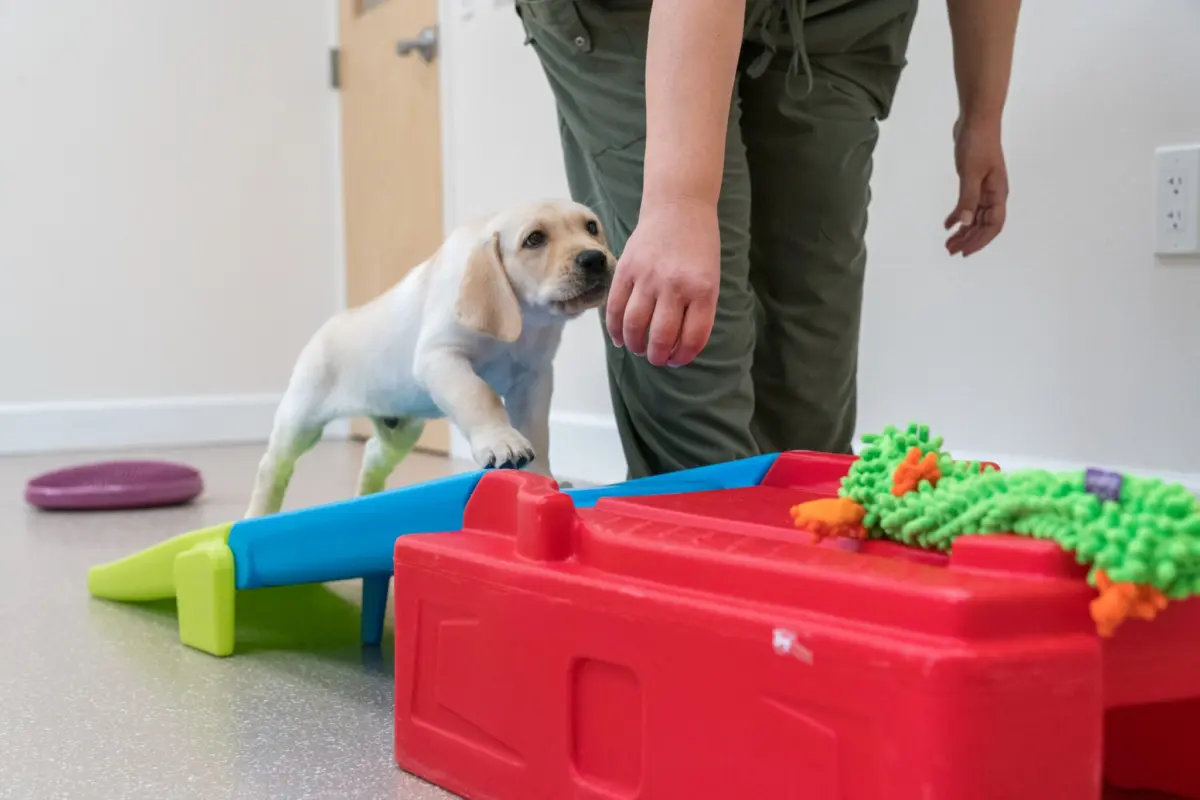

Long before a puppy takes its first clumsy steps, learns to walk calmly on a leash, or assumes the profound responsibility of guiding a visually impaired individual through a complex world, a remarkable transformation is already underway. Behind closed doors and away from public view, the foundational architecture of the canine brain and nervous system is being built during the earliest, most delicate days of life.
At organizations like Dogs Inc, the journey of transforming a newborn pup into a confident, life-changing guide or service dog begins on day one. This meticulous process does not rely on luck or happenstance; rather, it is anchored in proven, science-based protocols designed to maximize each puppy’s lifelong potential. Among the most critical tools in this developmental toolkit is Early Neurological Stimulation (ENS)—a brief, specialized series of gentle exercises that lays the groundwork for emotional resilience, stress tolerance, and adaptive learning.
Executive Overview
The developmental trajectory of a future service dog is a marathon of strategic interventions, thoughtful exposures, and continuous behavioral molding. While formal training and structured socialization occur later in life, modern canine science emphasizes that the neonatal period—spanning from birth through approximately two weeks of age—is a critical window of opportunity.
During this initial stage, puppies are entirely blind, deaf, and incapable of regulating their own body temperature. Yet, despite their profound vulnerability, their neurological systems are rapidly developing. Early Neurological Stimulation targets this exact timeframe. By introducing mild, highly controlled physical stressors for brief periods, handlers can stimulate the neurological system, accelerate cardiovascular performance, improve adrenal gland function, and enhance stress tolerance.
However, ENS is merely the opening chapter of an extensive playbook. It sits within a broader framework of holistic puppy rearing that encompasses the transitional stage, the critical socialization period, structured puppy raising, and advanced formal training. Organizations dedicated to breeding and training elite working dogs, such as Dogs Inc, recognize that producing a calm, focused, and adaptable service animal requires an uncompromising commitment to every single phase of canine development. This report explores the science, methodology, milestones, and organizational philosophies that govern the earliest days of tomorrow’s heroes.

Detailed Chronology: From Neonatal Beginnings to Adolescent Maturity
A puppy’s development does not happen in a vacuum. It progresses through distinct, scientifically recognized stages, each characterized by specific physical milestones, psychological shifts, and learning capacities. Understanding this chronology is essential for appreciating why early interventions like ENS yield such profound long-term dividends.
1. The Neonatal Stage (Birth to 2 Weeks)
During the neonatal stage, a puppy’s world is defined almost entirely by three things: nursing, sleeping, and seeking warmth from the mother and littermates. At birth, puppies cannot see or hear, and their nervous systems are immature. Reflexes dominate their behavior; for example, the rooting reflex helps them find their mother’s warmth and milk supply.
Despite their apparent helplessness, internal growth is exponential. The brain is forming neural pathways at an astonishing rate. This is the exclusive window during which Early Neurological Stimulation is applied. Because the puppy’s nervous system is so plastic, gentle, targeted experiences can permanently alter how the brain and body respond to stress later in life. Handlers must perform these exercises with clinical precision, ensuring that the stimulation remains mild and brief so as not to overwhelm the fragile organism.
2. The Transitional Stage (2 to 4 Weeks)
As puppies cross the threshold into the transitional stage, their sensory world explodes into clarity. Around two weeks of age, their eyes and ears begin to open, forever changing how they interact with their environment. By three to four weeks, puppies take their first tentative steps, begin to wag their tails, and can produce their first barks.
Simultaneously, their baby teeth begin to erupt, marking the biological shift from exclusive nursing to the introduction of soft, and eventually solid, food. This stage also sees the emergence of social play. Puppies start interacting directly with their littermates, learning critical canine communication cues and basic bite inhibition through peer feedback.

3. The Socialization Period (3 to 12 Weeks)
Widely recognized by animal behaviorists as the single most critical window in a dog’s life, the socialization period is when permanent impressions are formed.
- Weeks 3 to 5: Puppies become increasingly aware of human presence and environmental sounds. They begin forming attachments and exploring their immediate surroundings with mounting curiosity.
- Weeks 6 to 8: This is a pivotal time for foundational learning. Pups begin spending more time investigating new objects and settings. By eight weeks of age, many puppies are ready to transition to their puppy-raiser homes, where structured human interaction accelerates.
- Weeks 8 to 12: During this phase, puppies should be thoughtfully and systematically exposed to a wide array of novel stimuli—different people, varied floor textures, strange sounds, unfamiliar animals, and outdoor environments. Proper exposure during this window helps prevent anxiety, fear-based aggression, and generalized phobias in adulthood.
4. The Juvenile and Adolescent Stage (6 Months to 12 Months)
Much like human teenagers, adolescent dogs begin testing boundaries around six months of age. This stage is marked by significant hormonal shifts. Most dogs reach reproductive maturity between six and 12 months. In females, this often includes the onset of the first estrus cycle and the broader hormonal fluctuations associated with heat cycles. In males, rising testosterone levels can trigger new, hormone-driven behaviors, marking territory, or heightened reactivity to other dogs.
During adolescence, structured positive reinforcement training becomes non-negotiable. Dogs Inc and similar organizations rely heavily on consistent boundary-setting, continued public access training, and positive reinforcement to guide adolescents safely through this often-turbulent phase. Furthermore, experts note that puppies experience an average of four distinct "fear periods" as they mature—phases where they may suddenly appear startled or frightened by things they previously accepted. Recognizing these sensitive windows ensures that handlers can respond with patience rather than punishment.
Supporting Context & Metrics: The Science of Early Neurological Stimulation
Originally developed by the military (popularly known as the "Bio Sensor" program) and later adapted for elite working and sporting dog breeding operations, Early Neurological Stimulation is rooted in hard biological science.
How ENS Works
The protocol consists of five specific exercises, each lasting three to five seconds per puppy, performed daily from approximately day three through day sixteen of life. The exercises are:

- Tactile Stimulation: Holding the puppy in one hand and gently tickling the pad of one foot using a Q-tip or finger.
- Head Up: Holding the puppy perpendicular to the ground, with its head pointing straight up.
- Head Down: Holding the puppy gently with its head pointed downward toward the ground.
- Supine Position: Holding the puppy flat on its back, resting in the palm of the handler’s hand, allowing its eyes to face upward.
- Thermal Stimulation: Placing the puppy feet-down on a damp, cool towel for a specified, brief duration.
Measurable Physiological Benefits
Scientific observations and decades of practical data gathered by working dog organizations indicate that these brief, controlled stressors prompt significant biological changes in neonatal puppies. The identified benefits include:
- Improved Cardiovascular Performance: Enhanced heart rate efficiency and better overall cardiovascular health.
- Stronger Heartbeats: Measurably stronger and more resilient cardiac output under physical exertion.
- Adrenal Gland Stimulation: Improved hormonal regulation and endocrine system responsiveness.
- Greater Tolerance to Stress: An enhanced baseline ability to recover quickly from startling or stressful environmental changes.
- Enhanced Immune System: Better overall physical resilience and resistance to common illnesses during early growth stages.
ENS vs. Socialization: Understanding the Distinction
A common point of confusion among casual dog owners is conflating Early Neurological Stimulation with socialization. While both are indispensable components of raising a well-adjusted dog, they serve entirely different purposes and occur at vastly different developmental chapters.
- Timing: ENS takes place exclusively during the neonatal stage (birth to 2 weeks), when puppies are blind, deaf, and dependent on their mother. Socialization takes place primarily between 3 and 12 weeks of age, after sensory organs have fully opened and the puppy is actively exploring the world.
- Methodology: ENS involves precise, brief, physical handling protocols administered to individual puppies in relative isolation from external noise. Socialization involves active, dynamic interactions with complex environments, novel sounds, diverse human populations, and other animals.
- Objective: ENS jumpstarts the neurological and cardiovascular systems at a cellular and systemic level. Socialization builds cognitive confidence, teaches emotional regulation, and provides the psychological frameworks necessary for a dog to navigate human society smoothly.
Official Statements and Institutional Philosophy
The meticulous care required to breed, stimulate, socialize, and train a future guide or service dog demands an institutional culture rooted in expertise, dedication, and long-term vision. At Dogs Inc, the philosophy is clear: excellence cannot be improvised; it must be engineered from the very beginning.
"Long before a puppy learns to sit, walk on a leash, or one day guide someone through the world, a lot is already happening behind the scenes," notes the canine development team at Dogs Inc. "Early Neurological Stimulation is just one small piece of the bigger picture, but it reflects the thoughtful approach that helps support healthy development from the very beginning. At Dogs Inc, preparing future guide dogs and service dogs starts long before formal training begins."
Industry experts emphasize that early puppy development is not about manufacturing a "perfect" or robotically compliant animal. Rather, it is about unlocking genetic potential. No single experience—whether it is ENS, an early socialization class, or a specific training drill—determines the entirety of a dog’s personality. Genetics, overall health, environmental stability, and lifelong positive reinforcement all interact in complex ways to shape a dog’s final temperament.

Institutional protocols are therefore designed to stack the deck in the puppy’s favor. By combining scientifically validated neonatal stimulation with comprehensive socialization windows, structured crate training for independence, and progressive public access preparation, organizations like Dogs Inc ensure that their graduates possess the unshakeable composure required of working partners.
Future Outlook: Raising Life-Changing Partners
As the science of animal behavior continues to evolve, the methodologies employed by elite working dog organizations are becoming increasingly sophisticated. The future of guide and service dog breeding points toward an even deeper integration of behavioral tracking, genetic health screening, and customized early-intervention protocols tailored to individual puppy litters.
Yet, despite advancing technologies and refined protocols, the core philosophy remains timeless. A future guide dog must possess a delicate balance of independent problem-solving capabilities, intense focus, deep empathy, and absolute emotional stability. These traits cannot be forced upon an adult dog; they must be cultivated patiently, starting with a warm towel, a gentle touch, and a secure environment during the earliest days of life.
For the puppy raisers, trainers, scientists, and supporters associated with Dogs Inc, the work is continuous. From the fragile neonatal stage through the turbulent adolescent months and into formal graduation, every milestone achieved represents another step toward independence for a visually impaired or mobility-impaired individual.
As these future heroes grow from tiny, blind newborns into confident, life-changing partners, they carry with them the legacy of a science-backed, deeply compassionate beginning—proving that when it comes to shaping the future of service dogs, every single day truly matters.