
Executive Overview
Long before a puppy takes its first clumsy steps on a leash, learns how to sit on command, or prepares to guide a visually impaired individual through the complexities of the modern world, a quiet, high-stakes transformation is already underway. At organizations like Dogs Inc, the journey of a future service or guide dog begins not months into their lives, but during the fragile, formative hours of the neonatal stage.
In these critical opening weeks, puppies are seemingly helpless—blind, deaf, and entirely dependent on their mother and littermates. Yet, beneath this quiet exterior, their brains and central nervous systems are undergoing rapid, foundational development. To optimize this crucial period, specialized breeders and trainers employ science-backed methodologies such as Early Neurological Stimulation (ENS).
While ENS is only one piece of a much larger, multi-faceted puzzle, it represents a commitment to intentional, evidence-based puppy-rearing. This comprehensive report explores the science of early puppy development, the precise protocols of Early Neurological Stimulation, how these practices differ from later socialization, and why these early interventions are indispensable for cultivating the resilient, focused, and calm temperaments required of world-class service and guide dogs.
Detailed Chronology: The Stages of Early Canine Development
Understanding how a puppy transforms from a fragile newborn into a confident, capable working dog requires tracking their development across distinct, chronological milestones. Each stage introduces unique physiological changes, behavioral transitions, and developmental windows that shape their capacity to learn and adapt.
1. The Neonatal Stage (Birth to 2 Weeks)
The neonatal period is defined by utter vulnerability. Newborn puppies are born with their eyes and ears sealed shut, rendering them blind and deaf. They cannot yet regulate their own internal body temperatures, relying entirely on their mother’s body heat and the huddling warmth of their littermates. Their daily routine consists almost exclusively of nursing and sleeping.

Despite their apparent inactivity, the neonatal stage is a period of intense neurological growth. The brain is rapidly forming pathways, and the nervous system is primed to register tactile stimuli. It is precisely during this window—typically from day three through day sixteen—that Early Neurological Stimulation is introduced. Because puppies at this stage cannot process complex environments, ENS utilizes mild, structured physical stressors to stimulate neurological pathways without causing distress.
2. The Transitional Stage (2 to 4 Weeks)
As puppies cross the two-week threshold, a dramatic transformation occurs. Their eyes and ears begin to open, forever changing how they experience their environment. By the time they reach four weeks of age, puppies can typically hear and see well enough to start exploring their immediate surroundings.
This stage also marks the emergence of mobility: puppies begin to wobble onto their feet, attempt their first playful barks, and interact directly with their littermates. Biologically, their baby teeth begin to emerge, signaling the physiological shift away from exclusive nursing toward soft gruel and, eventually, solid food. Learning during this transitional period expands rapidly as sensory inputs flood their newly opened perceptual channels.
3. The Socialization Window (3 to 12 Weeks)
Often considered the most critical psychological window in a dog’s life, the socialization period bridges early development with active learning. Beginning around three weeks and extending through twelve weeks, puppies become biologically primed to form impressions of their world.
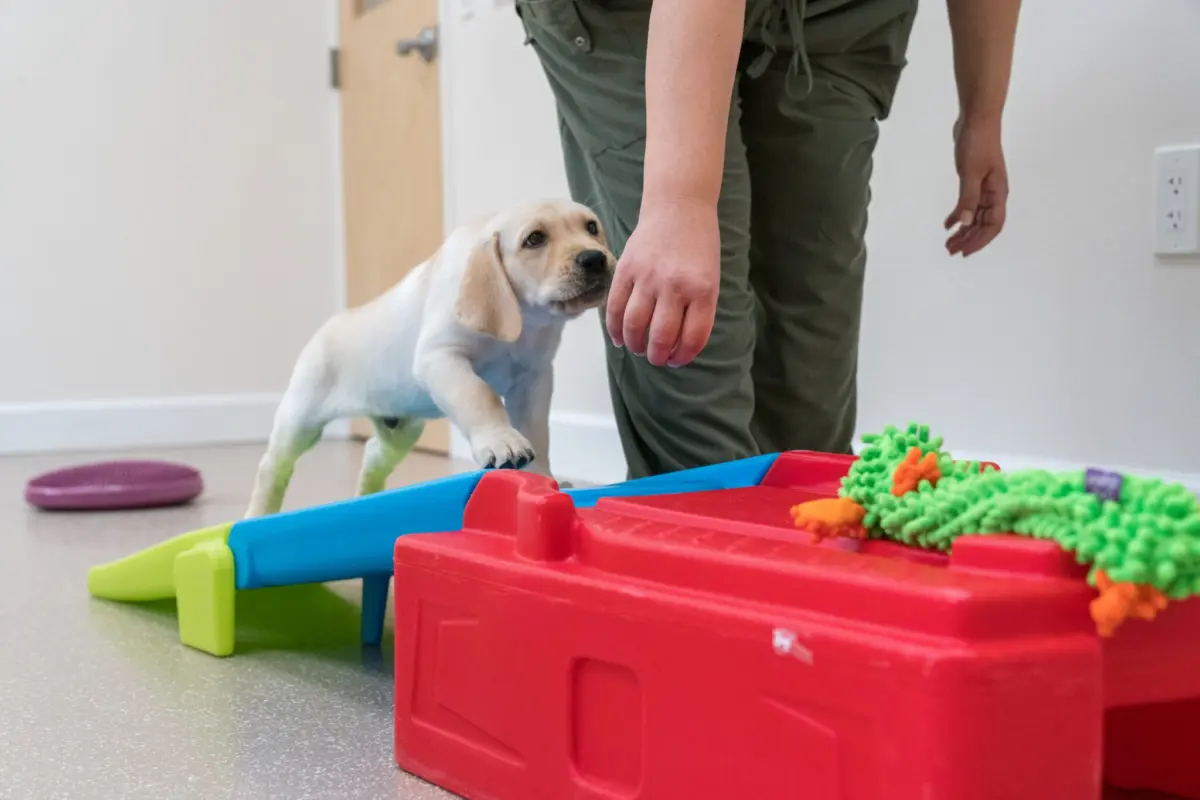
During this timeframe, puppies must be thoughtfully introduced to a wide array of stimuli—different sounds, textures, surfaces, human faces, and other animals. Positive exposures during this window help forge robust neural pathways that build confidence, curiosity, and emotional resilience. Conversely, a lack of socialization or traumatic experiences during these weeks can lead to chronic anxiety, fear-based reactivity, and behavioral challenges in adulthood. Veterinary behaviorists emphasize that by eight weeks of age, many foundational impressions are already taking root, laying the groundwork for a stable, friendly adult disposition.

4. Adolescent Milestones and Fear Periods (6 Months to 1 Year)
As puppies mature into adolescence—a phase that can begin as early as six months—they frequently test boundaries, much like human teenagers. This stage is accompanied by significant hormonal shifts. Most dogs reach reproductive maturity between six and 12 months of age. For female dogs, this includes the onset of their first heat cycle and the broader reproductive cycle, while male dogs begin exhibiting hormone-driven behaviors.
Furthermore, canine development experts note that puppies navigate an average of four distinct "fear periods" during their growth cycle. During these temporary phases, puppies may display sudden, uncharacteristic wariness toward familiar objects or novel situations. Recognizing these milestones is vital for handlers and trainers, who must respond with patience, positive reinforcement, and careful management rather than punitive corrections.
Supporting Context & Metrics: The Science and Protocol of ENS
To appreciate the value of Early Neurological Stimulation, one must examine its origins and mechanics. Originally developed by the military to improve the performance of working dogs, ENS involves a series of five distinct, tactile exercises administered once daily to puppies between the third and sixteenth days of life.
The Five Core ENS Exercises
Each exercise lasts approximately three to five seconds. Handlers use gentle, controlled movements to place the puppy in specific positions, stimulating the neurological system through mild, non-harmful stress:
- Tactile Stimulation: The handler holds the puppy in one hand and gently tickles the pad of the puppy’s foot using a Q-tip or finger between the toes. This exercise stimulates neurological reflexes in the extremities.
- Head Held Up: The puppy is held perpendicularly, with its head pointing straight up toward the ceiling, minimizing the natural gravitational pull on the neck muscles.
- Head Pointed Down: The puppy is held securely with its head inverted and pointed downward toward the ground, encouraging a passive, stabilizing response from the inner ear and vestibular system.
- Supine Position: The puppy is placed flat on its back in the palm of the handler’s hand, resting comfortably while suspended for a few seconds.
- Thermal Stimulation: A damp towel that has been cooled in a refrigerator is placed inside a container, and the puppy is placed upon it (without restraining it) for a brief, safe duration.
Physiological Mechanisms and Potential Benefits
These brief exercises introduce mild neurological stressors that prompt adaptive responses within the endocrine, cardiovascular, and central nervous systems. Decades of observational data and working-dog program insights suggest that early neurological stimulation can yield measurable physiological enhancements, including:

- Improved Cardiovascular Performance: Enhanced heart rate efficiency and regulation.
- Stronger Heartbeats: Increased cardiac output reserve.
- Stress Tolerance: Greater adaptability and resilience when confronted with novel or stressful situations later in life.
- Greater Disease Resistance: Enhanced immune system functioning and resistance to environmental pathogens.
ENS vs. Socialization: Understanding the Distinction
A common misconception among casual observers is that ENS is synonymous with socialization. In reality, they are distinct processes occurring at entirely different stages of development:
- Timing: ENS is strictly a neonatal practice (days 3–16), whereas socialization spans the transitional and juvenile phases (weeks 3–12 and beyond).
- Dependency: Neonatal puppies undergoing ENS are entirely dependent on their mother and littermates and cannot yet process complex social environments. Socialization relies on the puppy’s newly opened eyes and ears to actively interact with the external world.
- Objective: ENS focuses on priming the neurological and cardiovascular systems through physical stimulation. Socialization focuses on emotional resilience, environmental habituation, and inter-species communication.
Official Statements & Institutional Philosophy
Organizations dedicated to breeding and training elite working dogs view early intervention not as an optional luxury, but as an essential ethical and operational standard.
Representatives from Dogs Inc emphasize that the creation of a world-class service or guide dog is a meticulous, lifelong continuum. A spokesperson for the organization notes:
"Long before a puppy learns to sit, walk on a leash, or one day guide someone through the world, a lot is already happening behind the scenes. Preparing future guide dogs and service dogs starts long before formal training begins. Early Neurological Stimulation is just one small piece of the bigger picture, but it reflects the thoughtful, science-based approach that helps support healthy development from the very beginning."
Furthermore, animal behavior specialists working within elite breeding facilities stress that early interventions are designed to support, rather than dictate, a dog’s future. As one lead puppy development coordinator explains:

"Early puppy development isn’t about creating perfect dogs. It’s not about overwhelming puppies or speeding up training. It’s about providing thoughtful, age-appropriate experiences that support healthy growth, emotional maturity, and future learning. A puppy’s temperament and future success are always influenced by a complex interplay of genetics, health, early socialization, environment, and ongoing positive reinforcement."
Future Outlook: From Neonatal Nursery to Life-Changing Partnership
As puppies transition out of the neonatal nursery and move past the transitional stage, their world expands exponentially. By the time they reach three months of age, their cognitive capacity allows them to engage in short, highly positive training sessions using positive reinforcement methods.
At approximately four months (16 weeks), structured puppy classes are introduced, offering controlled environments where young dogs can refine their social interactions, master basic cues, and build confidence around other animals and humans. Crate training is integrated concurrently to foster routine, independence, and emotional self-regulation.
For organizations like Dogs Inc, this continuous investment in the developmental continuum ensures that future guide and service dogs possess more than just basic obedience skills. They graduate into adulthood equipped with:
- Emotional Resilience: The ability to remain calm and focused amidst the unpredictable sensory overload of crowded airports, busy sidewalks, and public transit.
- Adaptability: The capacity to adjust swiftly to changing environments and novel situations without succumbing to panic or fear-based reactivity.
- Unyielding Focus: The psychological fortitude required to act as the eyes, ears, and stabilizing anchor for individuals with visual impairments or mobility disabilities.
Ultimately, a puppy’s earliest weeks may pass in the quiet warmth of a whelping box, but they establish the trajectory for a lifetime of service. By combining rigorous scientific protocols like Early Neurological Stimulation with lifelong socialization, positive reinforcement, and expert puppy raising, organizations are able to unlock the full potential of these remarkable animals—turning tiny paws into life-changing partners.