
Executive Overview
Nearly 45 million acres of the United States’ most pristine, ecologically vital forests—an expanse larger than the state of Oklahoma—stand at a monumental crossroads. Under a controversial proposal advanced by the U.S. Forest Service, these remote sanctuaries could soon be opened to industrial logging, commercial development, and aggressive road building. The sweeping policy initiative targets the repeal of the Roadless Area Conservation Rule, universally known as the Roadless Rule, which has stood for a quarter-century as a cornerstone of American conservation.
First enacted in 2001, the landmark regulation protects approximately one-third of all National Forest System lands. Designed to safeguard fragile ecosystems, preserve critical watersheds, and curb the astronomical costs associated with maintaining backcountry infrastructure, the rule has faced intense scrutiny from federal officials who argue that modern ecological threats require a drastic shift in management strategy. However, the proposed rescission has triggered a fierce national debate, drawing sharp rebukes from conservation organizations, former federal forestry officials, fiscal watchdogs, and wildlife experts. As a critical public comment period remains open through October 6, the nation grapples with a fundamental question: Can industrial intervention truly rescue America’s forests from climate-driven disasters, or will dismantling bedrock environmental protections inflict irreversible damage on public lands, wildlife habitats, and taxpayer finances?
Detailed Chronology and Regulatory Evolution
To understand the gravity of the current proposal, one must examine the origins and evolutionary trajectory of the Roadless Rule. Developed over years of rigorous scientific study and unprecedented public engagement, the policy was formally codified in January 2001. Its primary objective was twofold: to protect the remaining expanses of undeveloped forestland from the ecological fragmentation caused by road construction and commercial logging, and to address a ballooning financial crisis within the U.S. Forest Service.
At the turn of the millennium, the agency was grappling with a massive maintenance backlog for its existing road network. Millions of dollars were being diverted away from active forest stewardship simply to keep deteriorating backcountry routes passable. By placing a moratorium on new road construction and industrial timber harvesting across inventoried roadless areas, the 2001 rule aimed to freeze the footprint of industrial development on public lands.
Over the subsequent 25 years, the rule weathered numerous legal challenges, administrative shifts, and political transitions. While states like Colorado and Idaho eventually established tailored state-level regulations to govern their roadless tracts, the federal framework remained a robust shield for backcountry ecosystems nationwide. The recent announcement by the U.S. Department of Agriculture (USDA) and the Forest Service to completely rescind the rule represents the most aggressive legislative and administrative challenge to the policy in its history, threatening to dissolve protections that have defined American forest conservation for a generation.
Supporting Context, Ecological Metrics, and Financial Realities
The debate surrounding the proposed repeal of the Roadless Rule extends far beyond philosophical differences over land use; it is deeply rooted in measurable ecological and economic impacts.
Biodiversity Hotspots and Wildlife Corridors
Roadless areas account for a mere 2 percent of the contiguous United States, yet they harbor an astonishing concentration of biodiversity. According to conservation data, these tracts provide critical habitat for 25 percent of all animal species currently listed or proposed for listing under the Endangered Species Act.
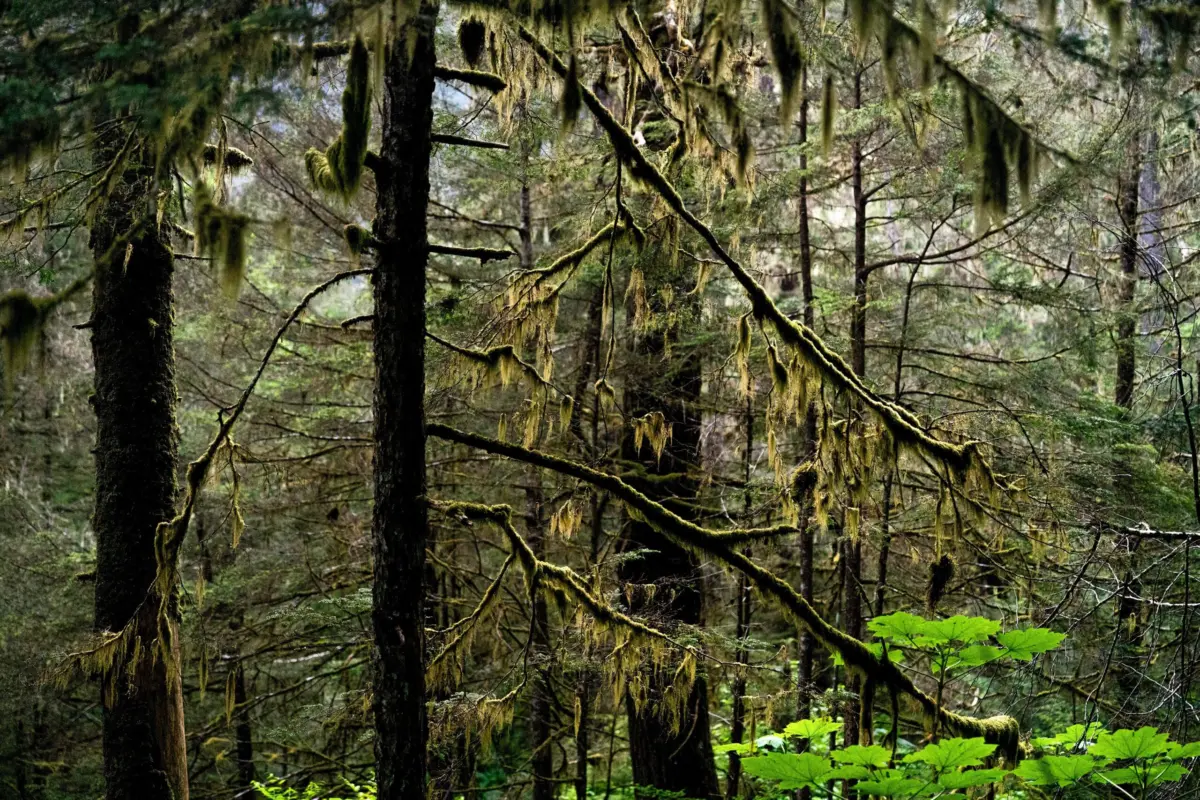
In Southeast Alaska, the 17-million-acre Tongass National Forest—the largest national forest in the country and a core component of the planet’s largest intact temperate rainforest—relies heavily on its roadless designations. More than half of the Tongass remains roadless, supporting all five species of Pacific salmon, hundreds of thousands of migrating shorebirds, and world-class nesting densities of Bald Eagles and Marbled Murrelets. Rare and endemic subspecies, such as the Queen Charlotte Goshawk and the Prince of Wales Spruce Grouse, depend entirely on the undisturbed old-growth woods of these backcountry zones.
Further south, the stakes are equally high. In North Carolina, roughly 144,000 roadless acres provide essential sanctuaries for Cerulean Warblers and the federally threatened Red-cockaded Woodpecker. In California’s Sequoia National Forest, Western Tanagers find refuge within towering groves protected by roadless boundaries. Across the American West, the overlap between roadless tracts and native wildlife ranges is staggering: 99 percent of roadless areas in Utah double as vital habitat for mule deer, while 93 percent of Montana’s roadless tracts provide crucial summer range for elk. As Chris Wood, president and CEO of Trout Unlimited, notes, mapping native trout and salmon habitats over inventoried roadless areas reveals an "almost one-to-one correspondence."
Ecosystem Services: Carbon Sequestration and Clean Water
Beyond serving as havens for terrestrial and aquatic wildlife, unfragmented forests play an indispensable role in mitigating global climate change. Old-growth and mature forests are exponentially more efficient at storing carbon than younger, regenerating stands. Research indicates that roadless areas within the National Forest System sequester approximately 445 million tons of carbon, with the Tongass National Forest alone storing roughly one-fifth of all carbon captured across the entire national forest inventory.
Furthermore, the Roadless Rule serves a vital human health function. A landmark study published in July highlights that protected roadless watersheds directly safeguard the clean drinking water supplies of 25 million Americans. Preserving these natural filtration systems prevents costly downstream water treatment expenses and ensures a reliable supply of high-quality water for municipalities across the country.
The Fiscal Burden of Infrastructure
Proponents of the repeal argue that opening these lands will stimulate economic activity through timber sales, but financial experts warn of the exact opposite outcome. The U.S. Forest Service already oversees a staggering 370,000 miles of existing roads—a network vast enough to circle the globe nearly 15 times. Maintaining this sprawling infrastructure has long posed a severe drain on federal resources, with the historical maintenance backlog shifting from an estimated $8.4 billion to roughly $6.9 billion over the years.
Autumn Hanna, vice president of the nonpartisan fiscal watchdog group Taxpayers for Common Sense, issued a sharp warning regarding the financial fallout of the proposal. "Repealing the 2001 Roadless Area Conservation Rule in its entirety would recklessly expose taxpayers to billions in new liabilities from subsidized roads and money-losing timber sales," Hanna stated. Building and maintaining new roads in remote, rugged terrain inherently demands heavy public subsidies, returning minimal economic value while saddling taxpayers with perpetual maintenance obligations.
Official Statements and Competing Perspectives
The ideological chasm dividing supporters and opponents of the Roadless Rule repeal centers on how best to manage forest health in an era defined by intensifying climate change, severe drought, and catastrophic wildfires.
The Administration and Timber Industry Case for Repeal
Federal leadership and timber industry representatives argue that the 2001 rule has become an obsolete barrier to proactive forest management. In a formal statement announcing the administration’s plan, Agriculture Secretary Brooke Rollins asserted that legacy restrictions are actively harming forest ecosystems.
"For too long, outdated restrictions have kept tens of millions of forested acres off-limits to the very treatments that improve forest health and reduce wildfire risk to our communities," Rollins said.
This sentiment is echoed by commercial forestry advocates. Travis Joseph, president of the American Forest Resource Council—a trade association representing western forest products companies—argued that the policy framework must evolve to address contemporary challenges. "We should continue to adapt and learn from failed policies to meet the moment, not continue to cling to positions and ideas that don’t serve the public’s interest," Joseph stated, emphasizing that active management tools, including commercial thinning and timber harvesting, are urgently needed to combat disease outbreaks and fuel accumulation.
The Conservation and Scientific Pushback
Conversely, a broad coalition of forest ecologists, conservation groups, and former federal officials reject the premise that repealing the rule will mitigate wildfire risks. They point out that the existing Roadless Rule already contains explicit provisions allowing land managers to conduct necessary thinning and prescribed burns to reduce hazardous fuel loads. Moreover, the rule permits limited road construction in emergency situations where human life or property is under imminent threat from wildfire.
To substantiate this, critics reference a comprehensive 2000 internal analysis by the Forest Service itself, which concluded that a lack of roads has never hindered fire prevention measures. In fact, the study found that fuel management activities within roadless areas have historically occurred at a higher frequency on a per-square-kilometer basis than in roaded sections of the national forest system.
Furthermore, experts argue that expanding road networks counterintuitively exacerbates the wildfire crisis. Chris Wood of Trout Unlimited, who participated in the original formulation of the Roadless Rule during his tenure with the Forest Service, explains the mechanics behind this paradox. Most wildfires in national forests originate within half a mile of a road, frequently ignited by human negligence, such as discarded cigarette butts or hot vehicle exhaust systems coming into contact with dry roadside grass.
"Roads actually equal fires," Wood notes. Rather than constructing controversial and expensive roads deep into remote wilderness, Wood and other experts advocate for focusing resources on strategic fuel reduction directly adjacent to communities at risk.
This perspective is reinforced by historical authority. A year prior to the formal repeal notice, four former chiefs of the Forest Service—who served across both Democratic and Republican administrations—co-authored a strongly worded letter to USDA Secretary Rollins. Drawing from decades of collective executive experience, they warned, "We believe a total repeal of the Rule will result in many more problems than it fixes and be more costly in the long run."
Sara Brodnax, Audubon’s director of public lands policy, emphasized the irreplaceable value of these intact habitats for vulnerable avian populations. "Protecting roadless areas can provide important strongholds for birds that are facing increasing pressure from fragmentation, development, and drought," Brodnax said. "We strongly believe that roadless areas are important, intact wildlife habitat and that the rule should not be repealed."
Future Outlook and the Path Forward
As the extended public comment period moves toward its October 6 deadline, the future of America’s roadless forests hangs in the balance. The proposed rescission of the 2001 Roadless Area Conservation Rule represents a profound shift in federal land management philosophy—one that prioritizes industrial access and aggressive mechanical intervention over passive preservation and ecological integrity.
The implications of this decision will resonate for decades. If the repeal moves forward, millions of acres of carbon-rich old-growth forests, critical endangered species habitats, and vital municipal watersheds will be opened to the heavy machinery of road building and commercial extraction. Taxpayers could find themselves underwriting billions of dollars in new infrastructure liabilities, while the fragile connectivity of America’s backcountry wildlife corridors faces unprecedented fragmentation.
Yet, the fierce resistance marshaled by conservationists, scientists, former agency leaders, and fiscal watchdogs demonstrates that the legacy of the Roadless Rule remains deeply defended. Even industry critics acknowledge that while targeted adjustments to forest management policies warrant public debate, a wholesale dismantling of the rule disregards a quarter-century of proven conservation science.
Ultimately, the impending resolution of this debate will test the nation’s commitment to balancing economic demands with the preservation of its most irreplaceable natural heritage. As citizens, scientists, and policymakers weigh in through the federal comment registry, the choices made today will permanently alter the ecological landscape of America’s public lands for generations to come.