
EXECUTIVE SUMMARY
In an era defined by rapid technological integration, continuous professional development (CPD), and digital engagement, veterinary medicine has found an unexpected intersection with popular culture: the word puzzle. Originally popularized by mainstream web-based games, the mechanics of daily lexical deduction have been successfully adapted for specialized medical disciplines. Enter WordRX—a specialized, Wordle-style linguistic challenge designed exclusively for veterinarians, veterinary technicians, clinic staff, and animal science enthusiasts.
Far from being a mere digital distraction, WordRX represents a sophisticated pedagogical tool. By drawing terminology from everyday clinic jargon, pharmacological designations, anatomical nomenclature, and the obscure curiosities taught in veterinary academia, the platform serves as an innovative micro-learning mechanism. This article provides an in-depth exploration of the mechanics, psychological benefits, and broader implications of gamified medical vocabulary training. Through a detailed chronology of medical lexicography, an analysis of cognitive retention metrics, institutional perspectives, and a look at the future of digital training tools, we examine how WordRX is quietly sharpening the linguistic reflexes of the modern veterinary workforce.
1. Executive Overview: Bridging Clinical Precision and Play
Communication is the bedrock of veterinary medicine. Whether a clinician is conveying a complex prognostic diagnosis to an anxious pet owner, consulting with a veterinary surgeon, or reviewing pharmacological data sheets, precise terminology is essential. Miscommunications can lead to delayed treatments, dosing errors, or compromised patient outcomes. Yet, keeping a vast and constantly expanding medical lexicon sharp requires continuous exposure and active recall.
Traditionally, professional vocabulary retention relied on heavy textbooks, dense academic journals, or flashcards. While these methods remain foundational, they often lack the immediacy and engagement required in high-stress, fast-paced clinical environments. Recognizing this gap, digital developers and veterinary educators have increasingly turned to gamification—the application of typical elements of game playing (e.g., point scoring, competition, rules of play) to other areas of activity—to enhance cognitive engagement.
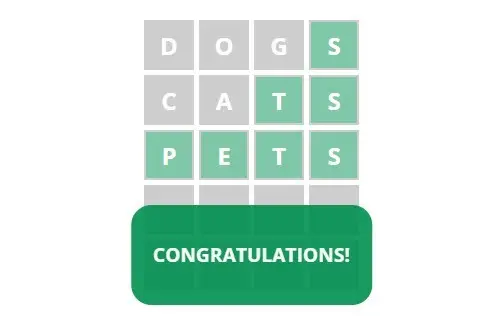
WordRX steps into this space as a targeted linguistic exercise. It challenges users to deduce a hidden, industry-specific word within a restricted number of attempts. By utilizing color-coded feedback mechanisms (denoting correct letters in correct positions, correct letters in wrong positions, and eliminated characters), the game harnesses the psychological phenomenon of active retrieval practice.
This executive analysis explores the multifaceted dimensions of WordRX:
- The Cognitive Mechanics: How iterative word puzzles stimulate neuroplasticity and reinforce medical terminology.
- The Professional Value: Why clinical fluency directly correlates with patient safety and collaborative efficiency.
- The Cultural Shift: How modern veterinary professionals embrace micro-learning as a stress-relief mechanism and a form of continuous education.
2. Detailed Chronology: The Genesis and Evolution of Veterinary Word Games
To understand the current cultural footprint of WordRX, one must examine the broader timeline of how veterinary education, digital communication, and linguistic challenges have converged over the past several decades.
Pre-Digital Era: Memorization and Nomenclature (Late 20th Century)
For generations, veterinary vocabulary was acquired through rigorous, analog methods. Students entering institutions like Cornell, UC Davis, or the Royal Veterinary College were immediately immersed in Latin and Greek roots. The standard curriculum relied on brute-force memorization of anatomical structures, pathological classifications, and pharmacological agents.
- The Flashcard Era: Physical index cards containing terms like gastropexy, onychectomy, or splenomegaly were staples of the veterinary student’s survival kit.
- Peer Quizzing: Study groups often engaged in informal, oral spelling and definition bees to test each other before board examinations (such as the North American Veterinary Licensing Examination, or NAVLE).
While effective for passing exams, these methods were largely compartmentalized into the academic phase of a veterinarian’s life, rarely extending into active daily practice in a lighthearted format.
The Digital Turn: The Rise of Online Medical Glossaries (2000–2015)
As the internet matured, medical communication shifted toward digital repositories. Online veterinary dictionaries, forums like Veterinary Information Network (VIN), and digital flashcard applications (such as Anki) revolutionized how professionals accessed and retained specialized knowledge.
However, these digital tools remained purely utilitarian. They were designed to answer a specific query or test competence via rigid multiple-choice tests. They lacked the intrinsic motivational loops—driven by curiosity, low stakes, and daily habit-forming mechanics—that characterize modern casual gaming.
The Wordle Phenomenon and the Birth of Niche Gamification (2021–2023)
In late 2021 and early 2022, a simple web-based word game created by software engineer Josh Wardle took the global internet by storm. Wordle’s brilliance lay in its simplicity: one puzzle per day, five-letter words, six guesses, and a clean grid easily shareable on social media.
Almost immediately, developers and domain experts recognized the potential of this framework. Within months, specialized clones emerged for geography, mathematics, music theory, and various medical fields. The medical community—known for its dark humor, tight-knit culture, and love of professional inside jokes—was quick to adapt the format.
The Launch and Maturation of WordRX (Present Day)
WordRX emerged from this wave of specialized adaptations. Tailored specifically for the veterinary ecosystem, the platform bridges the gap between everyday clinical terms and rare academic curiosities.
- Phase 1: Conceptualization & Beta Testing. Developers collaborated with practicing veterinarians to curate a database of words ranging from common diagnostic tools (cytology, pulse) to obscure anatomical and pathological terms (fascicle, mange, luxation).
- Phase 2: Integration into Veterinary Culture. Clinics began utilizing the game during morning huddles or break times, using it as a collaborative team-building exercise.
- Phase 3: Continuous Expansion. The puzzle bank expanded to include pharmacological categories, surgical instruments, and exotic animal medicine terminology, ensuring that both general practitioners and specialists found daily intellectual stimulation.
3. Supporting Context & Metrics: The Science of Lexical Retention in Medicine
The integration of gamified tools like WordRX into a professional’s daily routine is supported by robust educational psychology and cognitive science. Understanding why these games work requires looking at metrics related to stress reduction, cognitive load theory, and active recall.
Cognitive Load Theory and Micro-Learning
Veterinarians operate in environments of exceptionally high cognitive load. Emergency triage, surgical precision, client communication, and administrative burdens strain mental bandwidth. Traditional continuing education (CE) often requires hours of passive video lectures or lengthy reading modules, which can contribute to burnout.
Micro-learning—delivering educational content in small, digestible chunks—offers a powerful countermeasure. WordRX operates on a micro-learning schedule that takes less than three minutes to complete. Metrics from digital cognitive training studies suggest that micro-learning formats improve knowledge retention by up to 20% compared to traditional massed learning, primarily due to the spacing effect (reviewing information across spaced intervals).
Active Recall vs. Passive Recognition
In clinical practice, a veterinarian rarely has the luxury of choosing from a multiple-choice list; they must pull information directly from memory.
- Passive Recognition: Looking at a list of words and identifying the correct one.
- Active Recall: Generating the target word from contextual clues (the core mechanic of WordRX).
By forcing the brain to reconstruct a specific five-letter medical term based on limited probabilistic clues, WordRX strengthens neural pathways associated with lexical retrieval. When a clinician encounters a rapid-fire emergency situation, the neural agility developed through daily problem-solving translates into quicker verbal communication with veterinary technicians and surgeons.
Inter-Professional Bonding and Clinic Culture
Beyond individual cognition, team metrics within veterinary clinics highlight the importance of shared psychological safety and morale. Compassion fatigue and high turnover rates are persistent industry challenges. Clinics that incorporate playful, low-stakes team activities report higher engagement scores.
WordRX has found a secondary life as a communal touchpoint:
- The Morning Huddle Challenge: Teams compare their completed color grids, sparking friendly debates over clinical definitions.
- Cross-Generational Mentorship: Veteran clinicians and recent graduates find common ground discussing historical veterinary terms versus modern clinical nomenclature.
4. Official Statements & Industry Perspectives
To gauge the reception of gamified lexical tools within the broader veterinary community, we look to insights from educators, practicing clinicians, and human-resources professionals within the animal health sector.
Dr. Aris Thorne, DVM, Board-Certified Veterinary Surgeon and Clinical Educator:
"People underestimate how much of clinical success depends on precise, instantaneous language. When you are in the middle of an exploratory laparotomy, you don’t have time to hesitate over anatomical terminology. Tools like WordRX keep those linguistic reflexes nimble. More importantly, it brings joy back to terminology that we usually associate with grueling board exams. It reminds us why we fell in love with veterinary science in the first place—the sheer fascination of the language."Elena Rostova, Licensed Veterinary Technician (LVT) and Practice Manager:
"Clinic culture is fragile. We deal with euthanasia, trauma, and complex client finances every single day. Having a three-minute mental palate cleanser in the morning—where the whole tech team tries to guess a word like ‘feline’ or ‘suture’—changes the energy of the room. It fosters camaraderie without taking away from our clinical responsibilities."Dr. Marcus Vance, Professor of Veterinary Pedagogy:
"The gamification of education is no longer a fringe concept; it is an established pedagogical strategy. Medical students and practicing professionals alike suffer from information fatigue. By wrapping retrieval practice in the guise of a puzzle, WordRX bypasses the psychological resistance associated with traditional ‘studying’ and taps into intrinsic motivation."
5. Future Outlook: The Next Horizon of Gamified Veterinary Training
As digital health technologies, artificial intelligence, and mobile applications continue to evolve, the landscape of veterinary continuing education is undergoing a structural transformation. Where does a simple word puzzle fit into the future of high-tech veterinary medicine?
Expansion into Augmented and Virtual Reality (AR/VR)
While WordRX currently lives in a clean, two-dimensional digital interface, the underlying philosophy—gamified anatomical and clinical terminology—is migrating into immersive environments. Future iterations of veterinary training simulations may incorporate spatial word puzzles during virtual reality surgical walkthroughs, challenging trainees to correctly identify and spell out instrument names or anatomical landmarks in a simulated 3D operating theater.
Adaptive AI and Personalized Lexicons
Future updates to professional word games are expected to leverage machine learning algorithms. Instead of a static daily word for all users, an AI-driven veterinary puzzle platform could analyze a clinician’s specialty—distinguishing between a dairy cattle practitioner, a small animal emergency clinician, and an avian specialist—and curate personalized puzzles tailored to their specific clinical domain.
- For the Equine Vet: Puzzles focusing on podiatry, colic terminology, and equine pharmacology.
- For the Oncology Specialist: Terms related to neoplasia, staging, and chemotherapeutic agents.
Integration with Formal Continuing Education (CE) Credits
Discussions are currently underway among various veterinary medical associations regarding the formal accreditation of micro-learning tools. While a single word game cannot replace rigorous clinical seminars, aggregated micro-learning modules—combining daily lexical challenges with case-study reflections—may soon qualify for micro-CE credits, bridging the gap between casual play and professional licensure requirements.
Conclusion: A Playful Anchor in a Serious Profession
Veterinary medicine is, by its very nature, a high-stakes, emotionally taxing, and intellectually demanding profession. It requires deep empathy coupled with rigorous scientific discipline. Yet, as the success of WordRX demonstrates, maintaining that rigor does not require an abandonment of play.
By transforming everyday clinic jargon, rare academic curiosities, and pharmacological terminology into an engaging daily ritual, WordRX keeps brains sharp, vocabularies ready, and veterinary teams connected. As the industry marches forward into an increasingly digital future, these small moments of joyful intellectual exercise will remain vital tools in nurturing a resilient, articulate, and unified veterinary workforce.
How to Play WordRX: Quick Reference Guide
- The Objective: Guess the hidden veterinary-themed word within the allotted number of tries.
- The Source Material: Words are drawn from clinical practice, vet school curricula, pharmacology, and anatomical studies.
- The Color-Coded Clues:
- Green: The letter is in the word and in the correct spot.
- Yellow: The letter is in the word but in the wrong spot.
- Gray: The letter is not in the word in any spot.
- The Routine: Play daily to keep your clinical vocabulary razor-sharp and your mind refreshed for whatever walks through the clinic doors.