
Executive Overview
Along the dynamic and vulnerable coastline of Long Island Sound, Crab Meadow Marsh has emerged as a beacon of ecological hope. This past summer marked a transformative chapter in the history of the 250-acre coastal wetland, driven by an unprecedented convergence of rigorous scientific research, hands-on community engagement, and innovative environmental engineering. As climate change accelerates sea-level rise and human pressures mount against coastal buffers, the multi-faceted initiatives deployed at Crab Meadow over the warm-weather months offer a compelling blueprint for modern wetland restoration.
The crown jewel of the summer’s discoveries was the confirmation of active Saltmarsh Sparrow breeding within the sanctuary—a species on the precipice of extinction and a bird whose presence at Crab Meadow had not been documented in years. This biological milestone was complemented by targeted community cleanups that removed thousands of stray golf balls from fragile habitats, pioneering youth-led remediation trials aimed at healing historic mosquito ditches, and advanced engineering surveys laying the groundwork for a sweeping, macro-level ecological overhaul.
By weaving together grassroots volunteerism, youth education, and institutional science, the stakeholders behind the Crab Meadow restoration project are not merely patching a broken ecosystem; they are re-engineering its resilience for generations to come. This comprehensive report details the chronological unfolding of the summer’s events, contextualizes the ecological stakes, examines the methodologies transforming restoration science, and outlines the visionary roadmap ahead for this vital coastal sanctuary.
Detailed Chronology of a Transformative Summer
The revitalization of Crab Meadow Marsh did not happen overnight; it unfolded through a carefully orchestrated series of events, field investigations, and community mobilizations that spanned the summer months.
Early Summer: Mobilizing Engineering Teams and Baseline Studies
Behind the scenes, the foundation for the summer’s visible milestones was laid by rigorous environmental data collection. Project engineers and environmental specialists from EA Engineering and Sovereign Consulting mobilized early in the season to establish baseline metrics. Field teams conducted painstaking elevation surveys, detailed botanical inventories, and hydrological monitoring across the acreage.
Understanding the complex topography of the marsh is a prerequisite for any modern restoration effort. Decades of human alteration, coupled with rising tides, have left sections of the marsh waterlogged and vulnerable to erosion. By gathering precise elevation data and assessing existing habitat gradients, these specialists began drafting the complex engineering blueprints required to restore tidal flow, mitigate flooding, and optimize the landscape for native flora and fauna.
Mid-Summer: The Discovery That Changed the Season
Perhaps the most electric moment of the summer occurred mid-season when representatives from the U.S. Fish and Wildlife Service, working alongside specialized avian researchers, made a startling discovery tucked deep within the dense cordgrass of the marsh.
An experienced ornithologist and licensed bird bander identified an active Saltmarsh Sparrow nest—a species whose dramatic population declines have alarmed conservationists nationwide. To the utter delight of the research team, the nest contained fragile nestlings just days away from fledging. In accordance with strict regional monitoring protocols, the team briefly handled the chicks to fit them with unique, lightweight identification bands before returning them securely to the nest.
Field monitors watched anxiously as the parent bird returned almost immediately, confirming minimal stress and validating the safety of the protocol. A second nest was subsequently discovered and documented, shattering years of local absence records and injecting a profound sense of urgency and validation into the ongoing restoration planning.
Peak Summer: Community Action on the Fairways and Marshes
As avian researchers probed the secrets of the marsh canopy, human communities were mobilizing on the ground. In a unique partnership bridging local recreation and conservation, the Crab Meadow Golf Course joined forces with environmental advocates.
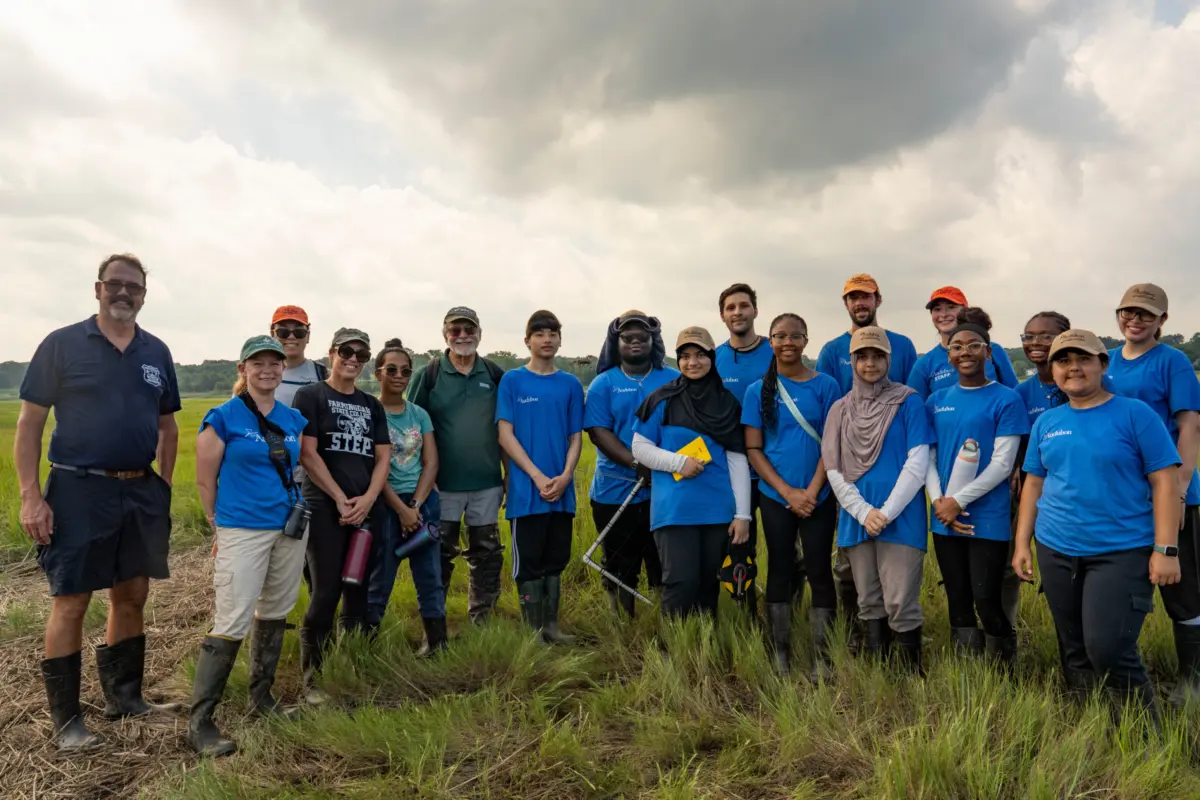
Equipped with golf carts and heavy-duty collection buckets provided by the golf course management, more than 20 teen and adult volunteers descended upon the wetland perimeters. The coalition—drawn from the AWARE Drug and Alcohol Community Coalition and the Theodore Roosevelt Sanctuary and Audubon Center—embarked on a labor-intensive sweep to clear stray golf balls that had accumulated in the marsh over years of play.
The initiative removed countless pieces of hard debris from sensitive intertidal zones. The recovered balls were subsequently returned to the course management, where viable units were cleaned and reintegrated into play, while damaged items were responsibly recycled or disposed of. This event marked the inaugural installment of a recurring stewardship series, proving that recreational facilities and conservation entities can forge cooperative, mutually beneficial relationships.
Late Summer: Youth Innovation and Environmental Education
As the summer drew toward its close, attention shifted to innovation and education. High-school-aged participants in the "Salt Marsh Stewards" program stepped into the spotlight to tackle one of the marsh’s most insidious legacy problems: 20th-century mosquito ditches.
Working under the mentorship of restoration scientists, these young stewards began field-testing a novel remediation technique utilizing organic materials to naturally trap sediment within straight-cut drainage ditches. By gently altering the hydrology of these obsolete channels, the team sought to encourage natural sediment deposition, ultimately filling the ditches and restoring sheet flow across the marsh plain.
Simultaneously, Audubon educators extended the summer’s reach to the next generation, partnering with a local summer camp program to immerse 140 children in full-day environmental education modules. Through seining, bird-watching, and tactile marsh explorations, these young campers absorbed the foundational principles of coastal ecology, cementing a community-wide culture of conservation.
Supporting Context & Metrics: The Science Behind the Restoration
To fully appreciate the magnitude of the Crab Meadow summer initiatives, one must examine the broader ecological vulnerabilities facing the region and the specific metrics guiding the intervention.
The Plight of the Saltmarsh Sparrow (Ammospiza nelsuri)
The Saltmarsh Sparrow is widely considered the avian canary in the coal mine for Atlantic coast wetlands. Breeding exclusively in high-marsh habitats dominated by saltmeadow cordgrass (Spartina patens), these diminutive birds time their reproductive cycles precisely to the lunar tidal calendar, building nests just inches above the mud.
However, accelerating sea-level rise driven by global climate change has upended this evolutionary timeline. Unprecedented tidal inundation frequencies now cause frequent, catastrophic nest drowning events before nestlings can fledge. Consequently, range-wide population surveys indicate alarming declines of up to 9ebb percent per year, placing the species on a steep trajectory toward functional extinction within the coming decades unless drastic habitat intervention occurs.
The discovery of active breeding pairs at Crab Meadow provides a vital data point: the habitat, though degraded, still retains residual qualities capable of supporting reproduction. The upcoming 250-acre restoration project is specifically tailored to enhance high-marsh elevations—creating micro-topographies and transitional upland zones where sparrows can successfully nest above the reach of standard high tides.
Unraveling the Legacy of 1930s Mosquito Ditches
The historical alteration of American coastal marshes represents one of the most widespread, unintended environmental modifications in conservation history. During the Great Depression, massive public works initiatives deployed thousands of laborers to dig straight, grid-like drainage ditches across coastal wetlands in an effort to control salt marsh mosquitoes (Aedes sollicitans).
While these ditches successfully drained surface pools, they fundamentally fractured the hydrological integrity of the ecosystems. Over decades of tidal action, many of these ditches eroded, widened, and deepened. Instead of draining standing water, they began draining the entire marsh surface of the moisture required by native vegetation, while simultaneously opening super-highways for predatory fish to consume resident marsh-breeding wildlife.
At Crab Meadow, the pilot technique tested by the Salt Marsh Stewards program uses localized organic matter—such as certified weed-free straw bales and native brush bundles—to slow down water velocity within the ditches. This controlled deceleration causes suspended sediment to drop out of the water column, gradually filling the ditch from the bottom up and restoring the continuous, un-channeled sheet flow characteristic of pristine, un-ditched marshes.
Scalable Engineering and Baseline Metrics
The macro-restoration framework, informed by EA Engineering and Sovereign Consulting, relies on an array of quantifiable metrics:
- Acreage Target: Approximately 250 acres of degraded coastal wetland.
- Elevation Tolerances: Laser-guided LiDAR and RTK-GPS elevation surveys mapping variances down to the centimeter to identify areas requiring sediment augmentation or tidal channel re-routing.
- Hydraulic Connectivity: Quantifying tidal prism volumes to ensure that culverts and tidal restrictions do not choke the exchange of nutrient-rich estuarine waters.
Official Statements and Stakeholder Perspectives
The convergence of diverse institutions at Crab Meadow Marsh has fostered a collaborative ethos echoed by leaders across the conservation, municipal, and scientific sectors.
Reflecting on the discovery of the Saltmarsh Sparrow nests, participating wildlife biologists underscored the delicate balance between active research and wildlife protection. "Finding an active nest of a species as imperiled as the Saltmarsh Sparrow is both a thrill and a profound responsibility," noted the lead ornithologist on the project. "The fact that the parents returned almost instantly after our non-invasive banding protocol demonstrates that scientific monitoring and wildlife conservation can coexist harmoniously, providing us with the empirical data needed to save these birds before time runs out."
Community leaders highlighted the unique synergy achieved through the volunteer cleanup initiatives. Representatives from the AWARE Drug and Alcohol Community Coalition emphasized the mental health and community-bonding benefits of outdoor stewardship for participating teens. "When young people put their hands into the mud, pick up debris, and actively heal a natural space in their own backyard, a fundamental shift occurs," a coalition spokesperson remarked. "They transition from passive observers of environmental decline to active agents of community renewal."
Municipal and golf course partners similarly praised the cooperative spirit defining the project. Facility management at Crab Meadow Golf Course noted that balancing recreational amenities with environmental stewardship is no longer optional in the 21st century. "Our course borders one of the most ecologically sensitive estuaries in the region," property management stated. "Working hand-in-hand with Audubon naturalists and community volunteers to keep our fairways clean and our neighboring marsh pristine is a commitment we take deeply to heart."
Future Outlook: A Resilient Horizon for Crab Meadow
As the summer gives way to autumn planning sessions, the momentum at Crab Meadow Marsh shows no signs of slowing. The synthesis of data gathered by engineering firms, the success of youth-led hydrological pilot projects, and the undeniable biological validation provided by the nesting Saltmarsh Sparrows have galvanized a unified vision for the future.
The immediate horizon will see the transition from investigative research to active engineering design. The elevation surveys and habitat assessments completed over the summer will directly inform the final permitting documents and construction specifications for the 250-acre restoration footprint. Key components of the upcoming phase will likely include:
- Marsh Elevation Enhancement: Strategically placing thin layers of dredged sediment to raise vulnerable marsh platforms above the creeping threat of sea-level rise, allowing native grasses to outpace inundation.
- Ditch Remediation Scaling: Expanding the successful organic-material pilot methods tested by the Salt Marsh Stewards across a broader network of legacy mosquito ditches to restore natural sheet-flow hydrology.
- Invasive Species Management: Targeting aggressive monocultures of non-native vegetation—such as Phragmites australis (common reed)—and replacing them with diverse assemblages of native high-marsh flora.
- Expanded Community Science: Broadening the volunteer stewardship and educational frameworks to ensure that local schools, summer camps, and civic groups remain deeply invested in the long-term health of the sanctuary.
Ultimately, the summer at Crab Meadow served as a microcosm of what modern conservation can achieve when rigorous science, municipal cooperation, and passionate community engagement align. By restoring the physical integrity of the marsh, engineers and scientists are building a natural bulwark against storms and rising seas. By welcoming volunteers and educating the next generation, the community is building a social bulwark of care, awareness, and advocacy.
As the Saltmarsh Sparrows raise their young in the restored cordgrasses of Long Island Sound, they carry with them the hopes of an entire ecosystem—reminding us that with dedication, vision, and hard work, damaged landscapes can be healed, and the future of our coastal habitats can be secured for generations to come.