
Executive Overview
In the quiet, suburban rhythms of everyday neighborhoods, profound acts of kindness often unfold far from the public eye. Across the globe, dedicated animal advocates quietly feed, shelter, and protect vulnerable feline populations, ensuring they are treated with dignity, respect, and compassion. Recently, the international animal protection community lost one such champion: John, a beloved social studies teacher, devoted husband, and fierce protector of cats.
John’s journey as an animal advocate is a testament to the transformative power of unexpected companionship. Believing himself to be allergic to cats for much of his early life, John’s perspective shifted entirely when stray felines persistently crossed his path, melted his defenses, and claimed a permanent place in his heart and home. Alongside his wife of 42 years, Deb, John spent decades tending to indoor companions and outdoor community cats alike, embodying the very definition of a compassionate caretaker.
Upon his passing, John ensured that his dedication to the welfare of animals would outlive him. By including Alley Cat Allies in his estate plans, John made a visionary commitment to safeguard cats and kittens worldwide. His planned gift will directly support the life-saving programs championed by Alley Cat Allies—most notably Trap-Neve-Return (TNR), veterinary care, and systemic advocacy designed to reform how municipalities treat outdoor cats.
This article explores John’s remarkable life, his enduring legacy, and the broader cultural and structural implications of planned giving within the animal welfare sector. Through an examination of John’s personal history, detailed testimonies from his wife Deb, and the institutional frameworks that make modern feline advocacy possible, this report underscores the extraordinary impact that a single individual can have on the global landscape of animal protection.
Detailed Chronology: From Accidental Allergy to "Permissive Cat Daddy"
The Early Years and the Allergy Misconception
For the first several decades of his life, John lived under the assumption that he could never share his living space with a feline companion. Like many people who experience mild or perceived sensitivities to animals, John accepted his supposed cat allergy as an immutable fact of life. He appreciated animals from a distance, enjoying the occasional wildlife encounter or observing neighborhood pets, but never anticipated that cats would eventually become a central pillar of his daily existence.
However, life possesses a unique way of upending human assumptions. Approximately thirty years ago, the first major shift occurred. A stray cat—independent, resourceful, and remarkably persistent—appeared in John and Deb’s neighborhood. Eschewing the conventional distance one might maintain from an unfamiliar animal, this particular stray gravitated directly toward John. What began as cautious observation quickly blossomed into an affectionate bond. John discovered, much to his surprise, that his body tolerated—and his heart welcomed—his newfound feline visitor. The supposed allergy receded into the background, eclipsed entirely by the warmth of interspecies connection.
The Arrival of "Puddy Cat"
If the first stray cracked open the door to John’s cat-loving identity, the arrival of a second stray twenty-five years ago blew it wide open. This new feline arrival captured the imagination and humor of the household. John, a man with an abiding fondness for classic Warner Brothers animation, looked at the charismatic stray and bestowed upon her a fittingly iconic moniker: "Puddy Cat."
Puddy Cat—affectionately known as "Pud"—transcended the status of a mere visitor, cementing her place as a beloved family member. For sixteen and a half years, Pud lived indoors with John and Deb, serving as a constant companion, a source of daily joy, and a masterclass in feline affection. Through Pud, John learned the subtle nuances of cat behavior, developing the patience, empathy, and gentle touch that would define his later relationships with animals.
The Educator and the Extrovert
While John’s affinity for cats defined much of his private life, his professional life was similarly characterized by deep compassion and engagement. Professionally, John worked as a social studies teacher. In the classroom, he was renowned not only for his pedagogical dedication but also for his infectious personality. Described by Deb as a "consummate extrovert," John brought history, civics, and human culture to life with enthusiasm and flair.
Students loved him dearly—a testament to his warmth, approachability, and genuine interest in their development. Even his trademark humor, consisting of an endless stream of groaning "dad jokes," became a legendary fixture of his classroom environment. This same nurturing, patient energy that made him an exceptional educator translated seamlessly into his interactions with animals. At home and in the neighborhood, John earned the affectionate title of a "permissive cat daddy," spoiling his feline charges with high-quality food, safe outdoor shelters, and boundless affection.
Decades of Community Cat Advocacy
John’s sphere of compassion extended far beyond the walls of his own home. Inspired by a similarly dedicated neighbor, John took on the mantle of a neighborhood caretaker. For decades, he actively fed, monitored, and protected several community cats who roamed his local area.
In doing so, John was participating in a quiet, grassroots movement that plays out in thousands of neighborhoods every day. Community cats—often referred to as feral or stray cats—frequently face systemic challenges, ranging from food insecurity to harsh weather conditions and the threat of municipal overpopulation. By stepping up as a daily caregiver, John provided a vital safety net for these vulnerable animals. He ensured they were fed on schedule, monitored for signs of illness or injury, and sheltered from the elements.
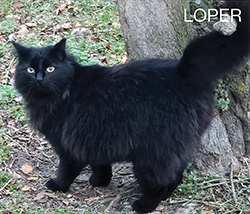
This hands-on dedication eventually expanded to encompass a multi-cat household. At the time of his passing, John left behind Gray, a cherished indoor-outdoor cat, alongside four outdoor community cats who relied on his daily stewardship: Miss Kitty, Sylvestra, Mini, and Loper. Each cat represented a unique relationship, a distinct personality, and a testament to John’s unwavering commitment to the animals in his orbit.
Supporting Context & Metrics: The Evolution of Planned Giving and Cat Advocacy
The Vital Importance of Planned Giving in Animal Welfare
While daily hands-on care—such as feeding community cats and providing outdoor shelters—is essential for immediate survival, the long-term systemic protection of animals requires institutional stability. This is where planned giving, estate planning, and legacy bequests play a transformative role in the nonprofit sector.
Organizations like Alley Cat Allies rely heavily on the foresight of donors who choose to incorporate charitable contributions into their wills and estate plans. Planned giving allows individuals of all economic backgrounds to make a profound, lasting impact that transcends their immediate lifetimes. Bequests fund large-scale educational campaigns, legal advocacy, legislative reform, and emergency disaster relief for animals—initiatives that require sustained financial backing.
In John’s case, choosing to include Alley Cat Allies in his estate plans means that his personal passion for protecting cats will be magnified on a global scale. The resources secured through his legacy will help fund programs that educate the public, support local shelters in transitioning away from lethal policies, and champion humane, science-based approaches to cat population management.
The Science and Impact of Trap-Nevee-Return (TNR)
At the heart of modern community cat advocacy—and heavily championed by organizations like Alley Cat Allies—is Trap-Neuter-Return (TNR). To understand the true value of John’s legacy, it is necessary to examine why TNR has become the gold standard in humane animal management.
Historically, many municipalities attempted to control stray and feral cat populations through catch-and-kill methods, commonly known as impoundment and euthanasia. Decades of data, however, have demonstrated that these lethal approaches are not only morally fraught but also fundamentally ineffective. When cats are removed from a specific territory through traditional impoundment, a phenomenon known as the "vacuum effect" occurs. New cats inevitably move in to take advantage of available food sources and shelter, resetting the population cycle and draining municipal resources.
TNR breaks this cycle entirely. Through TNR:
- Trapping: Community cats are humanely trapped using specialized, non-harmful equipment.
- Neuter/Spay: The cats are transported to licensed veterinarians, where they are spayed or neutered, vaccinated against rabies, and typically eartipped (the universal sign of a sterilized and vaccinated community cat) for easy visual identification.
- Return: Once recovered from surgery, the cats are returned to their original outdoor homes, where they can live out their lives naturally without contributing to population growth.
The metrics surrounding TNR speak for themselves. Communities that implement robust TNR programs consistently experience dramatic reductions in shelter intake numbers, lower rates of euthanasia, and stabilized outdoor cat populations. Furthermore, TNR eliminates nuisance behaviors associated with unspayed and unneutered cats, such as yowling, spraying, and territorial fighting, thereby improving the relationship between community cats and their human neighbors.
As Deb noted in her reflections on her husband’s life, supporting organizations that champion TNR is essential for creating a humane society. "I am grateful that organizations like Alley Cat Allies exist," Deb affirmed, highlighting the life-saving impact of systemic, science-based advocacy.
Official Statements and Personal Reflections
The narrative of John’s life and legacy is best understood through the words of those who knew him best and the institutions dedicated to his lifelong mission.
In a heartfelt letter written to Alley Cat Allies, Deb reflected upon their 42 years of shared life, John’s boundless compassion, and the feline family members who enriched their journey. Her words paint a vivid portrait of a man whose initial hesitation regarding cats transformed into a deep, abiding devotion:
"Interestingly enough, John thought for years that he was allergic to cats! Then 30 years ago, we had a stray show up and get attached to John. 25 years ago, another stray showed up. John, with his love of Warner Brothers cartoons, named her Puddy Cat… Pud lived with us for 16½ years."
Deb’s reflections also shed light on the multi-faceted nature of her husband’s character. Balancing his rigorous academic responsibilities as a social studies teacher with his playful humor and deep empathy for animals, John embodied a rare combination of intellect and warmth. Described by his wife as a "consummate extrovert" and a "permissive cat daddy," John approached every aspect of his life—whether engaging students in a classroom debate or feeding community cats on a chilly morning—with unwavering dedication.
Representatives from Alley Cat Allies have emphasized that legacies like John’s are the lifeblood of the organization. By transforming personal compassion into institutional support, individuals ensure that the fight for humane treatment, legal protections, and progressive policies remains robust and well-resourced. John’s gift serves as a powerful reminder that every animal advocate, regardless of their background, can leave a blueprint for a more compassionate world.
Future Outlook: Continuing the Mission of Compassion
As we look toward the future of animal welfare, the contributions of individuals like John illuminate a clear path forward. The cultural perception of community cats has undergone a monumental shift over the past several decades. What was once misunderstood or met with hostility is increasingly recognized as a vital component of urban and suburban ecosystems, deserving of humane care and legal protection.
However, significant challenges remain. Across the globe, millions of cats and kittens still face the threat of municipal overpopulation, inadequate veterinary care, and outdated, lethal policies. Overcoming these hurdles requires a dual approach: grassroots, daily caretaking by individuals in local neighborhoods, paired with large-scale structural advocacy by organizations equipped to drive legislative and institutional change.
John’s life bridges these two worlds perfectly. In his daily life, he was a grassroots caretaker—feeding Miss Kitty, Sylvestra, Mini, Loper, and Gray, ensuring they knew warmth, safety, and consistent nourishment. Through his estate planning, he became a global visionary, empowering Alley Cat Allies to scale those exact values to communities worldwide.
How You Can Make a Difference
The legacy left by John is not merely a memorial to one man’s life; it is an invitation to action. Ensuring that cats and kittens receive the protection, medical care, and humane treatment they deserve requires the collective effort of animal lovers everywhere.
There are multiple ways to contribute to this ongoing mission:
- Make a Direct Donation: Supporters can contribute immediately to Alley Cat Allies’ vital programs by visiting alleycat.org/Donate. Every financial contribution directly aids in funding TNR initiatives, veterinary interventions, and emergency rescue operations.
- Explore Planned Giving: Following in John’s footsteps, supporters can make a lasting, generational impact by establishing a bequest or planned gift. Detailed information on wills, trusts, and legacy contributions can be found at alleycat.org/PlannedGiving, or by scanning the official planned giving QR code provided in organizational newsletters. Donors may also reference CFC #10964 or EIN #52-1742079 for workplace giving campaigns. For personalized inquiries, Alley Cat Allies’ dedicated team can be reached directly at 866-309-6207.
- Engage Locally: Individuals can emulate John’s daily dedication by becoming community cat caretakers in their own neighborhoods, advocating for TNR programs with local animal control agencies, and educating their communities on the humane treatment of outdoor felines.
Conclusion
John’s story is a profound reminder that love knows no boundaries—and that compassion, once awakened, can ripple across decades and continents. From an unexpected encounter with a neighborhood stray to a lifelong commitment as a "permissive cat daddy," and finally to a visionary legacy gift that will protect countless cats for generations to come, John’s life was a masterclass in empathy.
As gray cats and community cats continue to find safety in neighborhoods around the world, and as TNR programs steadily replace outdated lethal methods, John’s spirit lives on. His legacy challenges us all to look closer at the vulnerable animals in our midst, to question our assumptions, and to build a world where every cat is treated with the dignity, compassion, and respect they so richly deserve.