
Executive Overview
For millions of American consumers, companion animals are not merely pets; they are cherished family members integrated into daily routines, including running household errands. As big-box retailers and warehouse clubs become central to suburban life, shoppers frequently find themselves questioning the boundaries of pet inclusivity. Among the most popular and strictly regulated retail environments in the United States is Costco Wholesale Corporation. Known for its membership-only model, bulk purchasing power, and strict operational guidelines, Costco maintains a specific stance on non-human visitors that often catches well-meaning shoppers by surprise.
The baseline reality is clear: Costco does not allow general pets, including ordinary dogs, inside its warehouse stores. However, navigating the intersection of federal accessibility laws, public health regulations, and retail operational standards reveals a more nuanced picture. Federal mandates, specifically the Americans with Disabilities Act (ADA), require retail establishments to accommodate trained service animals. Beyond these legal obligations, enforcement can occasionally vary at the local level based on municipal health codes, regional management discretion, and the distinction between true service animals, emotional support animals (ESAs), and household pets.
This comprehensive report examines Costco’s official animal policy, the legal frameworks governing service animals in warehouse environments, the strict limitations placed on emotional support animals, and practical guidelines for shoppers who rely on assistance animals. By exploring the protocols, safety considerations, and legal distinctions, this article provides an authoritative guide for Costco members seeking clarity on store access.
Detailed Chronology and Evolution of Retail Accessibility Policies
The Pre-ADA Retail Landscape
Decades ago, retail policies regarding animals were largely decentralized and informal. Grocery stores, department stores, and early warehouse clubs exercised wide latitude regarding which animals crossed their thresholds. While health department regulations strictly barred animals from establishments handling unpackaged food—such as meat counters and bakeries—general merchandise areas occasionally tolerated well-behaved dogs.
However, as commercial retail spaces expanded into massive warehouse footprints like Costco, Sam’s Club, and Walmart, the volume of foot traffic, heavy machinery operation (such as forklifts), and the handling of bulk food products necessitated standardized, uniform safety protocols.
The Landmark Legislation: The Americans with Disabilities Act (ADA)
The modern framework governing animals in public retail spaces was fundamentally reshaped by the passage and subsequent updates of the Americans with Disabilities Act (ADA). Enacted to protect individuals with disabilities from discrimination, Title III of the ADA covers places of public accommodation, including wholesale clubs and retail stores.
- 1990s Implementation: Following the initial passage of the ADA, federal guidelines established that businesses must modify their "no-pets" policies to permit the use of service animals by individuals with disabilities. During this period, the definition of a service animal primarily centered on guide dogs for individuals with visual impairments.
- 2010 ADA Regulatory Updates: The Department of Justice (DOJ) issued revised regulations that significantly clarified and narrowed the definition of service animals under the ADA. Crucially, the 2010 update restricted the definition of service animals exclusively to dogs (and, in limited separate provisions, miniature horses), explicitly excluding emotional support animals, comfort animals, and therapy dogs from public access rights under federal law.
Costco’s Corporate Alignment and Policy Standardization
As Costco expanded its footprint nationwide and internationally, the corporation codified its animal policy to align strictly with federal mandates. Rather than establishing independent, store-by-store interpretations, Costco adopted a centralized compliance model governed by the ADA.
Under this operational framework, Costco warehouses were instructed to deny entry to any animal that did not meet the rigorous legal definition of a trained service dog. This standardization was designed to protect public health, prevent safety hazards associated with untrained animals in high-traffic warehouse environments, and ensure a uniform shopping experience for all members.
Supporting Context & Metrics: The Mechanics of Retail Animal Policies
To fully understand why Costco maintains such a firm stance on animal access, it is necessary to examine the operational realities of warehouse retail environments, the legal distinctions enforced by federal agencies, and the statistical context of service animal usage in the United States.
The Warehouse Environment: Scale, Safety, and Sanitation
Costco warehouses are distinct from traditional supermarkets or clothing boutiques. They are characterized by:
- High-Volume Forklift Operations: Pallets of heavy merchandise are frequently moved via forklifts and electric pallet jacks during and sometimes after operating hours. The presence of an unpredictable or easily startled animal poses a direct physical safety hazard to the animal, its handler, and surrounding shoppers.
- Bulk Food Handling: Costco warehouses frequently house open-air bakeries, fresh meat departments, and produce displays. Public health codes—enforced by state and local health departments—impose strict sanitation rules regarding animal presence near food storage and preparation zones to prevent contamination.
- Congestion and High Foot Traffic: Aisles are often crowded with flatbed carts, large merchandise displays, and large numbers of shoppers. An anxious or reactive pet in such an environment can easily become overwhelmed, leading to potential bites, tangles with shopping carts, or accidental trampling.
The Legal Distinction: Service Dogs vs. Emotional Support Animals (ESAs)
A frequent point of friction at Costco warehouse entrances involves confusion regarding the legal status of different categories of working and companion animals.
| Category | Legal Status in Costco Stores | Training Requirements | Protected Under ADA? |
|---|---|---|---|
| Service Dogs | Allowed Nationwide | Individually trained to do work or perform tasks for the benefit of an individual with a disability. | Yes |
| Emotional Support Animals (ESAs) | Prohibited | Provide therapeutic comfort through companionship; lack specialized task-training. | No |
| Therapy Dogs | Prohibited | Trained to provide comfort to people in hospitals, schools, and nursing homes, not specific handlers. | No |
| General Household Pets | Prohibited | None required. | No |
Under ADA guidelines, business staff are legally permitted to ask only two specific questions when an animal’s status is unclear:
- Is the dog a service animal required because of a disability?
- What work or task has the dog been trained to perform?
Staff are strictly prohibited from asking about the nature or severity of the handler’s disability, requiring medical documentation, requiring a special identification card or training certificate for the dog, or asking the dog to demonstrate its task. Costco employees are trained to adhere strictly to these inquiry boundaries while upholding the requirement that the animal be under the handler’s control at all times.

Official Statements and Corporate Policy Guidelines
Costco Wholesale’s official customer service and operational directives explicitly outline the conditions under which an animal may enter its warehouses.
The Official Costco Service Animal Directive
In alignment with federal guidelines, Costco’s official corporate stance is articulated through its member customer service portals:
"Costco follows a strict service animal policy, in compliance with the Americans with Disabilities Act (ADA). This policy allows individuals to bring their trained service animals, such as dogs, into the store, but only if the animal is trained to assist a person with a disability with specific tasks or functions. Costco reserves the right to inquire about the status of any animal accompanying a shopper and the tasks or functions they are trained to perform. Failure to provide this information may result in being asked to leave the store."
Behavioral and Control Requirements
Even when a dog qualifies as a legitimate service animal under the ADA, Costco maintains the legal right—supported by federal regulations—to require the removal of the animal if:
- The dog is out of control: The handler does not take effective, continuous action to control it (e.g., uncontrolled barking, lunging, wandering away from the handler).
- The dog is not housebroken: The animal relieves itself inside the warehouse facility.
If a service animal is excluded or removed for these reasons, Costco staff must provide the individual with a disability the opportunity to complete their shopping trip or purchase merchandise without the animal present.
Best Practices and Etiquette for Members with Service Dogs
For members who rely on legitimate service dogs and plan to shop at Costco, understanding the operational expectations ensures a smooth, hassle-free experience.
1. Preparation and Identification
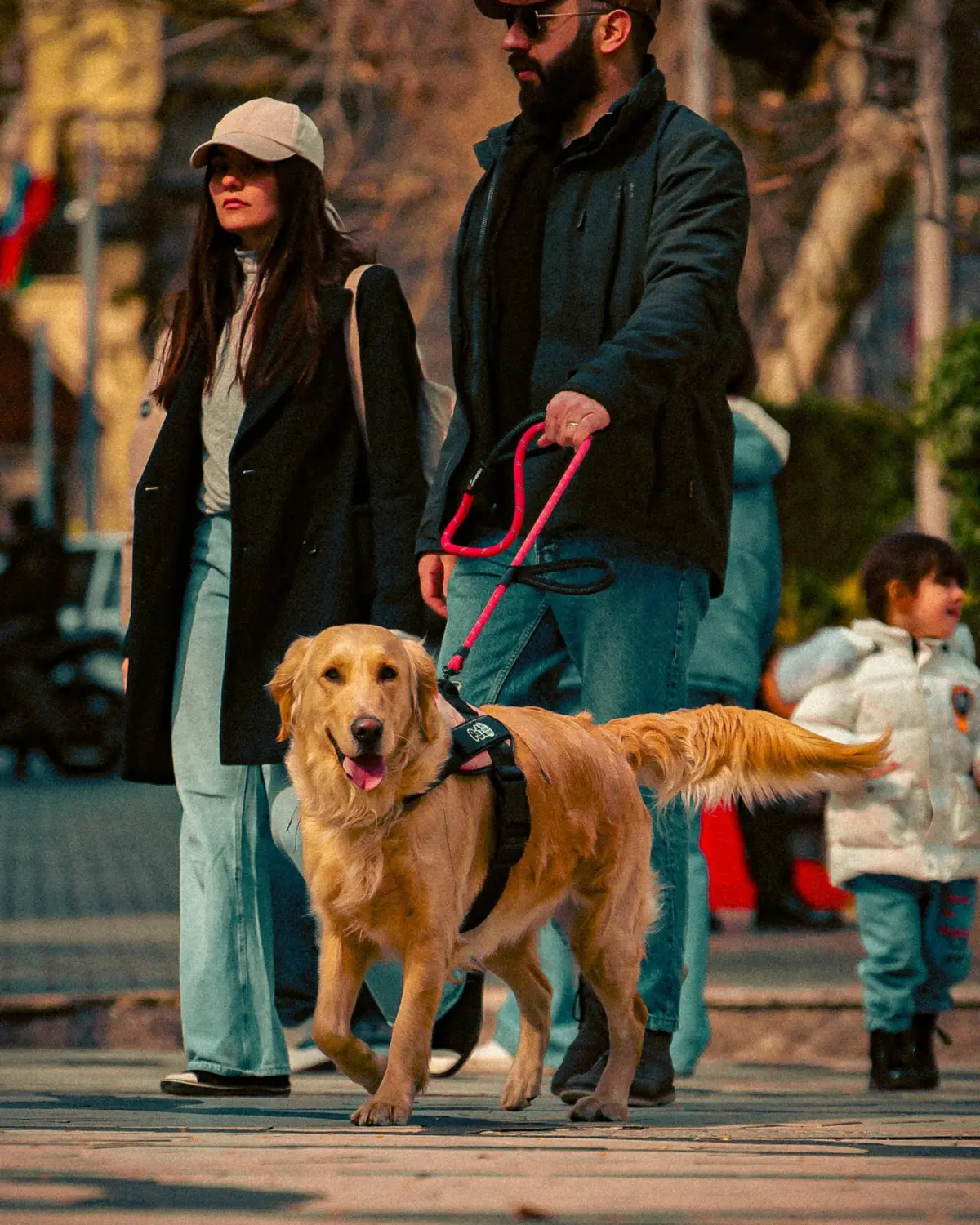
- Clear Identification: While not legally required by the ADA, utilizing a clearly marked service vest or harness can reduce friction at the warehouse entrance by signaling to staff and fellow shoppers that the animal is a working dog rather than a pet.
- Control Equipment: Ensure the dog is outfitted with a sturdy leash, harness, or tether that allows the handler to maintain physical control of the animal at all times. Retractable leashes are generally discouraged in crowded warehouse environments as they reduce immediate control.
2. Behavioral Expectations in the Warehouse
- Focus and Composure: The dog should remain focused on the handler, ignoring distractions such as food displays, other shoppers, and warehouse noises.
- Sanitation Preparedness: Handlers are universally responsible for maintaining the cleanliness and sanitation of their animals. While trained service dogs are reliably housebroken, accidents can happen, and handlers should be prepared to address them immediately.
3. Navigating Staff Inquiries
Members should not be offended if a Costco door greeter or manager asks the two permissible ADA questions. This inquiry is a standard operational procedure designed to protect public safety and ensure compliance with federal law. Providing clear, concise answers regarding the specific task the dog is trained to perform will facilitate immediate entry.
Future Outlook: Trends in Retail Accessibility and Pet Policies
As retail environments continue to evolve, the intersection of consumer lifestyle preferences and regulatory compliance remains a dynamic area of corporate policy.
The Rise of "Dog-Friendly" Retail Trends
In recent years, various home improvement centers, clothing retailers, and specialty stores have adopted permissive "pet-friendly" policies to attract consumer foot traffic. This trend has occasionally blurred public perception, leading some shoppers to assume that all large-format warehouse stores share the same level of openness toward companion animals. However, warehouse clubs like Costco, Sam’s Club, and BJ’s Wholesale Club are unlikely to shift toward general pet permissibility due to strict food safety regulations, industrial safety concerns, and the sheer scale of their warehouse operations.
Technological and Regulatory Shifts
Looking ahead, several developments are likely to shape how retail accessibility is managed:
- Stricter Verification Standards: Amid rising public concern regarding fraudulent emotional support animal certifications and misrepresentated pets, lawmakers and advocacy groups continue to push for clearer legal penalties for individuals who misrepresent household pets as service animals.
- Employee Training Enhancements: Major retailers are expected to continually update training modules for front-line employees to handle service animal encounters with professionalism, avoiding discriminatory practices while strictly enforcing safety boundaries against unauthorized pets.
Conclusion
Costco Wholesale’s dog and pet policy is rooted in a balance between federal accessibility mandates and the operational realities of managing a high-volume, bulk-inventory warehouse environment. While ordinary pets, emotional support animals, and therapy dogs are strictly prohibited from entering Costco stores, trained service animals that assist individuals with disabilities are fully welcomed in accordance with the Americans with Disabilities Act.
For shoppers, understanding these distinctions prevents awkward confrontations at warehouse entrances, ensures compliance with public health and safety standards, and preserves a safe, accessible environment for all members. Whether you are a member relying on a service animal or an enthusiastic pet owner planning your weekend errands, respecting these established protocols ensures a seamless shopping experience for everyone involved.