
Executive Overview
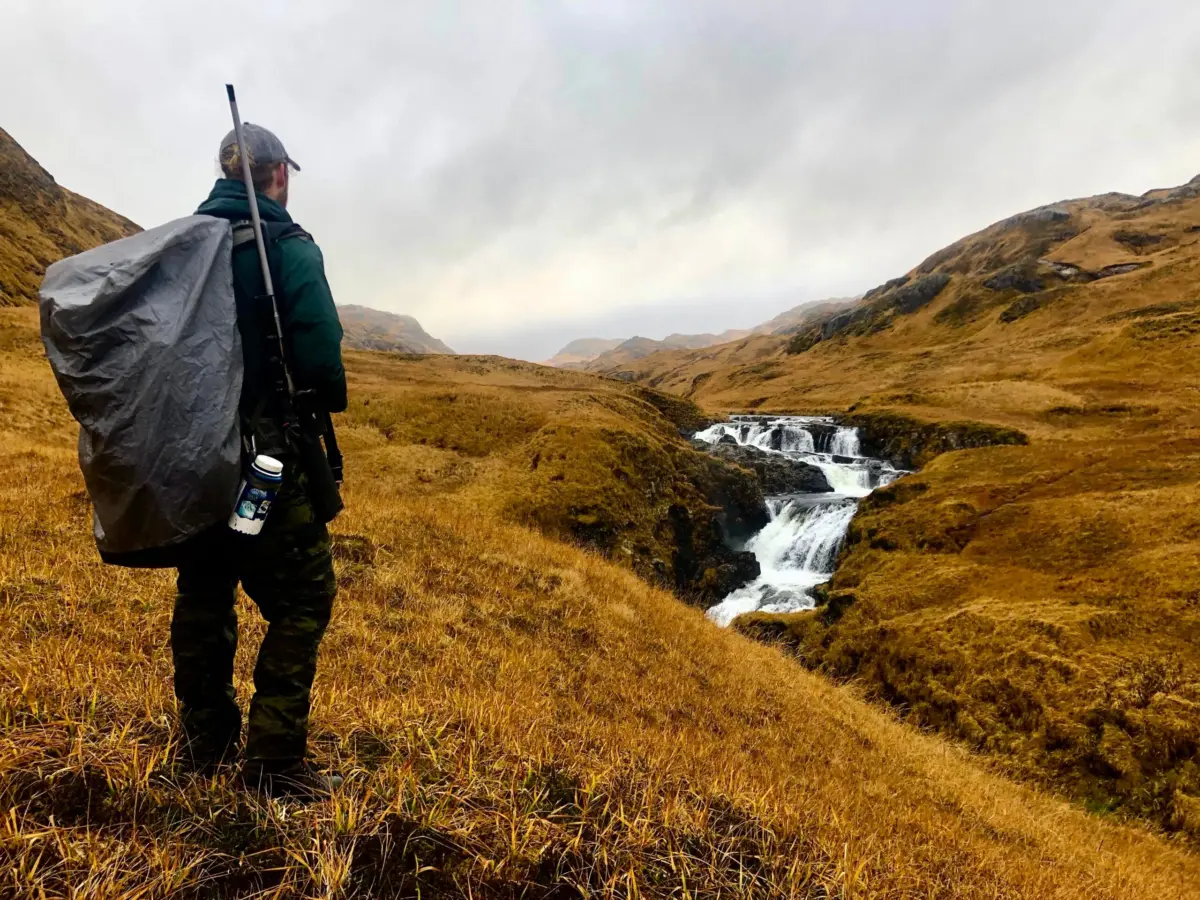
Every autumn across the rugged expanses of Alaska, a deeply rooted tradition unfolds. As moose, caribou, and deer migrate across the tundra and through the taiga, hunters and subsistence users head into the backcountry to harvest the provisions that will sustain their families and communities through the long winter. This harvest is more than a cultural touchstone or a recreational pursuit; for many Alaska Native villages and rural communities, it is a vital, irreplaceable source of food.
However, this age-old practice carries an unintended ecological consequence—one that has flown under the radar for generations. When hunters field-dress their game, they routinely leave behind nutrient-rich remains known as gut piles. While these remnants provide a critical, high-energy food source for scavenging birds during the lean late-fall and early-winter months, they also harbor a hidden hazard: microscopic fragments of lead ammunition.
Traditional lead bullets are engineered to deform upon impact, mushrooming to ensure a swift, humane kill. In doing so, they frequently fragment into dozens of tiny pieces that disperse deep into the animal’s tissues. For apex scavengers like Bald Eagles, Golden Eagles, and Common Ravens, ingesting these fragments can be fatal. Lead is a potent neurotoxin; even an amount as small as a grain of rice can impair a bird’s nervous system, digestion, and mobility, frequently resulting in a slow and agonizing death.
Enter a growing, hunter-led movement centered on a simple, non-toxic alternative: copper ammunition. Unlike lead, copper rounds are designed to stay intact, flowering cleanly upon impact rather than disintegrating. By making the switch to copper, hunters can preserve the ethical harvests they rely on while safeguarding the iconic raptors and scavengers that define the northern wilderness. Through grassroots outreach, peer-to-peer education, and financial incentive programs like the Alaska Copper Ammo Challenge, conservationists and hunters are proving that protecting wildlife doesn’t mean sacrificing performance.
Detailed Chronology: The Evolution of Lead-Free Hunting in Alaska
The realization that traditional ammunition poses a severe threat to wildlife is not entirely new, but the push to address it through voluntary, community-driven channels has accelerated significantly over the past decade.
- Pre-2010s: The Blind Spot of Ballistics. For generations, the primary focus of ballistics design and hunting ethics was singular: terminal performance. Hunters evaluated bullets strictly on weight retention, expansion, and accuracy. The phenomenon of bullet fragmentation and the subsequent shedding of mass into the surrounding meat was largely unexamined outside of specialized scientific circles.
- The Mid-2010s: Uncovering the Ecological Toll. As wildlife biologists began conducting thorough autopsies on dead and dying raptors, patterns emerged. Studies tracking Bald and Golden Eagle populations revealed sharp spikes in blood-lead levels during and immediately following autumn hunting seasons. Researchers began drawing a direct line from big-game gut piles to the neurological decline of scavenging birds.
- February 2024: Demonstrating the Science. Recognizing that theoretical ballistics data often fails to convince skeptics, grassroots organizations took action. In February 2024, Mary Glaves, Chapter Coordinator for Backcountry Hunters & Anglers, conducted rigorous ballistic gel tests at the Hank Harmon Rifle Range in Juneau. Firing both lead and copper rounds into simulated tissue, the demonstrations provided tangible visual proof: lead bullets shattered and left toxic debris behind, whereas copper bullets maintained structural integrity, flowering cleanly like a metal blossom while creating an effective, clean wound channel.
- Present Day: The Rise of the Alaska Copper Ammo Challenge. Today, the movement has transitioned from raw research to active, boots-on-the-ground support. Collaborative initiatives like the Alaska Copper Ammo Challenge—backed by partnerships between the Alaska Department of Fish and Game (ADF&G), the Alaska Falconers Association, and conservation groups—offer tangible assistance to hunters. By providing rebates of up to $80 on the purchase of copper rifle ammunition, these programs actively chip away at the financial barriers that have long hindered widespread adoption.
Supporting Context & Metrics: The Ballistics and Biology of Contamination
To understand why copper is gaining traction, one must first examine the physics of modern ammunition and the unique biological vulnerabilities of avian scavengers.
When a hunter takes a shot at a big-game animal, efficiency is paramount. "When a bullet strikes a deer or a moose or any other species we ask our bullets to expand so that they’ll kill the animal as efficiently as possible so it doesn’t suffer," explains Leland Brown, Program Manager of Lead-free Hunting Oregon and Co-Founder of the North American Lead-Free Partnership.
However, achieving that rapid expansion requires soft lead. According to research on moose hunters, retrieved lead bullets are frequently missing up to 20%—and sometimes as much as 50%—of their original mass upon impact. This missing lead does not vanish; it circulates through the animal’s tissues, with X-ray studies confirming that microscopic fragments can travel over a foot away from the primary wound channel.
When hunters harvest the animal, they typically salvage the prime cuts and leave the internal organs behind. For raptors and ravens, these gut piles are an irresistible buffet. Because birds have highly acidic digestive tracts, ingested lead is rapidly absorbed into their bloodstreams.
The financial and logistical metrics surrounding the transition to copper also present a complex picture:
- Price Disparity: Copper bullets are generally 30% to 65% more expensive than traditional lead rounds on average. In practice, this translates to an extra $1.50 to $8.00 per box of 20 rounds, with remote Alaskan retailers occasionally seeing markups reaching up to $10 more per box.
- The Effectiveness Equation: Despite cost concerns, field data indicates virtually zero performance penalty for copper. Studies and practical experience show no discernible difference in how far game animals travel after being struck by a well-placed copper round compared to a lead one.
- High Voluntary Compliance: In regions where educational outreach has taken root, voluntary compliance rates among hunters can soar between 75% and 90%, proving that respect for the landscape outweighs legislative mandates when communities are treated as partners rather than adversaries.
Official Statements: Perspectives from the Field and Agency Leadership
Navigating the shift toward non-toxic ammunition requires a delicate balance of ecological urgency and cultural empathy. Leaders in wildlife management and conservation emphasize that coercion is neither effective nor welcome in traditional hunting communities.
Arin Underwood of the TED Program at the Alaska Department of Fish and Game (ADF&G) highlights the necessity of the transition:
"Research shows chronic lead poisoning is affecting eagle populations in Alaska. Switching to copper ammo can reduce the amount of lead getting into the environment, which is especially important for scenarios where scavengers like eagles might consume it."
Ben Sullender, Audubon Alaska’s Director of Geospatial Science and an active hunter, approaches the issue from a personal and practical standpoint. Having integrated copper into his own hunting group’s routine, he notes that the choice quickly becomes second nature:
"It’s pretty straightforward—lead at the range, copper in the field. Yes, copper’s much more expensive, but you should only need one shot if you’re doing it right."
Furthermore, Sullender points out an overlooked benefit that directly impacts human health: avoiding lead contamination in the harvested meat.
"If you use lead, you’d need to throw out a ton of meat to protect yourself, your family, and any friends you’re planning to share your harvest with."
Leland Brown underscores the foundational ethos of the movement, stressing that the hunting community must drive the change internally:
"Hunters talk to hunters. We trust each other as hunters. That message, that communication, has to come from one to another. We’re asking for help. We’re not telling people what they have to do… I want to see hunters lead on this, and have it be yet another conservation win for the hunting community."
Mary Glaves echoes this sentiment, emphasizing the power of visual evidence:
"Seeing is believing. The lead bullet is kind of smooshed, and there’s pieces missing, but the copper bullet, it opens up like a flower petal. That actually leaves a bigger hole, a bare wound channel, causing more bleeding, causing the animal to die more quickly and not leave lead behind."
Future Outlook: A New Paradigm of Stewardship
As the Alaska Copper Ammo Challenge and similar initiatives continue to gain momentum, the future of northern conservation looks increasingly bright—provided that systemic hurdles like retail availability and cost continue to be addressed.
The transition to non-toxic ammunition represents a profound evolution in modern conservation ethics. Historically, hunters have been the vanguard of American wildlife management, funding habitat restoration, anti-poaching enforcement, and game research through excise taxes on firearms and ammunition, as well as license fees. Embracing copper is viewed by many as the natural next step in this legacy of stewardship.
Achieving a truly widespread cultural shift will require continued patience, peer-to-peer dialogue, and financial buffers like rebate programs to ease the transition for subsistence hunters operating on tight margins. As specialty copper rounds become more widely stocked in remote Alaskan general stores and hunting gear outlets, the barrier to entry will continue to shrink.
Ultimately, the story of copper ammunition in Alaska is not one of regulation and restriction, but of awareness and voluntary pride. By taking a closer look at what is left behind in the quiet aftermath of a successful hunt, Alaskan hunters are ensuring that the skies above the tundra remain filled with the powerful, unhindered flight of eagles for generations to come.