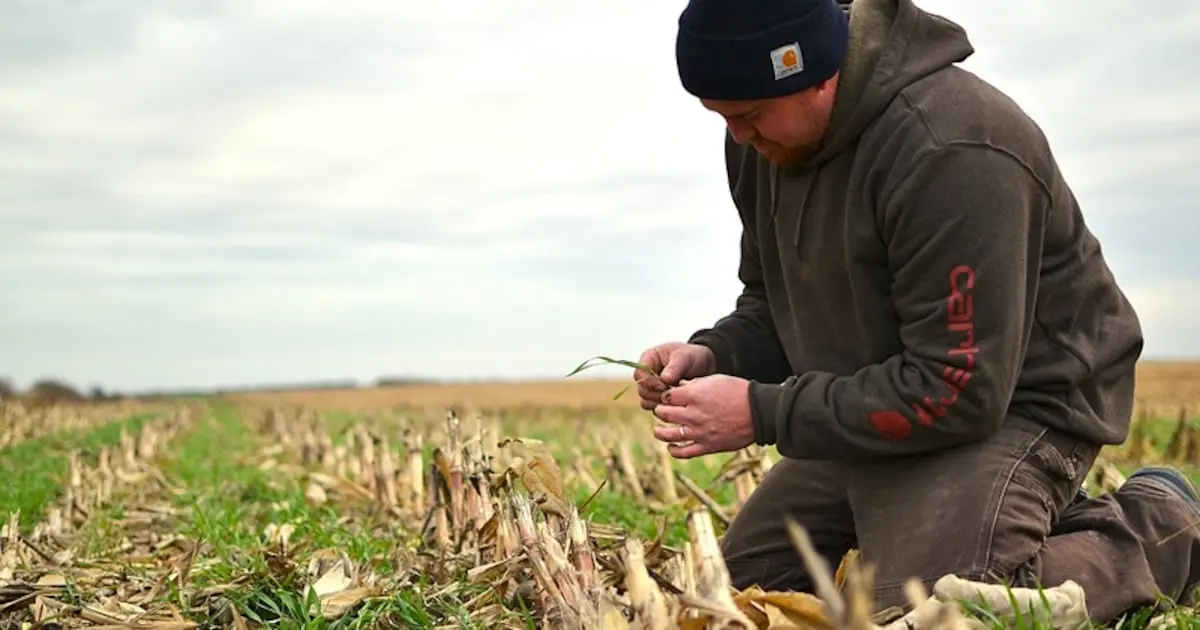

Executive Overview
As the American Midwest grapples with shifting weather extremes, topsoil degradation, and mounting environmental pressures regarding watershed management, the non-profit organization Practical Farmers of Iowa (PFI) has officially opened applications for its 2026 Cover Crop Cost-Share Program. Designed to alleviate the immediate financial barriers associated with adopting sustainable agricultural practices, the initiative offers a direct financial incentive of $15 per acre to corn and soybean producers planning to integrate fall cover crops ahead of the subsequent growing season.
The program represents a cornerstone of PFI’s broader, long-term strategy to mainstream regenerative farming practices across the heartland. By mitigating the upfront expenses of seed acquisition, equipment operation, and time investment, PFI aims to empower both seasoned practitioners and first-time adopters. The initiative is open to corn and soybean growers operating not only within Iowa but also stretching across targeted agricultural zones in Illinois, Minnesota, Missouri, Nebraska, South Dakota, and Wisconsin.
Crucially, PFI’s financial incentive is structured to be stackable, allowing producers to combine the $15-per-acre cost-share with other prominent publicly funded conservation mechanisms, such as the Iowa Department of Agriculture and Land Stewardship’s Water Quality Initiative (IDALS WQI), the Natural Resources Conservation Service’s Environmental Quality Incentives Program (NRCS EQIP), or the Conservation Stewardship Program (CSP). Beyond financial assistance, participants receive comprehensive agronomic advisory support and a complimentary one-year PFI membership, creating a holistic ecosystem of technical guidance and peer-to-peer learning.
Detailed Chronology & Program Mechanics: How the Cost-Share Operates
The rollout of the 2026 cost-share application window follows years of iterative refinement designed to streamline participation for busy farm operators. Understanding the mechanics of the application, verification, and payout lifecycle is essential for producers seeking to maximize their financial and agronomic returns.
Step 1: Application and Acreage Declaration
The process begins online via PFI’s centralized portal. Producers submit baseline operational data, specifically detailing the acreage they intend to commit to cover cropping for the fall planting window. During this initial application phase, farmers sign a designated release authorization. This document permits PFI to coordinate directly with the USDA Farm Service Agency (FSA) to verify reported acreage, ensuring administrative transparency and accountability for distributed funds.
Step 2: Implementation and Agronomic Management
Once accepted into the program, farmers move forward with planting their designated cover crops. According to Sean Dengler, crop nutrition coordinator at PFI, producers utilize a variety of establishment methods tailored to their operational scale, labor availability, and equipment inventory:
- Chasing the Combine: A traditional approach where drilling or seeding occurs immediately behind the harvesting equipment during the hectic fall window.
- Aerial Application: Utilizing planes or helicopters to broadcast seeds into standing cash crops prior to harvest, allowing the cover crop to establish early under the crop canopy.
- Drone Seeding: An increasingly popular, high-precision method that leverages unmanned aerial vehicles (UAVs) to distribute cover crop seeds uniformly across rolling terrain or tight field configurations without compacting the soil.
- Interseeding: A practice where cover crops are planted early into a growing cash crop, though Dengler notes this method must occasionally align with specific federal or state programmatic mandates.
Step 3: Verification and Wrap-Up Survey
Following the autumn planting season, participating farmers complete a comprehensive wrap-up survey. Through this instrument, growers submit verified seed purchase receipts and application-related expenses. PFI processes these records to calculate final cost-share disbursements, ensuring that the $15-per-acre allocation is distributed efficiently to offset the baseline cost of adoption.
Supporting Context & Metrics: The Scale of PFI’s Impact
To fully appreciate the significance of the 2026 cost-share launch, one must examine the staggering trajectory of PFI’s conservation programming over recent years. Cover cropping has transitioned from a niche experimental practice employed by radical conservationists into a recognized, economically viable pillar of modern Midwestern agronomy.
The Numbers Behind the Movement
PFI has consistently scaled its operational capacity to meet surging grower demand. Demonstrating this rapid expansion:
- The 2025 Benchmark: In the previous operational cycle alone, PFI successfully supported more than 2,400 individual farmers across an expansive footprint exceeding 900,000 acres.
- Capital Deployment: To achieve this immense reach, the organization deployed roughly $10 million in direct financial support during 2025, underscoring the deep capital commitment required to catalyze landscape-scale agricultural transformation.
- Geographic Reach: While rooted in Iowa—the nation’s leading producer of both corn and swine—PFI’s influence radiates outward. The inclusion of targeted counties and regions across Illinois, Minnesota, Missouri, Nebraska, South Dakota, and Wisconsin reflects an acknowledgment that watersheds, soil types, and climate vulnerabilities do not respect state lines.
Agronomic Science: Why Cover Crops Matter
The scientific rationale underpinning PFI’s financial investment is robust and multifaceted. Cover crops serve as biological shields for vulnerable Midwestern soils during the fall, winter, and early spring months when cash crops are absent.
Primary agronomic benefits include:
- Erosion Mitigation: Living root systems anchor topsoil in place, drastically reducing wind and water-induced soil displacement during heavy spring rains and rapid snowmelts.
- Nutrient Retention: Cover crops—particularly grasses like cereal rye or brassicas like tillage radishes—act as nutrient "scavengers." They absorb residual nitrates left over from commercial fertilizer applications, preventing them from leaching into tile lines, local streams, and ultimately the Mississippi River basin.
- Weed Suppression: Dense stands of overwintering cover crops outcompete early-season winter annual weeds, reducing reliance on expensive knock-down herbicides in the spring.
- Soil Health Enhancement: As organic matter accumulates and root exudates feed soil microbiology, soil structure improves. Water infiltration rates rise, compaction decreases, and resilience against drought conditions strengthens significantly.
Official Statements & Expert Perspectives
The launch of the 2026 program highlights the ongoing dialogue between agricultural economists, agronomists, and farm operators regarding the true cost of conservation adoption.
In an official press release accompanying the program launch, Sean Dengler, crop nutrition coordinator at PFI, addressed the primary economic friction point that discourages widespread adoption:
"We know cover crops can reduce erosion, suppress weeds, and improve soil health, but the upfront cost can keep farmers from trying them or expanding acres. This program helps offset the cost while giving farmers the support they need to make cover crops work on their farm."
Elaborating on the long-term compounding benefits realized by experienced practitioners, Dengler emphasized that patience yields profound agronomic dividends. Farmers who maintain consistent cover-cropping regimens over multiple years frequently observe transformative shifts in field uniformity and input efficiency:
"Farmers who’ve been doing cover crops for a long time, they’re seeing the yields in the spots of the field that are a little rough start to get a little better. It helps balance out the field more, and you can reduce your fertilizer inputs in years, potentially, once you get that biology active."
Navigating Cash Crop and Cover Crop Interactions
Successfully integrating cover crops requires sophisticated management, particularly regarding species selection relative to the subsequent cash crop. Dengler provided critical technical insights into matching cover crop species with rotation schedules:
- Cereal Rye and Soybeans: A pairing supported by many experienced producers. Cereal rye produces substantial biomass that terminates late or can be planted directly into. “We have plenty of farmers that will plant [soybeans] straight into the rye, and they swear by it. It works well, and the rye will be nice and tall and help with the weed coverage as well,” Dengler noted.
- Cereal Rye and Corn: A significantly trickier enterprise. Because cereal rye biomass can tie up nitrogen and compete aggressively with young corn plants if not managed with absolute precision, caution is paramount.
- Alternatives for Corn Rotations: To mitigate the competitive risks associated with cereal rye ahead of corn, Dengler suggests alternative species: “Some farmers like to do oats in front of corn, so then it’s not there in the spring, or they’ll do wheat, which doesn’t compete as much as say what rye does.” Winter-killed species like oats naturally terminate with hard frosts, leaving a pristine, mellow seedbed ready for early spring corn planting without the risk of allelopathic interference.
Future Outlook: Public-Private Partnerships and the Climate-Smart Horizon
As agriculture faces mounting regulatory scrutiny and corporate supply-chain sustainability targets, programs like PFI’s cover crop cost-share serve as a vital bridge connecting individual farm-gate operations with macro-level environmental goals.
The momentum behind regenerative agriculture is increasingly powered by synergistic public-private partnerships. Major food corporations, grain merchandisers, and consumer packaged goods (CPG) companies are making historic investments in supply-chain decarbonization and soil health restoration.
The Climate Smart Food Summit: Scaling the Dialogue
To explore these converging trends, industry stakeholders are encouraged to engage with upcoming high-level forums. PFI’s leadership is actively participating in broader industry discussions, notably through platforms like the upcoming Climate Smart Food broadcast series, produced jointly by AgNavigator and FoodNavigator.
During the broadcast series, prominent figures from the non-profit sector, academic research, and corporate sustainability will dissect the mechanics of scaling regenerative agriculture. Key sessions feature Chelsea Ferrie, crop nutrition systems manager at PFI, who is slated to share granular insights into the non-profit’s cutting-edge nitrogen reduction trials. Ferrie will be joined on the virtual stage by an experienced Iowa producer and Caitlin Colegrove, sustainable agriculture lead for North America at PepsiCo. This panel exemplifies how non-profit conservation groups, working farmers, and multinational food giants are collaborating to validate, fund, and scale agronomic practices that permanently alter the environmental footprint of the global food system.
Conclusion and Call to Action
For Midwestern corn and soybean producers contemplating the leap into cover cropping—or looking to expand their existing footprint across multi-county operations—PFI’s 2026 cost-share program offers a uniquely supportive gateway. By lowering financial hurdles, supplying expert agronomic advice, and integrating seamlessly with federal and state conservation dollars, Practical Farmers of Iowa continues to build a resilient blueprint for the future of American agriculture.
Farmers interested in securing funding for the 2026 crop year are strongly encouraged to review eligibility criteria, prepare their acreage data, and submit their applications promptly through the PFI Cover Crop Cost-Share Portal. Additionally, stakeholders seeking a deeper dive into corporate-nonprofit alignment are invited to register for the ongoing Climate Smart Food broadcast series to witness firsthand how the agricultural industry is shaping a sustainable tomorrow.