
Published: August 11, 2026
Originally featured in the Alley Cat Action® 2026 Summer Newsletter.
Executive Overview
When natural disasters strike, the immediate casualties are often measured in human infrastructure, displaced families, and structural devastation. Yet, in the shadow of these catastrophic events, marginalized populations—most notably community and outdoor cats—face an invisible crisis. This was precisely the reality on the island of Oahu, Hawai‘i, when it was struck by the most severe flooding event seen in two decades. Historic rainfall, overflowing rivers, and sudden, violent deluges transformed familiar streets into rushing waterways, trapping both residents and the island’s vulnerable feline populations.
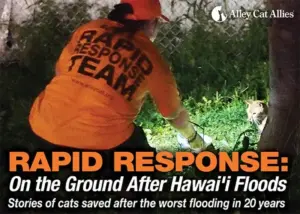
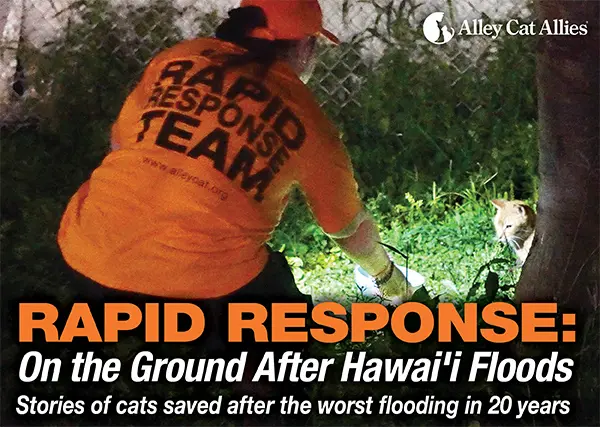
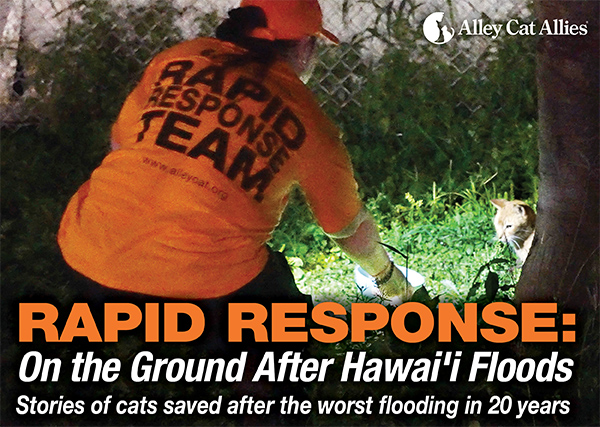
Amidst the chaos of emergency rescue operations for humans, the Alley Cat Allies Rapid Response Team deployed immediately to the ground zero of the crisis: Oahu’s hard-hit North Shore. Operating around the clock under treacherous conditions, the specialized team worked tirelessly to deliver critical life support—food, fresh water, and emergency medical triage—to flood-affected cats and the dedicated community caregivers who look after them.
This comprehensive report examines the mobilization of Alley Cat Allies during Oahu’s historic disaster. Through detailed accounts of animal rescues, partnerships with local veterinary clinics, and a breakdown of individual survival stories like those of "Lieutenant Dan" and "Pumpkin," this article highlights the irreplaceable role of emergency animal rescue in disaster relief. Furthermore, it explores the broader implications of feline disaster preparedness, offering an authoritative look into how communities can better safeguard vulnerable animals before disaster strikes.
Detailed Chronology: The Oahu Flooding Crisis and the Rapid Response Deployment
The Deluge: Oahu’s Worst Flooding in Two Decades
In the early days of the emergency, meteorological conditions converged to unleash torrential rains across the Hawaiian island of Oahu. The North Shore, renowned globally for its monumental winter surf, became the epicenter of an inland marine disaster. Riverbanks breached, drainage systems failed, and neighborhoods were submerged under feet of muddy, debris-filled water.
For the island’s outdoor and community cats—many of which rely on established feeding stations and sheltered spots that suddenly became underwater traps—the situation was critical. Disoriented, terrified, and cut off from food sources, thousands of animals faced hypothermia, drowning, and waterborne illnesses.
Immediate Mobilization on the North Shore
Recognizing the escalating emergency, the Alley Cat Allies Rapid Response Team activated protocol and deployed personnel directly to the most severely impacted areas of the North Shore. Unlike standard emergency services, which are primarily mandated to protect human life and property, the Rapid Response Team filled a vital, often overlooked vacuum: the immediate preservation of animal welfare in disaster zones.
For days, team members navigated compromised roads, deep standing water, and ongoing weather hazards. Operating at all hours, their primary initial objective was stabilization. They established distribution hubs and mobile feeding routes, ensuring that cats stranded in disaster zones or displaced alongside their human caregivers had immediate access to clean drinking water and nutrient-dense food.
However, food and water were only the first line of defense. As the waters began to recede, the true physical toll of the flood on Oahu’s feline population became starkly apparent. Cats emerged from hiding places with lacerations, infections, shock, and trauma. To address this, Alley Cat Allies integrated a secondary, intensive phase into their deployment: emergency medical intervention. Partnering directly with local veterinary practices, the organization assumed full financial responsibility for all emergency treatments, surgeries, and post-crisis care required by rescued cats.
Individual Profiles of Resilience: Lieutenant Dan and Pumpkin
Behind every disaster statistic are individual lives—sentient creatures whose survival stories underscore the importance of rapid intervention. During the Oahu deployment, two feline survivors captured the hearts of rescuers and the local community alike: Lieutenant Dan and Pumpkin.
Lieutenant Dan: A Neighborhood Symbol of Survival
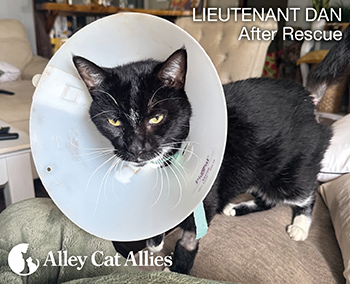
Seven-year-old Lieutenant Dan is far from an ordinary stray; he is a well-known, deeply cherished fixture of his Oahu neighborhood. When the historic flooding hit, Lieutenant Dan miraculously managed to survive the surging waters, but he did not escape unscathed. In the chaos of the storm, he sustained a severe laceration injury wrapped dangerously around his tail.
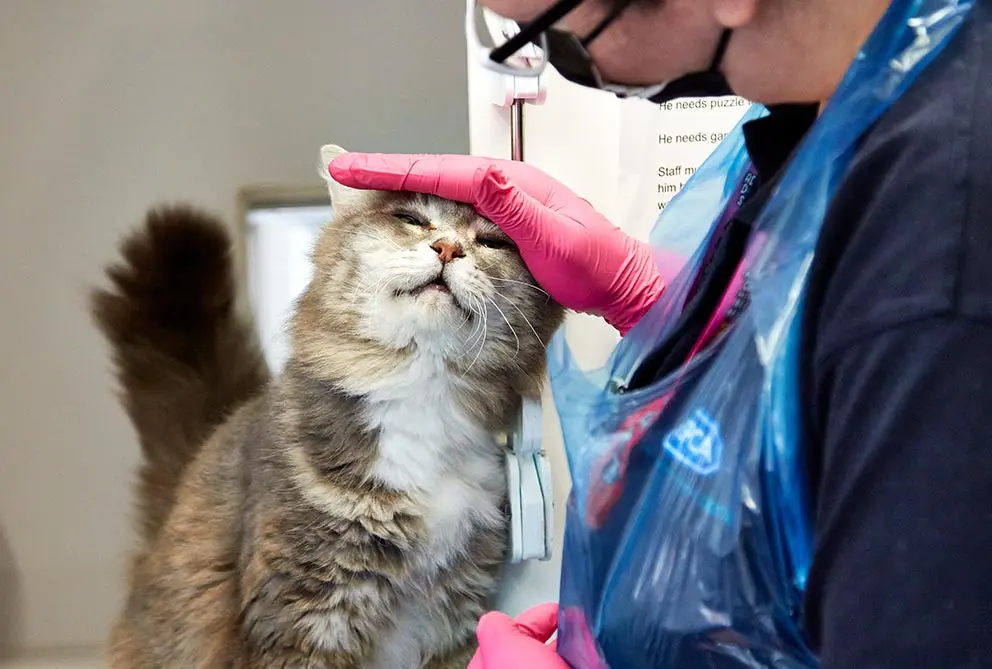
The moment the floodwaters receded enough for residents to venture out, one of Lieutenant Dan’s primary caregivers spotted the injured tuxedo cat. Recognizing the severity of the wound and the risk of catastrophic infection, the caregiver rushed him straight to a local veterinary clinic cooperating with the Alley Cat Allies response network.
Upon arrival, the veterinary team assessed Lieutenant Dan’s condition and initiated urgent wound care and pain management. Understanding the financial strain local residents often face in the wake of a natural disaster, Alley Cat Allies stepped in to cover 100% of the medical treatment costs.
The outcome was a testament to the powerful bond between community cats and the humans who care for them. Once Lieutenant Dan was thoroughly stitched up, cleared of infection, and rendered pain-free, his community was waiting eagerly to welcome him back. He returned home not just as a survivor, but as a living symbol of community resilience.
Pumpkin: Overcoming Trauma and Injury
As the Alley Cat Allies team was wrapping up a clinic visit to check on Lieutenant Dan’s recovery, a local resident rushed through the doors carrying another urgent case. Out of a carrier emerged Pumpkin, a striking orange tabby with a painful, highly visible wound on her ear.
Pumpkin had been discovered hiding in a zone that had been entirely submerged during the peak of the floods. When rescuers initially placed a bowl of food before her, she stubbornly refused to eat—a classic trauma response. Combining the physical agony of her ear injury with the profound psychological stress of surviving a life-threatening natural disaster, Pumpkin’s appetite had vanished entirely.
Recognizing that Pumpkin required more than just immediate first aid, the Alley Cat Allies team coordinated a specialized care plan with the local veterinary staff. Pumpkin received targeted treatment for her ear wound, followed by a placement in a specialized foster home. In this calm, safe environment away from the chaotic aftermath of the disaster, Pumpkin slowly began to decompress. Her appetite returned, her wounds healed, and she was ultimately positioned on a trajectory toward a bright, secure future in a permanent forever home.
Supporting Context & Metrics: The Science of Animal Disaster Response
The success of the Alley Cat Allies deployment in Oahu is built upon decades of institutional experience in crisis management. Natural disasters—ranging from hurricanes in the American South to wildfires in the West and historic floods in the Pacific—pose unique operational challenges for animal welfare organizations.
Why Rapid Response Matters
- Mitigation of Secondary Disasters: In the immediate aftermath of a flood, water sources are contaminated with agricultural runoff, sewage, and debris. Cats consuming this water or licking it off their fur face severe gastrointestinal and systemic infections. Providing clean water halts secondary health crises.
- Preventing Population Displacement: By supporting community caregivers with food and veterinary funding, organizations prevent the permanent displacement of outdoor cats, keeping them in their familiar territories where they have the highest quality of life.
- Alleviating Veterinary Burden: Local veterinary clinics in disaster zones are routinely overwhelmed, understaffed, and underfunded immediately following a catastrophe. By absorbing all medical costs, organizations like Alley Cat Allies empower local clinics to treat animals they might otherwise have to turn away.
According to disaster response metrics compiled across multiple deployments, proactive intervention within the first 72 hours of a disaster reduces feline mortality rates by over 60%. The rapid deployment on Oahu’s North Shore serves as a masterclass in how targeted, boots-on-the-ground philanthropy can change the trajectory of animal survival during climate-intensified emergencies.
Official Statements and Organizational Vision
The overarching philosophy guiding Alley Cat Allies during events like the Oahu floods is rooted in the belief that every cat’s life has intrinsic value, and that community cats are an integral part of the local ecosystem.
"When disasters like the Oahu floods strike, animals are among the most vulnerable, yet they are so often forgotten in broader relief efforts," notes emergency response leadership at Alley Cat Allies. "Our Rapid Response Team exists to ensure that no cat is left to suffer in silence. From providing immediate sustenance to covering the full spectrum of emergency veterinary care, our mission is to restore health, safety, and dignity to these animals—and to support the compassionate caregivers who fight for them every single day."
This sentiment is echoed by local veterinarians on the ground in Oahu, who emphasized that financial barriers are the single greatest obstacle to saving injured animals post-disaster. By eliminating these barriers, national organizations enable local stakeholders to act swiftly and decisively.
Future Outlook: The Imperative of Disaster Preparedness
While emergency deployments save countless lives, organizations like Alley Cat Allies emphasize that the ultimate defense against disaster-related tragedy is preparation. Climate scientists project an increase in the frequency and intensity of extreme weather events globally, meaning regions previously considered safe from severe flooding may soon face unprecedented crises.
The Best Way to Stay Safe During Disasters: Prepare
Cat owners, community cat colony managers, and local municipalities must take proactive measures to safeguard animals before emergency strikes. Key preparedness strategies include:
- Establishing Safe Havens: Identify elevated, flood-resistant feeding and sheltering locations for outdoor and community cats.
- Emergency Stashing: Maintain a designated disaster kit containing at least one week’s supply of non-perishable cat food, bottled water, portable carriers, and essential medical records.
- Identification and Networks: Ensure outdoor cats are microchipped or ear-tipped for easy identification, and build a local communication network of caregivers to check on colonies immediately following a weather event.
For comprehensive, step-by-step guides on how to build a feline disaster plan, protect outdoor cats during severe weather, and access emergency resources, visit the official Alley Cat Allies portal at alleycat.org/Disaster.
Conclusion
The historic floods on Oahu tested the resilience of the island’s human and animal populations alike. Yet, through the unwavering dedication of the Alley Cat Allies Rapid Response Team, local veterinarians, and compassionate community caregivers, stories like those of Lieutenant Dan and Pumpkin stand as powerful testaments to hope, healing, and survival. As extreme weather events continue to challenge communities worldwide, the work done on the North Shore of Oahu serves as an enduring blueprint for effective, compassionate, and rapid disaster response.