
Executive Overview
Every day, millions of pet owners make purchasing decisions based on visual promises printed on pet food packaging. High-definition images of juicy ribeye steaks, farm-fresh grilled chicken breasts, and pristine garden vegetables adorn bags of kibble and cans of wet food. These enticing graphics signal to consumers that they are purchasing premium, high-grade nutrition for their companion animals.
However, an investigation into the mechanics of pet food manufacturing and state regulatory oversight reveals a stark disconnect between packaging representation and actual product composition. Beneath the imagery of prime cuts lies a reality dominated by byproduct meals, mechanically separated meat, and lower-tier agricultural fractions.
       Visual Marketing vs. Manufacturing Reality
┌─────────────────────────────┐     ┌─────────────────────────────┐
│    Front-of-Pack Imagery    │     │      Actual Ingredients     │
│  - Whole Prime Steaks       │  ≠  │  - Mechanically Deboned Scrap│
│  - Grilled Chicken Breast   │     │  - Rendering Byproducts     │
│  - Fresh Whole Vegetables   │     │  - Defatted Plant Fractions │
└─────────────────────────────┘     └─────────────────────────────┘
                               │
                               ▼
              Violates State Adulteration Statutes
              (AZ, CA, PA, FL Commercial Feed Laws)
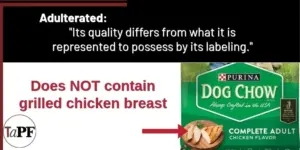
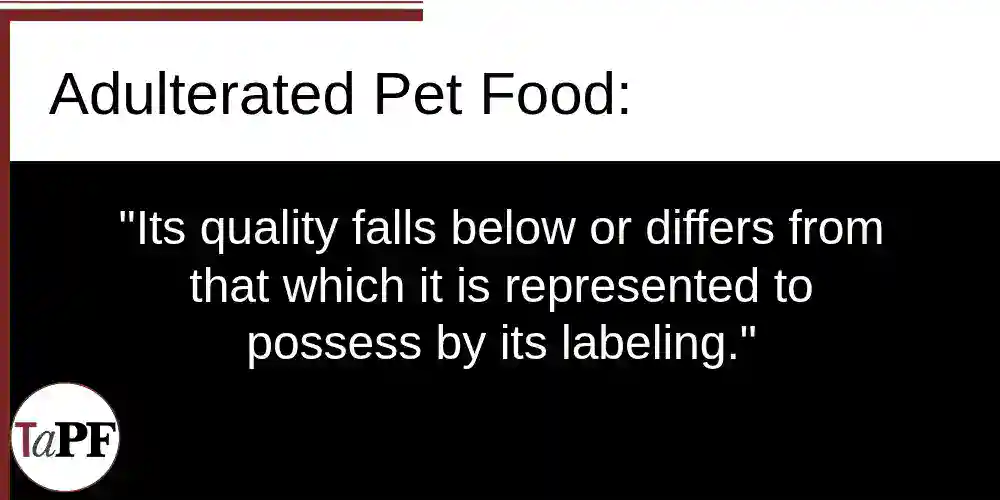
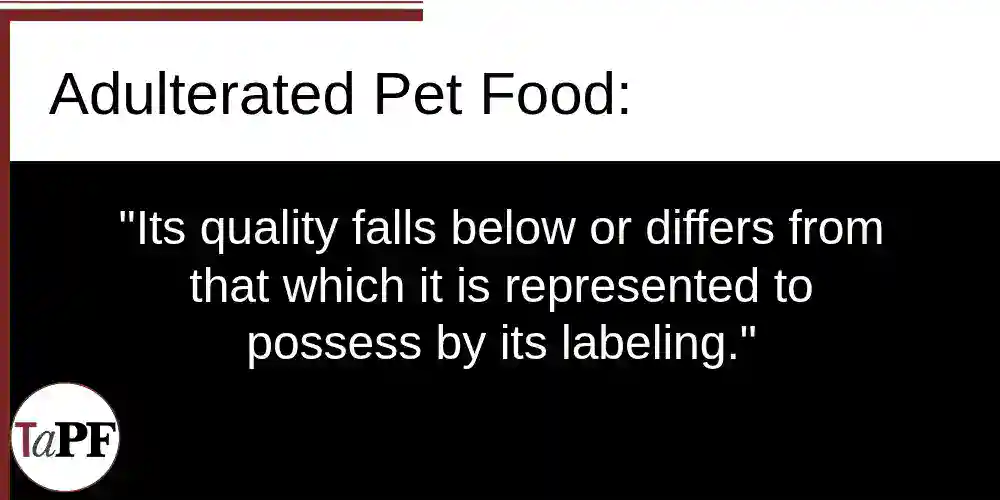
Crucially, this practice does not merely border on misleading marketing—it directly conflicts with existing commercial feed statutes across numerous U.S. states. Under explicit state laws governing commercial feeds, a product is legally classified as adulterated if a valuable constituent has been substituted with a less valuable substance, or if its actual composition falls below what its labeling purports it to possess.
Despite these clear statutory mandates, state regulatory agencies rarely enforce these laws regarding visual misrepresentation. This systemic lack of oversight has allowed pet food manufacturers to operate with near-total impunity, relying on consumer apathy and regulatory inertia.
Detailed Chronology: The Evolution of Pet Food Marketing and Regulatory Inaction
To understand how the current landscape of pet food labeling developed, one must trace the convergence of consumer trends, legislative history, and administrative passivity over recent decades.
  1950s–1980s: Standard Feed Model
  • Kibble marketed as utility feed from agricultural byproducts.
  • Packaging emphasized basic utility rather than culinary appeal.

  1990s–2000s: The "Humanization" Era
  • Shift toward pet humanization.
  • Packaging adopted human-grade aesthetics (prime cuts, fresh veggies).
  • Ingredient quality remained anchored to low-cost commercial feed standards.

  2010s–Present: Digital Expansion & Regulatory Inertia
  • Digital storefronts and brand websites legally extend label claims.
  • Disconnect between visual presentation and contents reaches historic highs.
  • State Departments of Agriculture face budget constraints, prioritizing basic sanitation over labeling integrity.
The Shift Toward "Pet Humanization" (1990s–2000s)
Historically, pet food was packaged and marketed much like livestock feed—utilitarian, plain, and clearly derived from secondary agricultural streams. However, during the late 1990s and early 2000s, the pet care sector underwent a structural transformation driven by "pet humanization." Marketers realized that consumers were increasingly treating dogs and cats as family members.
To capitalize on this emotional shift, pet food companies overhauled their packaging design. Vibrant imagery of restaurant-quality meats and fresh produce replaced basic line art. Yet while the marketing underwent a multi-million-dollar upgrade, the fundamental ingredients in many mass-produced formulations remained anchored to low-cost commercial feed standards.
The Expansion of Digital Marketing (2010s–Present)
As consumer purchasing shifted online, the legal definition of "labeling" expanded. Regulatory frameworks established that a product’s website, digital advertisements, and promotional media serve as legally binding extensions of the physical package label.
Despite this expanding regulatory scope, state feed control officials failed to adjust their monitoring mechanisms. While regulators periodically test kibble for basic guaranteed analysis (minimum protein and fat percentages) or pathogen contamination, they systematically ignore visual misrepresentation on packaging and digital storefronts.
The Present Regulatory Gap
Today, the gap between consumer perception and product composition has reached an historic high. State Departments of Agriculture—tasked with monitoring commercial feed compliance—face resource limitations and historically prioritize acute safety hazards (such as Salmonella or aflatoxins) over structural labeling fraud. Consequently, pet food manufacturers operate under an unwritten exemption from visual accuracy enforcement, even as state laws explicitly prohibit the practice.
Supporting Context & Metrics: Analyzing the Legal Architecture of Adulteration
The foundation of pet food regulation in the United States does not rest entirely on federal standards; rather, it is anchored in state-level Commercial Feed Acts. Most state laws are derived from model language drafted by the Association of American Feed Control Officials (AAFCO), yet individual state statutes carry the full weight of law within their respective jurisdictions.
An examination of state statutes reveals a consistent, unambiguous standard regarding product adulteration and misrepresentation.
Comparative Analysis of State Commercial Feed Statutes
| State | Governing Statute | Statutory Definition of Adulteration | Legal Implication for Misleading Imagery |
|---|---|---|---|
| Arizona | A.R.S. § 3-2611 | Adulterated if a valuable constituent is omitted/substituted, or quality falls below/differs from what is purported by labeling. | Depicting prime steak when using mechanically separated scrap constitutes statutory adulteration. |
| California | Food & Ag Code § 15041 | Adulterated if valuable constituents are substituted, or if composition differs from that represented by labeling. | Marketing materials depicting high-value meats violate state standards if lower-grade rendered meats are substituted. |
| Pennsylvania | Commercial Feed Act § 5106 | Adulterated if composition or quality falls below or differs from that which it is purported or represented to possess. | Explicitly bans any product whose physical contents fall below visual representations on packaging. |
| Florida | Florida Statutes § 580.071 | Unlawful to distribute adulterated feed where less valuable substances are substituted for represented quality. | Mandates strict alignment between labeled/represented quality and actual ingredients. |
The Legal Reality of "Adulteration"
The legal definition of adulteration extends beyond toxic contaminants or spoiled ingredients. In statutory terms, adulteration occurs when economic fraud alters the expected nature of the product.
                         LEGAL ADULTERATION TEST
                                    │
    ┌───────────────────────────────┴───────────────────────────────┐
    ▼                                                               ▼
Qualitative Misrepresentation                    Economic Substitution
Product composition falls below                  A valuable constituent is omitted
what imagery purports (e.g.,                     and replaced by a lower-cost alternative
prime cuts vs. byproduct meal). (e.g., chicken meal vs. breast meat).- Substitution of Valuable Constituents: When a package depicts a choice cut of beef or a whole grilled chicken breast, the manufacturer purports that the product contains high-value muscle meat. If the actual formula relies on mechanically separated meat, rendered byproduct meal, or bone scrap, a less valuable substance has been substituted for a valuable constituent.
- Failure to Conform to Representation: If a label implies the inclusion of whole, intact ingredients, but the interior contents consist of slurry or high-heat extruded meals, the product’s composition falls below and differs from what is purported by its labeling.
Under the letter of the law in Arizona, California, Pennsylvania, Florida, and dozens of other states, these products are legally adulterated. Distribution of adulterated commercial feed is a direct violation of state code.
Official Statements and Structural Industry Conflicts
The persistent non-enforcement of commercial feed laws stems from a complex dynamic involving advocacy organizations, regulatory bodies, and corporate legal strategies.
┌─────────────────────────────────────────────────────────────────────────┐
│                    THE REGULATORY TRIANGLE                              │
├───────────────────────────────┬─────────────────────────────────────────┤
│ Consumer Advocates            │ Demands enforcement of statutory        │
│ (TruthaboutPetFood.com, ATPF) │ adulteration standards for imagery.     │
├───────────────────────────────┼─────────────────────────────────────────┤
│ State Regulatory Authorities  │ Prioritizes microbial/chemical safety;  │
│ (Departments of Agriculture)  │ cites low complaint volumes for inaction.│
├───────────────────────────────┼─────────────────────────────────────────┤
│ Pet Food Manufacturers        │ Treat graphics as artistic puffery,     │
│ (Industry Legal Standard)     │ exploiting regulatory non-enforcement.   │
└───────────────────────────────┴─────────────────────────────────────────┘
The Consumer Advocacy Perspective
Susan Thixton, founder of TruthaboutPetFood.com and co-founder of the Association for Truth in Pet Food (ATPF), has spearheaded investigations into labeling discrepancies for nearly two decades. Speaking on the institutional failure to enforce statutory labeling compliance, Thixton notes:
"Pet food laws in most states directly require pet food manufacturers to have truthful labels—laws that should prevent misleading words and images on the label. Why haven’t these laws been enforced? In part because pet owners have not filed formal complaints with state regulatory authorities or their elected officials. When regulatory bodies face zero consumer pressure on labeling fraud, they allow industry standard practices to supersede written law."
The ATPF, which serves as a consumer stakeholder organization at AAFCO meetings and before the U.S. Food and Drug Administration (FDA), maintains that state regulators hold discretionary power that is currently being misapplied. By failing to issue stop-sale orders for visually deceptive packages, regulators passively validate consumer fraud.

The Regulatory Position
State feed control officials, operating within State Departments of Agriculture, often defend their posture by citing resource constraints and risk prioritization. Regulators maintain that their primary mandate focuses on public health risks—such as Salmonella, E. coli, heavy metals, and mycotoxins—which pose immediate safety threats to humans handling the food and animals consuming it.
Off-the-record statements from state feed officials reveal an implicit industry compromise: visual imagery on packaging is frequently treated as non-binding "puffery" or creative artistic interpretation, provided the text-based ingredient deck technically complies with AAFCO ingredient definitions. However, advocates point out that state adulteration statutes make no legal exception for visual artwork, explicitly stating that a feed is adulterated if its quality falls below what is purported or represented by its labeling.
The Corporate Defense
Pet food manufacturers contend that front-of-pack imagery is designed to illustrate the flavor profile or conceptual source of the proteins used, rather than the literal state of the ingredients prior to processing. Corporate legal teams rely on the fact that state regulators rarely challenge packaging graphics, allowing companies to invest heavily in premium visual branding while utilizing lower-cost feed ingredients in production.
Future Outlook and Consumer Action Plan
The enforcement of commercial feed laws will not change through administrative self-correction. Because regulatory agencies prioritize issues based on formal complaint volume and legislative oversight, shifting the enforcement landscape requires direct consumer action.
                   THE 5-MINUTE ACCOUNTABILITY STRATEGY

  Step 1: Inspect & Query
  Identify packaging with prime imagery; email manufacturer asking if
  exact cuts shown (e.g., grilled breast) are used.
                           │
                           ▼
  Step 2: Collect Evidence
  Save non-answers, deflection, or confirmation of byproduct usage.
                           │
                           ▼
  Step 3: File State Complaint
  Submit formal notice of statutory adulteration to State Department of Ag.
                           │
                           ▼
  Step 4: Legislative Escalation
  If state regulators fail to act, report agency non-enforcement to
  state elected representatives.
The 5-Minute Accountability Strategy
Consumers can take a targeted, five-minute action strategy to systematically challenge deceptive pet food labeling:
Step 1: Identify and Document Misrepresentation
Examine any pet food package or official product website. Locate visual depictions of food items—such as whole grilled chicken breasts, choice cuts of steak, or farm-fresh salmon fillets.
Step 2: Contact the Manufacturer
Send a direct, documented inquiry to the manufacturer’s customer service department asking a specific question:
"Does this pet food product contain the actual quality and cut of ingredient depicted on the packaging (e.g., intact grilled chicken breast / choice cut steak), or does it utilize rendered meals, mechanically separated meat, or agricultural fractions?"
Step 3: Document the Response
Corporate responses typically fall into two categories: outright refusal to confirm ingredient quality, or evasive statements explaining that the imagery is representative of "flavor profiles." Either response serves as documentation that the visual representation does not match the actual ingredient quality.

Step 4: Submit a Formal State Regulatory Complaint
Submit the manufacturer’s response, along with photographs of the packaging, to your State Department of Agriculture’s Feed Control Official. Point directly to your state’s adulteration statute (e.g., Arizona A.R.S. § 3-2611, California Food & Ag Code § 15041, Pennsylvania Commercial Feed Act § 5106, or Florida Statute § 580.071).
State in your complaint:
- The product’s packaging represents high-value constituents (e.g., prime meat cuts).
- The actual contents consist of lower-value substitutes.
- Under state law, the product is adulterated because its quality falls below what is represented by its labeling.
- Request immediate regulatory action, including a stop-sale order until the packaging is brought into statutory compliance.
Step 5: Escalate to State Representatives
If the state feed control agency refuses to investigate or issue a determination, forward the entire correspondence file to your state representative and state senator. Inform them that the state department responsible for consumer protection is choosing not to enforce active state statutes, thereby enabling commercial fraud against pet-owning constituents.
Long-Term Regulatory Impact
                  CHAIN REACTION OF SYSTEMIC CHANGE

  Consumer Complaints ──► Regulatory Investigation ──► Stop-Sale Orders
                                                             │
  Market Reform ◄── Structural AAFCO/FDA Realignment ◄───────┘
Systemic regulatory change occurs when administrative costs favor compliance over non-compliance. If state feed officials begin receiving thousands of documented adulteration complaints, their administrative calculus changes. State agricultural departments will be forced to address these statutory violations directly during annual product registration renewals.
Furthermore, heightened state enforcement will pressure national bodies like AAFCO and the FDA to establish binding visual labeling guidelines, similar to those that govern human food packaging under the Federal Food, Drug, and Cosmetic Act (FD&C Act).
By taking five minutes to challenge deceptive packaging, pet owners can move from passive consumers to active participants in regulatory enforcement—ensuring that the law is upheld and that packaging imagery reflects truth rather than marketing fiction.
Key Resources & Consumer References
- Consumer Advocacy & Ingredient Analysis: TruthaboutPetFood.com
- Stakeholder Representation at AAFCO/FDA: Association for Truth in Pet Food
- State Law Inquiry: Search
[Your State Name] Commercial Feed Law Adulterationto review local statutory language.