
Executive Overview
The United States Food and Drug Administration (FDA) is facing intense scrutiny from consumer advocates, legal experts, and pet owners over what appears to be a stark double standard in federal oversight. The agency recently initiated an aggressive legal offensive against a small independent pet food manufacturer, filing an emergency statutory injunction in federal court to permanently halt its operations. Citing violations of the Federal Food, Drug, and Cosmetic Act (FD&C Act), federal prosecutors acting on behalf of the FDA allege that the manufacturer distributed "adulterated" pet food across state lines under conditions that could pose health risks.
However, an investigation into federal inspection records, industry supply chains, and regulatory enforcement histories reveals a troubling pattern: while small-scale pet food producers are subjected to swift, existential legal action, massive multinational pet food corporations committing identical—or demonstrably more severe—statutory violations frequently receive no regulatory penalties, warning letters, or public notices.
At the center of this controversy is 21 U.S.C. § 342(a)(4), the federal statute defining adulterated food based on unsanitary processing or storage conditions. Despite official FDA inspection reports documenting millions of cockroaches inside active manufacturing plants operated by corporate giants like Mars Petcare—as well as widespread reliance on outdoor rendering facilities operating under exposed, unsanitary conditions—the agency routinely exercises "enforcement discretion" to shield major industry players from legal consequences.
This article examines the legal framework governing pet food safety, contrasts the FDA’s punitive action against small producers with its leniency toward industry giants, and explores the systemic implications of regulatory favoritism for millions of American households.
Detailed Chronology of Enforcement Discrepancies
The Emergency Injunction Against Small Producers
Under federal law, the FDA possesses sweeping authority to remove adulterated food products from interstate commerce and shut down non-compliant facilities. Under 21 U.S.C. § 331(a), the introduction into interstate commerce of any food that is adulterated or misbranded is strictly prohibited. When the FDA identifies a violation, it can request the U.S. Department of Justice (DOJ) to file a civil complaint for injunction in a federal district court.
In the case of the targeted small manufacturer, federal regulators moved directly to an emergency statutory injunction proceeding, seeking a permanent injunction under:
21 U.S.C. § 331(a):
"by introducing or causing to be introduced articles of food, as defined by 21 U.S.C. § 321(f), that are adulterated within the meaning of 21 U.S.C. § 342(a)(1) and (a)(4)…"
For a small enterprise, a federal injunction is virtually a corporate death sentence. It requires the immediate cessation of manufacturing, distribution, and sales, often accompanied by mandatory third-party audits, expensive facility overhauls, and burdensome compliance costs that independent brands cannot survive.
The Mars Petcare Inspection Trail: Millions of Insects, Zero Legal Action
The severity of the FDA’s legal attack on independent producers stands in sharp contrast to its historical handling of major corporate manufacturers. Official Establishment Inspection Reports (EIR) obtained through public records reveal that large-scale facilities have repeatedly escaped enforcement despite horrifying sanitary failures.
A prominent case involved an FDA inspection of a Mars Petcare manufacturing facility. During a multi-day regulatory audit, federal inspectors documented a massive, systemic infestation of German cockroaches running rampant inside active production areas where pet food was processed and packaged.

According to the official inspection records, inspectors observed:
- Severe filth and failure to exclude pests: "The severity of our observations as related to filth and the failure to take adequate measures to exclude pests from the manufacturing and related areas of the firm."
- Raw material contamination: "Failure to handle raw materials and ingredients used in manufacturing under conditions that will protect the animal food against contamination and minimize deterioration."
Crucially, this was not an isolated incident. The FDA’s own records indicate that the facility was a repeat offender, having received prior inspection citations for similar pest control failures a year earlier.
Despite documenting "filth" and "contamination"—the precise statutory triggers under 21 U.S.C. § 342(a)(4)—the FDA took zero formal regulatory action. The agency did not file an injunction, did not issue a public Warning Letter, did not mandate a product recall, and did not notify consumers. Mars Petcare continued commercial operations uninterrupted.
Unregulated Rendering Facilities and the Supply Chain Disconnect
The regulatory divide extends far beyond plant-level pest infestations to the foundational ingredients used in commercial pet food. Millions of pets across the United States are fed kibble containing rendered ingredients—such as meat meal, poultry meal, and animal fat—supplied by major ingredient processors (including facilities operated by Darling Ingredients and others).
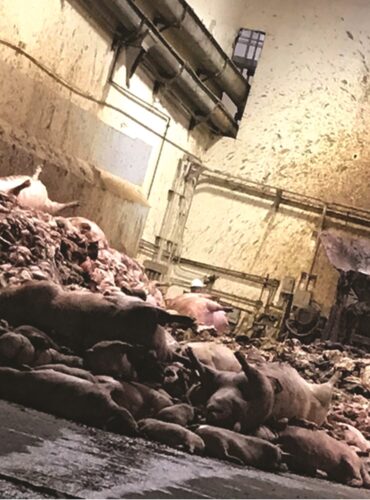
Photographic evidence from satellite imagery (Google Earth) and field inspections reveals that raw, unrefined animal tissues at many rendering sites are routinely held in outdoor, unsealed, and open-air environments. These ingredients are exposed to bird droppings, insects, heat, rain, and outdoor decay prior to processing.
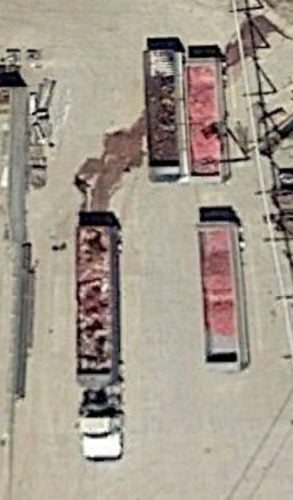
Despite clear evidence that these raw materials are held under conditions where they may become contaminated with filth, pet food conglomerates—including Purina, Mars Petcare, Hill’s Pet Nutrition, and Blue Buffalo—continue to utilize rendered meals from these facilities without regulatory pushback from federal inspectors.
Supporting Context & Metrics: Deconstructing Federal Food Law
The Legal Framework: 21 U.S.C. § 342(a)(4)
To evaluate the FDA’s enforcement consistency, one must examine the specific statutory language governing food adulteration. Under federal code, the threshold for a violation does not require proof that a food product actually caused illness; it merely requires that the food was prepared or held under conditions where it might become contaminated.
21 U.S.C. § 342(a)(4) Text:
"A food shall be deemed to be adulterated—"
(a) Poisonous, insanitary, etc., ingredients
(4) if it has been prepared, packed, or held under insanitary conditions whereby it may have become contaminated with filth, or whereby it may have been rendered injurious to health;"
                             FEDERAL ADULTERATION LAW
                                (21 U.S.C. § 342)
                                       │
           ┌───────────────────────────┴───────────────────────────┐
           ▼                                                       ▼
 21 U.S.C. § 342(a)(1)                                  21 U.S.C. § 342(a)(4)
 Contains poisonous or                                   Prepared, packed, or held under
 harmful substances.                                     INSANITARY CONDITIONS (Filth/Pests).
           │                                                       │
           ▼                                                       ▼
 ┌───────────────────┐                                   ┌───────────────────┐
 │ Actual Harm/Toxin │                                   │ Potential Risk /  │
 │   Demonstrated    │                                   │ Insanitary Process│
 └───────────────────┘                                   └───────────────────┘
The language of § 342(a)(4) is unambiguous. It creates a strict liability standard based on sanitary environment, not final product testing. Consequently, when FDA inspectors observe millions of insects crawling over equipment or raw ingredients stored in open-air pits, a statutory violation of § 342(a)(4) has occurred as a matter of law.
Comparative Enforcement Metrics
The regulatory disparity between small independent manufacturers and major corporate producers highlights a fundamental imbalance in federal enforcement actions:
| Factor / Criteria | Small Independent Manufacturer | Corporate Conglomerate (e.g., Mars, Purina) |
|---|---|---|
| Observed Violations | Trace microbial presence / Minor insanitary findings | Repeat cockroach infestations / Open rendering ingredients |
| Primary Statutory Citation | 21 U.S.C. § 342(a)(4) & § 331(a) | 21 U.S.C. § 342(a)(4) |
| FDA Enforcement Action | Emergency Federal Court Injunction | No Warning Letter, No Injunction, Closed without Penalty |
| Public Disclosure | Immediate DOJ Press Release & Court Action | Kept internal; undisclosed to consumers |
| Operational Impact | Total closure / Bankruptcy threat | Continued commercial manufacturing without disruption |
| Regulatory Discretion Applied | None (Zero-Tolerance) | Extensive ("Selective Enforcement Discretion") |
Official Statements and Stakeholder Positions
Consumer Advocacy Perspective: Susan Thixton
Susan Thixton, a prominent pet food consumer advocate and founder of TruthaboutPetFood.com and the Association for Truth in Pet Food (ATPF), has spent years tracking FDA inspection reports and regulatory compliance records. Thixton contends that the FDA’s enforcement strategy operates as a two-tiered system designed to protect market dominance for legacy brands while crushing smaller competitors.
"This statutory injunction proceeding is brought under the Federal Food, Drug, and Cosmetic Act to permanently enjoin smaller defendants, while the FDA turns a blind eye to massive corporate giants committing the exact same law violations," Thixton stated.
"The FDA calls it ‘selective enforcement.’ But it is far more than that. This selective enforcement directly provides ‘some’ with immunity to handsomely profit from selling adulterated pet food, and at the same time takes ‘others’ to court. This isn’t mere selective enforcement—it is regulatory favoritism that betrays every single U.S. pet owner. It’s regulatory double standards."
The Association for Truth in Pet Food acts as a stakeholder organization representing consumers at the Association of American Feed Control Officials (AAFCO) and before the FDA, advocating for equal enforcement of federal law regardless of manufacturer size.
The FDA Policy Defense: "Enforcement Discretion"
When questioned by advocacy groups and industry observers regarding why major corporations escape formal legal action following documented insanitary conditions, the FDA consistently relies on its legal doctrine of "enforcement discretion."

Agency officials argue that:
- Resource Allocation: The FDA possesses limited regulatory resources and must prioritize enforcement actions based on perceived immediate public health risk rather than technical statutory breaches.
- Post-Processing Mitigation: In commercial pet food manufacturing (specifically high-heat extrusion used for kibble), raw ingredients undergo intense heat and pressure processing, which the agency argues destroys pathogens like Salmonella or E. coli, even if raw materials were held under insanitary conditions beforehand.
- Voluntary Corrective Actions: Larger corporate entities often possess dedicated legal and quality-assurance teams capable of submitting written promises of voluntary corrective actions (FDA Form 483 responses), which regulators frequently accept in lieu of escalating to judicial proceedings.
Critics counter that post-processing heat treatment does not eliminate chemical toxins, heat-stable bacterial endotoxins, or the legal reality that processing filthy ingredients violates § 342(a)(4).
Future Outlook: Legislative Reform, Legal Precedents, and Consumer Action
Potential Legal Challenges Under the Administrative Procedure Act (APA)
The FDA’s reliance on selective enforcement may face heightened legal risks. Under the Administrative Procedure Act (APA), federal administrative agency actions can be set aside by courts if they are found to be "arbitrary, capricious, an abuse of discretion, or otherwise not in accordance with law."
If small pet food manufacturers targeted by federal injunctions can demonstrate that the FDA systematically ignores identical or more severe violations by major market competitors, defendants could raise equal protection and APA defenses. Establishing that federal regulators apply a zero-tolerance policy to small businesses while granting structural immunity to multi-billion-dollar conglomerates could reshape federal agency accountability.
Calls for Congressional Oversight
Consumer advocacy groups are increasingly turning to federal lawmakers to demand oversight hearings into the FDA’s Center for Veterinary Medicine (CVM). Key reform initiatives currently being advocated include:
- Mandatory Equal Enforcement Guidelines: Eliminating administrative loopholes that allow inspectors to bypass formal warning letters when severe filth or pest infestations are documented in corporate facilities.
- Full Transparency of Inspection Reports: Requiring the FDA to publish all Establishment Inspection Reports (EIRs) and Form 483 citations in a centralized, publicly accessible database within 30 days of inspection completion.
- Overhaul of Rendered Ingredient Policy: Requiring rendering plants supplying animal feed to adhere to the exact same sanitary storage and transport regulations mandatory for human food supply chains.
Navigating the Market: Guidance for Pet Owners
As questions surround regulatory oversight, pet owners are encouraged to exercise increased due diligence regarding pet food safety and ingredient sourcing:
- Investigate Ingredient Sources: Look for transparency regarding ingredient sourcing, favoring manufacturers that utilize human-grade ingredients processed in inspected human-food facilities.
- Review Independent Compliance Lists: Advocates maintain specialized resources, such as the TruthaboutPetFood.com annual consumer lists, which evaluate manufacturers based on sourcing, manufacturing standards, and regulatory compliance histories.
- Participate in Regulatory Governance: Pet owners can join advocacy groups like the Association for Truth in Pet Food to support consumer representation at AAFCO policy meetings and demand regulatory transparency from federal authorities.
The fundamental question remains: Will federal regulators enforce food safety laws uniformly to protect public health, or will double standards continue to dictate what goes into American pet food bowls?