
Executive Overview
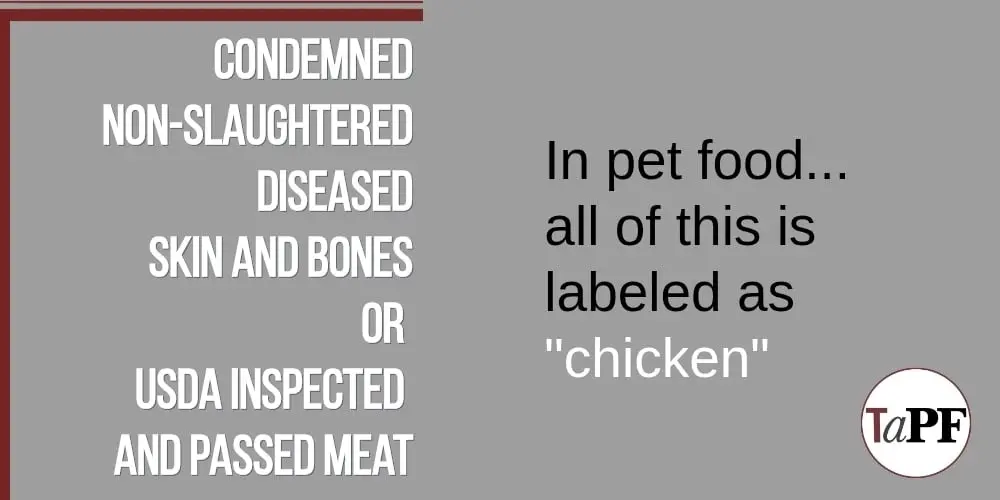
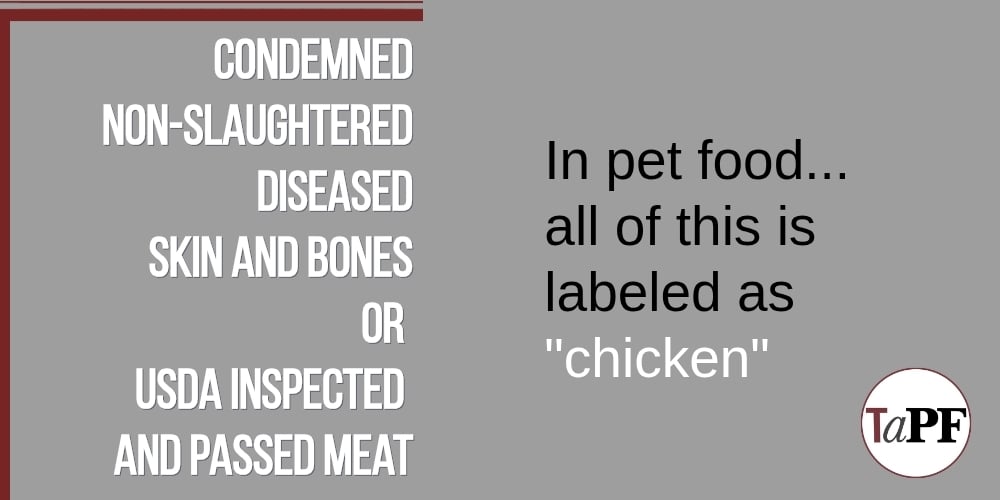
For decades, millions of pet owners across North America have purchased commercial pet food operating under a fundamental assumption: that the word "chicken" printed on a pet food label signifies the same wholesome ingredient found in the aisles of a retail grocery store. However, an examination of federal food safety regulations reveals a stark discrepancy. Under current regulatory frameworks, a single ingredient term—such as "chicken"—can legally denote everything from USDA-inspected and passed poultry breast meat to diseased, condemned animal carcasses, roadkill, skin, and bones virtually devoid of meat.
This systemic disparity stems from a lack of Standards of Identity (SOI) for pet food ingredients. Established for human food in 1939 by the U.S. Food and Drug Administration (FDA), SOIs were created to establish legal benchmarks defining what a specific food product must contain to be marketed under its common name. In the absence of equivalent standards for companion animals, pet food manufacturers operating within the "feed-grade" space are permitted to utilize diseased or non-slaughtered animal materials while using the exact same label claims as high-grade, human-edible foods.
This regulatory dynamic falls under the FDA’s own definition of Economically Motivated Adulteration (EMA)—the intentional omission, abstraction, or substitution of valuable ingredients with inferior or cheaper components. By permitting the feed industry to conceal ingredient quality behind ambiguous terminology, federal regulators have left pet food consumers exposed to market deception, creating a regulatory void where economic adulteration thrives legally.
Detailed Chronology: Decades of Deregulation and Undisclosed Policy
The absence of Standards of Identity in pet food is not an accidental oversight, but the result of a long history of administrative shifts, regulatory rollbacks, and legislative inertia spanning over eight decades.
+-----------------------------------------------------------------------------------+
|                            CHRONOLOGY OF REGULATORY FAILURE                       |
+------+----------------------------------------------------------------------------+
| 1939 | FDA establishes Standards of Identity (SOIs) to combat economic           |
|      | adulteration in human food (e.g., jam standards).                         |
+------+----------------------------------------------------------------------------+
| 1980 | FDA Compliance Policy Guide formalizes non-action against pet food         |
|      | containing diseased or non-slaughtered animal material.                   |
+------+----------------------------------------------------------------------------+
| 1999 | FDA revokes pet food SOI rulemaking authority, declaring such regulations |
|      | "unnecessary."                                                             |
+------+----------------------------------------------------------------------------+
| 2004 | Human-Grade pet food emerges, creating a dual-tier market using identical  |
|      | ingredient names for vastly different qualities.                           |
+------+----------------------------------------------------------------------------+
| 2007 | Deadly melamine contamination prompts Congress to pass FDAAA Section 1002, |
|      | mandating pet food ingredient standards by Sept 2009.                      |
+------+----------------------------------------------------------------------------+
| 2018 | Senator Rand Paul attaches an addendum to federal legislation, repealing   |
|      | the FDAAA mandate for pet food ingredient standards.                       |
+-----------------------------------------------------------------------------------+
1939: The Genesis of Standards of Identity
The FDA originally established SOIs under the Federal Food, Drug, and Cosmetic Act of 1938 to prevent systemic market fraud. At the time, food manufacturers routinely engaged in economic adulteration—selling jams containing virtually no fruit or diluted dairy products under standard names. SOIs legally mandated minimum quality thresholds, raw ingredient percentages, and standardized processing methods to protect consumers and promote fair dealing in the marketplace.
1980: Institutionalizing Lower Standards for Animals
While human food standards were strictly enforced, the FDA quietly established a permissive stance regarding animal feed. In a 1980 Compliance Policy Guide, the agency explicitly acknowledged the inclusion of compromised animal matter in pet food, declaring:
"Pet food consisting of material from diseased animals or animals which have died otherwise than by slaughter… will not ordinarily be actionable, if it is not otherwise in violation of the law. It will be considered fit for animal consumption."
This policy effectively sanctioned the covert substitution of condemned livestock into the pet food supply chain without requiring consumer disclosure on product labels.
January 1999: The Deregulatory Rollback
Prior to 1999, administrative avenues existed for the FDA to develop binding Standards of Identity specifically tailored for animal food. However, in January 1999, the FDA officially deleted these procedural regulations from the Federal Register, designating them as "unnecessary." Responding to public and Congressional queries, the agency claimed that if a compelling need ever arose, procedural regulations could simply be re-established through standard notice-and-comment rulemaking.
2004: The "Human-Grade" Dichotomy
The structural flaws of this deregulatory move became evident in 2004 with the commercial debut of the first verified "Human-Grade" pet foods. To legally claim human-grade status on product packaging, the FDA mandated that manufacturers source only 100% USDA-inspected and passed ingredients and process them in human-edible food facilities.
This requirement created a sharp market divide:
- Human-Grade Pet Foods: Legally required to source USDA-inspected and passed poultry ("chicken" = human-edible meat).
- Feed-Grade Pet Foods: Permitted to source condemned, diseased, or rendered poultry while utilizing the exact same single-word ingredient label: "chicken."
2007: Melamine Contamination and Congressional Action
In 2007, the pet food industry suffered the largest contamination crisis in its history. Foreign suppliers diluted vegetable protein concentrates (such as wheat gluten and rice protein concentrate) with toxic industrial chemicals—melamine and cyanuric acid—to artificially inflate crude protein readings during lab testing. The scandal resulted in thousands of domestic pet illnesses and fatalities from acute renal failure.
In direct response to this catastrophic failure of supply-chain oversight, the U.S. Congress enacted the Food and Drug Administration Amendments Act (FDAAA) of 2007. Under Section 1002 ("Ensuring the Safety of Pet Food"), Congress explicitly ordered the FDA to establish by regulation:
- Updated ingredient standards and definitions for pet food.
- Target processing standards for pet food facilities.
- Standardized labeling requirements regarding nutritional and ingredient claims.
Congress mandated a statutory deadline of September 2009 for the FDA to finalize these rules.
2009–2018: Regulatory Stalling and Legislative Elimination
The September 2009 deadline passed without the FDA issuing the mandated ingredient standards. For nearly a decade, the agency delayed implementation, allowing feed-grade pet food manufacturers to operate under pre-existing, non-binding definitions established by the Association of American Feed Control Officials (AAFCO).
In 2018, the statutory requirement was permanently undone. Senator Rand Paul of Kentucky attached an addendum to an unrelated federal legislative package that formally repealed the FDAAA Section 1002 mandate requiring the FDA to establish pet food ingredient standards. This legislative maneuver relieved the FDA of its legal obligation to create transparent ingredient definitions, returning the pet food industry to an unregulated state regarding ingredient quality identity.

Supporting Context & Metrics: Quantifying Condemned Material in the Supply Chain
To understand the economic scale of feed-grade substitution, one must analyze the volume of condemned livestock diverted from human food processing facilities into rendering and animal feed channels.
According to official Quarterly Enforcement Reports published by the United States Department of Agriculture (USDA) Food Safety and Inspection Service (FSIS), domestic slaughterhouses condemn millions of pounds of diseased, contaminated, or dead poultry every quarter.
+-----------------------------------------------------------------------------------+
|             USDA FSIS POULTRY CONDEMNATION METRICS (3-MONTH SAMPLE PERIOD)         |
+------------------------------------------+----------------------------------------+
| Metric Parameter                         | Volumetric Value                       |
+------------------------------------------+----------------------------------------+
| Total Poultry Carcasses Condemned        | > 1,000,000 units                      |
| Estimated Average Carcass Weight         | ~ 6.0 lbs                              |
| Total Condemned Tonnage Diverted (3 Mo.) | ~ 6,000,000 lbs                        |
| Projected Annual Condemned Tonnage       | ~ 24,000,000 lbs                       |
+------------------------------------------+----------------------------------------+
| Destination of Material                  | Rendering / Animal Feed Processing     |
| Legal Labeling Requirement on Pet Food   | Designated simply as "Chicken"         |
+------------------------------------------+----------------------------------------+
The Mechanism of Economic Adulteration
Because federal law does not require feed-grade pet food producers to disclose whether their meat sources were derived from USDA-inspected carcasses or condemned materials, an economic incentive structure emerges:
[ USDA Meat Slaughter Facility ]
              |
              +---> Inspected & Passed Meat ---> Human Supply Chain / Human-Grade Pet Food ($$$$)
              |
              +---> Condemned / Diseased Meat --> Feed-Grade Pet Food Renderers ($)
                                                                |
                                                                v
                                              Both Labeled Equally as "CHICKEN"
                                              on Commercial Pet Food Packaging
Feed-grade manufacturers can acquire condemned material at a fraction of the cost of USDA-inspected human-edible meat. Because both raw material inputs result in the identical label term—"chicken"—consumers are deprived of the ability to make informed purchasing choices based on true ingredient quality and value.
Official Statements and Regulatory Double Standards
The systemic divergence between human food oversight and pet food enforcement highlights a fundamental policy split within federal regulatory agencies.
The FDA on Human Food Standards of Identity
The FDA’s official stance regarding human food emphasizes consumer protection and market integrity:
"SOIs were first established in 1939 to help address economic adulteration that was occurring in the marketplace… SOIs were developed to help protect consumers and promote honesty and fair dealing. SOIs have been established to ensure that the characteristics, ingredients and production processes of specific foods are consistent with what consumers expect."
Furthermore, the agency explicitly defines Economically Motivated Adulteration (EMA) as follows:

"Economically motivated adulteration (EMA) occurs when someone intentionally leaves out, takes out, or substitutes a valuable ingredient or part of a food."
The Regulatory Disparity
Despite these clear definitions, the FDA Center for Veterinary Medicine (CVM) maintains a policy framework that permits the feed-grade industry to engage in practices that would constitute illegal economic adulteration if applied to human food.
+-----------------------------------------------------------------------------------+
|                        HUMAN FOOD VS. PET FOOD OVERSIGHT                          |
+----------------------------------+------------------------------------------------+
| Human Food Regulatory Standard   | Feed-Grade Pet Food Policy                     |
+----------------------------------+------------------------------------------------+
| Mandatory Standards of Identity  | No binding Standards of Identity               |
| Strict prohibitions on EMA       | Permitted substitution of condemned materials  |
| Clear cut/part labeling required | Unified vague terminology ("Chicken")          |
| 100% USDA inspection enforced    | Inclusion of 402(a)(5) non-slaughtered matter  |
+----------------------------------+------------------------------------------------+
Historically, the FDA CVM has defended its regulatory inaction by arguing that procedural regulations could be created if deemed necessary, while simultaneously failing to act on Congressional directives, consumer petitions, and market evidence highlighting widespread labeling ambiguity. Crucially, the agency has never issued comprehensive public guidance informing pet owners that feed-grade pet foods may legally contain materials from diseased or non-slaughtered animals.
Future Outlook and Consumer Advocacy Strategies
With federal mandates for pet food ingredient standards repealed and administrative action stalled, the burden of ingredient verification has effectively shifted onto the consumer. Regulatory transparency in the companion animal sector remains unlikely without significant legislative pressure or widespread shifts in consumer purchasing behavior.
Legally Defined Alternatives: Human-Grade Verification
Currently, the only legal mechanism ensuring ingredient quality transparency in pet food is the official "Human-Grade" claim.
                                  PET FOOD PURCHASING GUIDE
                                              |
                   +--------------------------+--------------------------+
                   |                                                     |
        [ "Feed-Grade" Product ]                             [ "Human-Grade" Product ]
                   |                                                     |
  - No Standard of Identity                             - Fully compliant with Human Food SOIs
  - May contain condemned/diseased meat                 - 100% USDA inspected & passed meat
  - Labeled generically as "Chicken"                    - Manufactured in human-edible facilities
  - High risk of Economic Adulteration                  - Full regulatory transparency
Products bearing verified Human-Grade claims must satisfy strict legal criteria:
- Source Transparency: Every individual ingredient must be certified 100% human-edible and USDA-inspected/passed prior to processing.
- Manufacturing Standards: The finished product must be produced, packaged, and stored in licensed human-food manufacturing facilities complying with 21 CFR Part 117 regulations.
Targeted Consumer Action Steps
Advocates and regulatory watchdog groups recommend a multi-pronged approach to demand legislative accountability and consumer protection:
- Direct Regulatory Correspondence: Pet owners can submit formal requests to the FDA Center for Veterinary Medicine (
[email protected]), demanding the administrative establishment of enforceable Standards of Identity for all pet food ingredients to eliminate labeling fraud. - Legislative Advocacy: Concerned citizens can contact state and federal representatives to highlight the ongoing regulatory vacuum created by the 2018 repeal of FDAAA Section 1002, urging Congress to reinstate mandatory pet food ingredient standards.
- Independent Ingredient Verification: Consumers can consult independent transparency organizations—such as the Association for Truth in Pet Food—which audit pet food manufacturers, cross-reference sourcing documentation, and publish verified ingredient transparency reports.
Until federal enforcement aligns pet food labeling policies with the transparent standards applied to human food, market-based demands for fully verified, human-edible ingredients remain the primary protection against economic adulteration in commercial pet food.