The landscape of pet food safety and regulatory oversight has come under intense scrutiny in 2026 following a wave of product actions and contamination events. Over the course of the year, regulatory monitoring has recorded 16 distinct pet product recalls. A major driver of these enforcement actions has been microbial contamination: six of the 16 recalls were triggered by Salmonella contamination, while an additional two recalls were initiated due to the presence of Listeria.
These developments have renewed critical discussions regarding the actual risk profile posed by Salmonella to companion animals versus human owners. Public health and regulatory data reveal a fundamental divergence in how federal bodies handle bacterial standards. While the Centers for Disease Control and Prevention (CDC) estimates that Salmonella accounts for approximately 1.35 million human infections annually in the United States, the vulnerability of pets themselves tells a markedly different clinical story. According to official documentation from the U.S. Food and Drug Administration (FDA), clinical Salmonellosis remains uncommon in adult dogs and cats, which frequently act merely as asymptomatic carriers unless pre-existing health conditions or extreme youth (such as in puppies and kittens) heighten susceptibility.
At the center of current industry debate is an apparent regulatory double standard between raw meat intended for human consumption and raw meat utilized in pet food formulations. The United States Department of Agriculture (USDA), which regulates raw and cooked meat for human retail, permits up to a 25 percent Salmonella-positive threshold in testing for certain raw ground poultry products. Conversely, the FDA enforces a zero-tolerance policy against Salmonella in all commercial pet foods, including raw ground chicken products.
Furthermore, an examination of FDA research regarding bacterial shedding in animal feces reveals notable discrepancies between agency conclusions and underlying scientific metrics. While the agency has cited raw pet food as a primary driver of Salmonella shedding in dogs, a closer analysis of the FDA’s own data—comprising 2,422 canine fecal samples—indicates that out of 60 positive cases, 50 occurred in animals consuming non-raw formats such as kibble, cooked, or dehydrated diets. As consumer advocates urge greater consistency and evidence-based reporting, public health protocols continue to emphasize strict universal handling and sanitation standards across all pet food formats.
Detailed Chronology and Regulatory Framework
The 2026 Pet Food Recall Landscape
Throughout 2026, federal monitoring of the pet food industry led to 16 total product recalls across various brands and product lines. Microbial hazards constituted half of all recorded compliance failures:
Total Pet Product Recalls (2026): 16 actions
Salmonella-Related Recalls: 6 actions
Listeria-Related Recalls: 2 actions
These recalls have placed pet food processing practices, ingredient sourcing, and pathogen control protocols under direct regulatory examination.
2026 Pet Product Recalls Breakdown:
+-------------------------------------------------------+
| Salmonella Recalls (6)                                 |
| Listeria Recalls (2)                                  |
| Other Recalls (8)                                     |
+-------------------------------------------------------+
| Total Recalls: 16                                     |
+-------------------------------------------------------+
The Federal Agency Divide: USDA vs. FDA Enforcement Standards
Understanding the comparative risk of raw meat contamination requires analyzing the jurisdictional split between the USDA and the FDA. The USDA holds regulatory authority over slaughter facilities and raw or cooked meat intended for human consumption. In contrast, the FDA governs animal feed and pet food across all production styles, including dry kibble, cooked meals, dehydrated formulas, and raw diets.
The two regulatory bodies operate under fundamentally different frameworks regarding acceptable bacterial allowances:
Bacterial Tolerance Limits for Raw Ground Chicken:
+-------------------------------------------------------+
| USDA (Human Grocery Raw Meat):  Up to 25% Positive    |
| FDA  (Pet Food Formulations):   0% Positive (Zero)    |
+-------------------------------------------------------+
1. USDA Performance Standards for Human Meat
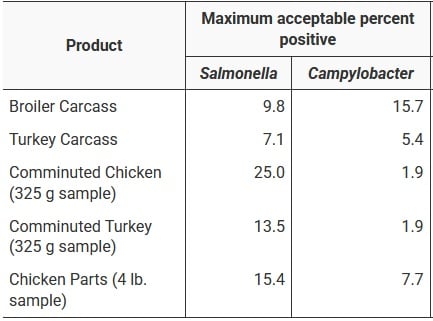
The USDA conducts random sampling within slaughter and processing facilities to monitor pathogen prevalence. Under its established "Maximum acceptable percent positive" standards for Salmonella and Campylobacter in not-ready-to-eat comminuted chicken and poultry products:
The USDA explicitly allows up to 25 percent of raw ground chicken samples to test positive for Salmonella.
Allowances are similarly established across whole chicken, whole turkey, ground turkey, and various chicken parts.
2. FDA Enforcement Standards for Pet Food
In contrast to the USDA’s allowance of baseline contamination in retail raw meat, the FDA enforces a zero-tolerance policy for Salmonella across all commercial pet food formats.
Under FDA enforcement, no positive test result for Salmonella is permitted in raw ground chicken pet food or any other pet food style.
As a direct result of these contrasting regulatory rules, raw ground chicken purchased at a standard grocery store for human preparation carries a statistically higher regulatory tolerance—and thus a significantly greater likelihood of containing Salmonella—than any commercially packaged pet food available on the market.
Supporting Context & Metrics
Human vs. Animal Susceptibility to Salmonellosis
The impact of Salmonella infection varies dramatically between humans and companion animals, establishing distinct public health priorities.
Human Infection Metrics (CDC Data)
The CDC identifies Salmonella as a substantial public health concern, estimating that the bacteria causes approximately 1.35 million human infections in the United States every year. Human exposure occurs through multiple vectors, with raw poultry meat recognized as one of the most prominent sources of risk.
Companion Animal Clinical Profiles (FDA Data)
According to published FDA literature, the clinical risk posed to pets differs substantially from human clinical outcomes:
Infection Frequency: Clinical Salmonellosis is designated by the FDA as uncommon in adult dogs and cats.
Carrier Status: Cats and dogs can harbour and shed Salmonella asymptomatically without displaying clinical symptoms of disease.
Risk Factors: When adult dogs or cats do exhibit active clinical illness from Salmonella, they typically present with a concurrent infection or underlying health problem.
Vulnerable Populations: Young animals—specifically puppies and kittens—demonstrate a higher clinical likelihood of developing active symptoms of Salmonellosis.
In-Depth Analysis of FDA Fecal Shedding Research
To assess the risk of pets transmitting bacteria to humans via fecal shedding, the FDA conducted a comprehensive study examining fecal samples from domestic animals. The agency tested 542 cats and 2,422 dogs for the presence of Salmonella.
Following the study, the FDA asserted that raw pet food posed the primary threat for Salmonella shedding in canine waste, citing that "Salmonella-positive dogs were more likely to have consumed raw food (16.7%, 10 of 60)."
However, an empirical breakdown of the data reveals critical gaps in this conclusion:
Breakdown of Salmonella-Positive Canine Fecal Samples (60 Total):
+-------------------------------------------------------------------------+
| Raw Food Diet Consumers:        10 dogs (16.7%)                         |
| Non-Raw / Other Diet Consumers: 50 dogs (83.3%)                         |
+-------------------------------------------------------------------------+
Overall Prevalence is Low: Out of 2,422 dogs tested, only 60 tested positive for Salmonella, representing an overall baseline prevalence of just 2.5 percent across the tested canine population.
Majority Consumed Non-Raw Diets: Of the 60 positive dogs identified in the study, exactly 10 had consumed a raw pet food diet. The remaining 50 positive dogs (83.3 percent) consumed other styles of pet food.
Data Omission: The published FDA study failed to disclose the specific dietary styles—such as dry kibble, cooked food, or dehydrated formulas—consumed by the 50 remaining Salmonella-positive dogs.
Analytical Contradiction: Advocates point out that claiming raw food is predominantly responsible for bacterial shedding is mathematically flawed when over four-fifths of the shedding dogs in the study were fed non-raw formats.
Official Statements and Stakeholder Perspectives
Regulatory Agency Documentation
The U.S. Food and Drug Administration (FDA) on Animal Health: "Salmonellosis is uncommon in dogs and cats, but they can be carriers of the bacteria. When the disease is seen in an adult dog or cat, the animal typically has another infection or health problem at the same time. Puppies and kittens are more likely to show signs of disease."
The Centers for Disease Control and Prevention (CDC) on Human Impact:
The CDC "estimates Salmonella cause about 1.35 million infections in the United States every year," noting that human exposure occurs through numerous vectors, including contaminated raw poultry meat.
FDA Fecal Study Findings on Dietary Linkage: "The overall study prevalence of Salmonella in cats (3 of 542) was <1%. The prevalence in dogs (60 of 2,422) was 2.5%… Salmonella-positive dogs were more likely to have consumed raw food (16.7%, 10 of 60)."
Consumer Advocacy Analysis
Susan Thixton, Pet Food Consumer Advocate and founder of TruthaboutPetFood.com and the Association for Truth in Pet Food, challenges the regulatory narrative surrounding raw pet food and agency communication strategies:
"This FDA claim that raw pet foods were more likely to leave Salmonella in the pet feces is not accurate. Of 2,422 dog feces tested, only 60 were positive for Salmonella (2.5%). Of the 60 positive, 10 of those dogs consumed raw pet food. This leaves 50 positive dogs who ate other styles of pet food. Unfortunately (or perhaps intentionally) the FDA study did not disclose what style of pet food the 50 remaining dogs consumed."
Thixton highlights that because non-raw formats accounted for 50 of the 60 positive cases, pet owners must recognize that bacterial risks are not isolated to raw diets alone:
"The potential styles of pet food those 50 positive dogs consumed would be kibble, cooked or dehydrated styles of pet foods. The reality is, any style of pet food can be a risk for Salmonella contamination."
Furthermore, consumer advocates emphasize the role of stakeholder organizations like the Association for Truth in Pet Food, which represents consumer interests at meetings with the Association of American Feed Control Officials (AAFCO) and the FDA to push for increased transparency, fair enforcement, and balanced public health messaging.
Future Outlook and Hygiene Protocols
Universal Risk Management Across Pet Food Formulations
Because microbial contamination can occur across dry kibble, cooked meals, dehydrated diets, and raw preparations, pet food safety advocates caution pet owners against assuming that non-raw food styles are completely free of risk. Comprehensive handling protocols must be maintained across all feeding regimens to minimize human and animal exposure.
Recommended Comprehensive Hygiene Standard Operating Procedures:
+-------------------------------------------------------------------------+
| 1. Meal Preparation Protocols                                           |
|    - Thorough hand washing with soap and warm water before/after handling|
|    - Sanitization of food bowls, scoops, and preparation utensils       |
+-------------------------------------------------------------------------+
| 2. Post-Feeding and Waste Handling                                      |
|    - Immediate washing of hands after picking up canine waste           |
|    - Complete hand hygiene following feline litter box maintenance      |
+-------------------------------------------------------------------------+
| 3. Regulatory Action Items                                              |
|    - Implementation of uniform public handling reminders by the FDA     |
|    - Alignment of FDA communications with USDA consumer messaging model |
+-------------------------------------------------------------------------+
Strategic Recommendations for Regulatory Reform
To ensure public safety while maintaining accurate public risk communication, consumer advocacy groups recommend specific policy adjustments for regulatory bodies:
Consistent Public Hygiene Campaigns: The FDA is urged to issue routine, standardized hygiene reminders for pet owners—focusing on consistent hand washing, bowl washing, and utensil sanitization—mirroring the ongoing educational guidance provided by the USDA for handling raw meat.
Transparent Data Reporting: Future study publications by regulatory agencies must fully disclose background diet categories for all positive samples to avoid selective reporting or misleading conclusions regarding specific food formats.
Harmonized Safety Metrics: Stakeholders continue to press for balanced enforcement oversight that addresses true clinical risks while advocating for transparent representations of pathogen data across all sectors of the pet food industry.