
Executive Overview
As the global agricultural sector grapples with shifting weather patterns, stringent environmental pressures, and the continuous demand for higher yields, fertilizer giant The Mosaic Company is accelerating its strategic pivot toward biological innovation. Marking its sixth major product rollout under the Mosaic Biosciences banner for the year 2026, the company has officially launched Renuvis Enzara, an advanced, enzyme-based crop residue treatment engineered to fundamentally transform how farmers manage post-harvest fields.
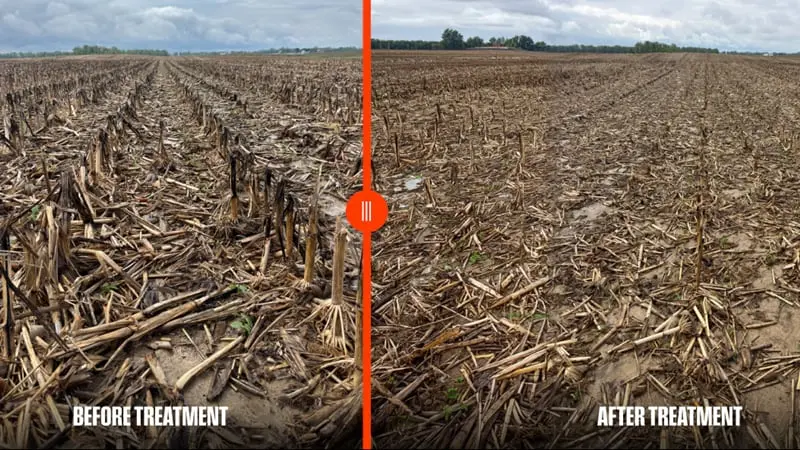
Designed primarily to address the persistent challenges of heavy residue accumulation—particularly in intensive cropping systems such as continuous corn—Renuvis Enzara utilizes an isolated and purified endoglucanase enzyme. This specialized biochemical agent targets the robust structural carbohydrates found in leftover plant material, systematically breaking them down into shorter-chain, readily available sugars. By feeding native soil microorganisms, the treatment dramatically accelerates the natural decomposition process, clearing the way for smoother spring planting operations, improved nutrient cycling, and enhanced seedbed preparation.
The introduction of Renuvis Enzara arrives at a critical economic crossroads for the fertilizer industry. While macroeconomic volatility and market fluctuations recently impacted conventional fertilizer balance sheets—highlighted by Mosaic reporting a net loss during the second quarter of 2026—the company’s bioscience division has emerged as a resilient engine of growth. Generating $25 million in net sales during that same period, the biosciences sector is projected to double its revenue contribution over the course of the year.
By prioritizing nutrient use efficiency over mere volume application, Mosaic is reshaping its corporate identity from a traditional bulk fertilizer supplier into a holistic crop nutrition and biological solutions provider. This comprehensive report explores the mechanics of Renuvis Enzara, its strategic alignment with emerging agronomic trends like short-stature corn, the scientific trials validating its efficacy, and what this launch signals for the future of sustainable farming.
Detailed Chronology: The Development and Launch of Renuvis Enzara
The path to commercializing Renuvis Enzara reflects a multi-year commitment by Mosaic to bridge the gap between traditional mineral nutrition and cutting-edge biological science. To understand the significance of this 2026 release, it is essential to trace the development timeline and the operational framework that brought the product from laboratory discovery to the farm gate.
The Research and Discovery Phase
Long before its commercial debut for fall fertilizer applications, Mosaic’s research and development teams recognized a growing bottleneck in modern agronomy: high-yielding crop genetics were producing unprecedented volumes of residue, yet conventional decomposition methods were failing to keep pace. Traditional microbial treatments often struggled with environmental unpredictability, varying soil temperatures, and inconsistent enzymatic activity.
To overcome these hurdles, Mosaic’s biological division focused on isolating a hyper-efficient enzyme capable of performing under diverse environmental conditions. Through extensive biochemical screening, the Renuvis Enzara formulation was refined around a purified endoglucanase enzyme. Unlike living microbes that can be sensitive to cold temperatures or chemical tank-mix partners, this stable enzyme acts directly as a catalyst, initiating the breakdown of complex lignocellulosic structures instantly upon contact.
Scaling Up and Field Trials
As the product moved into field-testing phases across major agricultural corridors, agronomists sought to quantify its performance under rigorous scientific parameters. Field trials focused on measuring changes in ash content and total digestible nutrients (TDN) before and after treatment applications.
The results provided the empirical backing necessary for commercialization. Mosaic quantified a consistent 5% reduction in organic residual material alongside an approximate 5% increase in total digestible nutrients within the treated residue. These metrics confirmed that Renuvis Enzara was not merely softening surface trash, but fundamentally altering its chemical composition to unlock trapped nutrients and return them to the soil profile more efficiently.
Commercial Rollout in 2026
Formally introduced to the market in 2026 as the sixth Mosaic Bioscience product of the year, Renuvis Enzara was strategically timed for fall application schedules. Recognizing that autumn is a critical window for residue management—allowing decomposition to occur over the winter months ahead of spring planting—Mosaic positioned the product for seamless integration into standard grower workflows. By ensuring the product could be tank-mixed directly with fall fertilizer or herbicide passes, the company eliminated the need for specialized, standalone application trips, thereby preserving grower margins and operational time.
Supporting Context & Metrics: Tackling the Modern Residue Crisis
To fully appreciate the agronomic value of Renuvis Enzara, one must examine the macro-level shifts occurring in North American field crop production. Modern agriculture is characterized by staggering yield milestones, but these high yields bring a hidden cost: an explosion in post-harvest biomass that must be managed before the next planting season can begin.
The Rise of Short-Stature Corn and Biomass Surges
In recent years, the agricultural seed market has seen the rapid commercialization and adoption of short-stature corn hybrids. Spearheaded by industry leaders such as Bayer, Corteva, and Stine Seed Company, these compact corn systems are engineered to withstand high winds, allow for higher plant populations, and permit late-season nutrient applications. However, despite their shorter physical stature above ground, these high-yielding varieties generate immense amounts of leftover biomass.
According to Kip Jacobs, field solutions agronomist for Mosaic, a typical 250-bushel-per-acre short-stature corn crop can produce an astonishing amount of residue. "On average, we see that 250 bushels of corn produces about five and a half tons of residue—anywhere from 8,000 pounds to 11,000 pounds of residue that needs to be managed per acre," Jacobs explains. "And the direct answer to that problem is Renuvis Enzara."
When left unmanaged, this dense carpet of stalks, leaves, and husks creates numerous operational and agronomic headaches:
- Hairy Wireworm and Pest Habitats: Thick residue mats provide overwintering sites for damaging insect pests and fungal pathogens.
- Cold, Wet Seedbeds: Heavy residue shades the soil in the spring, slowing down soil warm-up and delaying timely planting operations.
- Seed-to-Soil Contact Interference: Planter trash-whipper challenges can lead to uneven seed depth, erratic emergence, and ultimately, lost yield potential.
- Nutrient Tie-Up: As native microbes attempt to break down high-carbon residue, they can temporarily immobilize essential nitrogen in the soil, starving the newly emerged crop.
Application Flexibility and Technical Specifications
Renuvis Enzara was engineered specifically to alleviate these pressures across multiple tillage systems, including continuous corn-on-corn acres, conventional tillage following high-yield crops, and no-till or reduced-till environments.
The product is applied at a rate of 16 fluid ounces per acre and offers exceptional operational flexibility. Unlike many biological treatments that require narrow temperature windows to remain viable, Renuvis Enzara functions effectively in ambient temperatures as low as 32°F.
"If you’re comfortable getting the sprayer out of the shed, the enzyme is going to work," Jacobs emphasizes. Whether applied in the late fall as temperatures drop toward freezing or deployed during early spring burndown passes, the enzyme remains active, ensuring that residue breakdown begins the moment the spray hits the field.
Official Statements and Corporate Strategy: The Mosaic Vision
The launch of Renuvis Enzara is not an isolated product release; it represents a calculated pivot in Mosaic’s broader corporate strategy. As the fertilizer sector navigates market volatility, commodity price swings, and shifting regulatory demands, Mosaic is doubling down on a philosophy centered on nutrient use efficiency and holistic agronomic problem-solving.
Redefining the Fertilizer Paradigm
During recent financial disclosures, Mosaic addressed a second-quarter 2026 net loss of $273 million, driven largely by intense volatility in global fertilizer markets. Yet, juxtaposed against these macroeconomic headwinds was a powerful bright spot: the company’s bioscience division posted $25 million in net sales for the quarter, with leadership forecasting that this revenue stream will double over the course of the year.
Kip Jacobs elaborates on the philosophical shift driving this growth, noting that the traditional approach of simply applying more mineral fertilizer is no longer viable, responsible, or economically attractive for growers facing tight margins.
"Everything that we do at Mosaic is directly associated with increasing nutrient use efficiency," Jacobs states. "As a fertilizer producer, it would be very easy for us to just come out and say, ‘Well, you need to put more fertilizer on.’ That’s not the avenue that we’re taking, and that’s not the most responsible thing for us to do at any point, especially now in the economic situations."
A Comprehensive Portfolio for the Farm Gate
Mosaic’s evolving product ecosystem is designed to support the crop from pre-planting preparation through harvest. Jacobs contextualizes Renuvis Enzara within the company’s wider array of advanced agricultural tools:
"Whether it’s MicroEssentials or Aspire on the crop nutrition side, BioPath and PowerCoat for our fertilizer complements, and now Renuvis Enzara for biological crop residue management, every one of those directly associates with a problem at the farm gate," Jacobs explains. "Whether that’s nutrient use efficiency [or] operational efficiency, everything that we’re trying to do is to get that crop off to a better start and give it season-long availability of nutrients to give it the best probability of success."
This systems-based approach ensures that biologicals are not viewed as gimmicks or standalone novelties, but rather as indispensable components of modern, high-performance agronomic programs. By pairing advanced granular fertilizers with targeted biological coatings and residue-dredging enzymes, Mosaic is building an integrated portfolio designed to maximize every acre’s return on investment.
Future Outlook: The Intersection of Biologicals and Traditional Agronomy
As the agricultural industry looks toward the horizon, the boundary between conventional chemistry and biological science is rapidly dissolving. The commercial success of products like Renuvis Enzara points toward a future where biological inputs are standard operating procedure for progressive growers worldwide.
Scaling Bioscience in a Volatile Market
The projected doubling of Mosaic’s bioscience revenue in 2026 underscores a permanent shift in grower demand. Farmers are increasingly seeking tools that improve soil health, protect yields against environmental stress, and extract maximum value from existing soil and fertilizer investments. As biological manufacturing processes become more refined and cost-effective, adoption rates are expected to accelerate exponentially across major grain-producing regions.
Overcoming Industry Skepticism
Historically, biological products have faced skepticism within the farming community due to inconsistent field performance, overly aggressive marketing claims, and sensitivity to adverse weather conditions. Mosaic is actively combating this skepticism through rigorous scientific quantification—such as measuring ash content and total digestible nutrients—and by designing resilient, weather-tolerant formulations like the purified endoglucanase enzyme in Renuvis Enzara. By proving tangible ROI and operational convenience, companies like Mosaic are building long-term trust with agronomists and growers alike.
The Road Ahead for Crop Residue Management
Looking forward, the challenge of managing high-biomass crop residues will only intensify as seed genetics continue to push yield boundaries higher. Innovations that accelerate natural decomposition without tying up vital soil nitrogen will become foundational to sustainable soil stewardship.
With Renuvis Enzara leading the charge as its sixth bioscience introduction of 2026, Mosaic has positioned itself at the vanguard of this agricultural revolution. By addressing the physical realities of the farm gate—transforming stubborn residue into readily available sugars and unlocking trapped nutrients—Mosaic is proving that the future of fertilizer lies not just in what is added to the soil, but in how intelligently the entire farm ecosystem is managed.