
Executive Overview
Stumbling upon a bird’s egg—whether nestled securely in a porch potted plant, tucked deeply into the tangled branches of a park shrub, or discovered, tragically, alone and fractured on the ground—triggers an immediate sense of curiosity and wonder. For backyard birders, nature enthusiasts, and curious walkers alike, this discovery invariably leads to a single, pressing question: What species does this egg belong to?
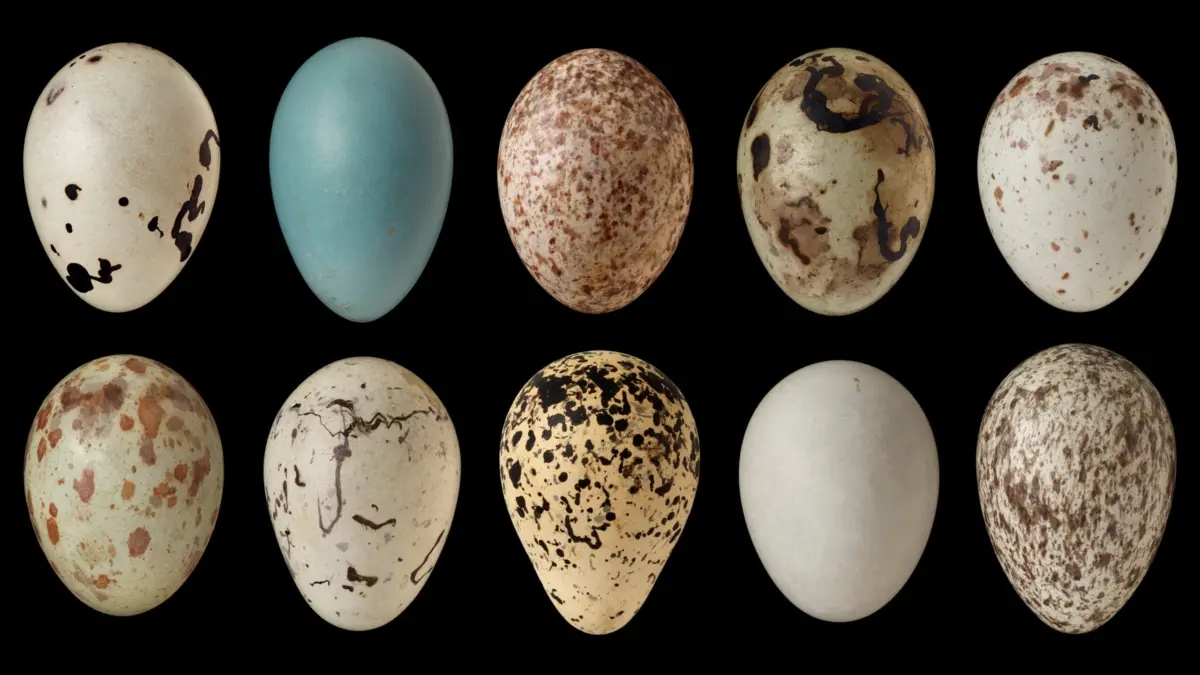
Identifying a wild bird egg requires the same keen observational skills used to identify the adult birds themselves. Success hinges on evaluating a triad of primary physical characteristics: color, size, and markings. When combined with critical environmental context clues—such as the structural architecture of the nest, the materials used to build it, and its precise geographic placement—observers can accurately narrow down the potential species.
While the diversity of avian eggs is staggering, modern ornithology has demystified much of the process. Scientists now understand that the breathtaking palette of avian eggshell colors is derived from just two biological pigments. Furthermore, established field guidelines allow novices and experts alike to safely categorize and identify eggs found across suburban neighborhoods, rural environments, and artificial nest boxes.
Crucially, encountering an active nest demands a strict code of ethics. Observers must maintain a safe, respectful distance to avoid alarming brooding adults or inadvertently attracting predators. This report provides a definitive field guide for identifying common North American bird eggs, explores the chemical science behind their stunning colorations, addresses frequently asked questions regarding brood parasites and incubation periods, and outlines best practices for ethical wildlife observation.
Detailed Chronology: The Science and Anatomy of Avian Oology
To truly appreciate the eggs found in the wild, one must understand how they come to be. The journey of an avian egg begins deep within the female bird’s reproductive anatomy long before it is laid in a carefully constructed sanctuary.
The Formation Process
Unlike mammals, female birds possess a specialized reproductive tract optimized for flight, typically retaining only the left ovary and oviduct. As the yolk matures, it is released into the infundibulum, where fertilization occurs if the female has mated. Over the course of approximately 24 hours, the egg travels down the oviduct, accumulating layers of albumen (the egg white), followed by the inner and outer shell membranes, the hard calcium carbonate shell, and finally, the protective outer cuticle.
The Pigmentation Phase
Just hours before the egg is laid, it passes through the uterus, where specialized cells deposit pigments directly onto the calcium shell. Despite the dizzying array of blues, greens, browns, speckles, and splotches found in nature, all bird egg coloration is derived from just two primary chemical compounds:
- Protoporphyrin: A reddish-brown pigment derived from the breakdown of hemoglobin in the bird’s blood.
- Biliverdin: A blue-green pigment resulting from the breakdown of red blood cells in the liver.
By combining these two foundational pigments in varying concentrations—and frequently layering them over a white or tinted calcium base—nature produces the vast spectrum of hues observed in modern avifauna. For instance, high concentrations of biliverdin produce the striking turquoise eggs of American Robins, while concentrated bursts of protoporphyrin create the dark scrawls and speckles found on the eggs of sparrows and falcons.
Nesting Chronology and Incubation
Once a complete clutch of eggs is laid, the timeline shifts to incubation—the critical window during which parents maintain optimal thermal conditions for embryonic development.
- The Laying Stage: Most songbirds lay one egg per day, typically in the early morning hours, until the clutch is complete. Incubation usually does not begin in earnest until the final egg is laid, ensuring that all chicks hatch synchronously.
- The Incubation Window: For the vast majority of passerines (perching birds), incubation spans 10 to 14 days. However, this timeframe varies drastically across the avian world. Shorebirds, raptors, and waterfowl may require a month or more, while oceanic seabirds, such as albatrosses, endure grueling incubation periods lasting up to 80 days.
- The Hatching and Fledging Phase: Following birth, altricial chicks (those born blind, naked, and helpless) remain in the nest for another 10 to 21 days, sustained by relentless feeding from both parents, before taking their first flights.
Supporting Context & Metrics: Field Identification Guide
When encountering an egg in the wild, field researchers and citizen scientists rely on systematic classification. Below is an authoritative breakdown of common North American eggs categorized by color and pattern.
Blue and Blue-Green Eggs
American Robin (Turdus migratorius)
- Color: A deep, vibrant, unmistakable shade of robin’s-egg blue.
- Size: Roughly the length of a quarter.
- Nest Context: Typically placed in the low branches of deciduous trees, dense shrubs, or architectural anomalies like building gutters and porch eaves.
Eastern Bluebird (Sialia sialis)
- Color: A paler, softer shade of blue compared to the robin.
- Size: Significantly smaller; roughly the length of a dime.
- Nest Context: Cavity nesters that readily utilize artificial bluebird nest boxes.
(Other notable species laying blue or blue-green variants include the Blue Jay, House Finch, Common Grackle, European Starling, Gray Catbird, Red-winged Blackbird, and Northern Mockingbird.)
White and Off-White Eggs
Mourning Dove (Zenaida macroura) & Rock Pigeon (Columba livia)
- Color: Pristine, unmarked pure white.
- Size: Medium-sized, oval-shaped.
- Nest Context: Doves build notoriously flimsy platforms of twigs in trees or on flat building structures, making their white eggs easily visible from below.
Ruby-Throated Hummingbird (Archilochus colubris)
- Color: Solid white and entirely unmarked.
- Size: Exceptionally tiny—roughly half an inch long, comparable in size to a single jellybean.
- Nest Context: Laid in tiny, lichen-covered cup nests secured to downward-sloping tree branches, typically in clutches of just two.
(Additional white-egg layers include the American Barn Owl, Black-chinned Hummingbird, Northern House Wren, Carolina Wren, and Tree Swallow.)
Speckled, Spotted, and Patterned Eggs
House Sparrow (Passer domesticus)
- Color & Pattern: White to pale gray base heavily speckled and blotched with dark brown, gray, or black.
- Nest Context: Found in dense, messy domed structures tucked into building crevices, cavities, and dense shrubbery.
Killdeer (Charadrius vociferus)
- Color & Pattern: Heavily camouflaged buff or olive-brown bases covered in bold, dark brown splotches and scrawls.
- Nest Context: Ground-nesters that lay their eggs directly onto gravel driveways, open fields, or flat rooftops with virtually no nest material.
(Other notable speckled layers include the Song Sparrow, American Goldfinch, and the controversial Brown-headed Cowbird.)
Specialized Groupings: Cardinals, Orioles, and Warblers
- Northern Cardinal: Whitish eggs with a subtle green or blue tint, densely speckled with brown and gray spots concentrated primarily around the larger end of the shell. Measuring roughly one inch in length, they are among the most frequently requested IDs in suburban gardens.
- Baltimore & Orchard Orioles: Elongated eggs featuring pale gray, bluish, or white bases marked with dramatic scrawls, dark blotches, and hair-like lines resembling pen marks, matching the pendulum-like hanging basket nests they occupy.
- Warblers (Yellow-rumped, Common Yellowthroat, Northern Yellow Warbler): Tiny, delicate white or creamy eggs accented with distinct wreaths of brown or purple spots around the wider pole.
Official Statements and Expert Guidance
Navigating human interactions with active nests requires adherence to strict biological and legal frameworks. Wildlife authorities and ornithological organizations emphasize several critical protocols for the public.
The Ethics of Nest Observation
According to guidelines established by the National Audubon Society, human intrusion near active nests poses severe risks to avian populations. Dr. Jane M. Robinson, avian ecologist and wildlife conservationist, notes:
"The presence of a human too close to an active nest can inadvertently signal the location to apex predators like jays, crows, and domestic cats. Furthermore, repeated stress can cause adult birds to temporarily—or permanently—abandon their brooding duties, leading directly to the chilling and death of vulnerable embryos."
Field experts recommend practicing the "snapshot and retreat" methodology. If an unattended nest is discovered, observers should capture a single photographic reference from a respectful distance rather than lingering to inspect contents.
Legal Protections and Brood Parasitism
A frequent ethical dilemma confronting backyard birders involves the discovery of Brown-headed Cowbird eggs. Cowbirds are obligate brood parasites, meaning they construct no nests of their own; instead, they stealthily deposit their speckled eggs into the nests of smaller songbird species, forcing the host parents to rear the foreign chick—often at the expense of their own brood.
Despite the emotional appeal of removing cowbird eggs to protect host species, federal law and ecological science advise restraint:
- Legal Constraints: In North America, native birds—including the Brown-headed Cowbird—are strictly protected under the federal Migratory Bird Treaty Act (MBTA). Removing, damaging, or possessing native bird eggs without a specialized state and federal research permit is strictly illegal.
- Ecological Consequences: Removing a cowbird egg can backfire dramatically. Host species frequently recognize tampering and will abandon the entire nest, destroying their own biological offspring in the process. Alternatively, targeted host species can face retributive "nest raiding" by female cowbirds if their original egg is destroyed.
Conservation biologists advocate leaving avian population dynamics to natural ecological processes, urging the public to appreciate the unique evolutionary strategies of parasitic species rather than intervening.
Future Outlook: Technology and Conservation in Oology
As urbanization continues to encroach upon native avian habitats, the intersection of citizen science and modern technology plays an increasingly vital role in protecting bird species and documenting reproductive health.
Digital Field Guides and Citizen Science
Gone are the days when identifying an enigmatic egg required thumbing through dense, physical encyclopedias in the field. Today, digital applications such as the Audubon Bird Guide app provide instantaneous access to comprehensive field data covering more than 800 North American species. By cross-referencing geographic location, seasonal timelines, habitat structures, and photographic egg databases, modern naturalists can contribute directly to continental bird monitoring initiatives.
Environmental Indicators
Avian eggs serve as sensitive biological barometers for broader environmental health. Historically, widespread thinning of raptor eggshells due to the synthetic pesticide DDT signaled an ecological catastrophe that ultimately led to the establishment of the Environmental Protection Agency and the ban of the chemical. Today, monitoring the timing of clutch initiation, hatching success rates, and shifts in breeding ranges helps researchers track the real-time impacts of global climate change on North American bird populations.
By combining foundational field knowledge, stringent ethical boundaries regarding wildlife observation, and modern digital resources, enthusiasts can safely explore the breathtaking beauty of avian reproduction while ensuring the enduring safety of the next generation of backyard birds.