
Executive Overview
In an era where global agricultural trade is increasingly defined by high-tech supply chain resilience, geopolitical shifts, and deep-seated value integration, bilateral partnerships are moving far beyond the traditional, transactional models of simple commodity export and import. A striking illustration of this paradigm shift unfolded at the prestigious 2026 Garlic Conference in Shandong, China. Against the backdrop of one of the world’s most formidable agricultural powerhouses, senior diplomatic and agricultural officials from Vietnam laid out an ambitious, forward-looking blueprint to reshape the economic contours of the Southeast Asian nation’s garlic industry.
Dr. Do Quang Tung, Vietnam’s Agricultural and Environmental Counsellor to China, delivered a keynote address that transcended the humble status of the Allium crop in question. While garlic may represent a modest slice of the broader multi-billion-dollar trade portfolio between Vietnam and its northern neighbor—overshadowed by heavy-hitting agricultural exports such as rice, coffee, and tropical fruits—Dr. Tung framed the sector as an essential litmus test for modern agricultural diplomacy. His core thesis was both simple and profound: the garlic sector serves as a premier micro-cosmos demonstrating how two nations can transition from a rudimentary exporter-importer relationship into comprehensive, end-to-end value chain collaboration.
This proposed strategic pivot comes at a critical juncture for Vietnam’s domestic agricultural landscape. On one hand, the country is grappling with surging domestic and industrial demand for garlic and its myriad derivatives, ranging from culinary staples to high-value nutraceuticals. On the other hand, the local sector faces acute structural vulnerabilities, including a heavy reliance on imported raw materials, intense regional competition, and a pronounced data deficit regarding domestic planting areas, real-time production yields, localized consumption rates, and import flows.
To bridge these gaps, Vietnam has formally proposed a multi-faceted cooperative framework with China. This initiative seeks to harness China’s world-class expertise in large-scale agricultural mechanization, advanced irrigation systems, sophisticated post-harvest management, and cutting-edge deep-processing technologies. In return, Vietnam offers unique geographical advantages, specialized microclimates, and prized indigenous cultivars—most notably the legendary Ly Son garlic, cultivated in the mineral-rich volcanic soils of Ly Son Island.
By strategically intertwining Chinese industrial capacity with Vietnamese agricultural heritage, the proposed partnership aims to modernize cultivation, drive joint research and development, fortify the processing sector, and elevate premium Vietnamese geographical indications (GIs) onto the global stage. This comprehensive report delves into the mechanics of this emerging partnership, analyzing the economic context, technological synergies, strategic proposals, and the long-term outlook for bilateral trade in the global garlic industry.
Detailed Chronology: The Road to the 2026 Shandong Conference
To fully understand the weight of Vietnam’s strategic overtures at the 2026 Garlic Conference, it is necessary to examine the evolutionary timeline that brought bilateral agricultural relations to this pivotal crossroads.
The Foundational Era: Traditional Border Trade
For decades, the agricultural trade dynamic between Vietnam and China was characterized by traditional cross-border commerce. Garlic, like many secondary crops, moved across porous borders in response to immediate market supply and demand imbalances. Vietnamese smallholder farmers in central coastal and northern provinces cultivated local strains primarily for wet markets and domestic consumption. Whenever domestic harvests fell short due to adverse weather patterns, pests, or disease, traders relied heavily on competitive, lower-cost imports from China to stabilize local markets. Conversely, during peak harvest seasons, localized surpluses occasionally found their way into neighboring markets. However, this early trade lacked institutional depth, standardization, or long-term strategic planning, leaving Vietnamese producers perpetually vulnerable to price shocks and supply chain volatility.
The Rise of Value-Added Processing and Data Deficits
As Vietnam’s economy industrialized rapidly over the past decade, consumer habits shifted dramatically. Urban populations and expanding food-processing industries began demanding more than just raw, fresh garlic bulbs. The market rapidly expanded to encompass a diverse array of value-added derivatives, including black garlic (prized for its antioxidants), peeled garlic, dried flakes, garlic powder, minced formats, and specialized garlic oils used in both the culinary and pharmaceutical sectors.
Despite this burgeoning demand, Vietnam’s domestic agricultural planning faced a structural bottleneck. The country lacked comprehensive, data-driven oversight of its garlic sector. Policymakers and industry stakeholders frequently struggled to secure accurate, real-time metrics regarding total planting areas, annual production outputs, shifting consumption trends, and exact import volumes. This informational vacuum complicated efforts to formulate effective national agricultural policies, leaving the domestic industry squeezed between rising local demand and an influx of heavily subsidized or highly efficient foreign imports.
The Diplomatic Catalyst: The 2026 Shandong Conclave
The gathering at the 2026 Garlic Conference in Shandong—the heartland of Chinese garlic production—represented a deliberate, high-level diplomatic and economic intervention by the Vietnamese government. Recognizing that isolationism or purely defensive trade barriers would fail to protect local farmers, the Vietnamese Agricultural Embassy decided to proactively engage the dragon in its den.
By presenting a well-structured, collaborative agenda at an international industry summit, Dr. Do Quang Tung and the Vietnamese delegation shifted the narrative from a defensive posture of market protection to an offensive strategy of integration. The conference served as the formal launchpad for a series of bilateral dialogues aimed at establishing joint pilot projects, research consortia, and investment bridges. This chronology marks the transition of Vietnamese agricultural policy from passive observation to active, value-driven economic statecraft.
Supporting Context & Metrics: A Tale of Two Agricultural Giants
A realistic assessment of the proposed Vietnam-China garlic partnership requires a clear-eyed examination of the vast asymmetry in scale between the two nations’ agricultural sectors, balanced against the qualitative strengths that Vietnam brings to the table.
The Scale of China’s Garlic Empire
To grasp the magnitude of the global garlic market, one must look closely at the People’s Republic of China, which exercises near-hegemonic dominance over the sector. China’s garlic industry operates on a colossal industrial scale that completely dwarfs that of its Southeast Asian neighbors:
- Cultivation Footprint: China dedicates approximately 850,000 hectares of land exclusively to garlic cultivation, an area larger than the total agricultural landmass of many smaller nations.
- Annual Output: Total annual garlic production in China routinely exceeds a staggering 16 million tonnes, supplying the vast majority of the global market.
- Export Valuations: Garlic and its associated processed products generate upwards of US$3.5 billion annually for the Chinese economy.
- Industrial Integration: This output is supported by an extraordinarily mature, highly consolidated processing industry. Chinese facilities convert raw garlic into sophisticated food additives, pharmaceutical ingredients, and nutraceutical products distributed across global supply chains.
Vietnam’s Domestic Landscape: Niche Strengths and Vulnerabilities
In stark contrast, Vietnam’s garlic sector is a minor crop when measured against national agricultural juggernauts like rice, coffee, black pepper, and tropical fruits. Production is heavily concentrated in specific microclimates across several central coastal and northern provinces.
While exact aggregate production figures fluctuate due to the aforementioned data collection challenges, Vietnam’s domestic output falls significantly short of satisfying total national requirements. Consequently, the country relies structurally on imported garlic supplies to satisfy both everyday household consumption and the growing needs of industrial food processors.
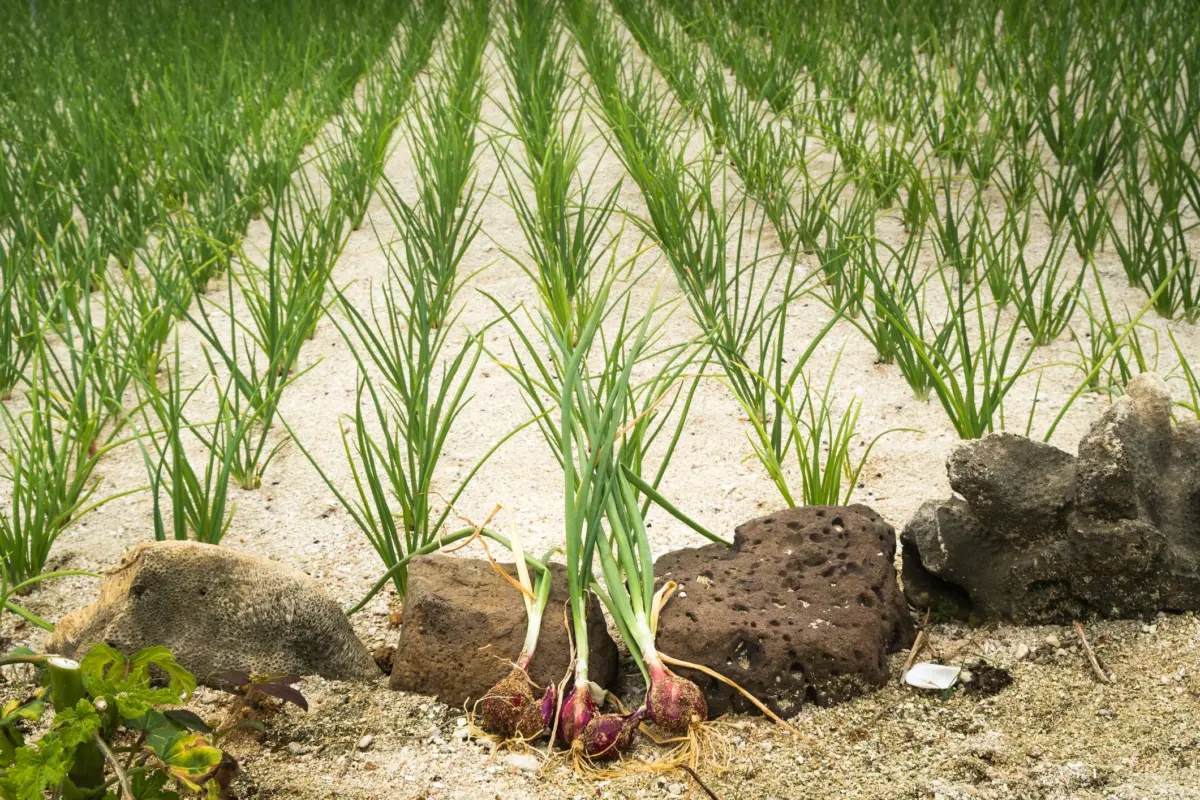
However, Vietnam’s trump card does not lie in sheer volume, but in distinct agricultural differentiation and terroir. Chief among these is Ly Son garlic, an elite variety cultivated on Ly Son Island. Grown in a unique geological matrix consisting of weathered volcanic soil layered over ancient coral reef debris, Ly Son garlic possesses a distinctive flavor profile, pungent aroma, and high concentration of medicinal compounds that command premium prices in domestic and regional markets.
By leveraging these specialized varieties alongside a growing network of processing facilities, Vietnam aims to carve out a high-value market niche rather than competing in the low-margin volume game dominated by mass-produced commodities.
Official Statements and Strategic Proposals
The core of Dr. Do Quang Tung’s address at the 2026 Shandong Conference was not merely diagnostic; it was profoundly prescriptive. Speaking as Vietnam’s Agricultural and Environmental Counsellor, Dr. Tung articulated a comprehensive, four-pillar framework designed to bridge the structural divide between the two nations.
1. Cultivation and Field-Level Collaboration
To address the productivity and efficiency gaps plaguing Vietnamese farmers, Dr. Tung proposed the establishment of targeted bilateral pilot projects. These initiatives would integrate China’s advanced know-how in large-scale agricultural production, farm mechanization, sophisticated irrigation networks, and modern post-harvest management systems with Vietnam’s unique local garlic varieties and favorable growing conditions.
"The garlic sector may not be the largest area in bilateral trade, but it demonstrates the ability to shift from mere commodity exchange to deeper cooperation across the entire agricultural value chain," Dr. Tung emphasized during his keynote. By upgrading farm-level practices, Vietnamese growers can significantly boost per-hectare yields and reduce post-harvest spoilage.
2. Research and Development (R&D) and Germplasm Protection
Recognizing that long-term agricultural resilience depends on scientific innovation, the Vietnamese delegation issued a call to action for stakeholders from both nations to initiate joint breeding programs. These collaborative R&D efforts are intended to:
- Improve crop yields and overall bulb quality.
- Extend post-harvest shelf life to reduce food waste.
- Enhance natural resistance to regional pests and plant diseases.
- Crucially, safeguard Vietnam’s native germplasm and protect its valuable geographical indications (GIs) from biopiracy and unauthorized replication.
3. Deep-Processing and Industrial Integration
Processing represents the most immediate battleground for value capture. As consumer demand shifts toward secondary and tertiary garlic products, Vietnam is keen to upgrade its domestic manufacturing capabilities.
Dr. Tung suggested that both countries cooperate closely in developing a wider spectrum of garlic-derived commodities. This strategy would uniquely leverage China’s advanced processing technology and vast market experience alongside Vietnam’s raw material base and geographical proximity.
Furthermore, a symbiotic supply chain mechanism was proposed: Chinese suppliers could export raw or semi-processed garlic materials directly to processing facilities operating within Vietnam. This arrangement would ensure a steady, reliable feedstock for local manufacturers, enabling them to comfortably meet domestic consumption demands while scaling up finished-product exports to third-country markets across ASEAN and beyond.
4. Institutional Facilitation and Investment Bridges
To ensure these visionary proposals move smoothly from the conference hall to the fields and factories, the Vietnamese Embassy in China has stepped up to serve as an active institutional bridge. Dr. Tung reaffirmed that the embassy stands fully prepared to act as a direct facilitation channel, connecting Chinese investors, agricultural machinery manufacturers, food-processing enterprises, and scientific research institutions with suitable, vetted partners in Vietnam. This diplomatic backing provides a secure legal and administrative framework for cross-border joint ventures.
Future Outlook: Positioning Premium Produce on the Global Stage
Looking toward the horizon, Vietnam’s long-term strategic vision for its garlic sector extends well beyond regional import substitution or short-term trade balancing. The ultimate objective is to elevate elite agricultural products—exemplified by Ly Son garlic—into globally recognized, high-value luxury commodities.
Achieving this ambitious goal will require a rigorous, sustained focus on several critical upgrades:
- Traceability and Food Safety: Implementing blockchain and digital ledger systems to track garlic from the volcanic soils of Ly Son to the supermarket shelf, assuring international consumers of absolute authenticity and safety.
- Branding and Geographical Indications (GIs): Enforcing strict legal protections for regional GIs to prevent market dilution by counterfeit products, thereby preserving brand equity and consumer trust.
- Advanced Processing Capabilities: Upgrading domestic factory infrastructure to produce medical-grade extracts, pharmaceutical-grade oils, and premium aged black garlic that can command lucrative margins in Western and East Asian export markets.
By intelligently leveraging the vast industrial capacity, technological prowess, and market experience of its giant neighbor, while fiercely guarding its own agricultural heritage and unique terroir, Vietnam is charting a pragmatic yet visionary course. The 2026 Garlic Conference in Shandong may focus on a humble bulb, but the cooperative model forged there may well serve as a brilliant blueprint for the future of bilateral agricultural modernization across the globe.