
Executive Overview
For millennia, the relentless expansion of human civilization has fundamentally restructured planetary ecosystems. Roads carve through ancient migration routes, sprawling suburbs replace native forests, and intensive agriculture alters the chemical and physical topography of the Earth. Ecologists have long understood that wildlife must adapt to these physical transformations. However, a landmark study published in the prestigious journal Science has fundamentally shifted our understanding of human-wildlife dynamics.
The research reveals that animals are responding not only to the permanent physical environments we build, but also to the ephemeral, immediate fact that human beings are physically nearby.
By fusing cutting-edge animal telemetry with unprecedentedly granular, anonymized cellphone location data across the United States, an international team of researchers from the University of California, Santa Barbara (UCSB), the Smithsonian’s National Zoo and Conservation Biology Institute, and Yale University has untangled a long-standing ecological mystery. The study demonstrates that wildlife responses to human disturbance are nuanced, highly species-specific, and deeply dependent on the baseline degree of landscape modification.
The catalyst for this breakthrough was the COVID-19 pandemic. The widespread imposition of global lockdowns triggered what scientists call the "anthropause"—a dramatic, sudden contraction and redirection of human mobility. This unintended global experiment allowed researchers to separate the static impacts of urban and agricultural development from the dynamic, mobile impacts of human physical presence.
The implications of this study are profound. By showing that 57% of studied species are simultaneously influenced by landscape modification and active human presence, the findings challenge traditional conservation models. Historically, wildlife management policies have relied on static metrics like housing density or road networks as proxies for human disturbance. This new research proves that such indirect measures miss half the picture. As conservationists look toward an increasingly crowded future, these insights offer a roadmap for precision management—proving that effective coexistence requires us to manage not just where we build, but when and where we move.
Detailed Chronology: How the "Anthropause" Unlocked Ecological Secrets
To understand how researchers achieved this methodological leap, one must examine the timeline of the COVID-19 Bio-Logging Initiative—a massive global collaboration born out of crisis.
The Pre-Pandemic Blind Spot
Before 2020, studying the fine-scale interactions between roaming animals and roaming humans was fraught with technological and logistical roadblocks. While wildlife ecologists had spent decades refining GPS tracking collars for mammals and birds, tracking human presence at a corresponding scale was nearly impossible.
Publicly available data detailing human movement is notoriously difficult to acquire due to privacy concerns and corporate data hoarding. Consequently, decades of conservation science were forced to rely on indirect proxies. Researchers would measure human impact by calculating the percentage of impervious surface cover, the density of road networks, the proximity of agricultural fields, or, on a broader scale, whether a region was currently under a stay-at-home order.
While these metrics provided a rough sketch of human alteration, they suffered from a fatal flaw: they treated human populations as static features of the landscape. A city block or a national park perimeter fence does not move, but the humans inside them do. A hiking trail might be completely deserted on a rainy Tuesday and gridlocked with thousands of recreationists on a sunny Saturday; traditional landscape metrics were utterly blind to this variation.
The Spring 2020 Shutdowns
When the SARS-CoV-2 virus brought global travel to a screeching halt in March and April of 2020, human mobility patterns fractured overnight. Urban cores emptied, highway traffic plummeted, and national parks experienced wild fluctuations in visitation.
Recognizing a once-in-a-generation research window, private technology companies took the unprecedented step of making anonymized, neighborhood-resolution cellphone geolocation data available to select academic researchers. This dataset quantified human movement in real-time and at a national scale.
Assembling the Data Matrix
Seizing this rare opportunity, co-lead authors Ruth Oliver (UCSB) and Scott Yanco (Smithsonian), alongside a vast network of international collaborators, constructed an unprecedented comparative analysis.
The research team gathered weekly GPS tracking records from 4,581 individual mammals and birds across the continental United States. Crucially, they aligned these animal movement vectors across identical seasonal and weekly periods in 2019 (pre-pandemic normal) and 2020 (the anthropause). By pairing this staggering volume of animal bio-logging data with the newly available human geolocation metrics, the team built a dynamic model capable of isolating two distinct variables: how much a landscape had been altered by infrastructure, and how many human bodies were actively moving through it at any given moment.
Supporting Context & Metrics: The Intersection of Space and Movement
The findings of the UCSB-Smithsonian-Yale collaboration dismantle the old paradigm that wildlife management can be effectively executed by simply mapping roads and buildings. The data reveals a complex, interdependent feedback loop between habitat modification and human foot traffic.
Statistical Breakdown of the Findings
The research team analyzed how human activity altered both the physical home ranges of wildlife and their "environmental niches"—the multidimensional space defined by the environmental variables and resources an animal utilizes to survive.
- Dual Influence: Overall, 57% of all animal species studied were significantly impacted by the combination of active human presence and underlying landscape modification.
- Mammalian Sensitivity: Human presence alone was associated with measurable shifts in territory size or niche breadth for 67% of all mammal species.
- Avian Responses: Similarly, bird populations proved highly sensitive, with human presence altering the territorial behavior of 68% of avian species.
- Habitat Contraction: When confronted with the dual pressure of human presence and altered landscapes, 67% of mammal species and 41% of bird species actively contracted the amount of territory they used, effectively squeezing themselves into smaller, potentially less optimal refuges.
- The Paradox of Pristine Spaces: Interestingly, sensitivity to human presence was often most acute in landscapes with the least amount of historical development—such as remote wilderness areas and national parks. In heavily urbanized environments, wildlife had often already habituated or fled entirely, whereas animals in pristine areas showed pronounced behavioral shifts when unexpected human intruders breached their quiet zones.
Interdependent Pressures
The researchers discovered that human presence and habitat modification do not act in isolation; they compound one another. The magnitude of an animal’s behavioral response to human foot traffic depended heavily on whether the local habitat was already fragmented by roads or agriculture. Conversely, the damaging effects of habitat modification were exacerbated or mitigated by the sheer volume of people moving through those fragmented zones.
This multi-tiered complexity explains why historic conservation policies—which frequently focused purely on preserving acreage without regulating human access—often fell short of protecting vulnerable populations.
Official Statements and Expert Analysis
The publication of this research in Science has elicited widespread commentary within the global ecological community, highlighting the necessity of shifting toward dynamic conservation frameworks.
Dr. Ruth Oliver, co-lead author and assistant professor at UCSB’s Bren School of Environmental Science & Management, emphasized that humanity’s footprint is multi-dimensional.
"Humans have complicated effects on wildlife—from our physical presence to how we reshape habitats—but we can’t understand our full impact without information on both," Oliver stated.
She noted that the integration of mobile-device data has provided ecologists with a lens that was previously unimaginable.
"These findings highlight the critical importance of species-based conservation," Oliver continued. "Every species has different habitat requirements, has its own particular behavioral tendencies and faces unique threats. Effective conservation requires that we understand the particular challenges that each species faces."
Dr. Scott Yanco, co-lead author and research ecologist at the Smithsonian’s National Zoo and Conservation Biology Institute, underscored the unprecedented nature of the data sources utilized in the study.
"The cell phone data we used was made available to researchers during the pandemic to help reveal the impacts of COVID-19 shutdowns," Yanco explained. "Typically, private companies hold onto these, which made this a rare opportunity for us to quantify how human presence impacts wildlife, and to demonstrate that there is more to consider than just land modification to create robust conservation plans."
The study is a crown jewel of the broader COVID-19 Bio-Logging Initiative. This monumental scientific coalition involved over 600 institutional partners worldwide, pooling approximately 1 billion location records derived from roughly 13,000 individual animals. Together, these researchers sought to decode how the sudden pause in human industrial, commercial, and recreational activity rippled across terrestrial and marine ecosystems.
While earlier findings from the initiative documented widespread behavioral modifications in mammals, shifts in global shipping lanes, and altered predator-prey dynamics, this latest paper marks the definitive integration of human telemetry with wildlife tracking.
Species-Specific Reactions: Wolves, Deer, and Cranes
One of the most vital takeaways from the research is that there is no universal behavioral template governing how wildlife reacts to human intrusion. Different evolutionary histories, life-history strategies, and ecological roles dictate drastically divergent responses.
Gray Wolves (Canis lupus)
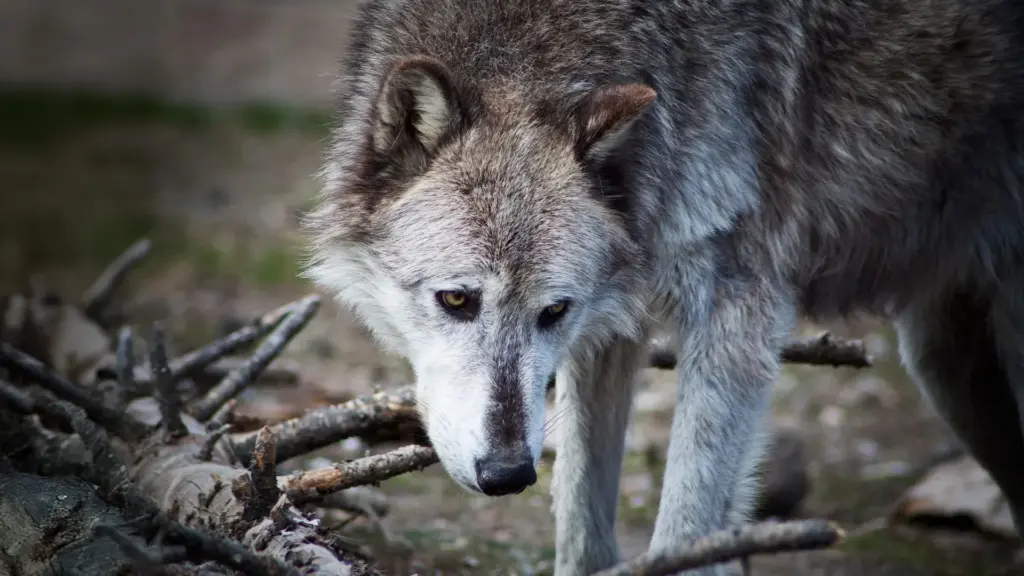
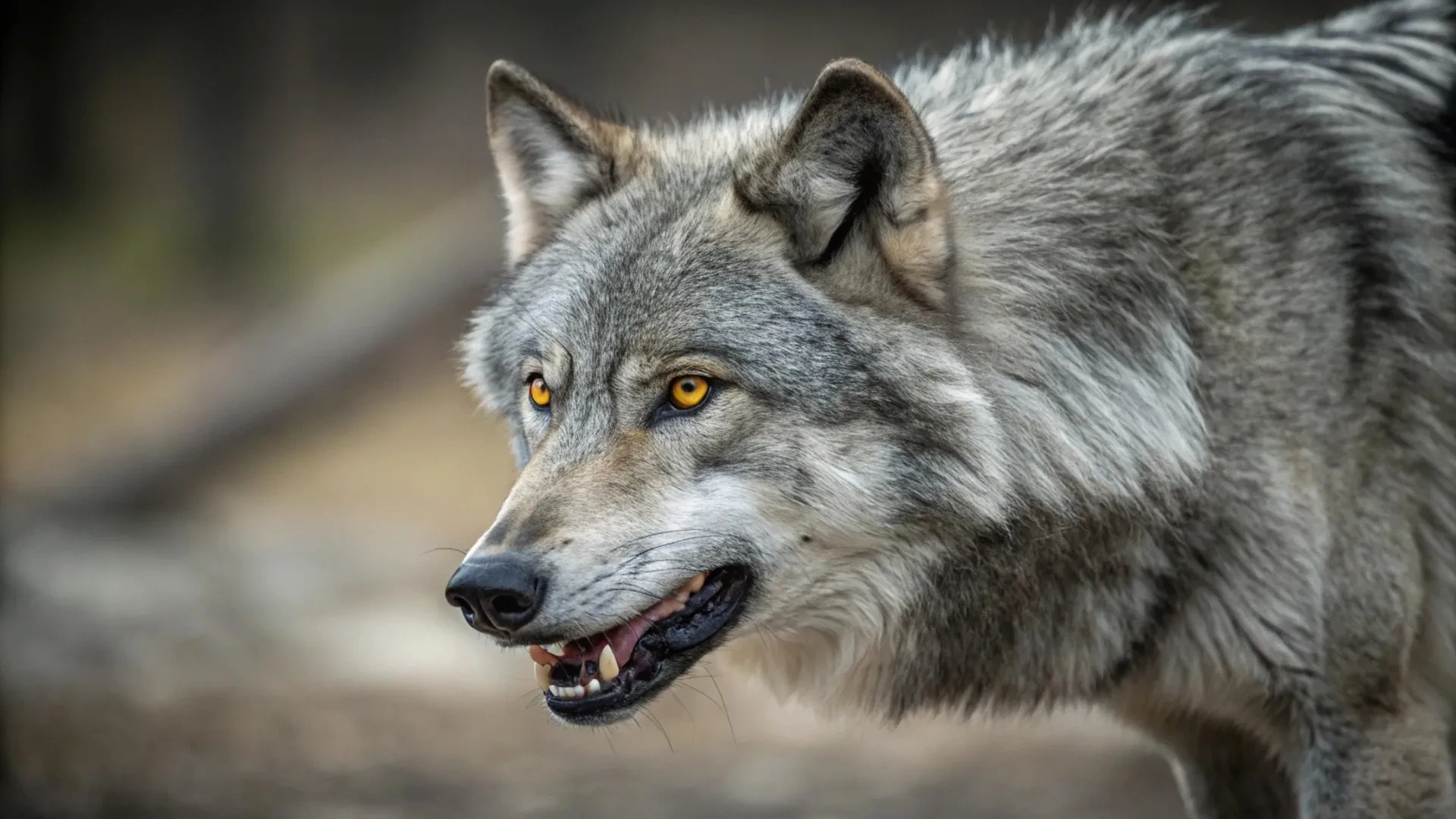
As apex predators with a long, fraught history of direct conflict with human populations, gray wolves exhibited behavior distinct from nearly all other species in the dataset. Rather than contracting their home ranges or fleeing from high-activity zones into tight pockets of refuge, wolves expanded their habitat use in response to human presence.
Ecologists hypothesize that this expansion reflects an active, highly strategic avoidance mechanism. Knowing the lethal risks associated with human encounters, wolves deliberately widened their spatial buffers, spreading out over larger areas to minimize the statistical probability of crossing paths with people.
White-Tailed Deer (Odocoileus virginianus)
White-tailed deer—an extraordinarily adaptable species renowned for its ability to thrive on the suburban fringe—showed a fascinating cross-scalar response.
- As surrounding landscapes became more physically modified (e.g., increased housing developments and roads), their environmental niches expanded as they learned to exploit human-subsidized resources like suburban gardens and agricultural crops.
- However, as actual human presence and foot traffic increased within those modified landscapes, their environmental niches rapidly contracted. When people were actively walking, driving, or recreating nearby, deer clamped down on their movements, seeking immediate cover.
Sandhill Cranes (Antigone canadensis)
Displaying a behavioral pattern that neatly inverted the white-tailed deer, sandhill cranes reacted to the dual pressures of human modification and presence in a completely opposite manner. Their responses highlight the evolutionary quirks that dictate avian versus mammalian adaptation strategies in the Anthropocene.
These divergent paths validate Dr. Oliver’s assertion that broad, one-size-fits-all conservation mandates are fundamentally obsolete. Protecting a watershed for deer will not yield the same wildlife management outcomes as protecting it for wolves or migratory birds.
Future Outlook: Adaptation, Stress, and Smarter Coexistence
As the COVID-19 Bio-Logging Initiative continues to mine its mountain of data, the scientific team behind this study is already pushing into the next frontier of conservation science.
Are Behavioral Shifts Beneficial or Detrimental?
While proving that animals alter their spatial use in response to human presence is a massive leap forward, a critical, haunting question remains unanswered: Are these behavioral adjustments helping wildlife survive, or are they indicators of chronic, debilitating stress?
"Our current study shows that animals change how they use space and resources, but we don’t know if these changes are helping them adapt or are a sign of stress," Dr. Oliver pointed out. "Our group is now digging into that question by asking whether animals that change their behavior in response to human pressures are at greater or lower risk of dying."
To answer this, researchers are cross-referencing behavioral adjustments with mortality data, tracking whether animals that flee or compress their home ranges suffer from lower reproductive success, higher parasite loads, or increased mortality rates over time.
A Blueprint for Nuanced Conservation Policies
The realization that human presence acts as an independent, mobile stressor opens the door for revolutionary, real-time wildlife management strategies. Traditional conservation has relied on static boundaries: seasonal hunting closures, permanent wilderness designations, and static wildlife corridors.
Armed with high-resolution cellphone telemetry and animal GPS tracking, land managers of the future could implement dynamic, time-sensitive conservation policies. For example, instead of permanently closing an entire national park trail system—which damages local economies and alienates the public—agencies could implement temporary, algorithm-driven access restrictions during peak wildlife breeding seasons or migration windows, guided by real-time data on both human and animal movement.
By acknowledging that humans are a dynamic ecological force—not merely a static layer on a map—conservationists can transition from reactive damage control to proactive, intelligent coexistence.
"Our results give me some optimism that we can achieve wildlife-coexistence through more nuanced policies that more smartly consider where and when we need to give animals space," concluded Dr. Oliver.
As our world grows increasingly crowded, this fusion of big data and wildlife ecology may well be the key to ensuring that humans and animals can share an increasingly shrinking planet.