
Executive Overview
To an ordinary pet, the modern world is an overwhelming sensory carnival. Dropped food on a bustling sidewalk, the erratic movement of a passing skateboard, the sudden blare of sirens, or the scent of wildlife in a manicured park present endless temptations. For a standard domestic dog, every instinct urges investigation.
However, for a professionally trained service animal, this chaotic environment must transform into something remarkably quiet, orderly, and manageable. The secret behind this profound composure is not merely an innate temperament, but a meticulously engineered cognitive state known as canine focus and neutrality.
At organizations like Dogs Inc, cultivating this laser-like attention is the cornerstone of service animal development. It is the invisible bridge of communication that connects a handler with their working dog, ensuring absolute safety, mobility, and independence. This comprehensive report explores the multifaceted science of service dog focus training: examining why distraction management matters, how early socialization shapes neural pathways, the proven methodologies utilized by professional trainers and puppy raisers, and the ultimate pursuit of behavioral neutrality in the real world.
Detailed Chronology: The Lifecycle of Focus Training
The journey of a service dog does not begin on the day they master complex mobility tasks or public access navigation. Rather, the architecture of focus is constructed sequentially, starting from the earliest weeks of a puppy’s life and evolving through structured phases until final placement with a handler.
Phase 1: Neonatal Foundations and Early Socialization
Long before a puppy is handed a vest or asked to retrieve a dropped item, their foundational learning environment is carefully curated. Early training and socialization at Dogs Inc introduce young puppies to a vast array of novel sights, sounds, and tactile surfaces.
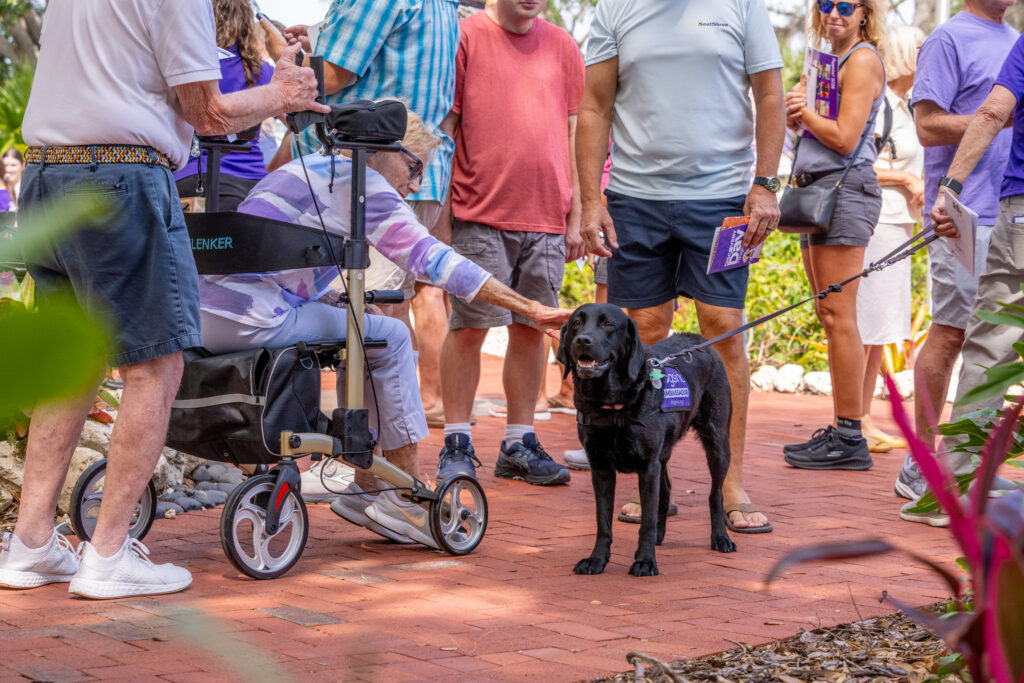
During this critical developmental window, puppy raisers expose pups to everyday stimuli—such as clattering metal pots, urban foot traffic, shiny floors, and gentle handling—in controlled, positive doses. The objective is twofold: to build unshakeable confidence and to fundamentally reduce fear-based reactivity. By pairing novel environments with calm behavior and high-value rewards, trainers establish a positive association with new experiences. Puppies learn early on that when the world becomes unpredictable, the safest and most rewarding response is to check in with their human companion.
Phase 2: Adolescent Impulse Control and Cue Reliability
As puppies transition into adolescence, their natural curiosity and environmental drive peak. This is the stage where impulse control becomes the primary curriculum. Dogs are taught to pause before reacting to a trigger, learning the difficult cognitive shift from instinctual impulse to thoughtful restraint.
During this period, trainers introduce mild, low-level distractions at a distance, allowing the dog to remain successful and calm. Through continuous repetition, these distances are systematically shortened. Puppies learn to offer spontaneous eye contact, hold their attention under pressure, and respond reliably to foundational cues even when competing with compelling environmental stimuli.
Phase 3: Public Access and Real-World Proofing
Once foundational focus is established in controlled settings, the training progresses into complex public environments. Public access training requires dogs to demonstrate their skills in high-distraction commercial and social spaces, including:
- Busy grocery stores and restaurants containing intense food scents and crowds.
- Public transit stations featuring sudden loud noises, mechanical movements, and dense foot traffic.
- Outdoor parks and pedestrian walkways populated by running children, wildlife, and pet dogs.
In these environments, trainers "proof" the dog’s behavior. Proofing ensures that a trained command is not context-dependent—meaning the dog obeys just as reliably inside a bustling shopping mall as they do in a quiet training room.
Supporting Context & Metrics: The Anatomy of Distraction and Neutrality
To fully appreciate the rigor of service dog training, one must analyze the specific categories of distractions that challenge these animals daily, as well as the physiological and psychological shift known as behavioral "neutrality."
Categorizing the Sensory Landscape
Canine perception is dominated by olfaction and hearing, making the modern urban landscape a minefield of potential triggers. Professional trainers categorize distractions into four primary operational domains:
- Environmental Distractions: Comprising unpredictable variables such as sudden traffic movements, construction noise, severe weather phenomena, and flashing lights. Service dogs must learn to treat these environmental shifts as background noise rather than threats.
- Social Distractions: Often the hardest to manage because they involve human interaction. Well-meaning strangers attempting to make eye contact, call out to the dog, or initiate unauthorized leash greetings present a major hurdle. Focus training overrides the dog’s natural desire for social appeasement, keeping their attention anchored to their handler.
- Food and Scent Distractions: Olfactory temptation is arguably a dog’s strongest primal pull. In environments like restaurants, grocery stores, or crowded streets littered with discarded food, a service dog must learn that scent does not equal permission. Food on the ground becomes an object to acknowledge and pass by cleanly.
- Animal Distractions: Squirrels, birds, and pet dogs are natural prey or play triggers. While an untrained puppy will instinctively react or chase, a fully trained service animal maintains total neutrality, ignoring the presence of other animals entirely.
Why Neutrality is the Ultimate Benchmark
A common misconception is that a service dog must be trained to ignore the world entirely, moving through life in a robotic trance. In reality, the goal of service dog training is neutrality.
Neutrality means the dog remains composed, balanced, and responsive regardless of external chaos. A neutral dog does not cower in fear, nor does it lunge out of aggression or excitement. They move through the world with a steady, quiet confidence.
| Metric / Behavioral State | Untrained Pet Dog | Fully Trained Service Dog |
|---|---|---|
| Response to Food Triggers | Investigates, consumes, or begs immediately. | Acknowledges presence; completely ignores and bypasses. |
| Reaction to Strangers | Seeks out petting, barks, or shows cautious hesitation. | Remains entirely indifferent, prioritizing handler instructions. |
| Encounter with Other Animals | Pulls on leash, whines, initiates play or defensive posture. | Maintains steady heel position, treating animals as non-entities. |
| Navigating Urban Noise | Startles, freezes, or attempts to flee from loud stimuli. | Remains calm, processing noise as standard background environment. |
When a dog achieves this state of neutrality, their cognitive bandwidth is preserved. Instead of wasting energy reacting to every passing stimulus, their focus remains finely tuned to their handler’s subtle physical cues, medical alerts, or directional commands.

Proven Training Methodologies: Building Blocks of Reliability
The transformation of a distracted puppy into a steadfast service partner relies on a structured framework of positive reinforcement, incremental exposure, and consistent accountability.
1. Positive Reinforcement and High-Value Motivation
Dogs repeat behaviors that result in favorable outcomes. By utilizing high-value rewards (such as specialized treats, enthusiastic verbal praise, or favored toys), trainers reinforce the precise moment a dog chooses to ignore a distraction and check in with their handler. This positive association ensures the dog views their human as the most rewarding and secure element in any environment.
2. Gradual Exposure and Desensitization
Flooding a dog with overwhelming stimuli leads to sensory fatigue and behavioral shutdown. Professional trainers utilize systematic desensitization. By introducing distractions at a distance where the dog can remain calm, trainers gradually decrease the distance over days or weeks. This method allows the dog’s neural pathways to adapt safely to high-stress scenarios.
3. Cultivating Reliable Recall and Emergency Redirection
Even the most advanced service dogs experience moments of unexpected sensory override. A squirrel darting directly across a walking path or a sudden loud crash can momentarily break focus. Training protocols emphasize building an infallible recall and clear redirection cues. When a dog’s attention slips, the instructor or handler calmly redirects the behavior, resetting the dog’s focus without punitive measures. Consistency, rather than unattainable perfection, builds long-term reliability.
Official Statements and Industry Insights
The philosophy of cultivating focus through structured, compassionate guidance is echoed by the professional training community at Dogs Inc. Industry experts emphasize that service dog training is fundamentally a collaborative ecosystem.
"A service dog is not born with an innate ability to tune out the world; that composure is meticulously built brick by brick," notes a senior training supervisor at Dogs Inc. "Through early socialization, positive reinforcement, and consistent public access work, we teach dogs that their most important anchor is the person holding their leash. Focus is simply the physical manifestation of trust."
Furthermore, behavioral specialists highlight the indispensable role played by volunteer puppy raisers.
"Puppy raisers do the heavy lifting of translating everyday life into teachable moments," explains an outreach coordinator. "They expose our dogs to the unpredictable rhythm of human society—grocery stores, schools, parks, and traffic. Without this foundational exposure, advanced task training could never take root in a meaningful way."
Future Outlook: The Evolution of Service Animal Independence
As the demands placed on service animals continue to evolve in an increasingly crowded and fast-paced society, the standards for focus training are more critical than ever. Future methodologies within the service dog industry are placing an even greater emphasis on individualized behavioral profiling, allowing trainers to tailor distraction-proofing to a dog’s specific temperamental strengths.
Moreover, ongoing research into canine cognition and stress mitigation is helping organizations refine how they measure environmental resilience in young dogs. By identifying stress indicators earlier and optimizing positive reinforcement frameworks, training programs can reduce burnout rates and ensure longer, healthier working careers for service animals.

Ultimately, the intricate science of focus training serves a singular, profound purpose: empowering individuals with disabilities to navigate their lives with absolute confidence, autonomy, and security. By turning a world full of distractions into a quiet backdrop of manageable stimuli, these exceptional animals do far more than perform tasks—they restore freedom.