As pet owners increasingly seek out adventurous ways to bond with their furry companions, outdoor recreation has expanded far beyond traditional hiking trails and neighborhood walks. Among the fastest-growing trends in the pet-adventure sphere are paddle sports—specifically kayaking and stand-up paddleboarding (SUP). While the image of a serene dog balancing effortlessly on the bow of a kayak makes for breathtaking social media content, transitioning from dry land to open water requires meticulous planning, an understanding of canine behavior, and a rigorous commitment to safety.
This comprehensive guide explores the ins and outs of introducing your dog to paddle sports. Drawing insights from experienced pet adventurers—such as Katherine, the mastermind behind the popular Instagram account @robinventures, and her 18-pound Basenji mix, Robin—this report delves into the practical steps, equipment necessities, and safety protocols required to ensure a seamless on-water experience. From selecting the right watercraft and choosing proper flotation devices to managing doggy anxiety and navigating open-water hazards, this article serves as the definitive manual for aquatic canine exploration.
Detailed Chronology: From Shelter Pup to Water Adventurer
The journey of introducing a dog to paddle sports is rarely instantaneous; rather, it is a progressive timeline of desensitization, trust-building, and skill acquisition. To understand how a non-traditional water dog transforms into an enthusiastic paddler, one can examine the progression of seasoned canine adventurers.
Phase 1: Land-Based Desensitization and Equipment Fitting
Before a dog ever sets paw on a floating vessel, preparation must begin on solid ground.
The Gear Check: Long-haired breeds require special attention before donning life vests to prevent painful hair-pulling; expert advice suggests outfitting them in lightweight cotton doggie t-shirts prior to strapping on a PFD (Personal Flotation Device).
Boat Familiarization: Introducing the kayak or paddleboard while it rests flat on dry land allows the dog to sniff, explore, and realize the object poses no threat. Forcing an unwilling dog into a watercraft only triggers panic and destroys trust.
Phase 2: The Inaugural Outing (Choosing Stability)
For most novice human-canine teams, the first on-water expedition begins in a controlled environment, such as a calm lake, quiet marina, or sheltered bay.
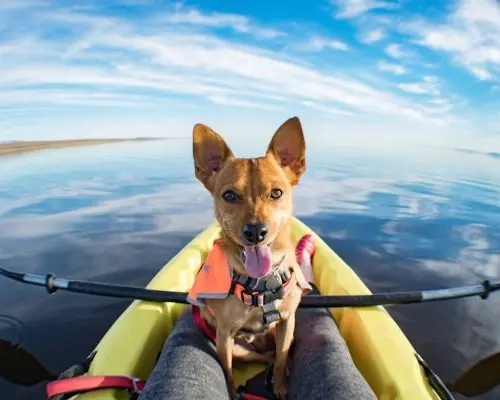
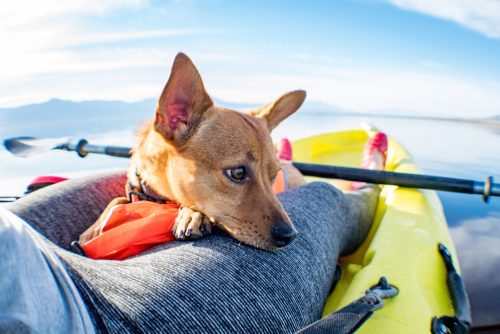
The Kayak Advantage: Sit-on-top kayaks are widely recommended for beginners. Their wide, stable hulls and spacious foot wells provide a secure environment where a dog can ride comfortably in the front prow or settle into the handler’s lap. Unlike speed-oriented sit-inside kayaks, sit-on-top models offer ample traction and maneuvering space.
Managing Nervousness: On initial trips, dogs often experience sensory overload. Utilizing a familiar item—such as placing a gear bag in the foot well for the dog to sit upon—can drastically increase stability and confidence.
Phase 3: Transitioning to Paddleboarding
Once a dog is accustomed to the sensation of being on the water, some owners transition to stand-up paddleboards (SUPs).
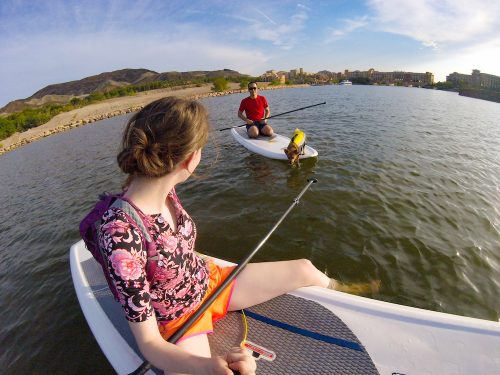
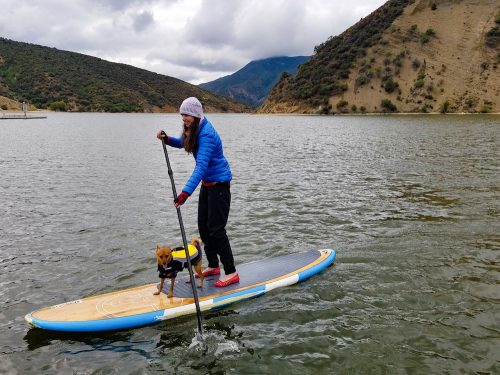
Board Dynamics: While SUPs offer a vast expanse of deck space, their slippery surfaces can intimidate dogs. Positioning the dog behind the paddler often provides better traction and improves the handler’s center of gravity.
The "Stay" Command: A vital prerequisite for paddleboarding is a rock-solid "stay" command. Sudden, unannounced leaps from a paddleboard can easily destabilize the craft, resulting in an unexpected swim for both human and hound.
Phase 4: Advanced Water Confidence and Swimming Mastery
With time, repetition, and positive reinforcement, fearful beginners often blossom into water-loving enthusiasts.
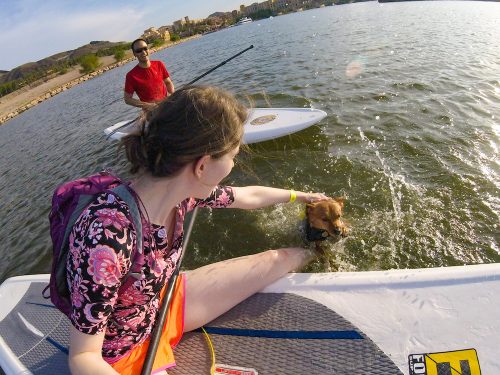
Building Independence: Highly confident adventure dogs may eventually learn to navigate the water independently. For instance, after numerous successful outings across California and Nevada lakes, experienced adventure dogs like Robin have demonstrated the ultimate evolution of water confidence: voluntarily plunging into open water to swim between companion paddleboards.
Water Retrieval Skills: Advanced training involves teaching the dog to swim directly back to the handler rather than the nearest edge of the board, ensuring they can be safely hoisted back aboard using the life jacket’s rescue handle.
Supporting Context & Metrics: Safety, Gear, and Environmental Hazards
Entering the realm of aquatic sports with a canine companion introduces distinct safety variables. Analyzing the physical demands, gear specifications, and environmental risks helps mitigate potential dangers on the water.
Essential Equipment Metrics
Investing in the correct gear is non-negotiable for a successful day on the water.
Canine Personal Flotation Devices (PFDs):
Fit and Function: A dog life jacket must fit snugly without restricting movement. Poorly fitted jackets can ride up during a panic paddle, trapping the dog’s front paws and turning a safety device into a hindrance.
Design Features: Look for PFDs equipped with a sturdy top grab-handle (crucial for hauling a dog back onto the watercraft) and a flexible neoprene belly panel for comfort. Brands like Alcott and Ruffwear offer reliable options tailored for adventure dogs.
Human PFDs:
Handlers must always wear their own life jackets, especially during initial outings. In the event of a capsize, a human’s immediate priority is managing a flailing dog rather than chasing a floating life vest. Furthermore, a panicking dog attempting to climb onto its owner makes treading water exceptionally difficult without a buoyant vest.
Leash Protocols:
Attaching a leash directly to a dog’s collar while on a watercraft creates a severe drowning hazard. If the boat capsizes, a traditional leash can wrap around the dog’s neck or snag on the hull, trapping the animal underneath. If a leash is utilized, it should clip exclusively to a secure PFD and be managed with extreme caution. Waist leashes are acceptable for on-land transitions but generally discouraged while actively paddling.
Environmental Health and Hydration Risks
Natural bodies of water present hidden dangers that every pet owner must monitor:
Freshwater Parasites and Bacteria: Lakes and rivers can harbor harmful pathogens, Giardia, and bacteria. Dogs should never be allowed to drink stagnant lake water; owners must pack fresh drinking water and a portable travel bowl.
Toxic Algae Blooms (Cyanobacteria): Nutrient-rich freshwater lakes frequently experience toxic blue-green algae blooms during the summer heat. Because dogs are often the first victims of fatal algae poisoning, handlers must thoroughly research local water quality reports before launching.
Official Guidelines and Expert Insights
To maintain a professional, authoritative standard in canine water sports, leading trainers and experienced pet adventurers emphasize mutual comfort and ethical handling.
"Paddling with your pup is a great way to enjoy the summer heat! Kayaking is an easy beginner activity, rentals are widely available at waterfront locations, and many dogs love it—or at least tolerate it." — Katherine, Creator of @robinventures
According to outdoor pet safety advocates, the golden rule of adventure sports is consent and gradual exposure. Forcing an anxious dog onto a kayak or paddleboard damages the human-animal bond and heightens safety risks. Experts recommend the following foundational rules:
Positive Association: Always utilize high-value treats and enthusiastic verbal praise to reward calm behavior on the water.
Read Canine Body Language: Shivering, excessive panting, whale eyes, or a tucked tail indicate severe stress. If a dog refuses to settle, it is time to cut the excursion short and return to dry land.
Respect the Handle: The grab-handle on a canine life jacket is strictly engineered for water rescues and gentle lifting back onto the boat—it should never be used as a tool to drag or force an unwilling dog into a watercraft.
Future Outlook: The Rising Popularity of Canine Paddle Sports
As the pet industry continues to innovate, the intersection of outdoor recreation and animal companionship is poised for significant expansion. Several key trends are shaping the future of kayaking and paddleboarding with dogs:
1. Technological Advancements in Pet Gear
Manufacturers are heavily investing in canine-specific water sports equipment. Future gear innovations are expected to include ultra-lightweight, breathable PFD fabrics equipped with integrated cooling technology, GPS-tracking modules embedded in life jackets for open-water safety, and puncture-resistant, anti-slip deck pads designed specifically to retrofit standard paddleboards for canine paws.
2. Specialized Eco-Tourism and Pet-Friendly Rentals
Waterfront outfitters and eco-tourism hubs across North America are increasingly catering to pet owners. We anticipate a surge in dedicated "Doggie Paddle" excursions, guided group tours tailored for dogs and their handlers, and rental fleets pre-outfitted with non-slip traction mats and dog-friendly kayak wells.
3. Education and Community Building
Platforms centered around adventure pets—exemplified by communities like @robinventures—are democratizing outdoor education. By sharing real-time troubleshooting, safety failures, and success stories, experienced handlers are equipping a new generation of pet owners with the knowledge required to explore responsibly.
Ultimately, paddleboarding and kayaking with a dog offer an unparalleled avenue for bonding. By prioritizing safety, respecting individual canine limitations, and investing in proper equipment, pet owners can transform a simple summer day on the water into a lifetime of unforgettable aquatic adventures.