
Executive Overview
In the realm of domestic canines, few lineages are as frequently conflated, misunderstood, and subjected to public scrutiny as the American Bulldog and the American Pit Bull Terrier. Sharing foundational roots in the historical stock of working utility dogs, both breeds present a formidable physical facade: muscular frames, broad skulls, and powerful jaws that have historically captured the human imagination. Yet, to treat these two distinct breeds as interchangeable is to overlook a complex divergence in genetics, structural anatomy, functional history, and behavioral psychology.
This investigative report provides an authoritative examination of the American Bulldog versus the American Pit Bull Terrier. By analyzing breed metrics, historical development, behavioral tendencies, and the socio-political implications of breed-specific legislation (BSL), we aim to dispel prevailing myths—such as the anatomical myth of the "locking jaw"—and provide prospective owners, canine behaviorists, and policymakers with an objective, data-driven framework.
Detailed Chronology: The Divergent Histories of Two Working Breeds
To understand the contemporary American Bulldog and Pit Bull, one must retrace a shared historical lineage that bifurcated based on human utility, geographic separation, and selective breeding practices.
The Ancestral Foundation: The Old English Bulldog
Both breeds trace their ancestry back to the Old English Bulldog—a type of dog fundamentally different from the modern English Bulldog seen in show rings today. Historically bred for utility, these ancestral dogs were utilized for working farm tasks, guarding property, and, regrettably, blood sports such as bull- and bear-baiting. These tasks required a canine possessing immense jaw strength, high pain tolerance, and unrelenting tenacity. When the Cruelty to Animals Act of 1835 outlawed these blood sports in the United Kingdom, the trajectory of these utility dogs shifted dramatically.
The Preservation of the American Bulldog
As the traditional working bulldog faded in post-industrial Britain, immigrants brought their working stock to the American South, where the dogs found a new purpose. Here, they functioned as all-around farm guardians, catching feral hogs and protecting homesteads from predators.
By the mid-20th century, however, the American Bulldog population had dwindled perilously close to extinction. The resurgence and ultimate survival of the breed are largely credited to the tireless conservation efforts of Dr. John D. Johnson and Alan Scott. Through meticulous documentation and selective breeding, these pioneers rescued the working-class bulldog from oblivion, establishing the foundations of the modern American Bulldog recognized today.
The Genesis of the American Pit Bull Terrier
Conversely, the American Pit Bull Terrier emerged through deliberate crossbreeding experiments. Breeders sought to combine the unyielding tenacity and raw muscle mass of the Old English Bulldog with the speed, agility, and gameness of the Old English Terrier.
Brought to the United States, these agile hybrids were utilized across various working capacities, but their history remains uncomfortably intertwined with illicit pit fighting. This dark chapter cemented a persistent cultural stigma. Despite this, the American Pit Bull Terrier quickly evolved into a versatile farm dog, hunter, and family companion, prized for its unwavering loyalty and human-centric affection.

Supporting Context & Metrics: Anatomy, Physiology, and Performance
Physical differentiation is often the primary challenge for casual observers attempting to distinguish between the two breeds. While both exude athleticism, their structural builds reflect their historical purposes.
Comparative Breed Metrics
| Metric | American Bulldog | American Pit Bull Terrier |
|---|---|---|
| Height Range | Males: 22–27 inches (56–69 cm) Females: 20–24 inches (51–61 cm) |
Males: 18–21 inches (46–53 cm) Females: 17–20 inches (43–51 cm) |
| Weight Range | 75–125 lbs (34–57 kg) | 35–65 lbs (14–29 kg) |
| Skeletal Build | Heavy-boned, stocky, and massively muscular | Lean, streamlined, and profoundly athletic |
| Coat & Colors | Short, single coat; white, brindle, or patched variants | Short, glossy coat; wide array of solid and mixed colors |
| Lifespan | 10–12 years | 12–15 years |
| Energy Output | Moderate to High | High to Extreme |
Morphological Analysis: Power Versus Agility
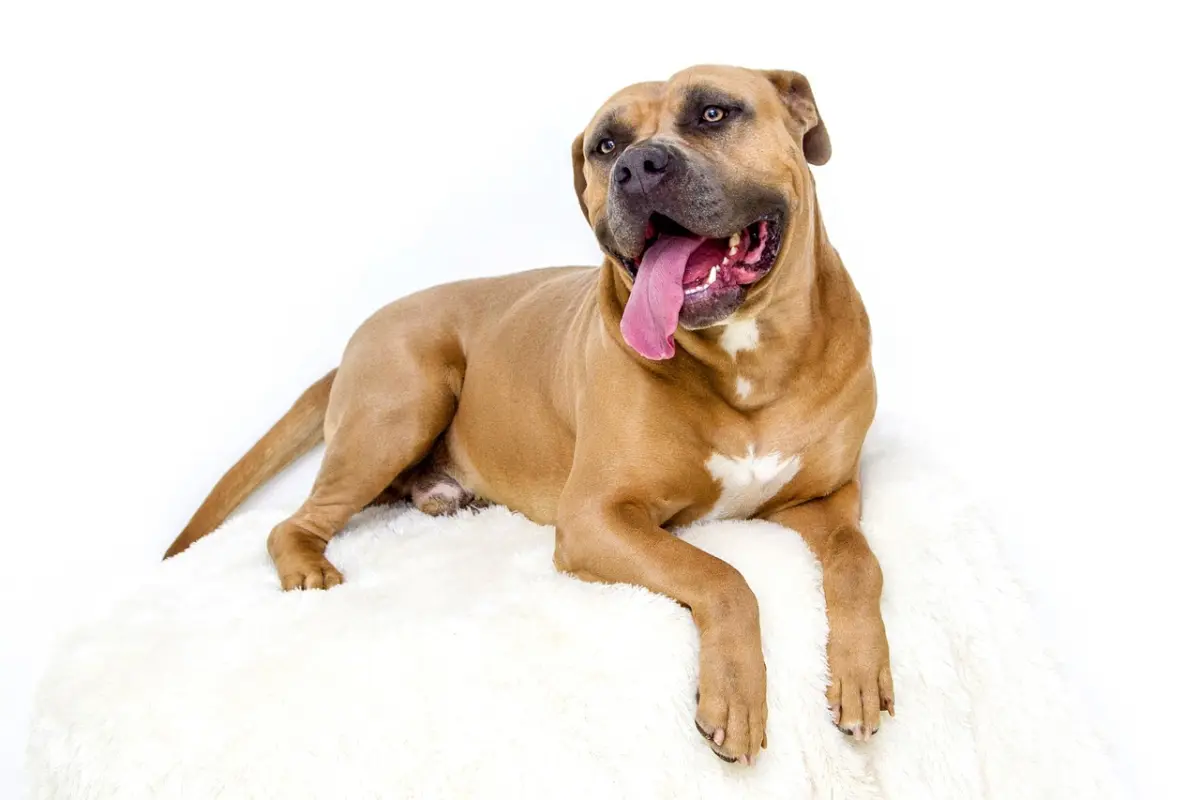
The American Bulldog is decidedly the larger and heavier of the two. Possessing a broad chest and a heavy-boned structure, it is designed for sheer force and endurance in holding large game like wild boars. Its shorter muzzle variant, while powerful, requires vigilant monitoring during strenuous exercise due to a higher susceptibility to heat exhaustion.
In contrast, the American Pit Bull Terrier is built for speed and agility. Standing lower to the ground with a lighter, more streamlined skeletal framework, the Pit Bull exhibits pound-for-pound explosive power. Its longer relative muzzle length and leaner frame allow for greater endurance during high-intensity, dynamic tasks.
Official Statements and Behavioral Psychology
Public perception of both breeds is frequently skewed by sensationalized media coverage. Canine behaviorists and veterinary associations emphasize that genetics dictate propensity, but environmental factors, socialization, and human stewardship dictate behavior.
Temperament and Drive: The American Bulldog
The American Bulldog is characterized by confidence, profound loyalty, and an innate protective instinct. Because they were bred to work independently on large properties, they possess a naturally self-assured and sometimes stubborn demeanor.
Experts note that American Bulldogs require structured, assertive leadership. Without early and rigorous socialization, their natural protective instincts can manifest as wariness toward strangers or unfamiliar animals. However, when raised in a balanced, engaged household, they transform into remarkably stable, gentle family guardians.
Temperament and Drive: The American Pit Bull Terrier
The American Pit Bull Terrier is celebrated by handlers for its intense "joie de vivre"—a joyous, high-energy approach to life and an overpowering desire to please its human handlers. Contrary to the myth of universal human aggression, well-bred Pit Bulls are notoriously affectionate toward people, often earning the historical moniker "nanny dogs" due to their patience with children.
However, behavioral authorities issue an important caveat regarding animal-directed aggression. Due to their historical pedigree, some Pit Bulls exhibit a higher propensity for dog-on-dog reactivity. This trait requires conscientious owners to maintain lifelong socialization and vigilant management in multi-pet environments.

Debunking the "Locking Jaw" Myth
One of the most persistent biological falsehoods in canine lore is the theory that Pit Bulls (and, by extension, Bulldogs) possess a specialized anatomical mechanism allowing them to "lock" their jaws mid-bite.
Comparative veterinary anatomists have repeatedly debunked this claim. Scientific examinations of canine jaw structures reveal no physiological difference, tendon lock, or bone-locking mechanism in either the American Bulldog or the Pit Bull compared to any other canine breed of similar size. The illusion of a "locking jaw" is entirely attributable to the breeds’ psychological tenacity—a high prey drive and gameness that causes them to maintain a grip longer than more easily distracted breeds.
Future Outlook: Ownership Realities and Breed Legislation
As urban and suburban populations densify, the regulatory landscape surrounding both the American Bulldog and the American Pit Bull Terrier continues to shift.
The Challenge of Breed-Specific Legislation (BSL)
Many municipalities and housing associations worldwide enforce Breed-Specific Legislation, outright banning or heavily restricting the ownership of Pit Bull-type dogs and, occasionally, American Bulldogs. Animal welfare organizations, behavioral scientists, and veterinary medical associations universally criticize BSL, arguing that it penalizes responsible owners while failing to address the root causes of canine aggression: poor ownership, lack of training, and illegal breeding practices.
Responsible Stewardship in the Modern Era
Owning either an American Bulldog or an American Pit Bull Terrier is not a casual undertaking. Prospective owners must evaluate their capacity to meet these dogs’ substantial physical and psychological needs:
- Exercise Requirements: Both breeds demand a minimum of 60 to 90 minutes of vigorous daily exercise. Mental stimulation, agility training, and interactive play are mandatory to prevent destructive boredom.
- Socialization Protocols: Early, positive exposure to diverse environments, human strangers, and other animals is non-negotiable during the puppy developmental stage.
- Legal and Social Awareness: Owners must navigate local ordinances, secure adequate liability insurance where necessary, and commit to being proactive ambassadors for their chosen breed.
Conclusion
The American Bulldog and the American Pit Bull Terrier are magnificent testaments to canine evolution, shaped by human history, grit, and utility. While they share an ancient ancestral thread, they stand apart in size, structure, and behavioral nuances. Recognizing these distinctions is essential for anyone looking to bring one of these powerful, loyal companions into their home. Ultimately, neither breed is inherently dangerous; rather, they are powerful reflections of the dedication, education, and responsibility of the humans at the other end of the leash.