
Executive Overview
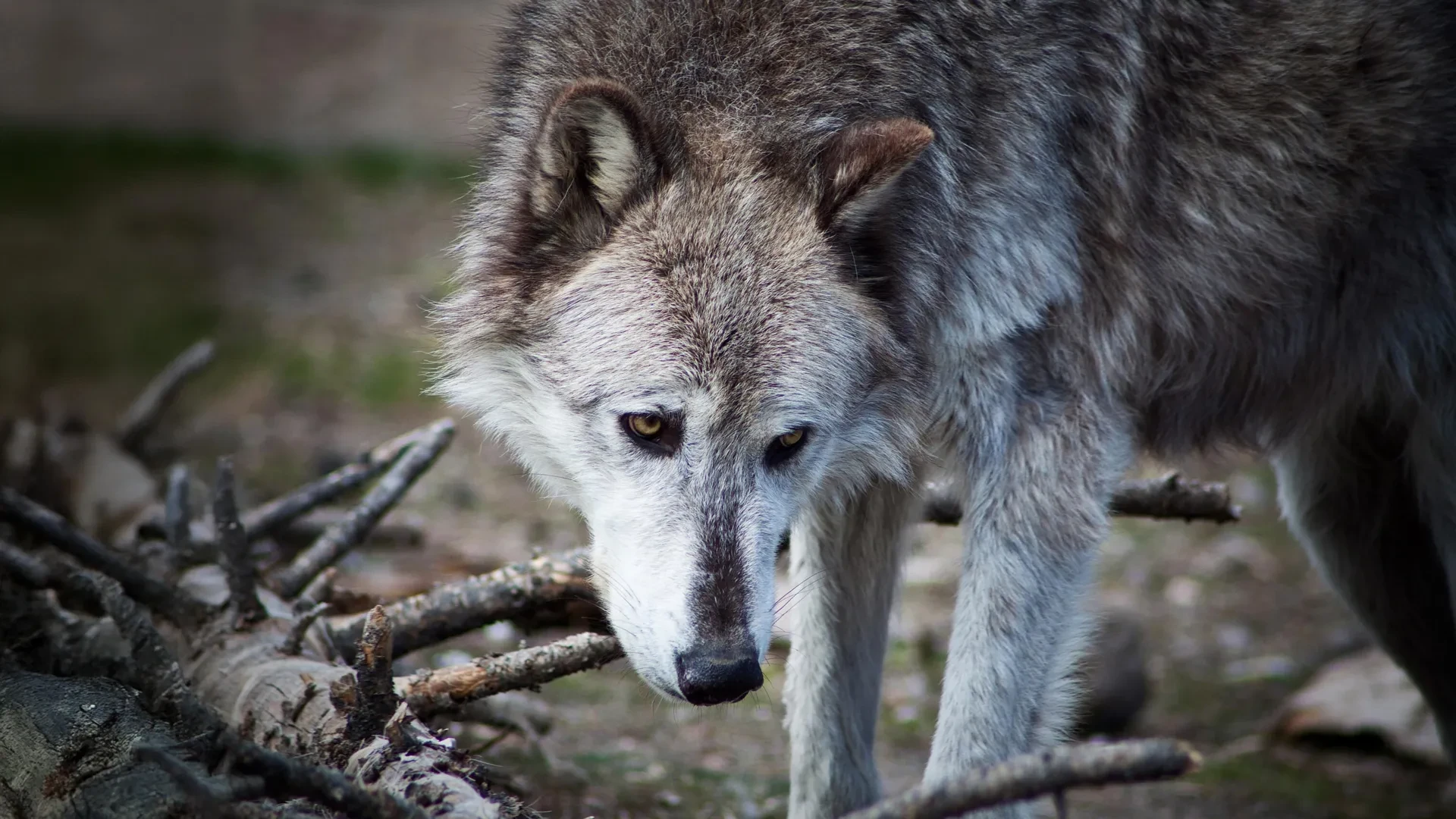
For nearly three decades, the reintroduction of gray wolves (Canis lupus) into Yellowstone National Park has stood as the gold standard of modern conservation biology. It is a tale retold in countless documentaries, textbooks, and scientific journals: the apex predator returns, keeps elk populations in check, allows overgrazed willows and aspens to regenerate along streambanks, brings back beavers, and ultimately reshapes the physical geography of the landscape in a textbook demonstration of a "trophic cascade."
Now, one of the most widely cited and celebrated pillars of this narrative is facing unprecedented scientific scrutiny.
In a rigorous new peer-reviewed analysis published in the journal Global Ecology and Conservation, a multi-institutional team of researchers from Utah State University and Colorado State University has dismantled a high-profile 2025 study concerning Yellowstone’s ecosystem dynamics. The new critique argues that the earlier work—led by prominent ecologist William Ripple and his colleagues—significantly overstated the ecological footprint of wolf recovery, relying on deeply flawed statistical models, circular reasoning, and methodological missteps.
According to the authors of the new paper, the sensational claim that willow crown volume exploded by 1,500 percent following wolf reintroduction is a mathematical artifact rather than a biological reality. By unpacking the underlying statistical mechanics of the 2025 study, the researchers demonstrate that the evidence for a dramatic, park-wide trophic cascade simply does not hold up under objective scrutiny.
Instead of a sweeping ecological revolution dictated solely by apex predators, the updated analysis suggests a far more modest, spatially nuanced reality. Plant recovery in Yellowstone, the authors argue, is governed by a complex matrix of local hydrology, variable browsing pressures, and micro-site environmental conditions rather than a top-down mandate from wolves alone.
This deep dive examines the anatomy of the scientific dispute, reviewing the chronology of the debate, the specific technical criticisms leveled against the 2025 study, the broader implications for predator-prey science, and the future of research within America’s oldest national park.
Detailed Chronology: From Field Experiments to Statistical Clash
To understand the gravity of the current debate, it is necessary to trace how decades of empirical field research in Yellowstone collided with macro-level ecological modeling.
The Foundation: Decades of Field Data Collection
The empirical bedrock of this controversy stems from long-term ecological monitoring projects initiated shortly after wolves were reintroduced to Yellowstone in 1995 and 1996. Over the span of two decades, field researchers—including teams associated with Colorado State University—tracked the physiological responses of woody plants, particularly willows (Salix species), aspens, and cottonwoods, across various geographic zones in the park’s northern range.
These field-based studies, culminating in foundational papers such as Hobbs et al. (2024), historically reported relatively weak or highly localized trophic cascade effects. While researchers consistently observed that heavy browsing by elk (Cervus canadensis) had suppressed woody growth prior to wolf reintroduction, the direct, cascading recovery of vegetation proved remarkably patchy, slow, and contingent upon water availability and streambank morphology.
The 2025 Ripple et al. Study: A Macro-Perspective
The narrative took a dramatic turn with the publication of a high-profile 2025 study by Ripple and colleagues. Utilizing existing datasets, the authors advanced a sweeping macro-ecological argument. They concluded that carnivore recovery in Yellowstone had triggered one of the strongest and most definitive trophic cascades documented anywhere in the global scientific literature.
Central to their argument was the assertion that willow crown volume had expanded by a staggering 1,500 percent. This dramatic figure captured the imagination of science communicators and environmental advocates globally, cementing the idea that the mere presence of wolves had single-handedly healed Yellowstone’s degraded riparian zones.
The 2026 Counter-Analysis: A Methodological Reckoning
Skeptical of the methodologies driving such a monumental claim, a team led by Dr. Daniel MacNulty (Utah State University) and Dr. David Cooper (Colorado State University) set out to re-examine the data, models, and assumptions underpinning the 2025 study.
Their findings, published in Global Ecology and Conservation, systematically dismantle the statistical architecture of the Ripple et al. paper. By exposing circular reasoning in the willow volume calculations, highlighting spatial sampling inconsistencies, and questioning the application of equilibrium ecosystem models to a dynamic landscape, the new analysis offers a sharp corrective. It bridges the gap between conflicting scientific conclusions, explaining why field-based researchers (Hobbs et al.) and macro-modelers (Ripple et al.) looking at the exact same physical spaces arrived at such diametrically opposed conclusions.
Supporting Context & Technical Metrics: Unpacking the Flaws
The core of the new critique is not merely an ideological disagreement over the importance of apex predators; it is an exercise in rigorous statistical diagnostics. The authors of the Global Ecology and Conservation paper identify several systemic vulnerabilities in the 2025 study.
1. The 1,500 Percent Willow Claim and Circular Reasoning
The most sensational metric advanced by the 2025 study was the claim that willow crown volume increased by 1,500 percent following wolf recovery. According to MacNulty and his colleagues, this figure was an artifact of a deeply flawed statistical model.
The model in question used plant height to both calculate willow volume and predict its change over time. In statistics, using the same variable on both sides of an equation creates a circular relationship.
- The Mathematical Trap: When a predictor variable is mathematically bound to the response variable, the model is guaranteed to produce a strong, statistically significant result—regardless of whether any actual biological change occurred in the field.
- The Scientific Fallout: The Utah State and Colorado State researchers contend that this circularity alone invalidates the reported magnitude of the willow recovery. Without independent variables separating the calculation of volume from its prediction, the 1,500 percent figure loses all empirical validity.
2. Geometric Mismatch: Applying Models to Distorted Plants
Compounding the circularity issue was a geometric mismatch in how the statistical models were applied. The height-to-volume model utilized in the 2025 study was originally developed for healthy, normally growing plants.
However, the willows in Yellowstone’s northern range had endured decades of intense, chronic browsing by elk. Consequently, these plants exhibited highly distorted, atypical growth forms—stunted, multi-stemmed, and structurally warped. Applying a standard model designed for unbrowsed plants to these heavily deformed shrubs systematically skewed the output, resulting in a dramatic overestimation of actual plant biomass accumulation.
3. Spatial Inconsistencies in Longitudinal Sampling
Longitudinal ecological studies depend heavily on tracking the exact same physical locations over time to measure change accurately. The new analysis reveals that many of the willow plots compared between baseline assessments in 2001 and subsequent surveys in 2020 were not, in fact, the same geographic locations.
When researchers compare mismatched sample sites across temporal epochs, observed differences often reflect spatial heterogeneity—the natural variability of soil, moisture, and local micro-climates from one spot to another—rather than genuine temporal ecological shifts.
4. Equilibrium Assumptions in a Non-Equilibrium Ecosystem
Ecosystem management theory recognizes that many natural systems, particularly those recovering from severe human disruption or large-scale climate shifts, operate in non-equilibrium states.
The authors of the new analysis point out that comparisons made between Yellowstone and other global trophic cascades relied on classic equilibrium assumptions. These assumptions fail to account for the dynamic, highly fluctuating realities of Yellowstone’s recovering landscape, where multi-decadal climatic shifts, bison populations, human hunting outside park boundaries, and variable beaver activity create a shifting mosaic rather than a stable, predictable trajectory.
5. Omission of Confounding Variables and Selective Imagery
Finally, the critique notes that the 2025 study relied on the selective use of photographs to visually reinforce its thesis of sweeping ecological recovery, while omitting other critical drivers of vegetation dynamics. Chief among these omitted factors is human hunting pressure on elk populations migrating outside the park borders, as well as localized hydrological changes independent of wolf predation.
Official Statements and Expert Perspectives
The academic community has received the new analysis with a mixture of professional validation and cautious reflection regarding how complex ecological narratives are communicated to the public.
Dr. Daniel MacNulty, lead author of the new analysis and a prominent wildlife ecologist at Utah State University, emphasized that the study’s objective is not to diminish the scientific value of wolves, but to restore absolute precision to ecological science.
"Ripple et al. argued that carnivore recovery produced one of the world’s strongest trophic cascades," said Dr. MacNulty. "लेकिन our re-analysis shows their conclusion is invalid because it relies on circular reasoning and violations of basic modeling assumptions. Our goal is to clarify the evidence, not downplay the role of predators. Predator effects in Yellowstone are real but context-dependent—and strong claims require strong evidence."
Echoing these sentiments, co-author Dr. David Cooper, an emeritus senior research scientist at Colorado State University, underscored that local environmental variables play a far more decisive role in plant recovery than apex predators alone.
"Once these problems are accounted for, there is no evidence that predator recovery caused a large or system-wide increase in willow growth," Dr. Cooper stated. "The data instead support a more modest and spatially variable response influenced by hydrology, browsing, and local site conditions."
Independent ecologists have noted that this correction is a healthy demonstration of the self-correcting nature of the scientific method. While the charismatic megafauna narrative of wolves "saving" Yellowstone is deeply embedded in the cultural consciousness, the empirical reality of nature is rarely monausal. Ecosystems are multicausal webs where top-down forces (predation) and bottom-up forces (water, nutrients, climate) interact in complex, highly localized ways.
Future Outlook: Re-evaluating Conservation Science in the Anthropocene
The publication of MacNulty et al.’s analysis marks a potential turning point in how ecologists study, interpret, and report on trophic cascades across the globe. As conservation biology navigates an era of intense public interest and rapid media dissemination, the pressure to produce simple, inspiring narratives can sometimes outpace methodological rigor.
1. Raising the Bar for Statistical Transparency
The most immediate legacy of this debate will likely be a renewed emphasis on methodological transparency and statistical independence. Reviewers and editors across high-impact ecological journals will face heightened scrutiny to ensure that macro-models do not rely on circular variables, and that geometric assumptions match the physical realities of battered, real-world ecosystems.
2. Embracing Complexity Over Simple Narratives
For decades, conservation messaging has leaned heavily on single-species solutions: restore the wolf, and the ecosystem heals itself. The new consensus emerging from Yellowstone suggests a much more humbling truth. Plant recovery in riparian zones depends fundamentally on hydrology—whether streambanks receive adequate seasonal flooding and water tables remain high enough to sustain woody growth despite browsing pressure from herbivores.
Future conservation strategies in Yellowstone and similar wilderness areas must integrate multi-factor approaches that account for climate variability, hydrological restoration, and nuanced herbivore-vegetation dynamics rather than banking entirely on apex predator reintroduction as a universal ecological panacea.
3. A Nuanced Appreciation for Yellowstone’s Wilderness
Ultimately, correcting the record on Yellowstone’s willows does not diminish the profound success of the 1995 wolf reintroduction. Wolves remain an integral, native component of the Greater Yellowstone Ecosystem, restoring ecological completeness and fascinating behavioral dynamics that enrich our understanding of wild carnivores.
However, science demands accuracy. By stripping away exaggerated claims and replacing them with a more modest, spatially variable understanding of trophic interactions, researchers have laid a stronger, more honest foundation for the future of wildlife conservation and ecological research.
As Dr. MacNulty and his colleagues demonstrate, the true story of Yellowstone is far more interesting—and infinitely more complex—than the myth.