
Executive Overview
Six months after the historic provisional implementation of the European Union-Mercosur trade agreement—one of the most expansive and hotly contested free-trade pacts in modern economic history—Brazil’s agricultural sector is reaping unprecedented rewards. Data released by Brazil’s Ministry of Agriculture and Livestock (MAPA) reveals that Brazilian agricultural exports to the 27 member states of the European Union surged by 14.8% in value during the first five months of the agreement’s operational phase.
This financial windfall equates to a staggering $12.21 billion in agricultural sales, underpinned by an 8.1% increase in physical volume, totaling 17.74 million tons of goods shipped across the Atlantic. The numbers signal a profound transformation in trade dynamics between South America’s agricultural powerhouse and the world’s largest trading bloc.
From staple commodities like soybeans to value-added protein products, honey, and specialty crops, Brazilian producers are aggressively capitalizing on lowered trade barriers. Yet, this trade boom is not merely a story of volume. It is a complex narrative of adaptation, stringent international compliance, and strategic geopolitical maneuvering. As tariffs systematically dissolve under negotiated multi-year schedules, Brazil is solidifying its position as an indispensable agricultural linchpin for European food security. At the same time, the nation’s agricultural leaders are navigating a labyrinth of rigorous environmental oversight, traceability demands, and ecological compliance frameworks to maintain their competitive edge in one of the world’s most discerning consumer markets.
Detailed Chronology: The Path to the EU-Mercosur Trade Breakthrough
To understand the magnitude of the current export surge, one must examine the arduous, decades-long trajectory of the EU-Mercosur trade agreement and the specific milestones that led to its recent provisional rollout.
The Decades-Long Negotiation Phase (1999–2019)
The conceptual foundation of the EU-Mercosur association agreement was laid in the late 20th century, with formal negotiations launching in 1999. For over twenty years, talks stalled repeatedly due to deep-seated protectionist concerns in European agricultural sectors—particularly among French and Irish cattle farmers—as well as geopolitical friction over environmental stewardship in South America.
By June 2019, political momentum broke through the deadlock, and negotiators from the European Commission and the Mercosur bloc (comprising Brazil, Argentina, Paraguay, and Uruguay) announced a "agreement in principle" on a comprehensive trade pact. This milestone framework aimed to integrate markets encompassing nearly 780 million consumers, promising to eliminate over 90% of tariffs on bilateral trade over time.
The Ratification Impasse and Environmental Hurdles (2019–2025)
Despite the 2019 political breakthrough, the path to implementation faced severe headwinds. European lawmakers, civil society organizations, and environmental NGOs raised profound concerns regarding deforestation in the Amazon basin, greenhouse gas emissions linked to cattle ranching, and the use of agrochemicals prohibited within the European Union.
European member states—led by France and reinforced by shifting political landscapes across Western Europe—demanded additional environmental side letters and legally binding sustainability commitments. These delays created deep uncertainty among South American producers who had invested heavily in export infrastructure anticipating an imminent opening of European markets.
The Breakthrough and Provisional Implementation (Late 2025 – Early 2026)
Through intense diplomatic recalibration and the introduction of advanced technological tracking frameworks by the Brazilian government—most notably the Agro Brasil + Sustainable Platform (AB+S)—the diplomatic logjam was finally broken. Recognizing the urgency of supply chain diversification and food security in the wake of global geopolitical volatility, the parties agreed to a provisional implementation framework.
Six months ago, this framework went live. Trade gates swung open, initiating phased tariff reductions and immediate volume expansions. The first five months of operations have exceeded initial economic projections, proving that both European consumer demand and Brazilian export capacity were primed for immediate integration once political barriers were removed.
Supporting Context & Metrics: Analyzing the Export Boom
The economic metrics underpinning the first five months of the EU-Mercosur trade agreement illustrate a broad-based expansion across multiple sectors of Brazil’s vast agricultural economy.
Volume and Value Breakdown
According to MAPA’s official assessment, Brazil shipped 17.74 million tons of agricultural commodities to the European Union during the initial five-month window. This represents an 8.1% year-over-year increase in sheer physical volume compared to the identical pre-agreement timeframe.
More impressive than the volume, however, is the 14.8% surge in total export value, which reached $12.21 billion. This divergence between volume growth (8.1%) and value growth (14.8%) points to a favorable market shift: Brazil is not merely exporting more raw commodities; it is capturing higher margins, moving higher-value goods, and benefiting from firm international pricing structures within the European market.
| Metric Category | First 5 Months Under Agreement | Comparison to Previous Years |
|---|---|---|
| Total Export Value | $12.21 Billion | +14.8% Increase |
| Total Export Volume | 17.74 Million Tons | +8.1% Increase |
| Target Markets | 27 European Union Member States | Expanded Distribution Reach |
| Key Growth Sectors | Soybeans, Meat, Honey, Coffee, Avocados | Broad-Based Multi-Sector Gains |
Sector-Specific Performance
While traditional powerhouses like soybeans and grain complexes continue to anchor the trade volume, niche and value-added agricultural sectors have experienced explosive growth under the early provisions of the pact:
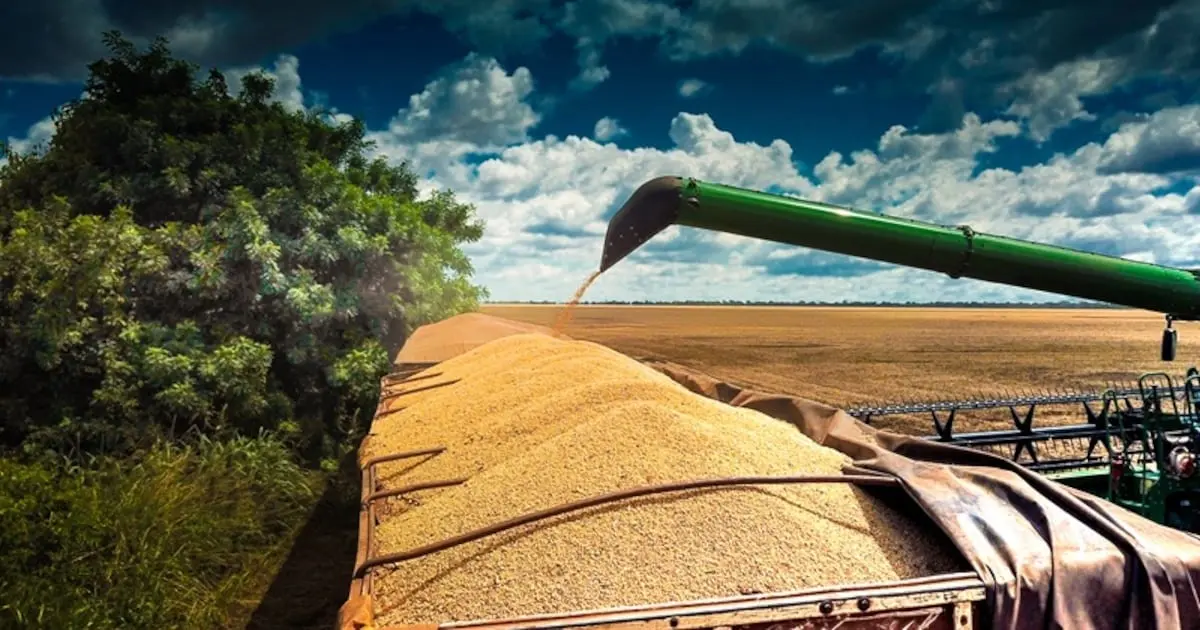
- Soybeans and Meal: Brazil remains the undisputed global leader in soybean production. European processing plants, facing tightening domestic feedstock supplies and shifting trade corridors, have ramped up imports of Brazilian soybeans and derivative meal products to satisfy domestic animal feed requirements.
- Animal Protein (Beef, Poultry, and Pork): Despite stringent European sanitary and phytosanitary (SPS) barriers, Brazilian meat exports have made significant inroads. Quota expansions and gradual tariff reliefs have allowed competitive Brazilian protein producers to capture a larger share of European retail and food-service markets.
- Specialty and Apiculture Products: Bee products—notably Brazilian honey—have witnessed notable demand spikes. Renowned for its purity and produced across diverse floral landscapes ranging from the Cerrado to the Amazon periphery, Brazilian honey has established a firm foothold among European consumers seeking organic and ethically sourced sweeteners.
- Horticultural and Specialty Crops: High-value crops such as avocados and coffee have experienced immediate benefits from the agreement’s tariff reduction schedules.
Official Statements and Industry Perspectives
The convergence of increased market access and rigorous compliance standards has prompted high-level commentary from government officials and agricultural sector leaders alike.
The Ministry of Agriculture and Livestock (MAPA)
In a translated public statement, Brazil’s Minister of Agriculture and Livestock, André de Paula, emphasized that the early success of the trade agreement is a testament to the sophistication and adaptability of the nation’s producers.
"The significant growth and diversity of exports to the European Union demonstrate the competitiveness of Brazilian agribusiness, our willingness to dialogue, and the increasingly strong presence of the productive sector in the international market," Minister de Paula stated.
He further underscored that Brazil’s international ascendance is no longer solely a function of production volume:
"Brazil demonstrates, once again, that its competitiveness is sustained not only in the volume it produces, but above all in quality, safety, and compliance with the most stringent standards required by consumer markets."
Industry Stakeholders and Producer Reactions
Agricultural federations across Mato Grosso, Paraná, and São Paulo have echoed the Minister’s sentiments while highlighting the logistical hurdles that farmers must clear to access the lucrative European market. Industry analysts point out that while the tariff reductions provide the financial incentive, structural investments in sustainable farming practices are the true keys to unlocking long-term market retention.
Producers note that meeting European expectations requires a cultural shift toward absolute transparency. The days of exporting bulk commodities without exhaustive documentation are rapidly closing, replaced by an era where digital traceability is the baseline currency of international agricultural commerce.
Future Outlook: Navigating Tariffs, Timelines, and Traceability
As the EU-Mercosur agreement moves past its initial six-month honeymoon phase, attention is shifting toward the multi-year implementation roadmap and the non-tariff hurdles that will define the next decade of trade.
Tariff Reduction Schedules Through 2030
The structural architecture of the EU-Mercosur trade deal is built upon phased liberalization. Tariffs are not eliminated overnight; rather, they follow a negotiated, sector-specific downward trajectory:
- Coffee and Soluble Coffee: Tariffs are being systematically ratcheted down year-over-year, with a definitive target of zero tariffs by 2030. This provides roasters and beverage conglomerates across Europe predictable sourcing models.
- Avocados: Having already enjoyed an immediate 20% tariff slash upon the agreement’s provisional activation, avocado imports from Brazil are scheduled for complete tariff elimination by the end of the decade, incentivizing horticultural expansion in regions with ideal microclimates.
- Meat, Sugar, Ethanol, and Grains: Sensitive sectors such as beef, pork, poultry, sugar, ethanol, rice, corn, and sorghum remain subject to tightly managed tariff-rate quotas (TRQs). Access to these quotas is contingent upon strict compliance schedules designed to protect sensitive European domestic farming communities while allowing measured entry for South American producers.
The Crucial Role of Traceability: The Agro Brasil + Sustainable Platform (AB+S)
Securing permanent market access under the EU-Mercosur pact is inextricably linked to environmental compliance. Europe’s stringent regulatory environment—exemplified by corporate sustainability due diligence directives and anti-deforestation regulations—requires absolute proof that agricultural commodities are not tied to illegal land clearing or social non-compliance.
To bridge this gap, MAPA launched the Agro Brasil + Sustainable Platform (AB+S) earlier this year. The AB+S platform serves as a critical technological bridge, equipping rural Brazilian farmers with advanced environmental and social data analytics. By integrating satellite monitoring, georeferenced property boundaries, and supply chain auditing tools, the platform allows small- and large-scale producers alike to generate compliance profiles that satisfy European import mandates.
Conclusion
The first six months of the EU-Mercosur trade agreement have rewritten the playbook for South American agricultural exports. By generating $12.21 billion in sales and a 14.8% value surge, Brazil has proven its capacity to feed European markets while meeting rigorous quality standards. However, the true test of the agreement lies ahead. As tariff walls continue to crumble toward the 2030 zero-tariff horizon, the long-term success of Brazilian agribusiness will depend entirely on its ability to harmonize mass production with uncompromising environmental transparency through initiatives like the AB+S platform. If Brazil successfully navigates this dual mandate, the current export boom will transform from an impressive early-stage victory into a permanent structural shift in global agricultural trade.