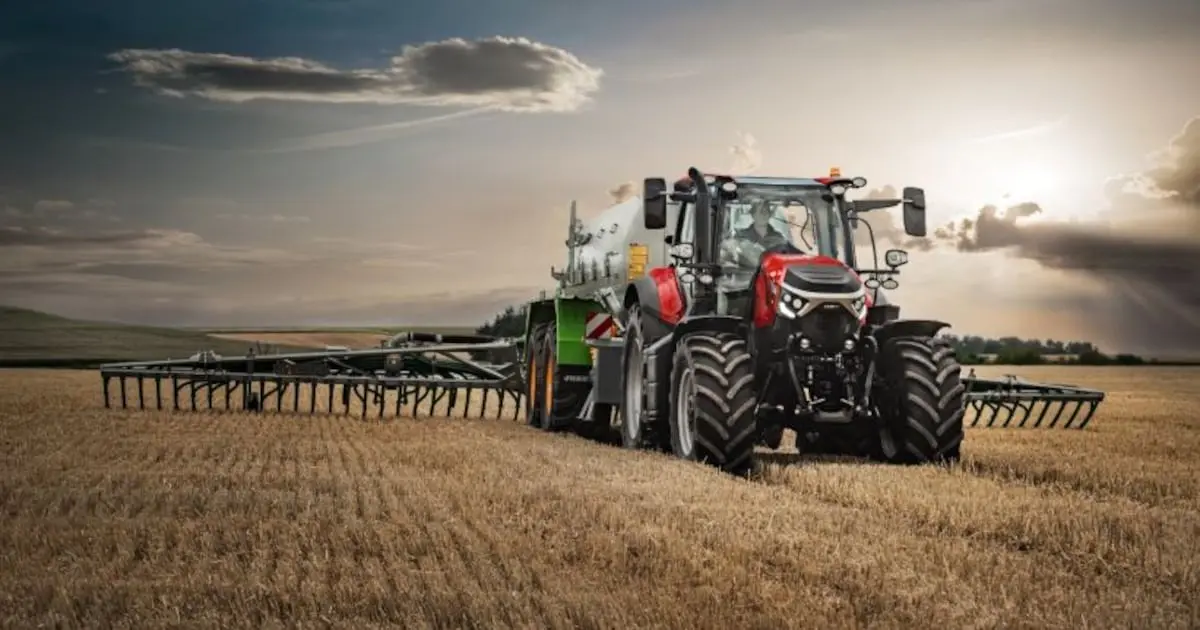

GLOBAL HEADQUARTERS — In a sweeping strategic realignment that reshapes the heavy machinery landscape, agricultural and industrial titan CNH has announced a definitive agreement to divest a 70% controlling interest in its global construction equipment portfolio to Japanese manufacturing heavyweight Kobelco Construction Machinery. Valuing the carved-out construction business at a headline figure of $1 billion, the landmark transaction will net CNH approximately $700 million in cash upfront while leaving the multinational with a strategic 30% minority stake in the newly formed joint venture.
The definitive agreement, unveiled alongside the company’s Q3 2026 financial disclosures, represents the terminal phase of a multi-year portfolio optimization strategy led by CEO Gerrit Marx. By shedding operational control of its earthmoving assets, CNH is executing a high-stakes pivot to focus entirely on its agricultural core. This transition cements its status as the world’s largest pure-play agricultural machinery original equipment manufacturer (OEM), positioning the company to aggressively redeploy capital into high-margin segments, next-generation agronomic technology, and advanced dealer support networks.
For industry observers, the transaction is not merely a divestment; it is a calculated capital allocation maneuver designed to insulate CNH from the cyclical volatility of heavy construction markets while equipping the firm to capitalize on nascent recovery signals within the global agricultural machinery sector.
Executive Overview
The sweeping transaction brings together complementary manufacturing and engineering footprints, combining CNH’s iconic CASE Construction, New Holland Construction, and Eurocomach brands with Kobelco’s world-renowned expertise in hydraulic excavators, specialized cranes, and pioneering digital construction innovations, such as its proprietary K-DIVE remote operation platform. Despite relinquishing majority ownership, CNH has engineered the alliance to preserve key commercial synergies: the company’s robust agricultural dealer network will retain access to construction equipment supplied by the joint venture, and CNH Capital will continue to underwrite financing services for end-users and dealers alike.
For CNH, the financial injection arrives at a strategic juncture. The $700 million in expected gross cash proceeds will be earmarked immediately for debt reduction and balance sheet fortification. This disciplined approach to capital preservation unfolded concurrently with a resilient third-quarter earnings report that outperformed Wall Street consensus estimates, even as broad macroeconomic headwinds and localized agricultural downturns continued to challenge legacy equipment manufacturers globally.
| Transaction Metric / Financial Indicator | Figure / Detail |
|---|---|
| Total Valuation of Construction Business | $1.0 billion |
| Divested Stake (to Kobelco Construction Machinery) | 70% |
| Retained CNH Stake | 30% |
| Gross Cash Proceeds to CNH | Approximately $700 million |
| Q3 2026 Consolidated Revenues | $4.35 billion (flat year-on-year) |
| Q3 2026 Adjusted Net Income | $205 million (nearly double YoY from $109m) |
| Q3 2026 Adjusted Diluted EPS | $0.16 |
| Net Cash Provided by Operating Activities | $686 million |
| Target Transaction Close Date | End of 2027 (subject to regulatory nods) |
Detailed Chronology: Decades of Transformation Leading to the Kobelco Partnership
To understand the magnitude of CNH’s pivot toward a pure-play agricultural model, one must examine the systematic corporate evolution that has defined the company’s trajectory over the past half-decade. The seeds of this strategy were planted long before the ink dried on the Kobelco agreement, reflecting a deliberate management philosophy focused on shedding non-core manufacturing exposures to concentrate capital where the company commands competitive differentiation.
The Foundation: Raven Industries and the Tech Pivot
The pivotal modern catalyst for CNH’s pure-play agricultural journey occurred in 2021 with the high-profile acquisition of Raven Industries for $2.1 billion. Raven, a recognized pioneer in precision agriculture, machine learning, and autonomous agricultural systems, instantly infused CNH with advanced technological capabilities. Rather than viewing itself purely as a builder of iron and engines, CNH leadership recognized that the future of farming resided in software, data analytics, automated guidance, and spot-spraying precision. Integrating Raven’s tech stack demanded substantial capital expenditure and engineering bandwidth—resources that were previously divided between agricultural combines and urban construction backhoes.
The Iveco Group Spin-Off
The second major milestone in CNH’s corporate restructuring materialized in early 2022, when the company completed the complete separation and spin-off of Iveco Group. By detaching its commercial vehicle, powertrain, and bus-manufacturing operations into an independent, publicly traded entity, CNH dramatically streamlined its balance sheet. This separation allowed the company to isolate its core cyclical exposures, separating the long-term fundamentals of global food production from the heavy commercial truck freight cycle.
The 2024–2026 Construction Portfolio Review
Even following the Iveco spin-off, CNH retained a sprawling construction equipment segment—comprising CASE, New Holland Construction, and Eurocomach—operating in a hyper-competitive global market dominated by heavyweights like Caterpillar, Komatsu, and a rising wave of Chinese OEMs. As agricultural commodity markets entered a cyclical correction phase in late 2024 and 2025, management initiated a rigorous review of the construction portfolio.
Internal deliberations weighed the massive capital requirements needed to transition construction fleets toward electrification and digital remote-control platforms against the superior margin profile and secular growth drivers of precision agriculture. By mid-2026, exploratory talks with Kobelco—a long-standing industrial partner—crystallized into a formal negotiation framework. The resulting transaction, slated to close by the end of 2027 pending standard antitrust and regulatory approvals across multiple jurisdictions, successfully extracts maximum value from the construction assets without severing commercial touchpoints for its dealer network.
Supporting Context & Metrics: Q3 2026 Financial Resilience
The announcement of the Kobelco joint venture was deliberately synchronized with CNH’s third-quarter 2026 financial reporting. Far from operating from a position of distress, CNH demonstrated notable operational agility, outperforming analyst expectations despite an ongoing cyclical adjustment across worldwide farm machinery markets.
Revenue Stability and Profitability Expansion
For the third quarter of 2026, consolidated revenues held steady at $4.35 billion, performing broadly flat compared to the same period in the prior fiscal year. More impressively, bottom-line profitability expanded dramatically. Adjusted net income nearly doubled, surging to $205 million compared to $109 million in Q3 2025. This earnings growth translated to an adjusted diluted earnings per share (EPS) of $0.16.
Underpinning these earnings was exceptionally strong operational cash generation. Net cash provided by operating activities reached $686 million for the quarter, reflecting aggressive inventory management, disciplined cost controls, and prudent production planning implemented by Marx and his executive team.
Accounting Realities and Tariff Tailwinds
A closer examination of the financial statement reveals distinct moving parts within the reported figures. Reported net income declined to $35 million, down from $67 million a year earlier. This variance was heavily influenced by a $156 million non-cash valuation allowance charge booked against deferred tax assets in Brazil, reflecting conservative accounting treatments amid regional economic volatility.
Conversely, the bottom-line results were bolstered by $109 million in tariff refunds recognized during the operating period, providing a welcome, albeit non-recurring, cash and income boost that helped offset persistent inflationary pressures across raw material supply chains.
Official Statements and Executive Vision
The strategic rationale underpinning the transaction was articulated clearly by CNH leadership, who emphasized that the partnership with Kobelco unlocks structural optionality just as global agricultural fundamentals show early signs of cyclical bottoming.
“CNH’s agreement with Kobelco follows a deliberate process to strengthen our construction business and sharpen our focus on our agriculture business,” stated Gerrit Marx, CEO of CNH. “The transaction positions CNH as the largest pure-play agriculture machinery OEM, with the ability to invest organically and inorganically as the agriculture industry moves toward recovery.”
Marx elaborated on the operational flexibility afforded by the transaction, noting that the cash infusion allows CNH to bypass traditional debt-financing constraints when pursuing strategic technology acquisitions. By offloading 70% of the capital-intensive manufacturing burdens associated with excavators and earthmoving machinery, CNH liberates internal engineering talent and balance sheet capacity to double down on its proprietary ag-tech stack.
Industry analysts have broadly praised the transaction structure. By retaining a 30% equity stake in the newly formed joint venture, CNH avoids the value-destroying write-downs often associated with outright fire sales of non-core assets. Simultaneously, it maintains exposure to any long-term valuation upside should Kobelco successfully scale the combined earthmoving portfolio across Asian and European markets.
Future Outlook: The Pure-Play Agricultural Horizon
With the construction divestment charted through its late-2027 closing timeline, CNH’s corporate identity is now inextricably linked to the trajectory of the global agricultural economy. Management’s strategic bet rests on the conviction that structural demand for food security, sustainable farming practices, and yield-maximizing technologies will outpace cyclical commodity downturns.
Navigating Regional Divergences
The path forward, however, is not without near-term complexities. During the earnings briefing, CEO Marx pointed to encouraging recovery indicators beginning to take root in North American agricultural machinery markets, where replacement demand for aging tractor and combine fleets is gradually thawing.
Conversely, market conditions across Europe, the Middle East, Africa (EMEA), and Brazil remain characterized by pronounced volatility, pressured by fluctuating farmer net incomes, elevated local input costs, and cautious dealer inventory destocking.
To navigate this mixed macroeconomic terrain, CNH is maintaining a posture of strict operational discipline:
- Prudent Production Planning: Matching factory output strictly to retail demand to prevent pipeline choking and pricing erosion.
- Rigorous Cost Execution: Continuing internal structural cost-reduction initiatives to safeguard operating margins.
- Dealer Network Empowerment: Ensuring farm equipment dealers are fully equipped with advanced digital tools, localized financing via CNH Capital, and responsive parts availability.
The Centrality of Precision Agriculture
At the heart of CNH’s future growth blueprint is the continuous integration of the Raven precision agriculture platform. As commercial farming transitions into an era defined by autonomous field machinery, computer vision, variable-rate nutrient application, and real-time agronomic data analytics, CNH intends to position its machinery as smart, connected nodes within an integrated digital ecosystem.
By unburdening its balance sheet of construction-related liabilities and generating $700 million in fresh liquidity, CNH has transformed itself into a nimble, focused competitor. As the agricultural cycle bottoms out and heads toward recovery, the newly streamlined OEM stands uniquely equipped to lead the next generation of smart farming innovation.