October 22, 2026 Adapted from the Alley Cat Action® 2026 Fall Newsletter
Executive Overview
The landscape of animal rescue and community cat advocacy is defined not merely by systemic policy changes, but by the accumulation of profound, individualized acts of compassion. In the relentless effort to safeguard vulnerable felines across the United States, organizations like Alley Cat Allies serve as critical lifelines, bridging the gap between municipal shelter overcrowding, abusive environments, and community-driven safety nets.
The Alley Cat Action® 2026 Fall Newsletter highlights three distinct yet interconnected rescue narratives that underscore the multifaceted nature of modern animal welfare. From the emergency medical evacuation of a mother cat and her four sons from a high-pressure Maryland shelter to the remarkable rehabilitation of a polydactyl survivor of abuse, and finally, a collaborative community policing initiative in Atlantic City, New Jersey, these stories offer a comprehensive look at how targeted intervention, medical funding, and grassroots community support converge to save lives.
This report provides an in-depth examination of these rescue operations, exploring the logistical frameworks, veterinary challenges, and community partnerships that made these outcomes possible. By analyzing the mechanics of these three cases, industry stakeholders, volunteers, and animal advocates can gain actionable insights into sustainable, compassionate feline care models that continue to redefine what is possible in animal rescue.
Detailed Chronology: Case Studies in Rescue and Rehabilitation
1. Operation Maryland: Rescuing a Feline Family of Five
The fragility of the animal shelter ecosystem is a constant challenge for rescue organizations nationwide. In Maryland, an urgent call for placement alerted advocates to a mother cat and her four male kittens who faced immediate displacement from a local facility operating at critical capacity. Time was of the essence; without swift intervention, the family faced the grim prospect of the shelter’s overflow protocols.
Compounding the urgency of their situation, every member of the feline family was suffering from varying degrees of upper respiratory infections (URIs)—a notoriously contagious and potentially fatal ailment in shelter environments, particularly for young kittens whose immune systems are still developing.
The Intervention and Medical Protocol
Upon receiving the distress signal, donor and supporter funding facilitated an immediate extraction plan. The feline family was transferred to a safe, supportive environment capable of providing comprehensive veterinary care. The treatment protocol for their severe upper respiratory infections required aggressive medical management, including specialized antibiotic regimens, supportive fluid therapy, and continuous monitoring to prevent permanent respiratory damage.
Community Engagement: The Naming Campaign
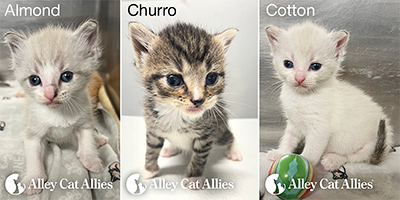
To foster public engagement and deepen supporter investment in the family’s recovery, Alley Cat Allies launched an interactive naming campaign. Supporters rallied to christen the resilient matriarch "Strawberry," while her four lively, all-male kittens were affectionately named after sweet treats: Churro, Creamsicle, Cotton, and Almond. Today, having fully recovered from their medical trials, the quintet has graduated to the next chapters of their lives, symbolizing the life-saving impact of rapid response and targeted financial support.
2. Hemingway’s Journey: From Abuse to Abundant Affection
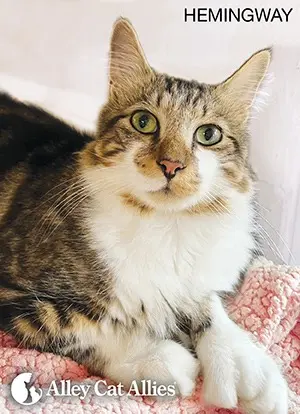
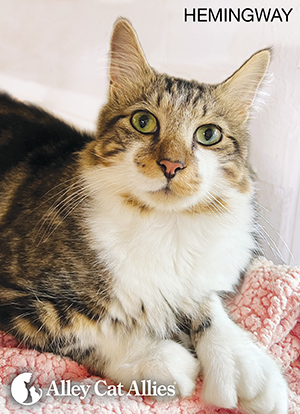
While shelter displacement and illness present formidable obstacles, recovering from the psychological and physical scars of human cruelty requires a different tier of intervention. Enter Hemingway, a young feline whose name pays homage to both his literary namesake and his striking physical anomaly: he is a polydactyl cat, boasting extra toes on his paws.
Surviving Abuse and Entering Care
Hemingway’s early life was marked by trauma. Rescued from an intensely abusive home environment, the young cat entered the care of Alley Cat Allies carrying deep psychological wounds alongside his physical needs. Abuse cases demand specialized veterinary oversight to treat immediate injuries, coupled with patient behavioral rehabilitation to undo the terror inflicted by humans.
Despite the severity of his past, Hemingway exhibited an astonishing capacity for trust and resilience. Within days of arriving in a secure, compassionate environment, his defensive posture melted away. He transitioned into what rescue workers affectionately described as a "purr machine," greeting handlers with soulful eyes and an irrepressibly cheerful demeanor.
A "Larger-Than-Life" Personality
True to his moniker, Hemingway approaches life with an "extra" ethos. Beyond his extra toes, he possesses an exceptionally sweet disposition and a tail that seems perpetually determined to set new length records. Having successfully transitioned from a victim of abuse to a cherished family member, Hemingway’s adoption serves as a powerful testament to the healing power of patience, professional veterinary care, and unconditional love.
3. Community Policing and Feline Welfare: The Sheba Phenomenon in Atlantic City
Effective animal welfare extends far beyond traditional shelters and foster homes; it requires deeply integrated community roots. In Atlantic City, New Jersey, that philosophy found its embodiment in a unique partnership between local law enforcement officers and community cat advocates centered around a cat named Sheba.
The Role of Law Enforcement in Animal Advocacy
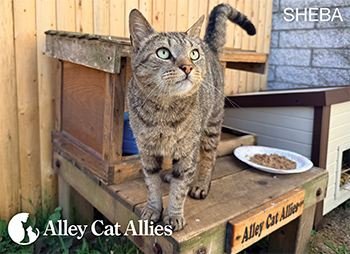
Caring for community cats is inherently a communal responsibility, but it takes on profound institutional significance when law enforcement personnel actively participate. A dedicated group of Atlantic City police officers had quietly taken Sheba under their collective wing, providing her with daily sustenance, fresh water, and regular affection during their shifts.
Recognizing Sheba’s needs and the broader population dynamics of community cats in the area, the officers connected with Alley Cat Allies and the Humane Society of Atlantic County. This collaboration granted them access to no-cost Trap-Neve-Return (TNR) services—a proven, humane method of stabilizing and managing community cat populations.
The TNR Protocol in Action
Sheba’s journey through the TNR pipeline was documented as a model for community policing and animal care cooperation. Officers proudly posed with Sheba safely secured in her humane trap before she was transported to the Humane Society of Atlantic County facility. There, she underwent:
Ovariohysterectomy (Spaying) to prevent further litters and reduce territorial behaviors.
Vaccinations, including mandatory rabies inoculations.
Microchipping to ensure permanent identification.
Following her procedure and a brief recovery period, Sheba was returned to her familiar territory—the very beat patrolled by the officers who loved her. Waiting for her return was not only a hearty meal but a brand-new, weather-proof outdoor shelter built to ensure her comfort and safety through the seasons, securing her a long, protected future in the community she calls home.
Supporting Context & Metrics: The Mechanics of Modern Rescue
To fully comprehend the weight of these achievements, one must examine the broader metrics governing animal welfare crises in the United States. Organizations operating within the rescue space confront staggering logistical hurdles annually.
Upper Respiratory Infections (URIs) in Shelter Populations
According to veterinary epidemiological studies, upper respiratory infections account for up to 50% of all infectious disease cases in animal shelters. Pathogens such as Feline Calicivirus (FCV) and Feline Herpesvirus-1 (FHV-1) spread rapidly through airborne droplets and fomites in high-density environments.
The Cost of Inaction: Without immediate medical isolation and pharmacological intervention, shelter-acquired URIs can progress to pneumonia, resulting in high mortality rates among unweaned and juvenile kittens.
The Financial Burden: Emergency medical extraction, specialized pharmacological treatments (such as secondary antibiotic coverage for opportunistic bacterial infections), and supportive care require robust donor networks. The rescue of Strawberry and her four sons highlights how targeted financial support directly mitigates shelter mortality rates.
The Efficacy of Trap-Neve-Return (TNR)
The collaboration between the Atlantic City Police Department and the Humane Society of Atlantic County highlights the gold standard of community cat management: Trap-Neve-Return.
Population Stabilization: TNR humanely halts the reproductive cycle of outdoor cats, leading to a natural and gradual decline in community cat populations without the costly and ineffective practice of catch-and-kill shelter intake.
Public Health Benefits: Vaccinating community cats against rabies creates an immune barrier that protects both the feline population and human residents.
Civic Engagement: As demonstrated by the Atlantic City police officers, engaging community members and municipal workers in TNR fosters civic pride, lowers rates of animal cruelty, and builds compassionate neighborhoods.
Official Statements and Stakeholder Perspectives
The successes detailed in the Alley Cat Action® 2026 Fall Newsletter reflect a philosophy of collaborative empowerment. While institutional policies set the framework, the human element drives actual execution.
"When systems fail or strain under pressure, it is the dedication of our supporters and community partners that catches these animals before they fall. Whether it’s funding emergency medical care for an entire litter with upper respiratory infections in Maryland, or providing no-cost TNR resources to police officers looking out for a neighborhood cat in New Jersey, every intervention proves that compassionate action changes destinies."
— Field Operations and Rescue Coordination Summary, Alley Cat Allies
Law enforcement officials in Atlantic City similarly emphasized the symbiotic relationship between human safety and animal welfare:
"Caring for Sheba wasn’t just an extracurricular kindness for our squad; it was an extension of our commitment to the community. Protecting the vulnerable—whether two-legged or four-legged—strengthens the fabric of our neighborhoods. Knowing she is now spayed, vaccinated, and settled into her new outdoor shelter gives our entire precinct peace of mind."
— Participating Officers, Atlantic City Police Department
Future Outlook: Scaling Compassion for Tomorrow
As the animal rescue community looks beyond the final quarter of 2026, the lessons drawn from Strawberry’s family, Hemingway, and Sheba offer a clear blueprint for future advocacy. The convergence of emergency medical funding, trauma rehabilitation, and institutional partnerships (such as law enforcement-backed TNR programs) demonstrates that sustainable animal welfare is entirely achievable when scaled effectively.
Key Strategic Objectives for the Future:
Expanding Emergency Foster Networks: Shortening the window between shelter distress calls and foster placement is vital to lowering disease transmission rates, particularly for juvenile felines vulnerable to upper respiratory infections.
Institutionalizing Community Partnerships: Replicating the Atlantic City model across municipal agencies nationwide—integrating police, sanitation, and public health departments into community cat care and TNR initiatives—will normalize humane population management.
Elevating Trauma-Informed Veterinary Care: Ensuring that survivors of abuse, such as Hemingway, receive not only physical rehabilitation but behavioral support will remain a cornerstone of successful permanent adoptions.
Ultimately, these narratives remind us that systemic challenges in animal welfare are met and overcome one life at a time. Through sustained public support, rigorous veterinary protocols, and unwavering community dedication, the horizon for feline welfare remains brighter than ever.