
Executive Overview
When the mind conjures an image of a guide dog leading a visually impaired individual through a bustling transit hub, or a service dog quietly retrieving a dropped item for a person with limited mobility, the silhouette is almost universally that of a Labrador Retriever. This persistent imagery is far from accidental. For decades, organizations dedicated to breeding, training, and placing assistance dogs—such as Dogs Inc—have leaned on the Labrador Retriever as a foundational cornerstone of their operational success.
The modern landscape of assistance work is complex, demanding high levels of emotional stability, cognitive flexibility, and physical resilience from canine candidates. While various breeds, including Golden Retrievers and German Shepherds, can and do succeed in working roles, the Labrador Retriever consistently outperforms expectations across a spectrum of standardized metrics. This comprehensive report explores the intersection of genetics, temperament, evolutionary history, and rigorous training methodologies that make the Labrador Retriever uniquely suited for the demanding life of a guide or service dog.
Detailed Chronology: From Working Ancestry to Modern Assistance Icon
To understand why the Labrador Retriever dominates contemporary assistance programs, one must trace the evolutionary trajectory of the breed, a journey marked by selective breeding for utility, cooperation, and close human partnership.
1. The Historical Foundation: The Lesser Newfoundland
The roots of the modern Labrador Retriever trace back centuries to the island of Newfoundland, where fishermen required a rugged, water-resistant canine partner to retrieve escaped fish, haul nets, and pull lines through icy North Atlantic waters. Among these dogs was the Lesser Newfoundland, a nimble and industrious animal characterized by a dense, water-repellent coat and an extraordinary work ethic. These early ancestors established a vital behavioral baseline: a deep-seated drive to work cooperatively alongside humans under challenging environmental conditions.

2. Standardization and British Refinement
In the 19th century, these working dogs were imported to Great Britain, where English sportsmen refined the breed. Breeders focused on enhancing the dog’s "soft mouth"—the ability to retrieve game without damaging it—along with high intelligence, keen observation skills, and an eager-to-please disposition. This era cemented the Labrador’s reputation as an exceptionally trainable sporting companion.
3. The Emergence of the Guide Dog Movement (Mid-20th Century)
As the modern guide dog movement took formal shape globally in the aftermath of World War I and World War II, organizations realized that traditional farm or guard breeds were ill-suited for urban environments and public access work. The ideal candidate required high emotional stability rather than high prey or defense drives. The Labrador Retriever’s gentle nature, combined with its robust physical stature and high adaptability, made it a natural choice for early systematic guide dog training.
4. Expansion into Multi-Disciplinary Service Work
Over the last fifty years, the role of the assistance dog has expanded dramatically beyond guide work for the blind. Today’s service dogs are trained to assist individuals with mobility impairments, post-traumatic stress disorder (PTSD), diabetes, epilepsy, and autism. Throughout this evolution, the Labrador Retriever has seamlessly transitioned into these diverse specializations, proving that the breed’s foundational temperament is endlessly adaptable to emerging human needs.
Supporting Context & Metrics: Defining the Ideal Service Dog Temperament
What precisely defines a great guide or service dog? Organizations like Dogs Inc evaluate each candidate as an individual, looking past simple breed generalizations to assess deep-seated behavioral and psychological metrics. However, statistical trends across major breeding programs indicate that certain breeds—most notably the Labrador Retriever—possess a higher baseline probability of meeting these stringent criteria.
The Working Environment: Navigating Chaos with Calm
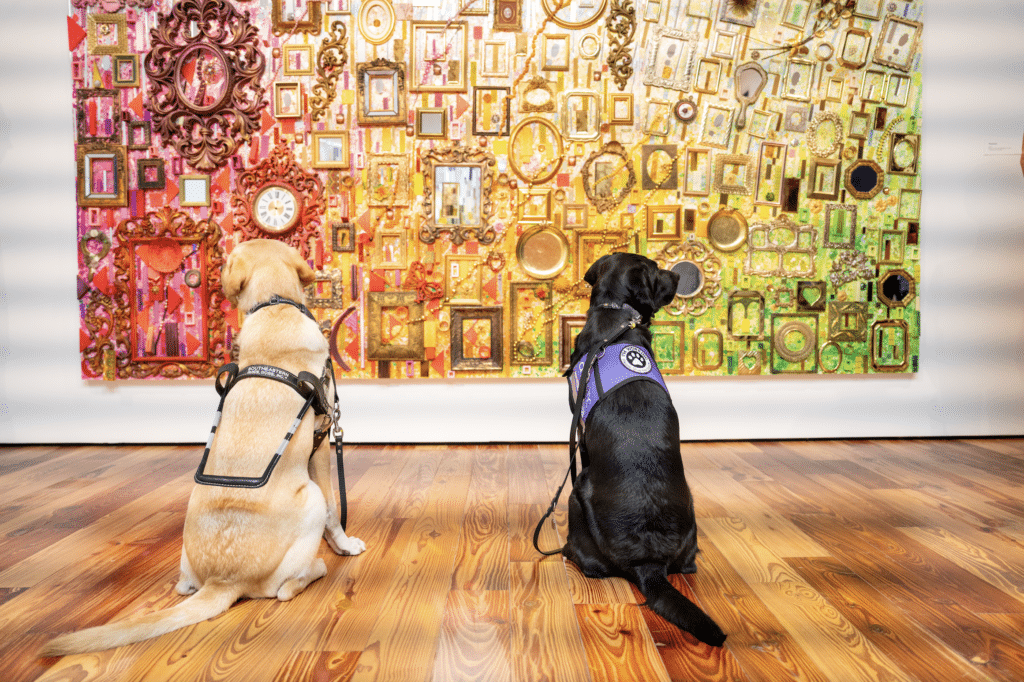
A working guide dog must make instantaneous, complex safety decisions. Consider the sensory overload of a modern metropolitan center: screeching sirens, unpredictable pedestrian traffic, sudden construction noises, flashing lights, and competing scents. The dog must navigate a crowded airport, ignore food dropped on a restaurant floor, stop safely at a curb, and maintain unshakeable focus.
Similarly, a mobility service dog must remain completely inert and calm while stationed underneath a wheelchair in a bustling corporate boardroom, yet instantly spring into action when commanded to retrieve a dropped set of keys or activate an emergency alert button.
Core Psychological Pillars of Assistance Dogs
Successful service and guide dog candidates universally demonstrate five core psychological pillars:
- Emotional Stability: The ability to remain calm and unreactive in the face of sudden environmental triggers.
- Confidence: A willingness to investigate novel objects or spaces without hesitation or fear-based avoidance.
- Focus: The cognitive capacity to tune out extraneous distractions (such as other animals, food, or unfamiliar people) and maintain task-orientation.
- Adaptability: The flexibility to transition seamlessly from a high-stress public environment to a quiet home setting without behavioral degradation.
- Stress Recovery: The physiological ability to bounce back quickly from a startling event (e.g., a sudden loud noise) and resume normal working behavior immediately.
The Labrador Advantage in Temperament and Trainability
Labrador Retrievers consistently score exceptionally high across these five pillars. Their innate people-oriented nature means they view human interaction and cooperation as a primary reward. This intrinsic motivation makes them exceptionally responsive to positive reinforcement training methods, which rely on consistency, patience, and clear communication to build complex behavioral chains over months or years.

Furthermore, Labs possess a remarkable resilience often described as "bounce-back." If startled by a falling object or an erratic pedestrian, a well-bred Labrador is statistically more likely to recover its equilibrium within seconds, whereas more sensitive breeds may harbor lingering anxiety that disrupts their working focus.
Official Statements and Institutional Perspectives
Industry leaders, puppy development coordinators, and veterinary professionals continuously analyze the efficacy of utilizing Labrador Retrievers in institutional breeding programs.
According to canine development experts at major assistance organizations, the decision to rely heavily on Labrador Retrievers is rooted in predictability. "When you are investing two years and tens of thousands of dollars into raising and training an assistance dog, predictability of outcome is paramount," notes a senior canine program director. "While every dog is an individual and undergoes rigorous, continuous evaluation, the Labrador Retriever gene pool offers a remarkably consistent baseline of health, temperament, and biddability."
Veterinary geneticists emphasize that the breed’s physical moderation also plays a critical role. Unlike brachycephalic breeds (which suffer from respiratory limitations) or giant breeds (which experience shortened lifespans and high rates of orthopedic failure), the Labrador Retriever represents a structurally sound, medium-to-large athletic build.

Official Kennel Club data underscores the breed’s enduring popularity, noting that the Labrador has reigned as one of the most popular registered breeds in the United States for decades. This vast population base allows specialized breeding programs to maintain diverse genetic lines while selecting specifically for working traits, health longevity, and emotional resilience.
Future Outlook: The Evolving Role of Labs in Modern Assistance
As the field of assistance dogs looks toward the future, the demands placed upon working canines are shifting in tandem with technological advancements, urbanization, and changing societal landscapes.
Integrating Technology and Mobility Support
Future service dogs will increasingly be called upon to interact with modern assistive technologies—such as smart-home systems, specialized mobility devices, and advanced medical monitoring tools. The Labrador Retriever’s high cognitive adaptability and problem-solving capabilities position the breed well for these technologically integrated roles. Whether pressing custom accessibility switches, opening automated doors, or retrieving specialized medical equipment, Labs demonstrate the fine motor control and intellectual capacity required for complex auxiliary tasks.
The Rigorous Evaluation Pipeline
Despite the historical success of the breed, institutional transparency dictates a sobering reality: not every Labrador Retriever puppy born into an assistance program graduates as a working dog. Modern evaluation protocols utilize advanced behavioral tracking from birth through young adulthood.
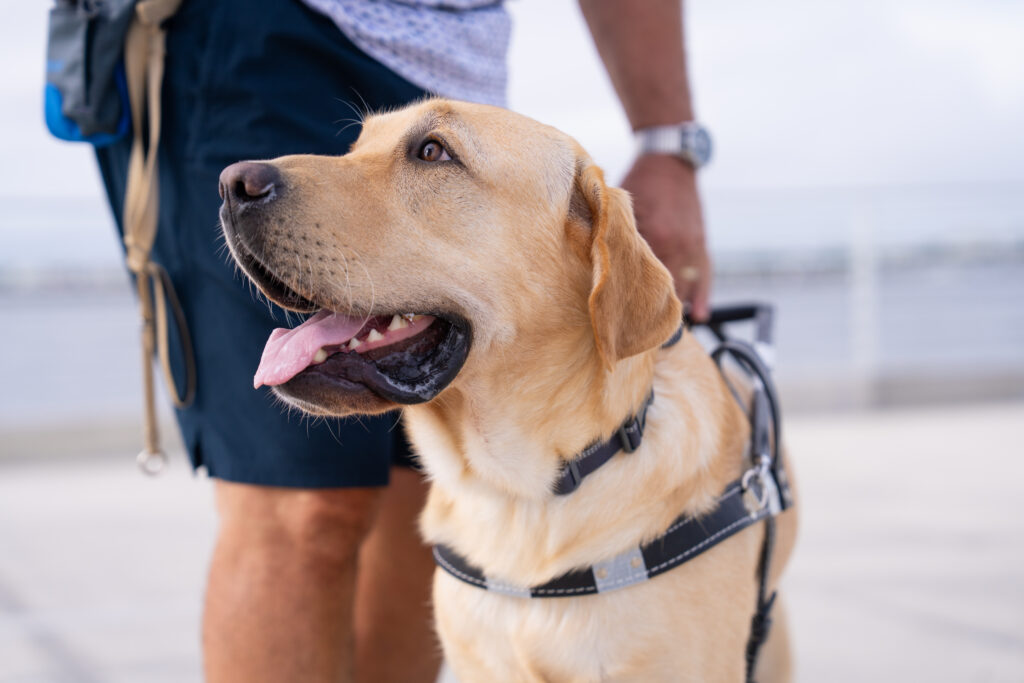
Puppies are raised by dedicated "Puppy Parents" who expose them to an expanding matrix of environments—from grocery stores and public transit to veterinary clinics and crowded sporting events. Throughout this maturation process—which can see Labradors maintain playful, puppy-like behaviors until roughly three years of age—trainers continuously assess emotional maturity and focus.
Dogs that display over-sensitivity, low stress tolerance, or an incompatibility with public access work are gently career-changed. These dogs often transition successfully into loving pet homes or alternative professional pathways, such as facility therapy or detection work. This rigorous culling and evaluation process ensures that only the most resilient, stable individuals are ultimately matched with handlers who depend on them for daily independence.
Health, Longevity, and Responsible Breeding
Looking ahead, the long-term sustainability of utilizing Labrador Retrievers in assistance work depends heavily on proactive health management. With a typical lifespan of 10 to 14 years and an adult working weight ranging from 55 to 80 pounds, Labs are susceptible to certain inherited conditions, including hip and elbow dysplasia, progressive retinal atrophy (PRA), and hereditary myopathy.
Forward-thinking organizations combat these concerns through rigorous health screening, genetic testing, and selective breeding practices. By prioritizing physical soundness alongside psychological stability, breeding programs ensure that future generations of Labrador Retrievers will retain the stamina, structural integrity, and robust health required to withstand the physical demands of daily assistance work.
Conclusion
The enduring partnership between humans and Labrador Retrievers in the realm of guide and service work is a testament to the remarkable qualities of the breed. Through a harmonious blend of emotional stability, eager trainability, rapid stress recovery, and deep-seated human-centric partnership drives, the Labrador Retriever has earned its status as the gold standard of working canines.
Organizations like Dogs Inc continue to illuminate the path forward, demonstrating that while breed genetics provide a vital foundation, it is the meticulous combination of early socialization, positive reinforcement training, individualized evaluation, and unwavering mutual trust that ultimately transforms a Labrador puppy into a life-changing, independent-living partner. As public spaces evolve and human needs diversify, the Labrador Retriever stands ready to meet the future with the same steady gaze, wagging tail, and steadfast loyalty that has defined its legacy for generations.