
By Thom Somes, The Pet Safety Guy
Published: August 3, 2020
Executive Overview
In the high-stakes environment of professional pet grooming, emergencies can strike without warning. For many animals, the combination of unfamiliar noises, restraint, and underlying health conditions can trigger sudden medical crises. On a fateful summer day at a local grooming salon, a routine appointment turned life-threatening when a notoriously difficult-to-groom canine named Max suddenly collapsed and lost consciousness.
What could have easily been a tragic headline instead became a powerful testament to the life-saving value of preparedness. Thanks to the quick thinking of salon leadership, adherence to established emergency protocols, and hands-on Pet Tech CPR and First Aid training, Max was successfully revived.
This incident offers a profound look into the unpredictable nature of animal care, validating the critical importance of specialized emergency training for pet care professionals. Beyond celebrating a miraculous survival, this case study explores the vital intersection of video surveillance technology, veterinary assessment, staff dynamics, and client relationships. Most importantly, it reinforces the core mission of Pet Tech: empowering those who care for animals with the knowledge, muscle memory, and confidence to act decisively when every second counts.
Detailed Chronology: The Anatomy of a Salon Rescue
To truly understand how a routine grooming session escalated into a life-or-death crisis—and how it was successfully managed—we must examine the step-by-step chronology of the event as captured by salon security cameras and recounted by the individuals involved.
The Buildup and Sudden Collapse
Max, a dog with a well-documented history of behavioral challenges that had previously resulted in him being "fired" from multiple grooming facilities across town, was undergoing a routine grooming session with stylist Elizabeth. For dogs with high anxiety or behavioral hurdles, the grooming process is inherently stressful. However, nothing in the initial stages of the appointment suggested that Max was suffering from an acute physiological crisis rather than standard behavioral resistance.
Without warning, Max collapsed. The sudden loss of consciousness sent immediate shockwaves through the salon. Elizabeth, who had been actively working on him, was instantly thrown into a high-stress scenario familiar to few civilian pet owners: a client in her care was unresponsive, failing to show normal signs of life, and requiring immediate intervention.
Decisive Action and the Pivot to Emergency Protocols
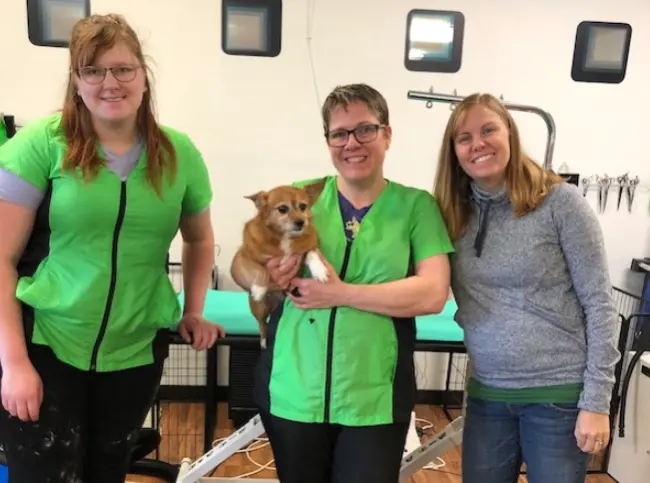
Instantly recognizing the gravity of the situation, salon owner Lara stepped in. Drawing directly from her formal Pet Tech CPR and First Aid training, Lara bypassed hesitation and initiated emergency resuscitation protocols.
In high-stress medical emergencies, panic is the primary adversary of effective intervention. Training replaces panic with muscle memory. Lara executed the foundational steps of pet rescue breathing and chest compressions. The turning point of the resuscitation effort occurred when Lara opened Max’s mouth to check his airway and manually sweep his tongue past his canines.
"When you see me pick him up and say ‘get my keys’ it’s because when I went to pull his tongue out past the canines, he flinched. He started coming to after that and was totally awake in route."
— Lara, Salon Owner and Rescuer
That critical flinch signaled the return of neurological reflexes. Within moments, Max began regaining consciousness. By the time he was loaded into a vehicle for emergency veterinary transport, he was fully awake, alert, and responsive—a direct result of instantaneous, high-quality CPR intervention.
Veterinary Findings and Medical Analysis
Following the stabilization of the patient, Max was rushed to a local veterinary facility for a comprehensive medical evaluation. In situations where an animal loses consciousness during routine handling, determining the root cause is critical to prevent future recurrences and to provide legal and medical clarity for the pet care business.
Diagnostic Imaging and Underlying Pathology
Veterinary staff performed a series of diagnostic tests, including thoracic x-rays, to assess Max’s internal systems and ensure that the chest compressions administered during CPR had not caused unintended skeletal trauma, such as rib fractures.
The radiographs revealed a reassuring picture regarding the physical intervention: Max’s ribs and chest cavity were entirely normal, confirming that the CPR was administered with appropriate technique and controlled force. However, the x-rays uncovered a significant pre-existing anatomical anomaly: Max’s trachea appeared abnormally small where it connects to the lungs.
The attending veterinarian concluded that this hypoplastic or narrowed tracheal structure was the primary underlying catalyst for Max’s sudden loss of consciousness. Stresses associated with the grooming environment likely compromised his respiratory efficiency, creating a bottleneck in oxygen delivery that his compromised airway simply could not compensate for.
Vet Clinic Dynamics and Inter-Professional Relationships
The veterinary visit also highlighted the nuanced relationships between pet grooming facilities and local veterinary clinics. Initially, the examining veterinarian—who was covering for Lara’s primary, long-time veterinary partner—viewed the situation with skepticism and alarm.
However, once Lara’s primary veterinarian arrived at the clinic, the atmosphere shifted dramatically. Her primary vet, who frequently refers difficult-to-place clients to Lara’s specialized salon, immediately embraced Lara, offering reassurance and professional validation. Upon learning the details of the incident and reviewing the professional rapport between the salon and the clinic, the examining veterinarian’s demeanor softened entirely, underscoring the importance of establishing strong, trust-based networks within the local pet care community.
Human Elements: Reactions from Pet Parents and Staff
A medical emergency inside a commercial pet business ripples outward, impacting the pet parents, the grooming staff, and the business owner. Managing these human reactions with empathy, transparency, and professionalism is just as critical as the physical rescue itself.
The Pet Parents’ Perspective
When pet owners are notified that their animal experienced a life-threatening medical crisis while out of their care, defensiveness or panic is a common initial reaction. Interestingly, Max’s owners displayed a remarkable level of understanding and pragmatic acceptance.
Their very first question upon hearing the news was telling: "Did he bite someone?" Given Max’s extensive history of behavioral rejections across town, his owners were intimately familiar with his difficult temperament. Upon learning the truth—that Max had suffered a medical collapse due to underlying respiratory vulnerabilities and had been successfully revived—they were profoundly grateful. They expressed deep appreciation for the staff’s competence and even insisted on paying for the grooming work that had been completed prior to the incident.
Staff Recovery and the Value of Video Surveillance
For Elizabeth, the groomer handling Max at the moment of collapse, the event was deeply unsettling. Working in an environment where an animal experiences a medical emergency can shake a professional’s confidence. However, salon leadership handled the situation with exemplary emotional intelligence. Rather than casting blame, Lara validated Elizabeth’s efforts and maintained a supportive workplace culture.
Crucially, the salon had installed security cameras just one week prior to the incident. Reviewing the footage provided undeniable objective truth:
"We had just installed cameras the week before and upon review, I can say 100% she did nothing wrong. I’m SO glad I had the cameras if only for me to be able to know what took place. I got the cameras mainly to protect the salon, but this showed another reason to have them."
— Lara
The footage protected the groomer from unwarranted self-doubt or external criticism, reinforcing that the collapse was entirely medical in nature and completely outside the stylist’s control.
The Imperative of Hands-On Pet CPR Training
This dramatic rescue is far more than a heartwarming human-interest story; it serves as a powerful case study for the absolute necessity of professional-grade pet safety education.
Why Online-Only Learning Falls Short
In the modern digital age, many individuals attempt to learn life-saving skills through passive mediums such as watching YouTube videos or reading instructional articles. While informational content has its place, it cannot replicate the physiological muscle memory required during an actual crisis.
When adrenaline surges and panic threatens to take over, cognitive reasoning slows down. Muscle memory, developed through repetitive, hands-on physical practice under the watchful eye of an expert instructor, is what allows a rescuer to bypass hesitation and immediately execute life-saving protocols.
The Pet Tech Methodology
Pet Tech has long championed the philosophy of experiential, interactive learning. Our programs combine rigorous theoretical knowledge with mandatory skill practice and professional coaching. Students do not merely memorize where to place their hands; they physically practice chest compressions on specialized canine and feline mannequins, calibrating their force, rhythm, and depth. They practice clearing airways, managing rescue breathing, and assessing vital signs until the actions become second nature.
When Max collapsed, Lara did not have to stop and think about the proper mechanics of canine CPR. Her hands had performed the motions in training; her mind recognized the parameters of the emergency; her training took the steering wheel. That is the true power of dedicated, hands-on certification.
Future Outlook: A Safer Horizon for Pet Care Professionals
Max’s story concludes on a high note. Following his full recovery, he returned home to a family that loves him, and he even displayed a happy, social demeanor when interacting with Lara during a subsequent veterinary visit. Moving forward, proactive precautions have been established: for his own safety and peace of mind, future grooming sessions will be handled exclusively by Lara, ensuring continuity of care tailored to his specific physical needs.
Raising the Industry Standard
Incidents like this force the pet care industry to evaluate its standards of operation. Grooming salons, boarding facilities, and doggy daycares shoulder immense responsibility. While licensing requirements vary widely by region, the voluntary adoption of Pet Tech CPR and First Aid certification sets elite businesses apart from standard operations.
Pet parents are increasingly sophisticated consumers. They actively seek out facilities where staff members are certified in pet emergency care. Knowing that the professionals entrusted with their furry family members are equipped to handle choking, cardiac arrest, bleeding, and respiratory failure provides unmatched peace of mind.
Conclusion: Investing in Preparedness
Accidents and medical crises are an inevitable statistical reality when working with animals. We cannot always prevent underlying anatomical anomalies like a compromised trachea, nor can we predict every behavioral trigger. However, we can control our level of preparation.
As Thom Somes, The Pet Safety Guy, often emphasizes, the goal of Pet Tech is to help pet parents and pet care professionals build happier, healthier, and longer relationships with their four-legged family members. By investing in comprehensive, hands-on training, businesses transform themselves from passive spaces of commerce into active zones of safety, ensuring that when the unexpected happens, they are ready to write a story of survival rather than loss.
About the Author
Thom Somes, The Pet Safety Guy, is the President and Co-Founder of Pet Tech, the world’s first international training center dedicated to pet CPR, first aid, and emergency care. A renowned public speaker, best-selling author, futurist, and passionate advocate for animal welfare, Thom has dedicated his career to bridging the gap between pet owners, pet care professionals, and veterinary medicine to ensure every pet lives a safer, healthier life.