Executive Overview: The Invisible Crisis in Commercial Pet Food
A comprehensive investigation into the safety of commercial pet food has unveiled a disturbing, systemic reality: toxic heavy metals—including lead, arsenic, cadmium, and mercury—are widely present across major pet food brands in the United States.
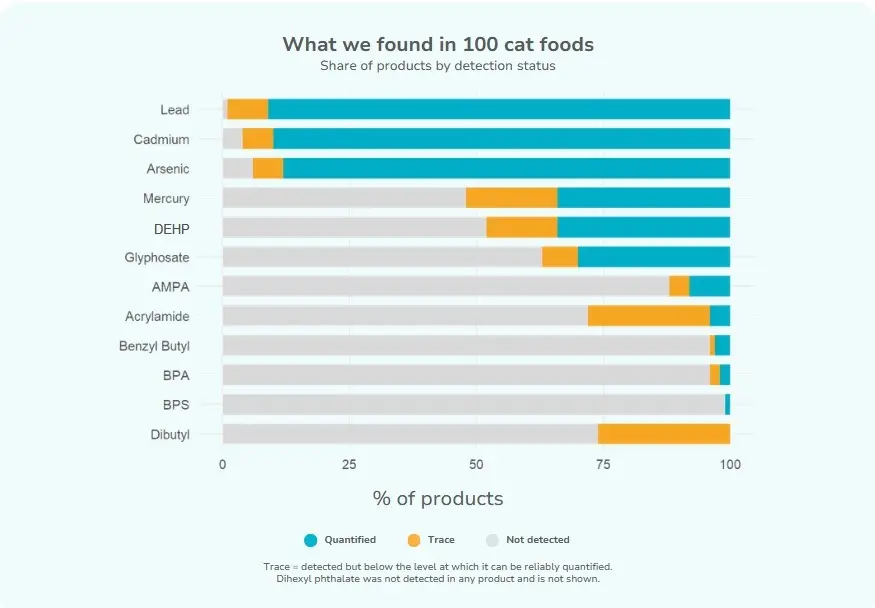
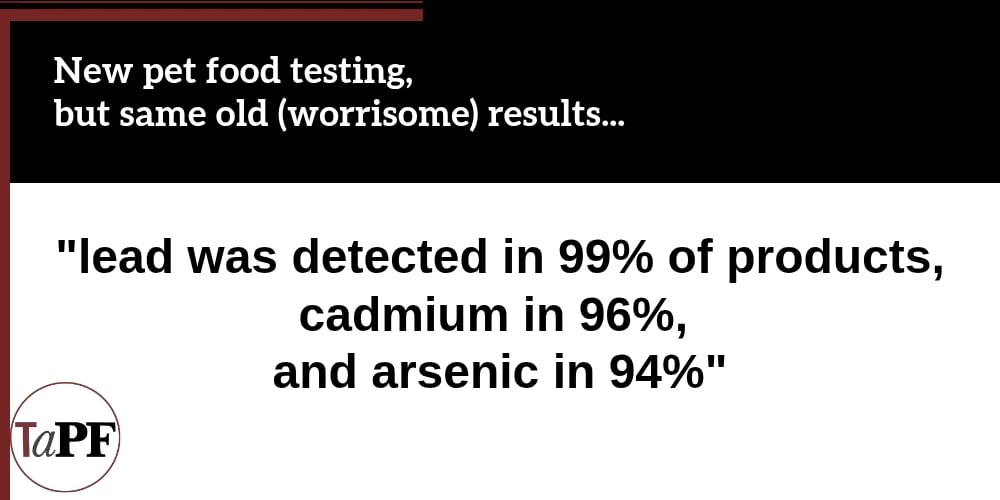
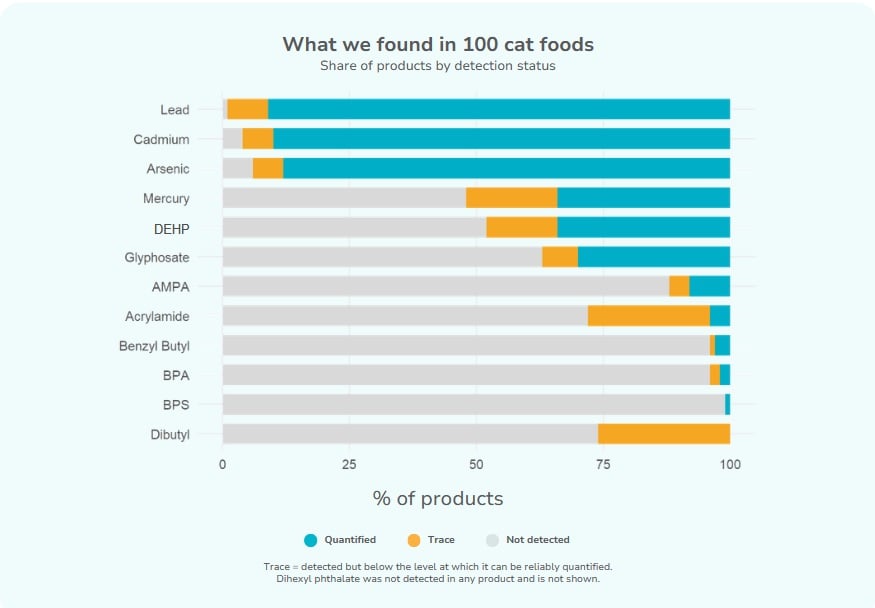
A report published by the Clean Label Project, a non-profit consumer advocacy organization dedicated to bringing truth and transparency to product labeling, revealed that up to 99% of tested cat food products across 62 leading brands contained measurable levels of heavy metals.
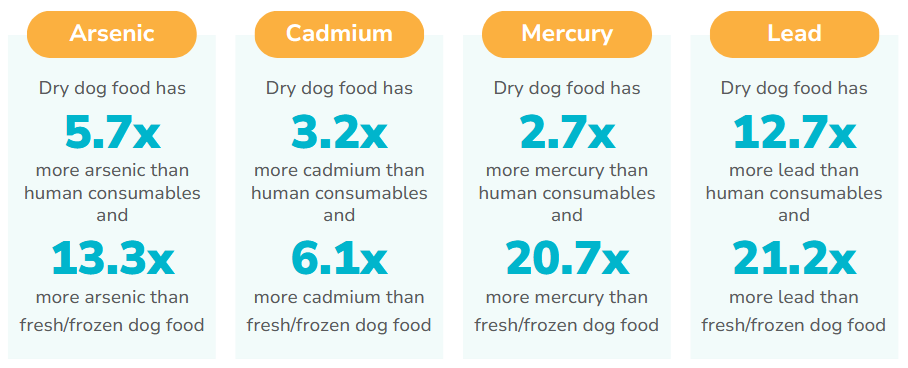
This finding follows a parallel study released by the organization in February 2026 focused on dry dog food, which uncovered severe lead, mercury, arsenic, and cadmium contamination, particularly in ultra-processed kibble formulations.
+-----------------------------------------------------------------------------------+
|                        SUMMARY OF RECENT TESTING FINDINGS                         |
+--------------------------+--------------------------------------------------------+
| Clean Label Project      | • 99% of tested cat foods contained heavy metals       |
| Cat Food Study           | • Evaluated across 62 commercial brands                |
+--------------------------+--------------------------------------------------------+
| Clean Label Project      | • Widespread lead, mercury, arsenic, & cadmium in kibble|
| Dog Food Study (Feb 2026)| • Fresh/frozen foods performed significantly better    |
+--------------------------+--------------------------------------------------------+
| Univ. of Nevada, Reno    | • Chronic mercury risk identified                      |
| Study (2021)             | • DNA testing exposed widespread ingredient fraud      |
+--------------------------+--------------------------------------------------------+
These revelations are not isolated anomalies; rather, they mark the latest chapter in a long history of independent scientific warnings. Studies dating back to 2009 from spectrographic testing laboratories and academic institutions have repeatedly documented persistent heavy metal loads in commercial pet diets.
Despite these accumulated data, the U.S. Food and Drug Administration (FDA) Center for Veterinary Medicine (CVM) has declined to establish legally binding action levels, safety thresholds, or maximum allowable limits for heavy metals, pesticides, or plastics in pet food. Instead, federal regulators rely on outdated livestock standards designed to prevent immediate toxicity in farm animals destined for quick slaughter—a framework critics argue provides zero protection for domestic cats and dogs subjected to chronic, daily exposure over a 15-to-20-year lifespan.
Detailed Chronology: A Decadelong Record of Unheeded Warnings
The systemic contamination of commercial pet food with heavy metals is a persistent issue documented across nearly two decades of independent laboratory testing.
2009 ───► SPEX CertiPrep baseline testing detects widespread metals in pet food.
2019 ───► SPEX CertiPrep 10-year follow-up reveals zero meaningful safety improvements.
2021 ───► Univ. of Nevada, Reno finds toxic mercury levels & DNA ingredient misrepresentation.
Feb 2026 ► Clean Label Project releases Dog Food Whitepaper; kibble shows elevated heavy metals.
Oct 2026 ► Clean Label Project Cat Food Study reveals 99% contamination across 62 top brands.
2009–2019: Early Benchmark Testing by SPEX CertiPrep
In 2009, SPEX CertiPrep, an analytical testing laboratory specializing in certified reference materials and spectrographic analysis, conducted a baseline examination of off-the-shelf pet food products. The study screened wet and dry formulations for heavy metals and trace element contamination.
A decade later, in 2019, SPEX CertiPrep conducted a follow-up study titled "Heavy Metals in Pet Food: Changes Over the Past Decade" to evaluate whether industrial manufacturing refinements or regulatory pressure had reduced contaminant loads. The comparison revealed virtually no meaningful progress: heavy metals remained widespread across multiple product categories, with continuous background levels of toxic elements persisting in wet cans and dry kibbles alike.
2021: University of Nevada, Reno Uncovers Mercury and Food Fraud
In 2021, researchers at the University of Nevada, Reno (UNR) published findings examining heavy metal concentration and ingredient authenticity in pet foods. The UNR study yielded two conclusions:
Chronic Toxic Exposure: The chemical analysis identified concentrations of mercury high enough to pose serious health risks under chronic, daily consumption scenarios.
Economic Fraud and Ingredient Mislabeling: Utilizing molecular DNA barcoding, the researchers evaluated the animal tissue origins in the samples. Every tested sample exhibited labeling inaccuracies. Products claiming to feature high-value or novelty proteins (such as specific ocean fish, venison, or duck) routinely contained unlisted, low-cost animal tissues—primarily cheap chicken and poultry byproducts—as their primary mass constituents.
February 2026: Clean Label Project Exposes Dry Dog Food Contamination
Building on historical data, the Clean Label Project published a whitepaper titled "Extremely High Levels of Lead, Mercury, Arsenic, and Cadmium Found in Dry Dog Food."
By benchmarking pet food contamination against established human food safety standards, the study demonstrated a clear divide across product formats: ultra-processed dry kibble consistently presented high heavy metal concentrations, whereas fresh, gently cooked, and frozen dog foods performed far better, recording substantially lower chemical contamination levels.
Recent Release: The Cat Food Landmark Study
The Clean Label Project extended its scope to feline nutrition, releasing its study: "Heavy Metals Found in Up to 99% of Cat Food Products Tested Across 62 Brands."
Evaluating products across the commercial spectrum, the study demonstrated that nearly every cat food tested contained measurable levels of dangerous heavy metals. Feline metabolic vulnerabilities make these findings particularly concerning to veterinary toxicologists and companion animal advocates.
The Biological Burden: Heavy Metals and Bioaccumulation
Heavy metals are insidious toxins because they bioaccumulate. Rather than being rapidly metabolized and excreted, metals bind to cellular proteins, concentrate in organs, and accumulate over time:
Lead (Pb): Accumulates in the bone matrix and soft tissues, disrupting neurodevelopment, hemoglobin synthesis, and renal clearance mechanisms.
Arsenic (As): A potent carcinogen linked to vascular damage, gastrointestinal ulceration, and hepatic toxicity. Inorganic arsenic forms are especially toxic to cellular respiration.
Cadmium (Cd): Exceedingly difficult for mammalian systems to excrete, cadmium targets the proximal tubules of the kidneys, causing chronic renal failure and progressive bone density loss (osteomalacia).
Mercury (Hg): Possesses extreme neurotoxicity and nephrotoxicity. Organic mercury (methylmercury) readily crosses biological membranes, accumulating in brain tissues and leading to irreversible central nervous system degradation.
Because cats are obligate carnivores, small in stature, and frequently fed the exact same commercial formulation twice a day for 12 to 18 years, their cumulative toxic load per kilogram of body weight far exceeds human exposure baselines.
Dry Kibble vs. Fresh Foods: Processing and Ingredient Quality
The variance in heavy metal content between dry kibble and fresh/frozen diets stems from ingredient selection and manufacturing techniques:
Rendered Meals and Bone Ash: Dry pet foods rely heavily on rendered meat meals (e.g., poultry meal, fish meal, meat and bone meal). Heavy metals like lead sequester in the skeletal structures of food animals; when bones are rendered into high-ash meals, the concentration of lead rises exponentially.
Low-Grade Fish Meals: Fish meal included in cat foods frequently utilizes whole, uncleaned forage fish or processing offal rich in viscera, where bioaccumulated methylmercury and inorganic arsenic concentrate.
Synthetic Mineral Premixes: Industrial mineral packs—often imported from countries with lax quality control—frequently contain trace contamination of heavy metals like cadmium and lead mixed into zinc, copper, and iron supplements.
Economically Motivated Adulteration: DNA Analysis and Mislabeling
The 2021 University of Nevada, Reno study highlighted how supply chain opaqueness amplifies toxic risks. When manufacturers substitute promised high-value proteins with low-grade poultry or unvetted animal byproducts, they introduce uncontrolled ingredient streams into the manufacturing chain.
When a consumer purchases a premium "wild-caught ocean whitefish" or "novelty protein" diet to avoid certain allergens or contaminants, yet receives a mixture dominated by rendered chicken byproducts, the risk profile of that food becomes completely unpredictable.
Official Statements & Regulatory Failure: The FDA’s Bureaucratic Void
Despite clear scientific documentation of contamination, regulatory oversight of heavy metals in pet food remains virtually nonexistent.
  FDA CVM Official Position                      Reality on the Ground
┌───────────────────────────────┐              ┌───────────────────────────────┐
│ • Uses case-by-case authority │              │ • Zero explicit safety limits │
│ • Cites NRC / AAFCO standards │ ────────────►│ • Livestock-focused standards │
│ • No codified action levels   │              │ • Fails domestic pets' safety │
└───────────────────────────────┘              └───────────────────────────────┘
Case-by-Case Enforcement Without Legal Action Levels
When questioned regarding heavy metal contamination in animal feed, the FDA Center for Veterinary Medicine (CVM) outlines its stance as follows:
"While the FDA CVM has not promulgated guidance, action levels, or tolerances for heavy metal levels in animal food, the FDA has—and uses—the authority to take action on a case-by-case basis where a particular animal food is found through routine or targeted testing to be adulterated. This is accomplished by taking into consideration information provided in the National Research Council of the National Academies Mineral Tolerance of Animals book (NRC) as well as information provided in the Association of American Feed Control Officials Official Publication (AAFCO OP)."
In practice, this policy means the FDA operates without enforceable legally binding limits for heavy metals, pesticides, or microplastics in pet food. Without codified safety thresholds, "case-by-case" enforcement relies on vague, post-market administrative actions rather than preventative baseline safety mandates.
The Livestock Fallacy: Why AAFCO and NRC Benchmarks Fail Household Pets
The primary flaw in the FDA’s regulatory framework lies in its reference texts: the National Research Council (NRC)Mineral Tolerance of Animals and the AAFCO Official Publication.
As the Clean Label Project highlighted in its cat food study summary, these regulatory benchmarks were never designed to safeguard companion animals:
"While human foods can often be compared to third-party regulatory thresholds, few (if any) regulations exist surrounding these contaminants in cat food. The few reference values that do exist for animal feed—maximum tolerable levels published by the National Research Council and the Association of American Feed Control Officials (AAFCO)—were derived to prevent acute poisoning in livestock, not to protect a housecat eating the same food every day for fifteen years. These regulations, heavily influenced by trade, provide false security and a ready-made excuse to reassure consumers about the products’ purported safety."
+-----------------------------------------------------------------------------------+
|                   REGULATORY BENCHMARK MISMATCH EVALUATION                        |
+------------------------------------+----------------------------------------------+
| LIVESTOCK TARGET (NRC / AAFCO)     | COMPANION ANIMAL REALITY (CATS & DOGS)       |
+------------------------------------+----------------------------------------------+
| Short lifespan (months to years)   | Long lifespan (10 to 20 years)               |
| Target: Prevent acute death        | Target: Prevent chronic disease/organ decay  |
| Mixed forage / variable diet       | Monotonous diet (same brand daily for years) |
| Designed for food supply economics | Designed for companion animal wellness        |
+------------------------------------+----------------------------------------------+
Agricultural livestock are raised for brief operational windows before slaughter. Their regulatory thresholds are designed strictly to prevent sudden toxic death or gross tissue pathology that would render meat unsalable. Applying these high tolerances to a domestic cat eating an identical commercial diet every day for 15 years allows chronic low-dose toxicity to go entirely unchecked.
Future Outlook & Consumer Advocacy: The Imperative for Reform
The accumulation of independent scientific evidence leaves the federal regulatory structure for pet food in an untenable position.
                      PATHWAY TO PET FOOD SAFETY REFORM

       [ Independent Science ]                 [ Advocacy Pressure ]
     • Clean Label Project studies            • TruthaboutPetFood.com
     • Academic research (UNR, SPEX)          • Association for Truth in Pet Food
                  │                                        │
                  └───────────────────┬────────────────────┘
                                      ▼
                   [ FDA CVM Regulatory Reform Demands ]
                   • Establish enforceable action levels
                   • Eliminate reliance on livestock NRC limits
                   • Mandate raw ingredient chain transparency
                                      │
                                      ▼
                   [ Systemic Supply Chain Shift ]
                   • Widespread third-party heavy metal testing
                   • Transition toward fresh / low-ash ingredients
                   • Elimination of deceptive mislabeling
Demanding Federal Action and Enforceable Safety Limits
Leading consumer advocates are confronting regulatory agencies directly. Susan Thixton, a prominent pet food consumer advocate, founder of TruthaboutPetFood.com, and representative at the Association for Truth in Pet Food (ATPF), has directed a stark question to federal regulators:
"How many studies evidencing US pet food is frequently contaminated/adulterated is it going to take for FDA to establish maximum allowed levels for heavy metals, pesticides, plastics in pet foods?"
Advocates argue that until the FDA CVM establishes mandatory maximum residue limits (MRLs) specifically calibrated for the feline and canine lifespans, the commercial pet food market will continue to expose animals to unnecessary chemical risks.
Navigating the Market: Advocacy and Transparency
While consumer advocacy groups like the ATPF continue to fight for seat-at-the-table representation during AAFCO standards meetings and FDA listening sessions, pet owners are forced to navigate a confusing marketplace.
To protect companion animals, consumer watchdogs recommend several strategic adjustments:
Demand Transparency: Seek out manufacturers that perform third-party batch testing for heavy metals and publish their Certificates of Analysis (COAs) publicly.
Diversify Diets: Avoid feeding a single brand or batch of processed dry food continuously for years, which reduces the risk of cumulative exposure to a single contaminated ingredient source.
Prioritize Minimal Processing: Consider fresh, frozen, or gently cooked diets utilizing human-grade muscle meats rather than ultra-processed kibbles reliant on high-ash rendered byproduct meals and low-grade mineral premixes.
The findings from the Clean Label Project, SPEX CertiPrep, and the University of Nevada, Reno present an undeniable conclusion: heavy metal contamination in American pet food is a structural crisis. Until regulatory bodies abandon livestock-era tolerances in favor of strict, enforceable health standards, the burden of ensuring pet food safety falls entirely on educated consumers and independent consumer watchdogs.