
Executive Overview
In a strategic maneuver set to reshape the landscape of agricultural technology, Reservoir Farms has officially announced its expansion into the Pacific Northwest. Revealed by founder and CEO Danny Bernstein at the prominent FIRA (Farming Robots and Autonomous equipment) event, the agtech incubator will establish its second out-of-state facility in Yakima, Washington, slated to open its doors in the spring of 2027.
This ambitious move marks a monumental step in Reservoir’s mission to bridge the gap between software developers, robotics engineers, and real-world farming operations. By introducing its proven incubator model to the Evergreen State, Reservoir aims to tackle some of the most complex, labor-intensive, and mechanically challenging cropping systems in global agriculture. From multi-acre orchards and sprawling vineyards to delicate berry fields, the Yakima incubator will serve as a specialized crucible for physical artificial intelligence (AI) and agricultural automation.
Reservoir Farms has carved out a distinct niche in the agtech ecosystem by operating living laboratories—providing early-stage start-ups with direct access to operational farmland. Through a multi-tiered subscription service that includes a popular "freemium" entry model often dubbed the "Spotify for farming innovation," the organization allows innovators to test, stress-test, and refine their products in authentic agricultural environments.
The upcoming Washington facility will not operate in a vacuum. It represents a massive collaborative effort anchored by strategic alliances with agricultural heavyweights, regional economic development agencies, and premier academic institutions. Supported by recent high-profile investments from industry titans like John Deere—which injected $10 million into Reservoir Farms—alongside backing from Western Growers, the initiative aims to systematically solve the labor crises and operational bottlenecks plaguing modern specialty crop farming.
Detailed Chronology: The Evolution and Expansion of Reservoir Farms
To understand the weight of the Yakima expansion, it is essential to examine the deliberate trajectory Reservoir Farms has charted since its inception.
Foundation and Early California Roots
Reservoir was born out of a critical realization within the agtech sector: too many brilliant robotics and AI prototypes fail because developers design them in sterile, controlled laboratories rather than messy, unpredictable agricultural fields. To counter this, Reservoir established its flagship testing grounds in California’s fertile agricultural hubs of Salinas and Sonoma. These locations offered start-ups immediate immersion into row crops, leafy greens, and viticulture, quickly establishing Reservoir as a premier destination for agtech validation.
Geographic Diversification into Arizona
Building on its California success, Reservoir expanded its footprint into Arizona. This move allowed the organization to test the adaptability of its incubator model across different desert climates, irrigation regimes, and crop varieties. The Arizona expansion proved that the subscription-based, real-farm testing model was not only geographically scalable but also highly attractive to venture-backed start-ups seeking diverse seasonal testing windows.
The Freemium Model Milestone (June 2026)
In June 2026, Reservoir democratized access to its innovation ecosystem by launching a free-tier subscription model. This strategic shift lowered the barrier to entry for bootstrap-stage start-ups, allowing a broader array of global tech developers to plug into Reservoir’s data networks, farm testing slots, and grower feedback loops.
The John Deere Investment and Capital Influx (August 2026)
Validation of Reservoir’s operational model reached an inflection point in August 2026, when agricultural machinery giant John Deere invested $10 million into the incubator. This capital injection provided Reservoir with the financial runway needed to accelerate its national expansion strategy, setting the stage for the massive infrastructure undertakings required to support physical AI hardware development on a multi-state scale.
The FIRA Reveal and the 2027 Horizon (October 2026)
At the FIRA event on October 20, 2026, Danny Bernstein formally pulled back the curtain on the next phase of growth. By targeting Yakima, Washington, for a spring 2027 launch, Reservoir transitioned from a regional West Coast player into a truly national engine for agricultural transformation. Prominent incubator alumni—including automated harvesting pioneers Bonsai Robotics and Sky Sense—alongside new members Cordon and Rootline, were immediately announced as foundational tenants for the new Washington location.
Supporting Context & Metrics: Why Washington State?
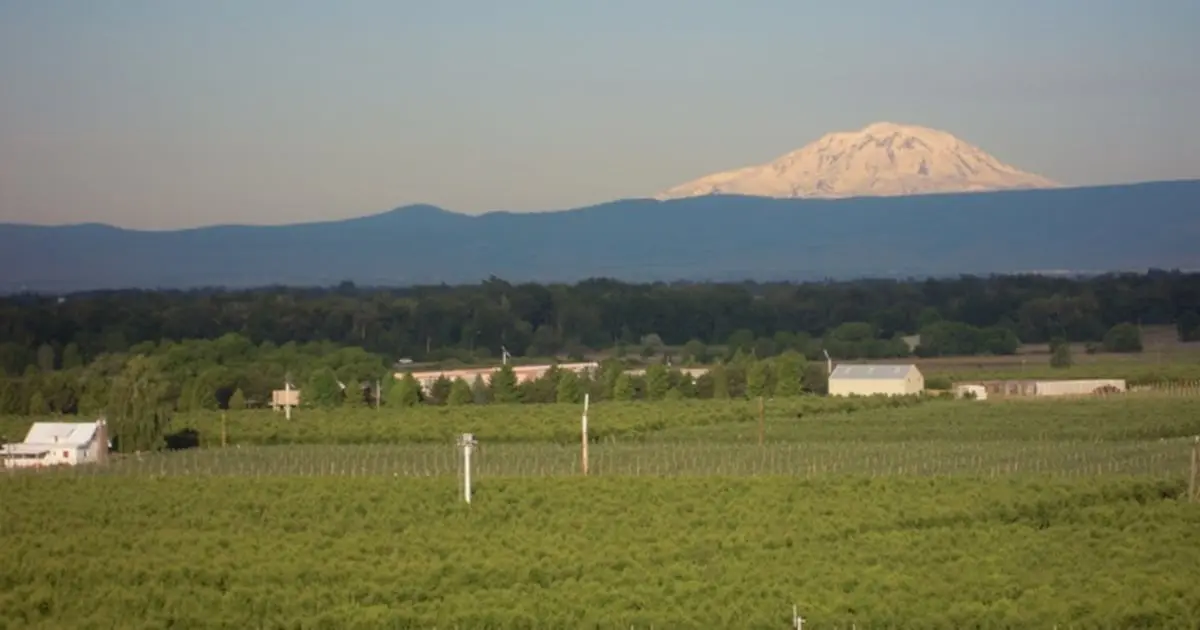
Choosing Washington State for the next Reservoir incubator was far from arbitrary. According to United States Department of Agriculture (USDA) data, Washington is an agricultural powerhouse, particularly when it comes to high-value specialty crops that defy easy mechanization.
The Specialty Crop Epicenter
Washington accounts for roughly two-thirds of all commercial apple production in the United States. Furthermore, the state is a dominant national supplier of sweet cherries, pears, blueberries, and wine grapes. Unlike cereal grains like corn and wheat—which have seen high levels of automation due to their uniform growth patterns and broad-acre footprints—specialty crops demand delicate handling, complex spatial navigation, and rigorous quality control.
The Escalating Labor Crisis
Labor is the single largest operational cost for Washington growers. Chronically tight labor markets, rising minimum wages, and unpredictable immigration policies have squeezed farm profit margins to historic lows. Manual harvesting, pruning, and thinning require massive seasonal workforces that are increasingly difficult to recruit and retain.
Unique Pest, Disease, and Environmental Pressures
Washington’s diverse microclimates—ranging from the arid, irrigated valleys of Yakima and the Tri-Cities to the maritime influences of western regions—create unique agronomic challenges. Orchards and vineyards face complex pest pressures, fungal diseases, and micro-climatic variations that require hyper-local tech solutions.
By planting its flag in Yakima, Reservoir is placing physical AI developers directly on the front lines of agriculture’s toughest operational challenges.
Collaborative Ecosystem & Institutional Partnerships
The success of the Yakima incubator relies heavily on a robust network of regional partners, economic development organizations, and academic powerhouses. Reservoir has deliberately woven its network into the fabric of the Pacific Northwest agricultural community.
Key Stakeholders and Regional Backing
- Washington Tree Fruit Research Commission (WTFRC): Providing deep industry expertise, the WTFRC ensures that incoming technologies align precisely with the practical needs of apple, pear, and cherry producers.
- Tri-City Development Council (TRIDEC): Committed to bolstering economic development in the Tri-Cities region, TRIDEC is providing vital regional support to ensure the incubator stimulates local job growth and tech sector investment.
- North American Blueberry Council (NABC): Offering specialized insights into berry cultivation, the NABC helps direct automated harvesting and crop-care innovations toward the unique structural needs of blueberry bushes.
- Western Growers: Continuing their strategic partnership with Reservoir, Western Growers helps bridge the gap between commercial producers and tech innovators across the western United States.
Academic Synergy with Washington State University (WSU)
To maximize the scientific rigor of the incubator, Reservoir is exploring collaborative partnerships with Washington State University. This academic integration promises to fast-track research and development by pairing tech start-ups with world-class agricultural scientists.
Naidu Rayapati, director of the WSU Prosser Irrigated Agriculture Research and Extension Center (IAREC), highlighted the profound impact of this academic-industry nexus in a recent press release:
"Opportunities to bring ag-tech startups together with our faculty to evaluate emerging technologies across diverse cropping systems, including orchards and vineyards, could give growers valuable insights within a single growing season and rigorous validation over multiple seasons, helping them make informed decisions, reduce risks, and improve productivity and profitability."
This partnership ensures that technologies emerging from the Yakima incubator are not only commercially viable but also scientifically validated across multi-year field trials.
Official Statements and Industry Perspective
The decision to expand into the Pacific Northwest has elicited strong enthusiasm from industry leaders who recognize the urgency of scaling physical AI in agriculture.
Danny Bernstein, founder and CEO of Reservoir Farms, articulated the core philosophy driving the expansion during his announcement at FIRA:
"Tree fruit, blueberries, wine grapes, and hops are some of the hardest crops in the world to automate, and labor is now the biggest cost Washington growers face. Expanding into the Pacific Northwest shows the Reservoir model is working. When you put builders on real farms with growers who will tell them the truth, rugged physical AI goes from prototype to production much faster."
Bernstein’s emphasis on "growers who will tell them the truth" underscores the unique value proposition of the Reservoir model. Tech developers are notoriously prone to building solutions looking for problems; by embedding them directly within active farming operations, Reservoir forces engineers to confront the dust, mud, erratic topography, and shifting weather conditions that define real-world agriculture.
Industry analysts note that this direct feedback loop drastically shortens product development lifecycles. Instead of spending years building a robot in a Silicon Valley garage only to find out it cannot navigate a muddy orchard slope, start-ups at Reservoir’s Yakima facility will receive immediate, unvarnished critiques from veteran growers who manage thousands of acres of high-value crops.
Future Outlook: The Road to Spring 2027 and Beyond
As Reservoir Farms looks toward the grand opening of its Yakima incubator in the spring of 2027, the agtech sector stands at a fascinating crossroads. The convergence of generative AI, advanced computer vision, robust edge computing, and falling hardware costs has created unprecedented momentum for agricultural automation.
What to Expect Next
Over the coming months, Reservoir will finalize its institutional agreements with WSU, complete facility build-outs in the Yakima Valley, and onboard its initial cohort of resident start-ups—including returning alumni like Bonsai Robotics and Sky Sense, alongside new innovators Cordon and Rootline.
Long-Term Implications for Global Agriculture
The implications of the Yakima expansion extend far beyond Washington State. If Reservoir can successfully prove that autonomous systems and physical AI can economically harvest delicate specialty crops like sweet cherries and blueberries, the playbook established in the Pacific Northwest can be replicated globally.
By systematically dismantling the barriers between software engineers and dirt farmers, Reservoir Farms is not merely incubating start-ups; it is actively architecting the future of human sustenance. As the spring 2027 launch approaches, growers, investors, and technologists alike will be watching the Yakima Valley, where the arduous marriage of rugged hardware and biological agriculture is set to take its next giant leap forward.